REVIEW
8.2· Great
Pokémon Pokopia Review: The Most Surprising Pokémon Game in Years | Switch 2
Pokémon Pokopia review: a post-apocalyptic Kanto rebuilt by a Ditto in disguise. The best-reviewed Pokémon game ever delivers cozy brilliance on Switch 2.

Opening
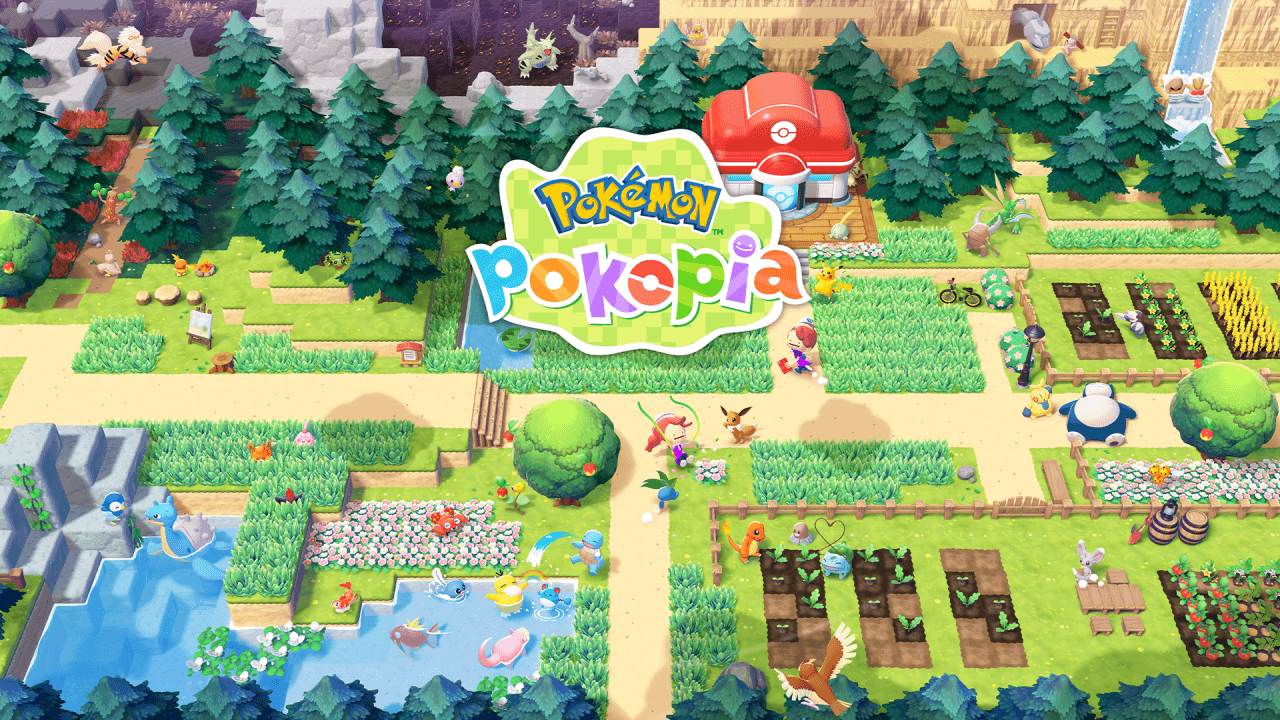
Humanity has fled to outer space, the Kanto region lies in ruin, and the only hope for revival is a Ditto pretending to be human. Pokémon Pokopia is the most original Pokémon game in years. This Switch 2 exclusive life-sim, co-developed by Game Freak and Omega Force, trades battles for habitat creation, building, and the slow work of coaxing a shattered world back to life across 20 to 40 hours of main story content. The question is whether the premise sustains a hundred-hour commitment, or whether the novelty wears thin before the credits roll. The answer is largely yes, with one particular friction worth naming before the player starts. The kind of design that trusts the player to notice a hillside that has settled into a habitat.
Game Snapshot
| Developer | Game Freak / Omega Force (Koei Tecmo) |
| Publisher | Nintendo / The Pokémon Company |
| Release Date | 5 March 2026 |
| Platforms | Nintendo Switch 2 exclusive |
| Price | £58.99 (digital) / $69.99 |
| Rating | PEGI 3 / ESRB E (Everyone) |
| Genre | Life simulation / construction |
| Length | Main story: ~20,40 hours; full completion: 100,250 hours |
| Install Size | 10.0 GB |
Presentation and World Design
The Kanto region arrives empty, which is the part of the premise the game commits to most fully.
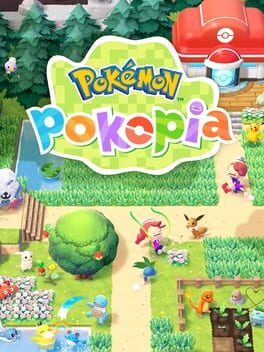
Pokopia’s post-apocalyptic Kanto is one of the more quietly particular settings in the franchise’s history. The world is not rubble and ash. It is overgrown, soft-lit, and melancholy in the way of a long-abandoned garden rather than a battlefield. Structures crumble gently. Tall grasses swallow paths. The colour palette runs warm and slightly muted, which suits the tone of a world waiting to be revived rather than mourned. The Switch 2 hardware handles the environmental detail comfortably.
Performance is steady. Loading transitions between regions are fast, framerates hold steady, and the game’s construction systems render new structures without stuttering. The one technical weakness noted consistently is render distance: the landscape blurs at a disappointingly short range, which undercuts the sense of scale the game otherwise earns. In a title about restoring a world, seeing that world pop in and out of clarity is a small but noticeable friction.
The music is considered. Composed in a style clearly indebted to Kazumi Totaka’s Animal Crossing work, each region’s ambient tracks shift with the time of day and the density of Pokémon activity nearby. Befriending a new species and hearing a new melody layer into the environmental score is one of Pokopia’s most consistently effective tricks. The UI is clean and functional, with a radial menu for Ditto’s transformation abilities that becomes second nature within a few hours of play.
Gameplay and Pokémon Relations

Building and Habitat Creation
Pokopia's central construction loop is built around one insight: Pokémon need particular environments to thrive, and creating those environments draws them to the player. Ditto acquires new transformation abilities from Pokémon it befriends, and these abilities translate directly into tools for reshaping the landscape. A form learned from a Grass-type Pokémon allows planting forests. Abilities drawn from Rock-types let Ditto smash debris and cut clear new paths. The breadth of the Pokédex becomes, effectively, a crafting tree.
The loop has a satisfying rhythm in the early and mid-game. Encounter a new Pokémon, discover what it needs, build or clear that habitat, and watch the population of a region grow. The feedback is immediate and visible: a barren plateau fills with sound and colour as the right conditions come together. The small sound of a new species arriving is the part the designer got right. This is what separates the game from both Animal Crossing's social cadence and Minecraft's material-gathering rhythm.
Ditto's Form-Swapping and its Costs
The main mechanical friction is transformation management. Ditto's forms are the primary interface with the world, and switching between them asks the player to navigate the same menu every time. In the early game, when the roster of available forms is small, this is unremarkable. By the mid and late game, when dozens of abilities are available, constant menu-swapping becomes genuinely burdensome. Each action calls for a different form, and each form asks for a menu visit. It is a friction the game's warm sensibility mostly absorbs, but it does not disappear.
Pokémon interactions outside of combat are well-handled. Once befriended, individual species can assist with tasks, converse with other Pokémon in the world, and contribute to the restoration effort in genre-specific ways. The caveat worth naming is that certain stretches of the game reduce Pokémon to functional tools rather than companions: deliver this resource, clear that terrain, then move on. The game is at its best when the relationship between Ditto and its companions feels collaborative rather than transactional.
Pokémon Pokopia: Story and Characters

The narrative premise earns its strangeness. Humanity, facing an uninhabitable Kanto, uploaded all their Pokémon into a digital preservation system before departing for space, a setup detailed on the official Pokopia site. The story's opening hours, guided by a Tangrowth acting as the player's mentor, establish the world's logic with a light touch. The post-apocalyptic framing is never grim. The game is too warm for grimness. It gives the Ditto protagonist a genuine purpose rather than the thin 'become champion' scaffolding that has supported most mainline titles.
The story advances through environmental restoration milestones. Reviving a region to a sufficient state triggers new narrative beats, reveals what happened in particular locations, and surfaces the broader question of what the humans left behind and whether they might return.
Character writing is understated and occasionally affecting. Individual Pokémon carry their own personalities and histories, communicated through dialogue fragments and behavioural observations rather than cutscenes. The world's lore is embedded in the environment itself: in the structures left standing, the habitats already formed, and the Pokédex entries that accumulate context as the restoration progresses. For a franchise whose narrative ambitions have historically been modest, Pokopia's approach to storytelling is genuinely particular.
Pokémon Pokopia Switch 2: Value and Longevity
At £58.99 / $69.99, Pokopia sits at the upper end of the Switch 2 launch library's price range. The value proposition depends entirely on the kind of player. For a reader who engages deeply with the restoration systems, 100 hours of meaningful play is achievable before the full Pokédex is in reach, and completionists should expect 250 hours to unlock every recipe, habitat, building, relic, and collectible. Pokémon Pokopia is, in practice, an indefinitely expandable life-sim once the main story concludes.
For a player whose interest ends at the credits, the 20,40 hour main story is compact by the series' standards. The game's director, Takuto Edagawa, confirmed that length in advance and indicated there is substantial content awaiting post-credits. That is accurate. The real-world timer mechanics, where certain Pokémon appear only at particular times of day, extend the time commitment and add a light version of the daily-login rhythm familiar from Animal Crossing. Construction projects also run on timers, meaning the game rewards returning rather than marathoning.
Pokopia sold 2.2 million copies in its first four days, with 1 million of those in Japan alone, making it the fourth best-selling Switch 2 title by that milestone. No DLC has been announced, but the depth of the existing systems makes the base game substantial. For anyone tracking the best Switch 2 games available right now, and pairs well with Animal Crossing: New Horizons on the same hardware, this sits near the top.
Technical Notes
Pokopia runs cleanly on Switch 2. Load times between regions are fast, frame performance holds steady during complex construction sequences, and the game has not exhibited the technical instability that has characterised several Switch 2 launch titles. The 10 GB install size is modest. The Switch 2's rumble feedback is used for environmental interactions and building confirmations. Access options include adjustable text size and simplified control remapping. No major bugs or crashes have been widely reported at launch or post-patch. For a reader interested in the broader cosy game genre this sits within, the best cosy games on PS5 in 2026 offers a cross-platform comparison.
Final Word
Pokémon Pokopia is the franchise at its most inventive since Legends: Arceus. A world left behind by humans, rebuilt one habitat at a time by a Ditto who does not quite belong in either species, is a premise that earns its strange emotional weight through patience rather than spectacle. The kind of game where restoring a single blighted hillside to a state where three previously absent Pokémon return and begin talking to each other produces a satisfaction that no score or achievement can adequately represent. The form-swapping menu friction is real, and the render distance cap is a genuine concession, but neither undermines the core loop. Skip it if you need narrative momentum or combat to hold attention across fifty hours. For anyone who has already worked through the best cosy games of 2026 and is ready for something with more systemic depth, Pokopia is the most generous entry in that bracket.
FAQ
Is Pokémon Pokopia worth buying for the Switch 2? Pokémon Pokopia is worth buying for a reader who engages deeply with restoration and base-building systems. At £58.99 the main story runs twenty to forty hours, with completionist play stretching to one hundred to two hundred and fifty hours. The premise of a Ditto rebuilding a post-apocalyptic Kanto is the franchise’s most inventive concept since Legends: Arceus.
How long is Pokémon Pokopia? Pokémon Pokopia runs twenty to forty hours for the main story and one hundred to two hundred and fifty hours for completionist play. The wide range reflects how much time a player invests in the construction and habitat-restoration systems, which can be pursued well beyond the main arc. The 10 GB install is modest by Switch 2 standards.
Is Pokémon Pokopia a Switch 2 exclusive? Pokémon Pokopia is a Nintendo Switch 2 exclusive, released on 5 March 2026. There is no Switch 1 version, no PC port, and no announced plan for other platforms. The game uses Switch 2-specific performance characteristics in its construction sequences, with smooth load transitions between regions and steady framerates during complex builds.
Who developed Pokémon Pokopia? Pokémon Pokopia was developed by Game Freak in collaboration with Omega Force (Koei Tecmo) and published by Nintendo and The Pokémon Company. The Omega Force partnership reflects the construction and base-building emphasis, drawing on Koei Tecmo’s history with management and strategy systems rather than the traditional Pokémon RPG framework.
Useful Links
Summary
Pokémon Pokopia is a Nintendo Switch 2 exclusive released on 5 March 2026, developed by Game Freak in collaboration with Omega Force and published by Nintendo and The Pokémon Company. At £58.99 it sits at the upper end of the Switch 2 launch library, with a main story of twenty to forty hours and completionist content stretching to one hundred to two hundred and fifty. The premise of a Ditto rebuilding a post-apocalyptic Kanto is the franchise’s most inventive idea since Legends: Arceus, and the soundtrack, composed in a style indebted to Kazumi Totaka’s Animal Crossing work, layers melody across the world as Pokémon return to restored habitats. Render distance is the one consistent technical weakness. A player who wants a traditional Pokémon RPG will not find it. A player who engages deeply with restoration systems will find Pokopia the most generous Pokémon experience released in years.
8.2
Great
SpawningPoint Verdict
Review summary
Pokémon Pokopia is a life-sim and construction game co-developed by Game Freak and Omega Force, exclusive to Nintendo Switch 2. Players control a Ditto transformed into a human form, working to restore a post-apocalyptic Kanto by building habitats and befriending returning Pokémon species. The core loop replaces traditional battles with environmental restoration, drawing on Omega Force's Dragon Quest Builders pedigree. Performance is smooth across the Switch 2 hardware, though render distance is a noted limitation. Constant menu navigation for form-swapping adds friction during intensive build sessions. No DLC is confirmed, but the base game offers 100 to 250 hours of content for dedicated players. The most ambitious Pokémon spin-off in a decade.