RETROSPECTIVE
Strange Horticulture Retrospective the Gentle Macabre
This Strange Horticulture retrospective finds a game whose softness and threat still belong together. The shop counter remains a complete dramatic space, the map still turns absence into exploration, and the plant book remains one of the cleanest puzzle tools in cosy-adjacent games. Its one wobble is the alchemy layer, where the

Opening
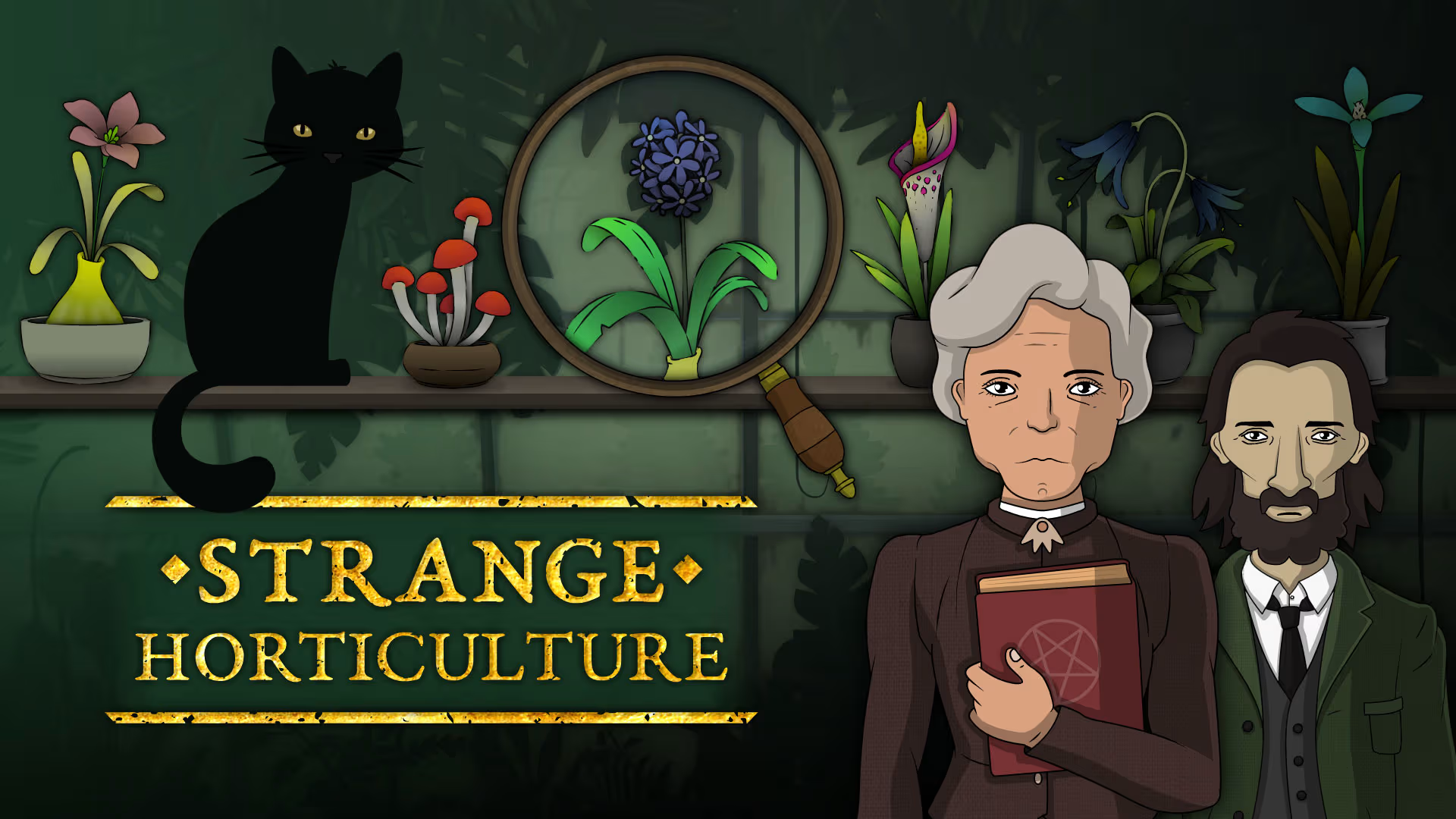
The rain in Strange Horticulture sounds like it has been waiting outside the shop door. Strange Horticulture still earns its gentleness by making attention the mechanic. That is the claim this strange horticulture review returns to in 2026. The game is gothic, but its macabre quality is the quiet kind: a warning in a plant description, a customer asking for help too carefully, a map square that feels wrong before the clue confirms it. The question now is not whether the identification loop was novel. Our full Strange Horticulture review argued that already. One is compelled to ask whether softness and threat still belong together. They do.
Game Snapshot
| Developer | Bad Viking |
| Publisher | Iceberg Interactive |
| Release Date | 21 January 2022 on PC, later ports to Switch (28 July 2022), macOS (22 November 2022), Xbox (4 August 2023) and PlayStation (23 February 2024) |
| Platforms | PC, macOS, Switch, PS5, Xbox, iOS, Android |
| Price | £11.99/$14.99 |
| Rating | PEGI 7/ESRB E10+ (Fantasy Violence, Mild Language) |
| Genre | Occult botanical puzzle |
| Length | Around 5.5 to 6 hours main, around 9 completionist |
| Install Size | Varies by platform |
Presentation and World Design
Strange Horticulture still understands the shop counter as a whole world. The desk is crowded with jars, pressed leaves, notes, books, and unnamed plants, but the clutter stays legible. It does not feel arranged for the player. It feels inherited, which is the correct posture for domestic duty.

Undermere works because most of it stays outside the window. The map widens the world, but the player rarely leaves the shop in the ordinary sense. A customer describes a location, a clue points towards a hill, and the player sits with the map until the place opens. The weather at the glass and the muted colour of the interface make the room feel both safe and watched. This is close to the reason our Wytchwood review valued teeth in a soft frame: the darkness matters because the game knows where to keep it.
Strange Horticulture Retrospective the Gentle Macabre
Buy on AmazonPrice and availability from Amazon
Gameplay and Combat
There is no combat here, and the absence is not decorative. Strange Horticulture puts its pressure into reading, cross-referencing, and choosing the plant whose leaf shape, scent, or description answers the request in front of you. The encyclopaedia is not background material. It is the active verb of the game, a book the player learns to handle like a tool rather than consult like a menu.
The identification loop remains precise because every correct answer carries a small moral weight. A customer might need a remedy, a warning, a sedative, or a way into something worse. The player is not asked to fight. The player is asked to attend. That distinction is why the game still sits beside larger cosy structures. Our Moonstone Island review is about routine, skies, and accumulation. Cattails Wildwood Story on Switch 2 is about social rhythm. Strange Horticulture is narrower: one counter, one book, one decision.
The alchemy layer is the one place where the rhythm loosens. Compound preparations widen the margin for error, and the game briefly feels less clean than when a single plant resolves a request. It recovers, but the wobble matters because the rest of the loop is so exact.
Story and Characters
The story arrives through accumulation rather than announcement. A widow, a concerned neighbour, a cultist, and a traveller pass through the same small room, each carrying one part of a larger unease. The writing rarely tells the player what to feel. It lets the request sit beside the plant book until the implication becomes difficult to avoid.

That restraint is still the game’s best narrative choice. Undermere has murders, occult societies, and a creature at the edge of speech, but the horror is held in grammar and gesture. A sentence in the encyclopaedia can turn a plant from useful to dangerous. A customer can sound grateful and leave the player less certain than before. This is not the same shopkeeping intimacy as our Tiny Bookshop review, where people reveal themselves through reading habits. Strange Horticulture reads people through what they ask a plant to do.
Value and Longevity
Strange Horticulture is compact, which is one reason it still holds. The first run is long enough for the mystery to thicken, but short enough that the plant book never becomes routine paperwork. That is the correct length for this premise. A longer version would risk turning attention into administration.
The replay value sits in changed knowledge rather than raw expansion. Returning with a fuller encyclopaedia lets the player see earlier requests differently, which is a quieter reward than a new mode but a better one for this game. For anyone asking whether Strange Horticulture is worth it now, the answer depends on whether a six-hour mystery can feel complete. Here it can.
Technical Notes
Strange Horticulture’s technical needs are modest, but modest does not mean irrelevant. The text must remain readable, the cursor must feel exact, saves must support short sessions, and the audio mix must leave room for rain, paper, and the small sound of a customer arriving. Platform-specific behaviour varies. The interface should disappear into reading. When it does, the game has the correct technical shape.
Final Word
The image that remains is not the ending, but the counter before a decision. A customer has gone quiet. The book is open. The rain sits at the window. The plant in front of the player looks right, but the description carries one word that changes the whole request. Strange Horticulture still works because it understands that this pause is the game. Not the reveal after it, not the ending it may lead to, but the small interval where kindness and harm share the same leaf shape. That is the gentle macabre, and after four years it has aged well.