REVIEW
7.9· Great
Littlewood Review 2026: The Post-Hero Life Sim Worth Playing
Our Littlewood game review 2026 asks whether Sean Young's solo-dev town builder still holds up. Spoiler: the post-hero premise still earns its place in the genre.

Opening
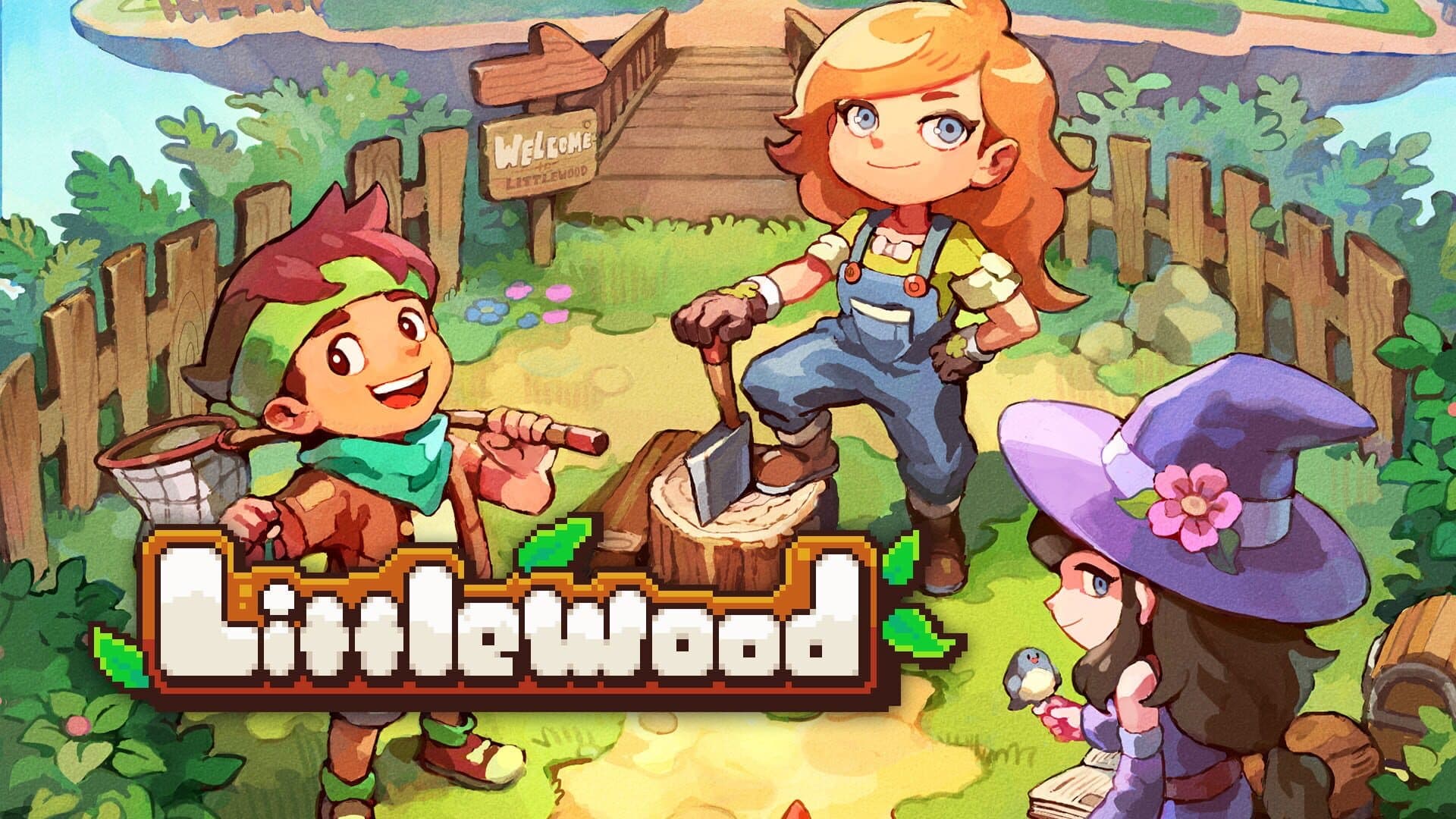
Littlewood is the only cosy game that starts after the hero has already saved the world. The premise earns everything that follows. Sean Young’s solo-developed town builder drops the player into a world where the Dark Wizard is defeated, the hero has amnesia, and the only remaining task is building somewhere pleasant for old adventuring companions to live. That inversion removes urgency, pressure, and progress-gating in a way that Stardew Valley and its successors have never attempted. Six years on from its full PC release and five years after arriving on Switch, Littlewood 2026 is the genre’s clearest answer for anyone who finds even the genre’s gentlest titles still carry too much weight. The kind of design that trusts the player to spend the afternoon however they choose.
Game Snapshot
| Dev / Publisher | Sean Young / SmashGames |
| Release Date | 4 August 2020 (PC full release); 25 February 2021 (Switch) |
| Platforms | PC (Steam/GOG), macOS, Linux, Nintendo Switch |
| Price | £12.79 / $14.99 |
| Rating | ESRB E (Everyone) |
| Genre | Life simulation / town builder |
| Length | ~29.5 hours (main objectives); ~41 hours (main + side content); ~55 hours (completionist) |
| Install Size | ~422 MB (Switch); ~1 GB (PC) |
Presentation and World Design
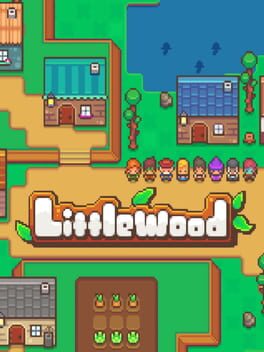
Littlewood opens in the morning, in pixel art that has been allowed to settle, and the first sound is a save chime that does not insist on itself.
Littlewood is a pixel-art life sim that wears its influences honestly. The visual style draws from the same tradition as early Harvest Moon and classic Zelda: top-down grids, chunky sprites, saturated colour palettes, and a world where every building and fence post is legible at a glance. It is not technically ambitious. What it does instead is maintain visual coherence across every system. The town the player builds looks like the overworld they explore, which shares its pixel register with the relationship portraits of the villagers and the mini-games in the fishing spots. Nothing jars.
The game’s layout philosophy gives complete freedom from the start. A player positions every building, shapes the terrain into mountains or lakes, and arranges the town’s residential and commercial areas with no predefined grid forcing anything into place.
Seasons cycle and bring distinct visual changes to the environment, with seasonal events and festivals punctuating the calendar. There are no sprawling continents or unlockable biomes beyond the core map expansions tied to town progression. That constraint is intentional: Littlewood is about depth of engagement with a single space rather than breadth of exploration across many. For a reader expecting a world to travel, this is a limitation. For a reader wanting a home to build, the scale is exactly right.
Littlewood Gameplay and Town Building

The mechanical core of Littlewood sits between resource gathering and town construction, with a session structure built around daily actions rather than stamina. The game allocates roughly sixty actions per day across activities including mining, woodcutting, fishing, farming, bug-catching, and cooking. When those actions are spent, the day ends. The system asks for prioritisation without penalty: there is no penalty for ending early, no optimal sequence required, and no crops that die if a player forgets to water them.
Gathering works through automatic tool selection. Walk towards a rock and the pickaxe equips; approach a pond and the fishing rod appears. The friction of inventory management is largely absent. Collected materials feed the town construction loop: wood and stone become planks and bricks, which become houses for new villagers, which unlock new shops, recipes, and facilities. The progression is transparent.
Villagers arrive as the town grows and each carries backstory that unfolds through dialogue and shared activities. Relationships deepen through a heart-based progression system, with companions available to follow the player and provide activity bonuses. The relationship system extends to romance and marriage. The amnesia premise feeds into this: the hero arrives knowing nothing of their former friendships, and uncovering those histories offers the game’s primary narrative hook.
Where the system shows strain is in the late game. Once the main construction goals are cleared, progression slows sharply. Rare materials required for final upgrades appear infrequently, and each day’s sixty actions begin to feel thin when the only purpose is grinding for a single ingredient.
Story and Characters in Littlewood

The narrative premise of Littlewood is its strongest structural idea: the player has already saved the world, and the story is about what happens after. The companions who fought alongside the hero now want somewhere to rest, and that emotional register (aftermath, recovery, community over conflict) runs through every character interaction. Willow and Dalton, the two characters who knew the hero before the memory loss, carry the closest thing the game has to a central arc, with their histories and the player’s role in them gradually surfacing through conversation and relationship progression.
The supporting cast expands as the town grows. Each new villager arrives with a reason for being there and a history that ties loosely to the hero’s forgotten adventuring past. Characterisation is handled through brief, well-written dialogue rather than extended cutscenes. The writing is warm without being saccharine. Characters have opinions, mild conflicts, and histories that the game treats as interesting rather than smoothing away.
There is no overarching villain, no ticking clock, and no dramatic revelation waiting at the end of a story dungeon. Littlewood is a game about building a life in the absence of crisis, and the story accepts that as sufficient. For a reader who arrived from action RPGs or narrative-heavy games, this can feel like an absence. Within the best cosy games of 2026, it is a deliberate and confident genre position. The comparison point is not Fire Emblem; it is Unpacking, a game similarly interested in the emotional texture of building a space rather than completing a quest.
Value and Longevity

At £12.79 / $14.99, Littlewood is priced below every major life-sim competitor on PC and Switch. The main objectives at approximately 29.5 hours, main story with side content at 41 hours, and completionist runs at around 55 hours. That places it well above the price-per-hour value of most indie titles in the genre, particularly given it was developed entirely by one person over three years.
The game does not have paid DLC and has received no major content updates in recent years, so the package available in 2026 is the same as at full launch. That is a minor consideration for a reader who spends the content quickly: there is no post-launch expansion adding new biomes, relationships, or mechanics. Stardew Valley’s Switch 2 Edition, by contrast, has accumulated years of free content updates that extended its longevity considerably.
For the right reader, the absent DLC is irrelevant. Littlewood is a complete, coherent experience that achieves everything it sets out to do within its existing scope.
Technical Notes
Littlewood runs without incident on all supported platforms. The Switch version, at 422 MB, is among the smallest downloads in the life-sim genre and loads quickly on both original Switch hardware and Switch 2.
The PC version supports Windows, macOS, and Linux. System requirements are minimal. A five-year-old laptop runs it without difficulty. No access features beyond basic audio settings are documented, and there is no photo mode or visual filter system. These are characteristic of a solo-developed title, and the absence of these extras does not affect the core experience. Post-launch, the developer addressed bug reports as they arose, and the game has remained stable throughout.
Final Word
Littlewood earns its place in 2026 not by doing more than its competitors but by doing less, deliberately. The life sim genre has spent the years since Stardew Valley adding systems, expanding maps, and layering mechanics until many titles arrive feeling like work. Sean Young built a game where the hard part is finished before the title screen clears, and the rest is choosing how to spend a quiet afternoon. The clearest illustration: a fishing trip with Willow, sixty actions on the clock, nothing at stake if the player comes back empty-handed. At £12.79, Littlewood has no real rival in this particular niche. Skip it only if a central story or a high skill ceiling is needed to stay engaged; the game has neither, and that is precisely the point.
FAQ
Is Littlewood worth playing in 2026? Littlewood is worth playing in 2026 for a reader who wants a life sim that begins after the heroic act rather than building towards one. At £12.79 it sits below every major life-sim competitor on PC and Switch, with main objectives at 29.5 hours, main and side content at 41, and completionist runs around 55. The price-per-hour value is uncommon.
How long is Littlewood? Littlewood runs approximately 29.5 hours for the main objectives, 41 hours including side content, and around 55 hours for completionists. The pace is deliberately gentle: there is no central story, no skill ceiling, and no failure condition. The hours accumulate through town building, friendship cycles, and seasonal events rather than escalating mechanics.
What platforms does Littlewood run on? Littlewood runs on PC (Steam and GOG), macOS, Linux, and Nintendo Switch. The Switch version, at 422 MB, is one of the smallest downloads in the life-sim genre. There is no PlayStation or Xbox version. System requirements on PC are minimal, making the game accessible to a wide range of older hardware.
Who made Littlewood? Littlewood was developed by Sean Young at Smashworx, working alone over multiple years. The game launched in PC Early Access in 2018, reached full release in August 2020, and arrived on Switch in February 2021. The single-developer scope shows in the focused design philosophy: less, deliberately, rather than the system-stacking common in larger life-sim teams.
Useful Links
Summary
Littlewood is a pixel-art life sim developed by Sean Young at Smashworx and released in full on PC in August 2020, with the Switch port arriving in February 2021. The main objectives run approximately 29.5 hours, 41 hours including side content, and around 55 hours for completionists. At £12.79 it is priced below every major life-sim competitor on PC and Switch. The game begins after the hero has saved the world, with no central story and no skill ceiling, and the design treats that absence as the point rather than a gap. A reader who needs a central narrative or rising mechanical challenge will find the structure too gentle. A reader who wants to rebuild a quiet town at their own pace will find few peers at this price.
7.9
Great
SpawningPoint Verdict
Review summary
Littlewood is a solo-developed life sim by Sean Young, released in full in August 2020 on PC and February 2021 on Nintendo Switch. Players take the role of an amnesiac hero who has already defeated the Dark Wizard and must now build a town for their old companions to inhabit. Core activities include resource gathering through mining, fishing, farming, and bug-catching, with materials used to construct buildings and attract new villagers whose histories gradually unfold through relationship mechanics. The game's defining feature is the deliberate removal of urgency: no crops die, no fail states punish, and each day ends on the player's terms. Late-game progression can slow against rare material requirements. At £12.79 / $14.99 with 30 to 55 hours of content, it is a focused, accomplished entry point for anyone who wants a cosy game without the pressure that usually accompanies one.