The Grimoire opens like a well-organised field journal: entries accumulate as the witch surveys the countryside, each recipe a record of what she has noticed rather than what she has been told. The game does not hand the witch her power. It asks her to read the world until the world yields it. That is a different kind of invitation from the one most crafting games extend, and after four years the difference still holds.
Wytchwood, the 2021 crafting adventure from Alientrap, is the kind of design that takes the genre’s central act, gathering and making, and quietly asks what it should be in service of. The answer it arrives at is moral purpose, which turns out to be the correct answer.
Game Snapshot
| Developer | Alientrap |
| Publisher | Whitethorn Games |
| Release Date | 9 December 2021 (PC/consoles); 8 February 2024 (mobile) |
| Platforms | PC (Windows), macOS, Nintendo Switch, PS4, PS5, Xbox One, Xbox Series X/S, Android, iOS |
| Price | £15.49 | $19.99 |
| Rating | PEGI 7 | ESRB Everyone 10+ |
| Genre | Crafting adventure |
| Length | ~10 hours (main story); ~10-15 hours (main + side content) |
| Install Size | ~1 GB (PC) |
Presentation and World Design
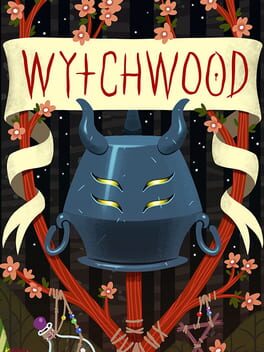
The art here works the way good illustration works: it commits to its register and holds it throughout. Wytchwood uses a paper-doll aesthetic, layering flat inked characters against painted environmental backgrounds in a palette of burnt oranges, forest greens, and ink-dark blues that carries from the swamp to the mountain passes. The style evokes a storybook read in poor light, colourful in a way that is not quite cheerful. This is the correct palette for a game about an elderly witch sorting out the moral failings of fairytale characters.
The witch herself, all angular limbs and a kettle-hat worn at an irritated angle, is one of the more distinctive figures the genre has produced. She does not project warmth. She projects competence and exasperation in roughly equal measure, which turns out to be a more interesting posture than warmth usually is. Eight distinct biomes each have their own ambient population and colour register, unlocked progressively, which gives the world the quality of a map being drawn as the journey proceeds. The areas are compact, which is the correct decision: Wytchwood is interested in a thoroughly inhabited small world rather than a large empty one.
The limitation is the interiors. Exterior environments suggest rooms of corresponding richness, but inside spaces frequently do not meet that expectation. The contrast between an ornate forest clearing and the sparse inside of a house it contains is a recurring note across the runtime.

Gameplay and Combat
There is no combat in Wytchwood. The witch's power comes entirely from preparation: what she has gathered, what she has brewed, and what she can conjure from the Grimoire when a problem stands between her and a soul. This is Alientrap's most important creative commitment, and the game does not waver from it.
The Grimoire expands as the witch surveys creatures, flora, and objects in the environment. Recipes unlock progressively, each requiring gathered ingredients that exist only in specific biomes. A completed recipe produces a potion, charm, or enchantment that resolves a problem character or opens a new area. The cauldron is the verb. Everything else is preparation for using it.
The loop holds because each ingredient connects, by a legible chain of recipe steps, to a specific moral outcome. The witch brews a shrinking potion not to fill a progress bar but because a vain miller needs to understand how large his ego has made him. Gathering is always in service of a judgement, which gives it the quality of deliberate attention.
The Witch Eye Sense, a soft environmental glow that highlights ingredients and interactive objects, removes the trial-and-error that makes ingredient-hunting tedious in the genre. Not the absence of work, but the removal of work that does not reward attention. The player still walks, looks, and checks which biome holds what. The visual noise is simply gone.
Where the loop stiffens is in the closing sections. Required ingredients become rarer, gathering routes lengthen, and the purposeful forward motion settles into something closer to a to-do list. The game's best quality is its narrative momentum, and the final third asks the player to notice the momentum has slowed.

Story and Characters
The structure is twelve souls. A demon holds the witch's memory, and the price of its return is twelve wicked characters brought to account, each a variant of a Brothers Grimm type: the greedy merchant, the vain suitor, the cruel stepmother, the liar who prospers by it. The game does not pretend this structure is subtle. It does not need to. The subtlety is in how each case is constructed, which is carefully.
Each soul is a self-contained story in miniature with its own setting and moral geometry. The witch is not asked to rehabilitate anyone. She applies the appropriate consequence, and the Grimoire provides the mechanism. The result is a narrative that moves with the economy of a fable, every element load-bearing, resolution satisfying in the way a closed bracket satisfies: because it was opened with precision.
The witch herself is the finest character the game contains. She is incurious about nothing and sentimental about nothing, which makes her an unusual figure in this register. Most cosy protagonists are open and warm by design. She is closed and dry by character, and the gap between her and the genre's expectations is where most of the writing's energy lives.
What the game does not build is emotional weight between the stories. The witch moves from case to case with professional efficiency, which serves the fable structure but leaves little space for the quiet accumulation of detail that makes a crafting world feel inhabited between its quests.

Value and Longevity
At £15.49, Wytchwood offers a complete and considered experience across roughly ten hours. There is no padding in the design: each of the twelve souls takes approximately the time it needs to take, and the game ends when it has finished rather than when a runtime target has been met. That is a decision that respects the player's afternoon.
The game does not have a new game plus mode or procedurally generated content. What it has is a coherent beginning, middle, and end, the kind of structure that makes a second playthrough a matter of revisiting rather than re-engaging. Most players will complete it once. That single run is well-made enough that once is sufficient.
For portable play, the Switch version runs without incident, which is the correct outcome for a game asking for the kind of short-session attention that portable play encourages. A single soul can be resolved in under an hour, which means the game fits neatly into the time it is given. It does not require an evening. It offers, instead, a sequence of good afternoons.

Technical Notes
Wytchwood runs cleanly across its supported platforms. The PC version is modest in its requirements and performs without issue on hardware that would be considered entry-level by current standards. The Switch version holds its performance consistently across handheld and docked modes, which matters for a game played in short sessions where the transition between setups should not be a consideration.
The UI is plain in the way that good prose is plain: it says what it means and stops there. The Grimoire is legible. The ingredient tracking is legible. The map is legible. No lore-flavour in the button labels, no ornamental notation in the inventory. This design quality becomes visible only when a game of this type gets it wrong, at which point it is all you can see.
The ambient sound layer carries the atmosphere between quests with unhurried competence. Each biome has its own ambient register, distinguishable without being emphatic. No single sound cue dominates, which means the general ambient quality has the character of a room that has been considered rather than decorated.
Final Word
Wytchwood earns what it claims. It calls itself a cosy game and the claim holds not because the aesthetic is gentle but because the design is honest: the gathering serves the story, the story serves a moral purpose, and the moral purpose gives the witch her particular quality of unhurried authority. The moment that settles this verdict is the one where a completed potion causes a vain character to confront an accurate mirror, and the witch watches with the expression of someone who has seen this particular failing before and has the recipe for it. Wytchwood 2026 review seekers will find a game that has not aged into irrelevance. It has aged into clarity.
FAQ
Is Wytchwood suitable for players who find crafting games overwhelming?
Wytchwood's crafting loop is designed around a single core mechanic: gather ingredients, follow Grimoire recipes, produce the appropriate consequence for each fable character. The Witch Eye Sense highlights interactive objects and ingredients in the environment, removing the visual noise that makes ingredient-hunting tedious in the genre. The system is deliberate and self-contained, with no simultaneous farming, relationship, or economy mechanics to manage alongside it. Players who find multi-system cosy titles demanding will find this a structurally simpler and more focused alternative.
How long does it take to complete Wytchwood?
The main story runs approximately ten hours across twelve distinct soul cases, each self-contained and designed to be completed in one to two short sessions. Full completion of side content and environmental exploration extends the runtime to roughly ten to fifteen hours. The game ends when it has finished rather than when a runtime target is met, which means the ten-hour figure is a clean single-run length rather than an estimate that depends on how thoroughly a player explores.
Does Wytchwood have any combat?
Wytchwood has no combat of any kind. The witch's power comes entirely from preparation: she resolves every conflict through crafted potions, enchantments, and charms rather than through direct confrontation. This is the game's defining design commitment and holds consistently across the full runtime. Players who are specifically looking for a cosy crafting experience without combat mechanics will find this a title that has made that choice at the level of structure rather than as a genre convention.
Is Wytchwood worth playing in 2026?
Wytchwood released in December 2021 and has not been surpassed in its specific territory of morally purposeful crafting adventure. The design remains coherent, the fable structure holds its narrative logic, and the witch protagonist is the kind of character the genre rarely produces. At its current price point of £15.49, a ten-hour experience with a complete narrative and a considered visual identity represents reasonable value against the longer and more elaborate titles that have appeared in the years since.
Which platform is best for Wytchwood?
Wytchwood runs cleanly across all its supported platforms. The Switch version performs consistently in both handheld and docked modes and fits particularly well with the game's short-session structure, where a single soul case can be resolved in an hour or less. The PC version on Steam or GOG offers the same experience with the additional benefit of the game appearing frequently in sales. The mobile version, released in 2024, is a viable option for shorter sessions; the crafting UI translates reasonably to touch input given the deliberate pace of the loop.
8.3
Great
SpawningPoint Verdict
Review summary
Wytchwood is a crafting adventure that earns its gentleness by design rather than by default. Alientrap's decision to ground every gathering task in a specific moral consequence gives the loop a purposeful quality that the genre rarely achieves, and the paper-doll art direction sustains a consistent storybook atmosphere across ten clean hours. The witch protagonist, dry and competent where most cosy leads are warm and open, is the game's most distinctive contribution to the field. The final third stiffens as required ingredients thin out, and interior spaces across the eight biomes rarely match the richness the exterior world implies, but neither limitation undermines the overall design integrity. At its current price, Wytchwood remains the clearest available answer for players who want a crafting loop that holds a moral argument.