The Witcher 4 has been in full production for less than two years, which means every release window estimate is extrapolation dressed as reporting.
That is not an accusation aimed at any particular outlet. It is the structural condition of covering a game this early in its lifecycle. CD Projekt Red has confirmed the cinematic trailer, confirmed the engine, confirmed Ciri, confirmed the trilogy framing. They have not confirmed a date. Everything placed in a specific window, whether 2026 or 2027, is built on inference from hiring data, earnings call language, and the studio’s own prior production history. It is worth being clear-eyed about that before buying into any particular forecast.
What follows is an account of what the studio has actually said, what the signals genuinely support, and where the gaps are.
What CD Projekt Red Has Actually Confirmed
The confirmed facts are narrower than most coverage implies.
CD Projekt Red announced in early 2022 that a new Witcher game was in pre-production. The subsequent period involved significant restructuring following Cyberpunk 2077’s troubled launch: the studio’s public communications were careful, and the word “pre-production” was doing considerable work. By 2024, the language shifted to “full production”, a phrase the studio used deliberately in public communications and earnings calls to signal that the project had crossed a meaningful internal threshold.
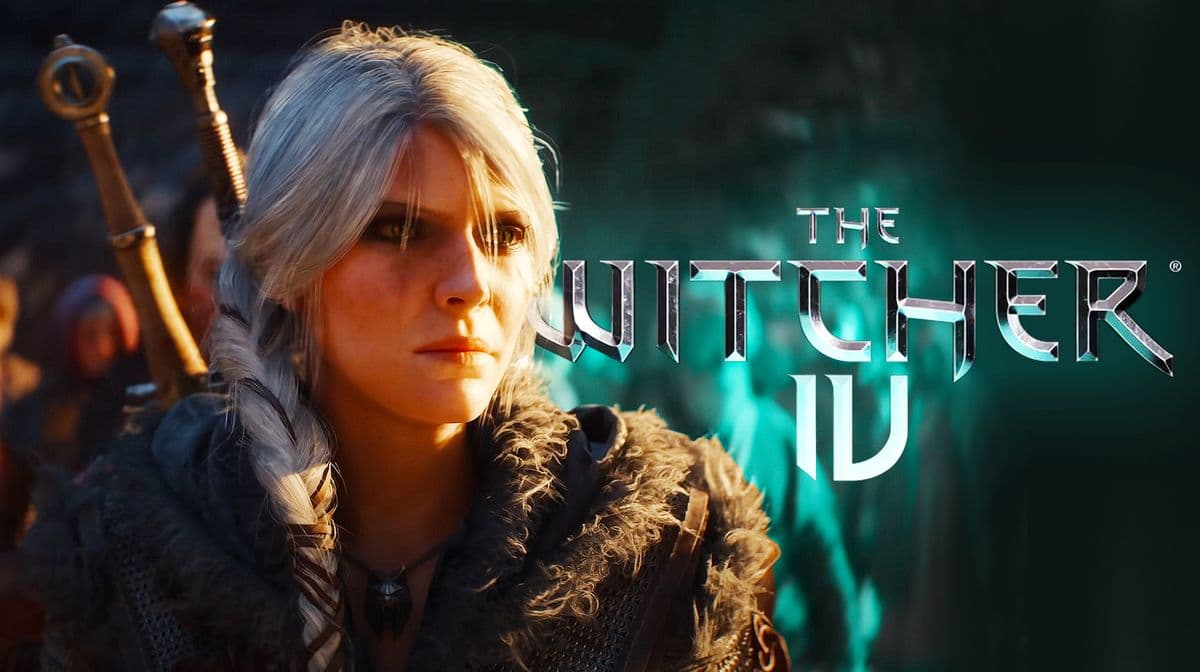
The Game Awards 2024 cinematic reveal confirmed Ciri as the protagonist, Unreal Engine 5 as the engine, and the broad creative direction of the new trilogy. It did not confirm a release date or a release window. The footage was cinematic, not gameplay.
What earnings calls confirm: active hiring across multiple disciplines, including senior systems designers, combat designers, and UE5-specialised engineers. The pattern of hires is consistent with mid-to-late production, though mid-production and late production have very different delivery timelines and the available data does not resolve which.
What earnings calls do not confirm: a target ship date.
The studio has been explicit about declining to commit to specific dates following the Cyberpunk 2077 shipping experience. That is not evasion; it is a production management decision with a traceable rationale.

The Game Awards 2024 Reveal: Ciri as the New Lead
The cinematic trailer positions Ciri as the new protagonist, which is a significant creative decision that the studio has spent considerable capital communicating.
Ciri was the most structurally interesting character in The Witcher 3 from a narrative standpoint, appearing as a controllable character in key sequences and carrying the game’s central emotional weight while Geralt served as the nominal protagonist. The decision to build the next trilogy around her is architecturally coherent: she has established world-relationship, player familiarity, and a power set with meaningful game-design implications.
The trailer itself is not evidence of the game’s current state. High-quality cinematics can be produced with a small team working from early asset direction; they are part of the marketing apparatus rather than a window onto the build. The environments shown were convincing, the production values were what audiences expect from a studio of this size, and the Ciri model design communicated a visual direction that is distinct from the Geralt-era aesthetic.
What the trailer does confirm: the studio has settled on a creative direction for the protagonist and is confident enough in that direction to broadcast it publicly. That is not a small commitment.
What the trailer does not confirm: the state of the game’s systems, encounter design, or world architecture.
Unreal Engine 5 and What It Argues About Polish
The decision to build The Witcher 4 on Unreal Engine 5 rather than REDengine carries implications that are worth analysing as a production signal rather than as marketing language.
REDengine was the studio’s proprietary engine across Witcher 3 and Cyberpunk 2077. It was capable of producing visually distinctive results, particularly in lighting and environmental density, but it carried significant technical debt that contributed to Cyberpunk 2077’s performance problems at launch. The decision to adopt UE5 is the studio externally acknowledging that maintaining and extending a proprietary engine alongside a production of this scale was not a viable path.
UE5 has known strengths: Nanite geometry, Lumen global illumination, and a development tooling ecosystem that is mature and well-documented. It also has known complexity in optimisation, particularly on last-generation hardware. Studios working in UE5 have reported that achieving consistent performance across platform targets requires substantial optimisation passes late in development, and those passes take time. The pattern is visible across the genre: Elden Ring shipped in a technically strong state after a longer-than-expected cycle, and that disciplined runway showed in the result.
The engine choice argues for a longer runway rather than a shorter one. A studio that has adopted a new engine for the first time on its most high-profile project will need that runway. This is not a criticism; it is a structural reality of working at the engine-switch scale.
The positive read: UE5 gives CD Projekt Red access to tooling and optimisation infrastructure that REDengine never had. If the studio uses that infrastructure well, the launch-state performance problems that followed Cyberpunk 2077 become structurally less likely. The engine is better equipped to support a technically clean ship.

The 2027 Window: What Signal Points to It
The 2027 window comes from three convergent signals, none of which is direct confirmation.
First: production timeline inference. The shift to “full production” language in 2024 suggests the project cleared pre-production between 2022 and 2024. AAA productions of this scale typically run three to four years in full production. A 2024 full-production entry points to a 2027 or 2028 delivery on that logic alone.
Second: earnings call cadence. CD Projekt Red’s investor communications have become progressively more specific about the Witcher 4 development timeline, which is consistent with a project moving toward a period when investor guidance requires firmer commitments. Studios do not typically increase earnings call specificity about a project that is more than three years from ship.
Third: hiring profile. The senior-level hires in combat and systems design suggest a team that is in the phase of building and iterating on core gameplay pillars, not in the exploratory phase where those pillars are still being defined. That phase tends to precede content production and polish, which is the stage that consumes the back end of a development cycle.
None of these signals confirms 2027. They are consistent with 2027. They are also consistent with early 2028. A studio that has publicly committed to a more disciplined ship posture following Cyberpunk 2077 will not be pressured into a 2026 window by market expectations.
The New Trilogy Framing
The Witcher 4 is confirmed as the first entry in a new trilogy, which is a creative and commercial commitment with significant structural implications.
A trilogy framing affects how the first entry is designed. The first game in a trilogy has to establish the world architecture, the protagonist’s ability set and progression logic, and the tonal register that the subsequent games will inherit and develop. It carries a heavier foundational load than a standalone. The scope of that foundational work is one reason why trilogy-opening games tend to be among the most expensive and time-intensive projects in a studio’s portfolio.
The Witcher 3 was not planned as a series endpoint when it began development, but the accumulated weight of two prior games meant it inherited a developed world and a protagonist with established mechanical language. The Witcher 4 inherits Ciri’s narrative history but is building new mechanical and world-architectural language from scratch, on a new engine, for a protagonist whose gameplay role in prior games was limited to specific sequences. Recent big-budget RPGs have shown how much that foundational work matters: Avowed spent its development cycle establishing a new protagonist in an established world, and the result was a game that felt coherent precisely because the scope was matched to the ambition.
That is a significant scope. It argues for a development timeline that accommodates the scope rather than compressing it.
How CD Projekt Red Could Get the Launch Wrong
The risk profile for The Witcher 4 is legible from the studio’s own history, and it is worth naming directly.
The Cyberpunk 2077 launch did not fail because the game was bad, and it did not fail because the studio ran out of money. It failed because the game shipped in a state that was not ready for the hardware targets it was marketed against, specifically last-generation consoles, under market pressure to meet a committed date. The studio made the decision to ship and absorbed the reputational and financial cost of doing so. The subsequent recovery, through post-launch patches, was substantial and genuine, but the launch-state damage to player trust was real and the studio knows it.
The structural risk for The Witcher 4 is the same class of risk: a production that is ambitious at the engine and scope level, building toward a trilogy commitment, on a new technical foundation, with a player expectation baseline set by Witcher 3’s received greatness. The combination of those factors creates pressure toward a date commitment that a disciplined production should resist. The Dragon Age: The Veilguard retrospective is instructive here: a beloved RPG lineage, a new engine, a long wait, and a launch that divided players precisely because the combat design did not carry the weight the expectation had placed on it.
The positive counter-signal: the studio has reorganised its production leadership since 2020, has been explicit about what went wrong, and has declined to commit to dates in the way it previously did. Whether that organisational change holds under the pressure of an imminent launch remains to be seen.
What to Watch: Earnings Calls, Trailers, Press
The signals that will sharpen the release window picture are not social media speculation. They are observable in specific channels.
Earnings calls: CD Projekt Red’s quarterly investor communications are the most reliable lagging indicator of production state. When the language shifts from “full production” to specific milestone references (platform certification, localisation completion, disc manufacturing), the window will be six to twelve months out. Watch for that language shift.
Gameplay reveal: a substantive gameplay trailer, distinct from the cinematic reveal, will indicate the game has reached a build state the studio is willing to show publicly. The gap between cinematic reveal and gameplay reveal has been informative on past CD Projekt Red projects. A gameplay reveal in 2025 or early 2026 would support a 2027 window. Absence of a gameplay reveal through 2026 would push the realistic window to 2028.
Platform certification announcements: platform holders typically require certification submissions six to eight weeks before a confirmed ship date. A date will not be confirmed before that process begins. Any “confirmed” date circulating before a platform certification window is speculative.
Hiring freeze signal: when a studio transitions from filling production roles to consolidating and reducing headcount, it is in the final stretch. That signal typically appears six to twelve months before ship. CD Projekt Red’s public hiring data does not indicate that transition yet.

Final Word
The Witcher 4 is a real game in active development, which is not as trivial a statement as it sounds after several years of uncertainty following Cyberpunk 2077’s launch.
What it is not: a game with a confirmed release date. The 2027 window is the best-supported inference from available signal, but inference is not confirmation, and a studio that has committed to a more disciplined production posture will not be rushed by the inference. The cinematic reveal established Ciri as a lead who carries genuine narrative weight. The UE5 choice gives the studio better technical infrastructure than it has previously had. The trilogy framing establishes the scope.
Whether CD Projekt Red delivers on that scope, on time, in a state that justifies the wait: that question will not be answered by earnings call analysis. It will be answered by the game. Watch for the gameplay reveal. Everything before it is architecture; everything after it is evidence.
FAQ
When is The Witcher 4 release date?
CD Projekt Red has not confirmed a release date for The Witcher 4. The studio has confirmed full production is underway and has declined to commit to a specific window. Based on production timeline inference, active hiring data, and the cadence of CD Projekt Red's earnings call language, 2027 is the window most consistently supported by available signal, with early 2028 remaining plausible. No date should be treated as confirmed until the studio makes a direct announcement.
Is Ciri the main character in The Witcher 4?
Yes. The Game Awards 2024 cinematic reveal confirmed Ciri as the protagonist of The Witcher 4 and the new trilogy it begins. This represents a deliberate shift from Geralt, who will not be the lead of the new trilogy. Ciri appeared as a playable character in specific sequences in The Witcher 3, giving her established narrative and mechanical foundations that the new game will build from.
What engine is The Witcher 4 built on?
The Witcher 4 is built on Unreal Engine 5, marking a departure from CD Projekt Red's proprietary REDengine used for The Witcher 3 and Cyberpunk 2077. The engine switch is significant: UE5 offers Nanite geometry and Lumen global illumination, but also requires substantial optimisation work to achieve consistent cross-platform performance. The choice argues for a longer development runway rather than a compressed one.
Will there be a Witcher 4 gameplay reveal?
No gameplay reveal has been confirmed as of mid-2026. A substantive gameplay trailer, distinct from the 2024 cinematic reveal, would indicate the game has reached a publicly demonstrable build state. Expect that reveal to precede any concrete release window announcement. Its absence through 2026 would push the most realistic window to 2028.
Is The Witcher 4 a sequel to The Witcher 3?
The Witcher 4 is the first entry in a new trilogy rather than a direct narrative sequel. It is set in the same world and draws on the established lore, but the shift from Geralt to Ciri as protagonist marks a creative separation. CD Projekt Red has described it as the beginning of a new chapter rather than a continuation of the Geralt storyline. Players do not need to have played the previous games, though familiarity with Ciri's role in The Witcher 3 provides relevant context.