RETROSPECTIVE
8.2· Great
The First Berserker: Khazan Retrospective 2026, One Year On Where the Contract Held


The stagger system is Khazan’s argument: every other mechanic exists to make it legible. A year on, the question isn’t whether Neople built something competent; the question is whether the argument holds under the weight of the late-game encounter design. It mostly does, until the third act decides to treat the stagger economy as an answer rather than a question, and the contract slips. What earns the cost in the first thirty hours is the clarity of the proposition: posture damage as currency, stagger windows as sentences in a shared grammar between player and boss. The parts that don’t hold are precisely the parts where that grammar breaks down, not because Khazan forgets its own rules, but because it applies them too literally.
Game Snapshot
Developer: Neople
Publisher: Nexon
Release Date: 27 March 2025
Platforms: PlayStation 5, Xbox Series X/S,
Windows Price: £39.99/$49.99 (Standard); £54.99 / $69.99 (Deluxe)
Rating: PEGI 16/ESRB M (Mature 17+)
Genre: Soulslike action
RPG Length: ~45-60 hours main story; ~80+ hours completionist Install Size: ~50 GB
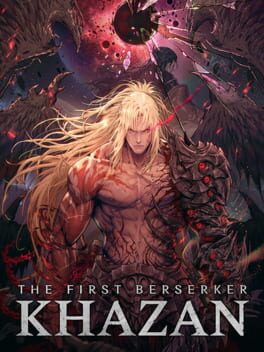
The First Berserker: Khazan Retrospective 2026, One Year On Where the Contract Held
Price and availability from Amazon
Presentation and World Design
Pell Los is a world that reads as architecture before it reads as narrative. The realm draws from the Dungeon Fighter Online universe, and whilst it carries the lore-weight of an established IP, the game is careful to stage it as environmental text rather than exposition: crumbled parapets, siege-scorched courtyards, the residue of a war that preceded the story by decades. The visual register is high-fantasy soulslike with a Korean action-RPG aesthetic inflecting the creature design, and the result is distinct enough from the European-gothic palette most genre contemporaries reach for.
The audio is, in places, the stronger design choice. Khazan sounds like a game that understands impact: the crack of a stagger break carries weight in a way that most genre competitors still reach for through haptic feedback rather than sound design. When the stagger window closes on Yetuga, the acoustic confirmation arrives before the visual does, and that prioritisation is intentional. The score operates in a horror-adjacent register during the mid-game, particularly across the Pell Los interior zones, and the dynamic layering during multi-phase boss transitions demonstrates an understanding of music as encounter structure rather than background atmosphere.
Where the presentation earns its score: boss arenas are staged, not merely populated. The encounter with Hismar is a visual argument about verticality before it’s a mechanical one. Short declarative observation: Khazan knows what its spaces are for.
Combat and the Stagger Economy
The stagger economy is Khazan’s central mechanical claim, and for the first thirty hours it argues its case with conviction. Sekiro treats posture as ritual; Khazan treats it as economy. The distinction is load-bearing. Sekiro’s posture system rewards patience and pattern internalisation, a slow accumulation of read and refusal. Khazan’s stagger system rewards aggression calibrated to resource state: the player is always managing two parallel currencies, health and posture damage, and the optimal line through an encounter is the one that converts posture pressure into a stagger window before either resource runs out. Lies of P makes the parry the economy’s unit of exchange; Khazan makes it the accumulated weight of sustained offensive pressure. The grammar is different, and usefully so.
The first-act bosses demonstrate this grammar with precision. Yetuga is a masterclass in staging the encounter: the fight introduces the stagger window as a concept through its attack cadence, giving the player clear posture-damage feedback before the window triggers, then removes that scaffold on the second phase and asks the player to anticipate rather than react. Volbaino stages its encounter differently, using multi-directional pressure to force the player to choose between maintaining offensive stagger build and protecting their own posture threshold. Both fights earn the cost: the mechanical difficulty is inseparable from the mechanical teaching.
The mid-game holds this. Hismar, Hosharu, and the Toxic Toad all stage encounters that expand the grammar without abandoning it. Sand Smaragd introduces environmental stagger mechanics, using the terrain as a third participant in the economy rather than a neutral stage. Hyaku is the high-water mark: a fight that demands the player treat every stagger break as a sentence, not a paragraph, because Hyaku’s posture recovery speed compresses the window to a point where hesitation costs more than aggression.
And the moment the late game arrives, the argument starts to strain. Maluca is the inflection point. The fight applies the stagger economy to a multi-phase encounter where the posture threshold resets between phases, and the stagger window in the final phase is calibrated to a margin that treats mastery as a prerequisite rather than an achievement. The distinction matters: Sekiro and Lies of P both have late-game encounters that demand fluency, but they stage those encounters as the culmination of a taught vocabulary. Khazan’s late-game treats the stagger window as the answer to its own difficulty question, rather than as a component of a larger encounter argument. The contract slips.

Story and Tone
Khazan the general is a framing device as much as a protagonist: the betrayal, the execution, the resurrection, the vengeance arc. The narrative is light per soulslike convention, and correctly so. Neople understands that the story’s job is to motivate the encounter sequence rather than compete with it. Khazan’s psychological state, the grief of a legendary commander reduced to a revenant instrument of his own anger, is communicated through posture and movement animation before it’s communicated through dialogue, and that prioritisation keeps the story from outgrowing its function.
Environmental storytelling through Pell Los architecture carries what dialogue leaves behind. The throne room confrontation is staged as a visual argument about power before the cutscene begins: the geometry of the space, the sightlines, the way Khazan is framed against the architecture of the institution that destroyed him. Narrative-light does not mean narrative-absent; it means the narrative knows its weight and stays within it. Khazan’s story earns the genre convention it works inside.

Patch State and Late-Game Balance
The post-launch patch history is a record of Neople addressing symptoms more than causes. Multiple updates across April, June, and September 2025 adjusted posture-damage thresholds on several late-game bosses, refined the weapon-stance switching system to reduce input-delay friction on stance transitions, and introduced optional accessibility modifiers for boss posture recovery speed. The Sabre Tooth DLC, released October 2025, added a substantial NG+ content layer, two new boss encounters with revised stagger economics, and a weapon-stance expansion that meaningfully alters the late-game build vocabulary.
The patches softened some of the late-game encounter design issues noted at launch. Maluca’s final phase window was widened in the June update, and the adjustment is legible in play: the fight now stages its difficulty as a fluency requirement rather than a reflex ceiling. That is the correct direction, and the patch history suggests Neople was listening to the mechanical argument rather than just the frustration signal.
What the patches did not address is structural. The multi-phase posture threshold reset, which is the mechanical root of the late-game contract-slip, remains as Neople designed it. Whether that’s a considered choice or an unresolvable architecture decision is difficult to assess from the outside. What’s observable: the late-game encounter design in the patched version is better than at launch, and still not as coherent as the first act. The Sabre Tooth DLC encounters, by contrast, apply the stagger economy with more precision than anything in the base game’s third act. Neople appears to have learned from the base game’s weakest sequence and applied that learning to the DLC design. That’s an encouraging pattern.
Value and Replay
At £39.99/$49.99 Standard, Khazan launched at a price point below most major soulslike contemporaries, and the content volume justifies the positioning. The main campaign at 45-60 hours is dense rather than padded: the encounter sequence is designed to a consistent mechanical standard, and the weapon-stance system generates genuine build diversity without demanding replays to experience the core argument. The Deluxe tier at £54.99/$69.99 includes the Sabre Tooth DLC, which is substantial enough at approximately 12-15 additional hours to represent fair value if purchased as a bundle at launch.
Replay incentive is real and specific. The weapon-stance system opens meaningfully different combat lines through the same encounters, and the stagger economy responds differently to stance choices in ways that change the analytical frame, not just the numbers. A Berserk-stance run through Volbaino is a different encounter argument than a Technique-stance run. That’s the correct design for a game built on posture economics: variety at the level of approach rather than just build statistics.

Final Word
A year on, Khazan: The First Berserker holds the part of its contract that matters most: the stagger economy is a genuine genre contribution, not a reskin of systems the player already knows. The first act earns the cost with precision; Yetuga and Volbaino stage encounters that teach the grammar before the late game demands fluency. The contract slips in the third act, where the stagger window becomes the answer rather than the question, and multi-phase posture resets expose a structural ceiling the patches have softened but not resolved. The Sabre Tooth DLC suggests Neople learned from that ceiling and applied the lesson well. The retrospective verdict is fair: Khazan is better at teaching the genre than it is at honouring the student in the final hours. It earns the cost. It doesn’t quite hold the line.
FAQ
Is Khazan: The First Berserker worth playing in 2026?
Yes, and the patch history makes the case stronger than it was at launch. The late-game balance issues that drew the most criticism have been partially addressed across the post-launch updates, and the Sabre Tooth DLC adds genuine NG+ content that applies the stagger economy with more precision than the base game's third act. At the current Standard price point, the first thirty hours alone justify the cost. Players who engage with posture-based soulslike systems and find Sekiro's parry-ritual demanding rather than rewarding will find Khazan's economy more legible. Recommended without significant hesitation.
How does Khazan compare to Sekiro and Lies of P?
Sekiro treats posture as ritual; Khazan treats it as economy. The distinction is mechanical and meaningful: Sekiro's system rewards the patient accumulation of pattern recognition, whilst Khazan asks the player to manage two parallel resource curves simultaneously, health and posture damage, and find the optimal aggression line between them. Lies of P makes the parry the unit of exchange; Khazan makes it the accumulated weight of sustained pressure. All three games stage the encounter as a grammatical argument, but Khazan's grammar is the most legible for newcomers to posture-based systems. Its first-act teaching sequence is more explicit than either predecessor.
How long is Khazan: The First Berserker?
The main campaign runs approximately 45-60 hours depending on engagement with optional encounters and build experimentation. Completionist runs, including the Sabre Tooth DLC content, reach 80+ hours. The main campaign hours are dense: Neople does not pad the encounter sequence with filler zones, and the weapon-stance system generates build diversity that extends the mechanical relevance of each fight beyond a single playthrough. The Sabre Tooth DLC adds approximately 12-15 hours of new content for players who want to extend past the base campaign, with two new boss encounters and revised stagger economics that reflect the lessons of the post-launch patch period.
Does Khazan have DLC?
The Sabre Tooth DLC released October 2025 and is included in the Deluxe edition. It adds a substantial NG+ content layer, two new boss encounters with stagger economics that are more precisely calibrated than the base game's late-game sequence, and a weapon-stance expansion that opens new build lines for returning players. The DLC's encounter design quality is notably stronger than the base game's third act, suggesting Neople absorbed the structural criticism and applied the learning directly. Players who found the base game's late-game contract-slip frustrating will find the DLC closer to the first-act standard than the base game's own conclusion managed.
Is Khazan accessible for newcomers to soulslikes?
More so than most. Khazan includes accessibility options that adjust boss posture recovery speed and the timing pressure of stagger windows, and these options function as a form of keeping the contract rather than breaking it: they allow the player to engage with the stagger economy at the appropriate level of challenge for their current fluency, then scale back towards the designed experience as the grammar becomes internalised. The first-act encounter sequence is itself a deliberate teaching mechanism; Yetuga in particular is staged to introduce the stagger window concept before demanding the player apply it under pressure. Players new to posture-based soulslike vocabulary have a more legible entry point here than Sekiro offered in 2019.
8.2
Great
SpawningPoint Verdict
Review summary
Khazan: The First Berserker earns its place in the 2025 soulslike field through stagger-economy design that treats posture damage as a managed currency rather than ritual pattern recognition. The first thirty hours of encounter staging are precise, with Yetuga and Volbaino teaching the grammar before the late game demands fluency. The third act exposes a structural ceiling where stagger windows become the answer rather than the question, partially softened by the patch history. The Sabre Tooth DLC applies the lessons with more precision than the base game's conclusion managed. At £39.99 / $49.99 for 45 to 60 hours, the contract holds for posture-based-soulslike newcomers more legibly than Sekiro or Lies of P offer.


