

The quarantine zone does not explain itself. Atomfall drops the player into Skethermoor with a name they cannot remember and a landscape that has been doing something terrible for longer than anyone is willing to say, and the game’s central design decision is to make that silence structural rather than decorative. The dread here is not aesthetic. It is built into what the world will and will not tell you. Rebellion has made a British survival game where the most interesting weapon is the data pad.
Game Snapshot
| Developer | Rebellion Developments |
| Publisher | Deep Silver/Rebellion Developments |
| Release Date | 27 March 2025 |
| Platforms | Xbox Series X/S, PlayStation 5, PlayStation 4, PC (Windows), Xbox One |
| Price | £49.99 | $59.99 (day-one on Xbox Game Pass) |
| Rating | PEGI 18 | ESRB M (Mature 17+) |
| Genre | Survival Action/Open World |
| Length | Main story: 12-15 hours/Main + side content: 20-25 hours |
| Install Size | Approx. 18 GB (PC) |
Presentation and World Design
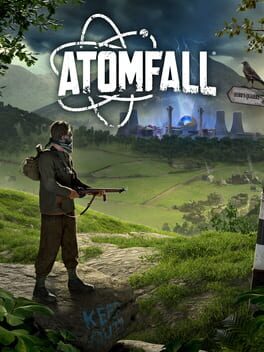
Rebellion structures Atomfall’s environmental design around the gap between surface legibility and concealed truth. Wyndham Village looks like a 1950s British settlement under pressure: bunting still strung between posts, civil-defence pamphlets stacked in doorways, the physical vocabulary of a community that believed the official account. Slatten Dale narrows the aesthetic register toward something older and stranger, the dry-stone boundaries and ceremonial clearings encoding a different relationship to the quarantine zone than the village institutions suggest. The environmental storytelling does not deliver its argument through text prompts; the player reads what has been preserved and what has been destroyed, and the pattern is the evidence.
The art direction makes specific choices about what post-nuclear Britain looks like that separate the game from genre defaults. This is not a scrap-metal wasteland or a Soviet-collapse grey zone. The colour palette is green and rust and wet slate. The threat of contamination reads in livestock pens that have been left but not emptied, in kitchen gardens that someone continued tending after the exclusion order. That specificity is Rebellion’s strongest visual decision: the landscape functions as a document before it functions as a survival space.
The Sniper Elite lineage is legible in the outdoor zone construction, particularly the sight-line geometry that makes moving through Slatten Dale feel like a tactical problem rather than a traversal exercise. The data pad system integrates neatly into the environmental logic: physical objects carry context that the world’s remaining inhabitants will not provide, and the investigation web the player builds across locations gives each new zone a layer of interpretive weight.

Gameplay and Combat
The interrogation system is the most specific thing Atomfall does. NPC encounters are structured around incomplete information on both sides: the player does not know what a character knows, the character does not know what the player is investigating, and the dialogue branching rewards returning to conversations after new evidence surfaces rather than exhausting a character’s options in a single session. An interrogation in Wyndham Village conducted before the player understands the Protocol’s role in the quarantine reads differently than the same interrogation conducted after Slatten Dale. The game stages this as a design decision rather than a content volume: the character’s responses do not change, but the player’s ability to read them does.
Combat operates on a scarcity logic that is correctly calibrated for the investigation framing. Ammunition is a resource the player is consistently short of, which means firearms carry weight as a commitment rather than a default response. The melee system, anchored on the cricket bat in the early game and opening out toward bladed tools as crafting resources accumulate, is legible without being deep: attack timing, stamina management, and zone awareness are the variables the game asks the player to manage, and the encounters in Skethermoor’s industrial fringe are designed to teach them before the Druids and Protocol factions introduce group-pressure scenarios.
The faction encounter design is where the combat loop earns its complexity. The Druids operate differently from the Outlaws and from Protocol enforcers: their approach patterns and weapon loadouts reflect the ecological logic of their zone rather than applying a uniform enemy template across the map. A patrol in Slatten Dale behaves as something rooted in that specific territory. The combat does not reach the encounter-design sophistication of genre peers in the STALKER lineage, but it respects the atmospheric register rather than undercutting it with a system that feels grafted from a different game.

Story and Characters
The narrative structure is an investigation economy: the player receives fragments and the game withholds the framework that would make them cohere, releasing it through exploration rather than through scripted delivery. What happened at Windscale is the stated premise; what the quarantine zone has become in the decades since is the actual subject. The three factions, the Druids, the Outlaws, and the Protocol, each carry a partial account of the disaster, and none of them is offering it freely. Completing any faction’s quest line provides evidence that undermines at least one other faction’s account, which is the correct structure for a mystery built around institutional concealment.
The character writing is functional rather than literary. Named NPCs in Wyndham Village are given enough specificity to register as individuals with stakes rather than quest dispensers, but the dialogue rarely pushes toward the kind of characterisation that makes a single NPC memorable. What the game does well is withhold: the characters who seem most forthcoming early in the investigation are often the least reliable, and recognising the gap between what someone is saying and what they know requires the player to treat the interrogation system as an analytic tool rather than a content delivery mechanism. That is a structural choice about trust that holds across the full runtime.
The multiple-ending structure reflects the faction alignment decisions the player makes through the investigation, and the endings are differentiated enough to make the choices feel non-cosmetic. The final sequences do not fully resolve the disaster’s deepest implication, which is either a deliberate ambiguity about institutional accountability or a narrative thread that ran past the boundary of what the game could support. The dread that the opening sequences establish does not entirely land in the finale.

Value and Longevity
The main investigation runs to roughly twelve to fifteen hours for a focused player. A full completion pass covering Slatten Dale, the Protocol facility interiors, and the Outlaw encampment zones extends that to twenty to twenty-five hours, with the additional time driven primarily by faction quest completion and environmental documentation rather than by padding. The survival loop does not artificially extend the runtime: the crafting economy is scaled to the investigation’s length rather than designed to create repetitive resource-gathering obligations.
Atomfall launched day one on Xbox Game Pass on 27 March 2025, covering Xbox Series X/S, Xbox One, and PC via Game Pass for PC. This makes it the lowest-friction entry point for the game, and the investigation-first design means a Game Pass playthrough at no additional cost is the recommended route for players who are uncertain whether the survival mechanics will sustain their interest across the full runtime.
Replay value is present but limited. The faction alignment system produces meaningfully different late-game evidence patterns and distinct endings, and a second playthrough conducted with the full picture of what each character is concealing reads the early interrogations differently. The crafting system does not generate sufficient variation between playthroughs to make survival loop replay a strong argument on its own.

Technical Notes
Performance on PC and Xbox Series X/S is stable across open-zone traversal and interior sequences. The fog density in Slatten Dale and the Druid ceremonial zones does not produce frame-rate degradation in current-generation configurations. The PlayStation 4 and Xbox One builds carry expected last-generation concessions in draw distance and texture resolution without affecting the investigation systems or the combat loop. The audio mix handles the dread register correctly: ambient sound drops before scripted encounters in a way that conditions the player rather than startling them, and the silence in the Protocol facility interiors is structural rather than incidental. No significant bugs at the time of this review across any platform.
Is Atomfall on Xbox Game Pass?
Atomfall launched on Xbox Game Pass on 27 March 2025 across Xbox Series X/S, Xbox One, and PC via Game Pass for PC. It is available through the subscription at no additional cost beyond membership. For players already subscribed, this is the recommended way to begin the game, particularly given the investigation-first structure that may not immediately surface the survival loop’s depth in the opening hour.
Is Atomfall Like S.T.A.L.K.E.R.?
The comparison is structural rather than superficial. Both games place the player in a quarantined zone where the official account of the disaster does not match what the environment documents, and both use scarcity-driven survival mechanics to make exploration carry weight rather than treating it as a traversal exercise. The differences are significant: Atomfall’s melee combat and interrogation focus contrast with STALKER’s firearms-centred systems and faction warfare, and Rebellion’s game is less mechanically demanding. Players who engaged with the investigation and atmospheric design of STALKER: Shadow of Chernobyl or Anomaly rather than primarily with its simulation depth will find Atomfall a close fit in intent if not in scale.
Final Word
Atomfall earns its investigation. The specific image the game leaves is not a combat encounter or a survival moment but a data pad found in the Protocol facility’s lower level that retrospectively re-reads everything the Wyndham Village NPCs said in the first three hours as something other than what it appeared to be. That is what the structure was building toward. The game does not fully deliver on the dread it stages in Slatten Dale’s ceremonial spaces, and the combat is lighter than the atmospheric design deserves. Recommended for players who want a survival game where the interrogation system is the primary tool and the zone is a document rather than an obstacle.
FAQ
Is Atomfall on Game Pass?
Atomfall launched on Xbox Game Pass on 27 March 2025 and is available through the subscription at no additional cost on Xbox Series X/S, Xbox One, and PC via Game Pass for PC. Players without a subscription can purchase the game at £49.99 / $59.99 across all supported platforms. The Game Pass release represents the lowest-friction entry point for a game whose investigation-first design benefits from low commitment barriers in the opening hour.
How long is Atomfall?
A focused main-story run through the Wyndham Village investigation, Slatten Dale, and the Protocol facility sequences takes twelve to fifteen hours. A full completion pass adding Outlaw encampment quests, all faction alignment threads, and comprehensive environmental documentation extends the runtime to twenty to twenty-five hours. The crafting and survival systems do not artificially pad the runtime: the game is scaled to the investigation rather than designed to maximise session count.
Is Atomfall like STALKER?
Atomfall shares the quarantine-zone investigation premise and scarcity-driven survival approach of the STALKER series, but differs significantly in mechanical depth and combat focus. Rebellion's game prioritises the interrogation system and faction evidence economy over simulation-level firearms mechanics and persistent faction warfare. Players drawn to STALKER for its atmosphere and the disjunction between the official disaster account and what the zone documents will find Atomfall a close fit in register; players drawn to STALKER for its emergent survival simulation will find the mechanics lighter.
Is Atomfall worth it in 2026?
For players interested in atmospheric British survival with a genuine investigation at its centre, yes. The data pad system and faction evidence economy hold up in 2026 as a design model for mystery-delivery that does not collapse into cutscene exposition. The combat is lighter than genre contemporaries. On Xbox Game Pass the value proposition is direct; at full retail the investigation and atmospheric design justify the price for the specific player who wants a survival game structured around what a quarantine zone is concealing.
8.3
Great
SpawningPoint Verdict
Review summary
Atomfall stages its post-nuclear British mystery through zone architecture and an interrogation economy that rewards returning to evidence rather than exhausting it. Skethermoor, Wyndham Village, and Slatten Dale each carry the disaster's history in what has been preserved, and the data pad investigation system gives that environmental documentation a mechanical function. The cult-mystery framing through the Druid, Outlaw, and Protocol factions produces differentiated evidence patterns rather than uniform quest content. The combat is correctly calibrated to the atmospheric register without reaching the encounter-design depth the zone variation suggests. The finale does not fully land the dread the opening establishes. A survival game built around what a quarantine zone will not tell you, recommended for players who treat the interrogation system as the primary tool.


