REVIEW
9.5· Outstanding
Elden Ring Review 2026: Still Worth Playing After Shadow of the Erdtree?

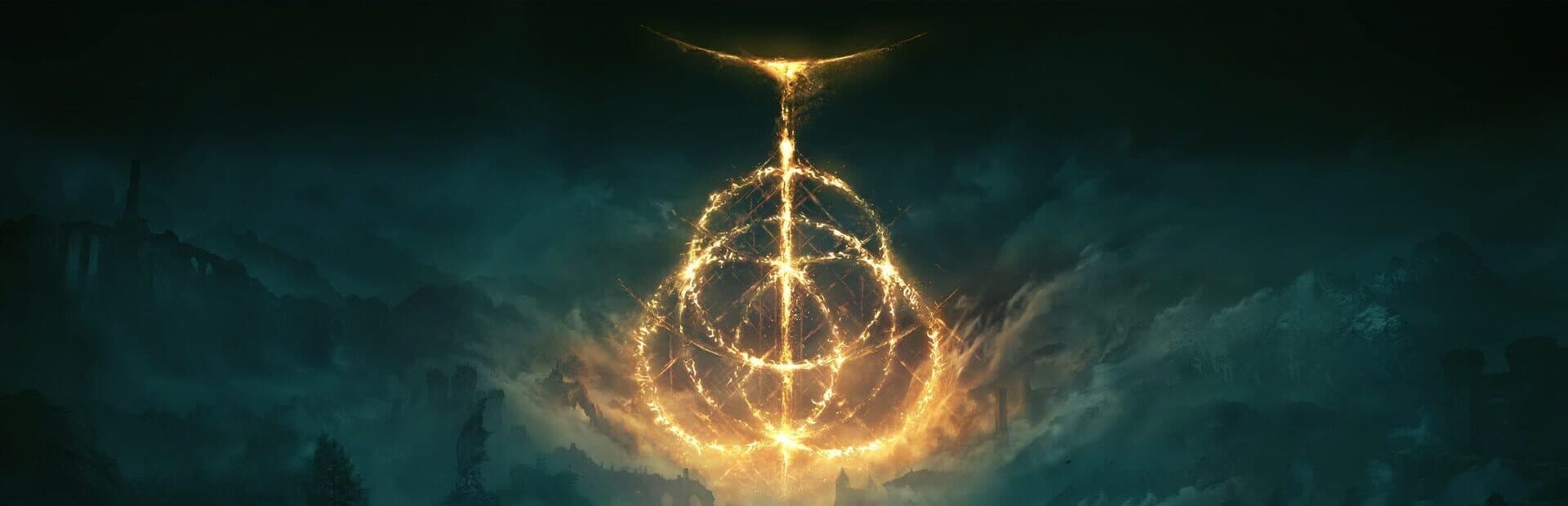
Elden Ring builds its difficulty into geography; FromSoftware’s earlier games built it into enemy AI. That distinction is still the cleanest way to explain why this game works when it works and why it occasionally fails when it fails. Four years on, with Shadow of the Erdtree completing the contract the base game opened, the Lands Between are worth the time of any player who has not made the journey and worth returning to for those who have. The open-world format earns what it costs.

Game Snapshot
| Developer | FromSoftware |
| Publisher | Bandai Namco Entertainment/FromSoftware |
| Release Date | 25 February 2022 |
| Platforms | PC (Windows), PlayStation 4, PlayStation 5, Xbox One, Xbox Series X/S |
| DLC | Shadow of the Erdtree (21 June 2024) |
| Price | £67.99 | $89.99 (Standard Edition) |
| Rating | PEGI 16 | ESRB M (Mature 17+) |
| Genre | Action RPG/Soulslike |
| Length | 50-60 hours (main story); 90-120 hours (main + major side content) |
| Install Size | ~60 GB (base); ~15 GB additional (Shadow of the Erdtree) |

Presentation and World Design
The Lands Between are built to be read as much as navigated, and the art direction delivers on that promise at every scale. FromSoftware’s visual identity here is doing encounter-architecture work: Limgrave functions as a teaching space, its open geography and relatively sparse enemy density establishing the sight-line and patrol logic the player will need for everything that follows. The transition into Stormveil Castle is a deliberate compression, corridors and fog gates and enemy ambushes in stairwells staging the game’s difficulty escalation through spatial grammar rather than a menu screen.
The environmental storytelling routes through systems rather than exposition. Armour sets carry the traces of fallen orders through crests worn thin by combat across centuries. Item descriptions contradict what the NPCs say, which is the correct structure for a world where the protagonist is an outsider assembling a history from fragments. The Erdtree dominates every sky, a navigational landmark and a lore argument simultaneously. Its presence in Limgrave is one scale; in the Mountaintops of the Giants, once the player understands what sustains it, the same visual becomes structurally different information.
Caelid is the game’s clearest statement of world-as-encounter. The scarlet rot, the degraded architecture, the enemy types scaled beyond what the player should be engaging at the moment of discovery: the zone is not optional content padded out for completionists. It is a geography that communicates danger through design before the player tests it. That communication is the game teaching its language, and it is honest.

Gameplay and Combat
The combat system is not the genre’s most technical and it does not need to be. Elden Ring’s difficulty is calibrated to the weight of the open world behind it: a player who has collected the right tools for a given encounter has been paying attention, and the game’s design rewards that attention more consistently than it rewards mechanical precision alone. That is not a concession to accessibility; it is the correct design decision for a game of this scale.
The boss sequence structures the game’s argument. Margit the Fell Omen opens the assault on Stormveil and establishes the game’s core teaching logic: his delayed overhead is the tell, and the moment the player reads it correctly, the fight becomes a different problem. Godrick the Grafted is where the phase-transition contract is first stated clearly: the second phase does not add attacks so much as it recontextualises the first, the wind-up animations now serving as setups for a graft-arm slam the player has not seen before. Everything learned in phase one remains true and is now slightly wrong in a way the player can act on.
The build system is where the open world earns its length. Faith and Intelligence hybrids operate on a different economy from pure melee: Bloodflame Talons’ bleed application through close-range Faith scaling changes the terms of fights where a straight-sword build would be grinding through a health pool. The Moonveil katana’s Transient Moonlight Ash of War reframes the range question in ways that alter how the player positions in boss arenas. The Mimic Tear, until its balance adjustment, was a second phase-skip; after the nerf it became a genuine support rather than a bypass, which is the correct design direction.
Malenia, Blade of Miquella, is the game’s most debated encounter and the one that most clearly tests the contract. The Scarlet Aeonia second phase introduces the waterlily-field arena geometry and a healing-on-hit mechanic that rewards aggression from the player rather than defensive play. The fight is not miscalibrated; it is asking a different question than most of the game’s bosses. Whether that question is the right one to ask remains a legitimate design argument. The answer depends on whether the player has built toward it.

Story and Characters
The narrative is staged through systems: the geography is the argument, the item descriptions are the evidence, and the boss fights are the punctuation. The player assembles a story rather than receiving one. The Erdtree’s legitimacy, Queen Marika’s decisions at the Elden Ring, the role of the Elden Lord across successive political generations, the Shattering that preceded the player’s arrival: none of this is delivered through expository cutscenes. All of it is encoded in what the game shows you and withholds from you, in the order that the encounter design determines.
George R.R. Martin’s contribution to the mythos is most visible in the Demigod structure: Godrick the Grafted, Rennala of the Full Moon, Starscourge Radahn, Morgott the Omen King each carry histories that intersect and contradict each other in the way the item descriptions position them. Rennala’s story, told through the albinaurics in the Academy of Raya Lucaria and through the full-moon mechanic itself, is among the most efficiently constructed pieces of lore-through-play in FromSoftware’s catalogue. Radahn’s Festival of Stars is a design argument about how a god-level encounter earns its scale through narrative framing before the player enters the arena.
The multi-ending structure rewards engagement with the major questlines rather than offering a clean “good/bad” binary. Ranni’s questline, which spans multiple regions and requires the player to connect threads from characters encountered hours apart, is the closest the game comes to a conventional narrative arc, and it lands correctly because the mechanical journey into Nokstella and Nokron earns the revelation at its conclusion.
Value and Longevity
The base game is 50 to 60 hours for a player completing the main critical path and the major demigod encounters. A thorough run through optional dungeons, legacy dungeons, and secondary questlines extends that to 90 or more. The open-world structure means those additional hours are not padding: the Altus Plateau, the Mountaintops, Crumbling Farum Azula are each designed as combat and exploration experiences in their own right, with enemy types and arena geometries that teach new encounter vocabularies.
Shadow of the Erdtree, released June 2024, is a full-sized expansion built on the assumption that the player has completed Mohg, Lord of Blood and Starscourge Radahn. The Land of Shadow introduces Scadutree Fragments as a region-specific power-scaling mechanic that effectively resets the late-game power ceiling and stages the expansion’s difficulty as a self-contained arc rather than an extension of the base game’s curve. Messmer the Impaler is the expansion’s architectural centrepiece: a multi-phase encounter that sequences its attack vocabulary as deliberately as any boss in the base game, and whose second phase recontextualises the first in the way Godrick established as the game’s canonical phase-transition language.
At the combined price of base game and DLC, the content-to-cost ratio is among the strongest in the genre. The game is also considerably better understood in 2026 than at launch: community build guides, Fextralife coverage, and four years of collective encounter analysis mean a new player has resources the launch-window audience did not.
Technical Notes
Performance on PS5 and Xbox Series X/S is stable throughout the base game’s main content. The colosseum arenas and some of the late-game multi-enemy encounter spaces show frame-time variance, though not at a level that affects parry timing in the encounters the game places there. The PC version’s launch-state issues, which included stuttering and frame-pacing problems at launch in February 2022, have been resolved through subsequent patches.
Shadow of the Erdtree introduced its own performance challenges on PC at launch, with shader compilation stutters affecting the first hours of play in the Land of Shadow. Patched versions are stable. Console versions of the expansion hold frame rate consistently across the named boss encounters, including Messmer and the final-act bosses.
The open-world traversal on Torrent is technically clean. The mount’s controls are responsive and the mounted-combat implementation, while limited in scope, does not introduce input-ambiguity problems in the encounters that use it.

Is Elden Ring Worth Playing in 2026?
The answer depends on whether the player is bringing soulslike vocabulary with them. A player who has completed at least one game in the genre, whether Dark Souls III, Sekiro, or a recent entry such as Lies of P or Khazan: The First Berserker, arrives with the attack-reading foundation the game assumes from Margit onward. That player will find the Lands Between among the most generously designed open worlds in the genre, and Shadow of the Erdtree a worthy extension of the contract.
A player new to soulslike combat will find the first three hours without purchase. Margit does not teach its parry window through graduated exposure; it assumes the player has already built the vocabulary elsewhere. The game’s accessibility options, which allow adjustment of damage received and other parameters, lower the cost of the learning process without changing the encounter structure. That is the contract extended to a wider set of signatories, which is the correct direction.
The 2026 case for starting now rather than waiting: the game is complete, patched, and accompanied by four years of community knowledge. The experience is not diminished by that context. The Lands Between have not aged poorly.
Final Word
Elden Ring earns its difficulty. That verdict rests on the Margit fight, which is where the game states its terms for the first time: the delayed overhead is the contract, and the player either learns to read it or does not progress. Four years on, with Messmer the Impaler completing the argument in Shadow of the Erdtree, the game’s design holds across its full runtime. The open-world format, which looked like a risk at announcement, turns out to be the mechanism through which the difficulty becomes navigable: the player controls the pace of engagement and the tools they bring to each encounter. The contract holds in both directions. Recommended to players who bring soulslike vocabulary; the accessibility settings extend the terms to those who are still building it.
FAQ
Is Elden Ring worth playing in 2026?
Yes, and the case for starting now is stronger than at launch. The game is fully patched, Shadow of the Erdtree completes the base game's narrative and encounter arc, and four years of community knowledge means build guides and questline walkthroughs are comprehensive. A player arriving in 2026 has resources the launch audience did not. The Lands Between are not diminished by that context; the encounter design holds at the same level as when the game was new.
Is Elden Ring harder than Dark Souls?
The difficulty comparison is not straightforward because the games build their challenges differently. Dark Souls sequences its encounter escalation through a tightly controlled linear structure; Elden Ring builds difficulty into geography, which means the player can approach the same boss at different power levels depending on how thoroughly they have explored. Margit and Godrick are harder than many Dark Souls early-game bosses for an underprepared player and considerably more manageable for a player who has used the open world correctly. The systems are comparable in rigour; the expression of that rigour differs structurally.
How long is Elden Ring?
The main story and major demigod encounters take 50 to 60 hours for most players. A thorough run through optional dungeons, legacy dungeons, and secondary questlines extends that to 90 to 120 hours. Shadow of the Erdtree adds approximately 25 to 40 hours depending on how thoroughly the player engages with the Land of Shadow's optional content and Scadutree Fragment collection. The open-world structure means those hours vary significantly by playstyle.
Does Elden Ring have DLC?
Shadow of the Erdtree is the sole expansion, released 21 June 2024. It requires completion of Mohg, Lord of Blood and the acquisition of Miquella's Needle to access. The expansion adds a new region, the Land of Shadow, a full roster of new bosses including Messmer the Impaler, new weapons and Ashes of War, and a region-specific power-scaling system through Scadutree Fragments. No additional DLC has been announced.
Is Shadow of the Erdtree worth it?
For a player who has completed the base game's critical path, yes. The Scadutree Fragment system resets the late-game difficulty curve in a way that stages the expansion as a self-contained arc rather than a continuation of the base game's power ceiling. Messmer the Impaler is among the best-designed encounters FromSoftware has produced: the phase-transition logic sequences correctly, the attack vocabulary is taught before it is tested, and the arena geometry is built for the encounter rather than around it. The asking price reflects the content volume and the quality of the encounter design.
9.5
Outstanding
SpawningPoint Verdict
Review summary
Elden Ring remains one of the most rigorously designed open-world soulslikes available in 2026. The Lands Between stage their difficulty through geography as much as enemy design, rewarding preparation and exploration over mechanical precision alone. Margit through Malenia builds a boss sequence that teaches its phase-transition logic consistently across 60 hours. Shadow of the Erdtree completes the contract with the Messmer encounter at its centre. The game assumes soulslike vocabulary from its first major boss; players building that vocabulary for the first time will find the accessibility options extend the contract rather than break it. The combined base-game and DLC package represents the genre at its current ceiling.