

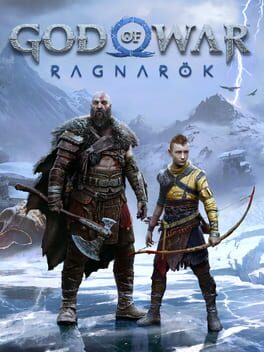
God of War Ragnarök is a large game that has learned to manage its own scale. The combat system inherited from the 2018 reboot is tighter here: the Leviathan Axe and the Blades of Chaos are better separated in their encounter applications, so the player is making genuine choices about which vocabulary to deploy rather than defaulting to the one they know. The Draupnir Spear, new to Ragnarök, adds a third lane of tactical decision-making whose payoff arrives progressively rather than immediately. That structural honesty, giving each weapon a distinct function in the encounter economy, is what separates this from spectacle action that merely looks like a combat system. The god of war ragnarok review verdict for 2026: the Norse cycle closes correctly, and three years on, the work holds.

Game Snapshot
| Developer | Santa Monica Studio |
| Publisher | Sony Interactive Entertainment |
| Release Date | 9 November 2022 (PS5/PS4); 19 September 2023 (PC) |
| Platforms | PS5, PS4, PC |
| Price | PS5/PS4 base: £29.99 | $39.99 (current, 2026); PC: £29.99 | $39.99 (current, 2026); Valhalla DLC: Free (PS5/PS4), £11.99 | $14.99 (PC, sold separately) |
| Rating | PEGI 18 | ESRB M (Mature 17+) |
| Genre | Action-adventure |
| Length | Main story: 25-30 hours; Main + sides + Valhalla: 55-70 hours |
| Install Size | PS5: ~64 GB; PC: ~122 GB |
Presentation and World Design
The nine realms are not interchangeable environments: they are distinct combat classrooms. Vanaheim stages its encounters in dense jungle geometry with sightlines that compress into corridors, which changes how the Blades of Chaos function relative to open-arena fights in Midgard. Svartalfheim introduces elevated platforms and water-level mechanics that alter the approach vector on grouped enemies. Asgard, when it arrives, is architecturally legible in a way that tells the player immediately this is where the game’s final arguments will be made.
Santa Monica Studio has built environments that do design work rather than backdrop work. The Dwarf-forged geometry of Svartalfheim’s industrial districts is functional: the cluttered sightlines are not decorative but encounter-specific, forcing the player to manage weapon choice based on engagement distance. The Elvish decay of a darkened Alfheim communicates system information through atmosphere. A realm that has had its light stolen behaves differently as a combat space, and the game communicates that change through light geometry before it asks the player to adapt to it.
The audio mix handles the scale correctly. The thunderclap of Mjolnir in the Thor encounter is mixed louder than ambient combat audio, which is a telegraph rather than spectacle: the oversized audio cue signals the oversized telegraph window on Thor’s overhead. The sound design is functional throughout.

Gameplay and Combat
The Leviathan Axe runic attack economy is built around two lanes: light runic attacks reload quickly and layer into normal combos; heavy runics require a longer charge and produce wider arena-clearing effects. The game teaches this distinction through Draugr wave encounters in Midgard before it asks the player to apply it under pressure in tighter Vanaheim spaces. The Blades of Chaos operate on the opposite axis: their runic attacks are designed for interrupt and stun rather than crowd control, and the player who treats them as a slower version of the Axe will be misusing both.
The Draupnir Spear represents the most significant structural addition to the combat system. The spear plants on enemies and surfaces; its rune ability detonates the planted charges in sequence, which teaches the player to manage resource placement across an encounter rather than within it. The first time the detonation chain catches a named enemy mid-attack cycle and produces a stagger window is the moment the game explains what the spear is for. That teaching arrives through a named encounter rather than a tutorial prompt, which is the correct method.
The Heimdall encounter stages this weapon’s argument most completely. Heimdall’s combat design is built around his ability to anticipate and dodge standard attacks, which the spear’s planted charge mechanic circumvents: a planted spear remains in the arena regardless of his dodge, and the detonation window does not require the player to telegraph intent. The encounter is not a difficulty gate; it is a confirmation that the player has understood the spear’s vocabulary.
Gna, the optional Valkyrie Queen, calibrates the parry economy correctly: her attack cycle mixes overheads requiring a block, sweeps requiring a dodge, and feints designed to draw the wrong response. She is the most complete test of the full combat vocabulary the game has built, and the encounter earns its difficulty by arriving after the vocabulary has been fully delivered.
The shield system adds a layer that the 2018 reboot lacked in meaningful application: shield choice affects parry window width and counter-attack opening, so the player is making equipment decisions that change encounter-level behaviour rather than stat-column behaviour. The Dauntless Shield’s tighter window produces a larger stagger; the Stonewall Shield absorbs and releases on a charge. Both require encounter-reading rather than preference.

Story and Characters
The 2018 reboot set up a specific structural problem: Kratos, the subject of the franchise’s Greek cycle, is presented as a man attempting to build a life and a relationship with his son while carrying the weight of what he has been. The Norse cycle’s dramatic question was not whether Ragnarök would happen but whether Kratos could change enough to face it differently to how he faced the Greek pantheon.
Ragnarök answers that question through the Atreus arc as much as through Kratos. Atreus’ journey to Asgard as Loki, his encounters with the Aesir, and his effort to find a path through Fimbulwinter without his father’s methods, runs parallel to Kratos’ negotiation of the same problem from the other side. The game is built around the gap between what a father wants to teach and what a son chooses to learn, and it stages that through the Tyr reveal, through Atreus’ relationship with Angrboda in Ironwood, and through the final sequence in which Kratos must act not as a warrior but as a witness.
Odin as the primary antagonist is staged as an information-economy problem rather than a power-economy one: his threat is not strength but knowledge, and the encounter design reflects this. He is present throughout the game as a presence the player is not yet equipped to confront, and when that confrontation arrives, the fight stages his information advantage mechanically before resolving it narratively.
Garm in Hel and Nidhogg in Vanaheim function as mid-game arguments about what the combat system can do in specifically constrained arena geometries. Both encounters work as encounters. The Garm fight’s chain-and-anchor environmental mechanic is the most structurally inventive encounter in the game before the endgame sequence.
Value and Longevity
At £29.99/$39.99 on PS5 and PC in 2026, Ragnarök represents the sharpest value proposition in the franchise. The base campaign is 25 to 30 hours for the main path, with the nine realms’ side content and the Favour system extending that to 50-plus hours for players who engage with them. The side content is not filler: the Crater region in Vanaheim is the game’s most open-world-adjacent space and contains some of the best-staged optional encounters in the run.
The Valhalla DLC is free for PS5 and PS4 owners and represents genuine additional value. It is a roguelite built around the same combat vocabulary as the base game, adding a progression loop that resets resources on death but permanently unlocks upgrades through Tyr’s Favours. The system is more structurally interesting than a standard NG+ mode because it requires the player to make combat-economy decisions under resource pressure rather than simply replaying encounters with a more powerful build. It also delivers significant character work for Kratos: the DLC’s framing is explicitly about processing what the main game did, and it earns that framing.
On PC, Valhalla is sold separately at £11.99/$14.99, which affects the PC value calculus: the full PS5 package at £29.99/$39.99 with Valhalla included versus the PC base at £29.99/$39.99 plus the DLC at £11.99/$14.99 totalling £41.98/$54.98. For players who do not already own a PS5, the PC version with purchased DLC remains good value. For players choosing between platforms, the PS5 version with free Valhalla is the stronger proposition by pricing alone.

Technical Notes
The PS5 version runs at 60fps in Performance mode, 30fps in Fidelity mode, and a variable 40fps mode for 120Hz displays. Ray tracing is not present on the base PS5: the reflections come later, added in the PS5 Pro patch. DualSense haptic feedback is applied to weapon-specific audio cues: the Leviathan Axe’s freeze charges read differently in the controller than the Blades’ heat build, which provides a secondary feedback channel during encounters where the visual information is busy. Loading times are measured in seconds rather than minutes.
The PC version, ported by Jetpack Interactive, supports NVIDIA DLSS 3.7, AMD FSR 3.1 (with frame generation available across all GPU families), and Intel XeSS 1.3. Ultrawide monitor support, full controller remapping, and uncapped frame rates are included. The port’s scalability is well-constructed: Low preset settings maintain playable frame rates on hardware several generations old, while Ultra settings at 4K on current hardware is where the realms’ lighting geometry is displayed correctly. VRAM requirements at higher settings are significant; 8 GB is functional at 1080p/1440p, with 12 GB or more recommended for 4K Ultra.
Cross-save functionality between PS5 and PC is supported, allowing progress transfer. The PC build does not include DualSense haptic feedback, which removes one of the PS5 version’s distinctive secondary feedback channels.
Final Word
Ragnarök closes the Norse cycle correctly. The fight that best represents what the game achieved is not the final encounter but the Heimdall fight, which is where the Draupnir Spear’s tactical vocabulary is confirmed and Kratos’ character work arrives simultaneously: the encounter is designed around patience and system mastery rather than force, and the game has spent 20 hours earning the right to stage it that way. For players who completed the 2018 reboot, this is the conclusion that framing deserved. For players arriving in 2026 at £29.99/$39.99 with Valhalla included, the full Norse cycle at this price point is one of the most complete single-player action packages available.
FAQ
Is God of War Ragnarök worth buying in 2026?
At £29.99/$39.99 on PS5 with Valhalla included free, yes. The main campaign is 25 to 30 hours for the critical path and extends to 55-plus hours with side content and the Valhalla roguelite DLC. The combat system, built around three weapons with distinct encounter applications, holds up in 2026. Players who want a complete action-adventure with a well-staged narrative closing a two-game arc will find the current price reflects the volume and quality of what is here.
Is God of War Ragnarök better than the 2018 reboot?
The combat system is more fully realised: the Draupnir Spear and the revised shield system add tactical lanes that the 2018 version's two-weapon economy lacked. The narrative closes what the 2018 game set up, with the Atreus arc running parallel to Kratos' rather than subordinate. Whether it surpasses the original depends on what the player values: the 2018 game's tighter single-location pacing versus Ragnarök's broader nine-realms scope. Both complete a single structural argument; Ragnarök requires the prior game to land its payoffs.
How long is God of War Ragnarök?
The main story runs approximately 25 to 30 hours. A main story plus significant side content run extends to 45 to 55 hours. Adding the Valhalla DLC, whose roguelite loop scales with player investment, brings the full package to 60 to 70 hours depending on difficulty preference and build experimentation. Fast travel between realms is available once unlocked and keeps exploration efficient across the full run.
Does God of War Ragnarök include the Valhalla DLC?
On PS5 and PS4, yes: the Valhalla DLC is included free with all versions. On PC, Valhalla is sold separately at £11.99/$14.99. The DLC adds a roguelite mode built around the base game’s combat vocabulary, with a permanent progression system using Tyr’s Favours. It also delivers significant character work for Kratos and is worth completing after the main campaign.
Is God of War Ragnarök on PC?
Yes. The PC version was released on 19 September 2023, ported by Jetpack Interactive. It supports NVIDIA DLSS 3.7, AMD FSR 3.1 with frame generation, Intel XeSS 1.3, ultrawide monitors, full controller remapping, and an uncapped frame rate. The port runs stably across a wide hardware range. Cross-save between PS5 and PC is supported. Note: Valhalla is not included free on PC and must be purchased separately at £11.99/$14.99.
9.3
Outstanding
SpawningPoint Verdict
Review summary
God of War Ragnarök closes the Norse cycle with a combat system that earns its complexity through named encounter staging and a narrative that pays off the 2018 reboot's structural setup. The Leviathan Axe, Blades of Chaos, and Draupnir Spear are well-separated in encounter application; the Heimdall and Gna fights are where the full vocabulary is tested correctly. The nine realms are designed as distinct combat classrooms rather than interchangeable settings. Valhalla adds genuine structural value to the package, not cosmetic replay. At £29.99 / $39.99 on PS5 with Valhalla free, the complete Norse arc represents a well-priced package. The PC port by Nixxes is stable and fully featured. Recommended.


