

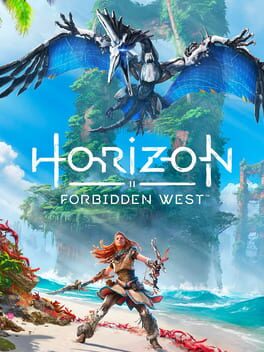
Horizon Forbidden West is a machine-combat game wearing an open-world RPG’s clothing, and the distinction matters. Guerrilla Games understood that the Tremortusk fight, the Slitherfang encounter, the moment a Stormbird enters a space Aloy is already navigating on foot, these are the load-bearing questions the sequel was built to answer. The machine roster teaches itself across sixty hours of escalating encounter design. That it also carries structural problems in its mid-section pacing and an uneven companion-narrative that does not always earn its runtime does not change the central achievement: this is an open-world action RPG that treats combat legibility as the measure of its quality, and it mostly holds.
Game Snapshot
| Developer | Guerrilla Games |
| Publisher | Sony Interactive Entertainment |
| Release Date | 18 February 2022 (PS4, PS5); 21 March 2024 (PC) |
| Platforms | PlayStation 4, PlayStation 5, PC (Windows) |
| Price | Standard: £19.99 | $29.99 Complete Edition: £29.99 | $39.99 |
| Rating | PEGI 16 | ESRB T (Teen) |
| Genre | Action role-playing game, open-world adventure |
| Length | ~25h main/~60h completionist |
| Install Size | ~60 GB (PS5)/~83 GB (PC) |
Presentation and World Design
The Forbidden West frontier is encounter-staged terrain. Each of the game’s three primary cultural regions serves a distinct combat function: the Carja highlands channel machine encounters through vertical canyon geometry that forces Aloy onto rappelling routes and cliff ledges, converting sightlines into tactical decisions before a fight begins. The Tenakth clan lands open into red sandstone plains where mid-range threats like the Stormbird and the Clawstrider require the player to manage open-space positioning without natural cover. The Utaru farmlands introduce aquatic machines in flooded lowlands, building the game’s underwater encounter vocabulary from shallow-water ambushes before the deeper oceanic sections commit to full three-dimensional combat.
The art direction does structural work here, not decorative work. Machine designs are readable at range: weak-point glow effects function as pre-combat telegraphing rather than cosmetic feedback, allowing the player to stage an approach around vulnerability data before the fight anchors. The environmental storytelling embedded in ruins and settlement layouts gives each zone a distinct history without delivering it through exposition, which is the correct method for a world the player is discovering through movement and observation rather than through cutscene.
Guerrilla Games built the world around layered exploration incentives. Climbing routes, wing-glider paths, and underwater passages create vertical and horizontal layers that each introduce distinct machine ecologies. The design philosophy is consistent: every new space teaches new combat information through its geometry before the encounter begins in earnest.

Gameplay and Combat
The combat system is a weak-point economy: the Tremortusk’s tusks are tear targets that, once stripped, remove its charging attack from the encounter vocabulary. The Slitherfang’s coil carries a freeze vulnerability that, combined with tearblast arrows, breaks its venom-spit cycle and staggers it into a punish window. The Stormbird’s wing joints are the opening the fight is built around, because once both wings are damaged, the aerial threat becomes a grounded one with a narrowed attack pattern. Guerrilla has engineered the machine roster so that studying each type is not optional preparation but the actual shape of the combat encounter.
The element-weapon interaction system earns its depth across the full runtime. Frost slows movement and amplifies physical damage from tearblast, which is the core Tremortusk sequence. Plasma builds to a detonation that creates a vulnerability window. Fire removes elemental armour on machines with layered resistances. Each new machine introduced in the game’s second and third acts teaches one new combination rather than introducing entirely separate logic, which is encounter design that respects the vocabulary already built. The system plateaus in the mid-section, roughly hours fifteen through twenty-five, where the encounter variety does not escalate proportionally to the time the game has invested in building the player’s toolkit. New machine types do not always introduce new interaction logic; some repeat existing combination patterns in different terrain.
The Valor Surge skill chain changes the combat contract in the final act. The ability to chain knockdown effects against multiple targets converts the late-game encounter geometry into something closer to sequential management than single-threat focus. That shift is a design choice, not a scaling failure, but it changes what the game is asking for in a way that is worth naming. For players who preferred the focused single-machine attention of the first fifteen hours, the late-game multi-threat staging is a different skill requirement.

Story and Characters
The story stages its ambition through the breadth of its cultural world-building and often loses the thread in the joins between those cultures. Aloy’s central mission, preventing a second HADES extinction event, is the narrative spine the game wraps three tribal encounters around. The Carja’s internal politics carry weight because the first game established their context. The Tenakth clan structure is introduced and resolved within the Forbidden West’s single playthrough, which compresses character work that needed more time. The Utaru’s relationship with the machines has genuine originality in its staging, but the companion whose arc connects Aloy to that culture, Zo, receives the least developed quest structure of the three.
Kotallo’s arc is the exception: the quest Guerrilla built around his injury and recovery earns its emotional register by routing it through the game’s combat-design language. His personal stakes connect directly to what the encounter system has been teaching the player about loss and adaptation in the machine fights. That is narrative connected to mechanical argument rather than running parallel to it.
The writing delivers its weakest work in the ensemble dialogue scenes aboard The Base. Companion characters who receive strong individual quests do not translate their character development into the group dynamic. The jokes land inconsistently and the tonal register shifts in ways that undermine scenes the game has been building toward across multiple hours of individual quest work.

Is Horizon Forbidden West Worth Buying in 2026?
The case for Horizon Forbidden West in 2026 is cleaner than it was at launch. The Complete Edition at £29.99 / $39.99 includes Burning Shores, the PS5-exclusive DLC set in the ruins of Los Angeles, adding eight to twelve hours of content built around the game’s highest-production combat encounters: the Slitherfang variant fights and the Waterwing aerial sequences are technically the most demanding encounters in the full package. At that price point against that content volume, the value proposition is straightforward for players who have not yet engaged with the game.
The question for returning players is Burning Shores’ standalone worth. The DLC commits its narrative to a new character, Seyka, whose relationship with Aloy carries more emotional weight than most of the main game’s companion work. The encounter design escalates from the base game’s ceiling: the final Burning Shores boss is staged around machine-interaction sequences that require the full weapon-element vocabulary the base game built across sixty hours. That is a correct design decision for a DLC aimed at players who have completed the main campaign. Whether it justifies a separate purchase for players who own the base game depends on their interest in the Aloy-Seyka dynamic, which is the DLC’s strongest element.
The PC version released in March 2024 holds its footing at the current price point. The port delivers the full encounter design with scalable performance options, and the additional two years of patch support mean the stability issues from launch are resolved.

Horizon Forbidden West vs Zero Dawn: Which to Play First?
Horizon Zero Dawn is the correct starting point. The first game builds the encounter-design vocabulary the sequel assumes: machine weak-point targeting, elemental-damage interaction, and the traversal-to-positioning loop that Forbidden West escalates in every region. A player who begins with Forbidden West will find the tutorial pacing abrupt because the game is teaching refinements to a system whose foundations it does not re-lay.
The narrative case for Zero Dawn first is stronger than the mechanical one. Aloy’s relationship to her own origin, the context for the Carja political structure, and the significance of HADES as a threat all carry more weight if the player has experienced them from the beginning. Forbidden West builds on those foundations in ways that are still functional without them but are more legible with them.
Zero Dawn’s Remaster, released in 2024, is the current recommended entry point on PS5 and PC. It delivers the original’s encounter design with updated visual fidelity and the same gameplay foundations. The upgrade cost from standard Zero Dawn ownership is modest. Starting there and moving to Forbidden West Complete Edition represents the most coherent encounter-design curriculum Guerrilla has assembled.
Value and Longevity
The Complete Edition at £29.99/$39.99 covers the main campaign, Burning Shores, and all post-launch updates. Main story completion sits between twenty-five and thirty hours for players following the critical path. Full completion across side quests, arena challenges, Cauldron runs, and collectible hunts extends beyond sixty hours. The side-quest structure is authored rather than procedural: Errand contracts and Clan quest lines add context to the tribal politics rather than simply extending runtime through repetition.
New Game Plus persists as an endgame target for players who want to approach the encounter design with a complete toolkit from the start. The arena challenge board provides structured combat targets outside the open world. The post-launch patch history addressed performance stability and added quality-of-life options for inventory management and fast travel frequency. The price-to-content ratio at the Complete Edition’s current pricing is among the strongest in the PS5 first-party catalogue.
The standard edition at £19.99/$29.99 remains a sound entry point for players who want to assess the base game before committing to Burning Shores. The DLC can be purchased separately thereafter. The Complete Edition is the better value for players who already know they will engage with the full package.
Technical Notes
The PS5 version offers two performance modes. Quality mode runs at a locked 30fps with 4K output and the full visual asset load. Performance mode targets 60fps with dynamic resolution scaling, holding between 1440p and 1800p during standard open-world traversal and dipping toward the lower end in heavy multi-machine combat scenarios. The machine combat design does not require consistent 60fps execution in the way that a parry-based soulslike does: the encounter timing windows are generous enough that frame-rate variation in performance mode does not produce combat failures attributable to presentation instability.
The PC port introduced scalable resolution, texture quality, shadow distance, and FSR upscaling support. Load times on SSD storage sit under five seconds on PS5. The PC version at its recommended settings delivers comparable visual output to the PS5 quality mode with the additional flexibility of higher frame-rate targets on capable hardware. The install footprint of approximately 60 GB on PS5 and 83 GB on PC requires planning on consoles with smaller SSD configurations.
Performance is stable throughout. Nothing here requires a footnote beyond those specifications.
Final Word
The Tremortusk encounter is the game in miniature: it announces its vulnerability through weak-point illumination, teaches the tusk-strip sequence through the aggression pattern of its charging attack, and rewards preparation with a punish window the player has earned by reading the information correctly. Forbidden West builds sixty hours of encounter design around that same contract across a machine roster that does not repeat its teaching logic. The mid-section pacing loses the thread for roughly ten hours, and the companion-narrative scaffolding outside Kotallo’s arc does not always hold its weight. The Complete Edition at £29.99/$39.99, with Burning Shores’ escalated encounter ceiling, is the correct version to play in 2026. Recommended for players who want open-world action RPG combat that treats study as the core skill.
8.8
Great
SpawningPoint Verdict
Review summary
Horizon Forbidden West is an open-world action RPG whose machine-combat design earns the sequel billing. The Tremortusk tusk-strip sequence, the Slitherfang Frost-and-Tear interaction, and the Stormbird wing-joint encounter are the game's argument in concentrated form: the encounter design teaches before it asks. The three tribal regions of the Forbidden West frontier, Tenakth clan lands, Carja highlands, and Utaru farmlands, stage distinct combat ecologies that prevent the machine roster from settling into repetition. Mid-section pacing loses the escalation thread for approximately ten hours, and the companion narrative outside Kotallo's arc does not consistently match the encounter design's standard. The Complete Edition at £29.99 / $39.99 with Burning Shores is the correct version to play in 2026.


