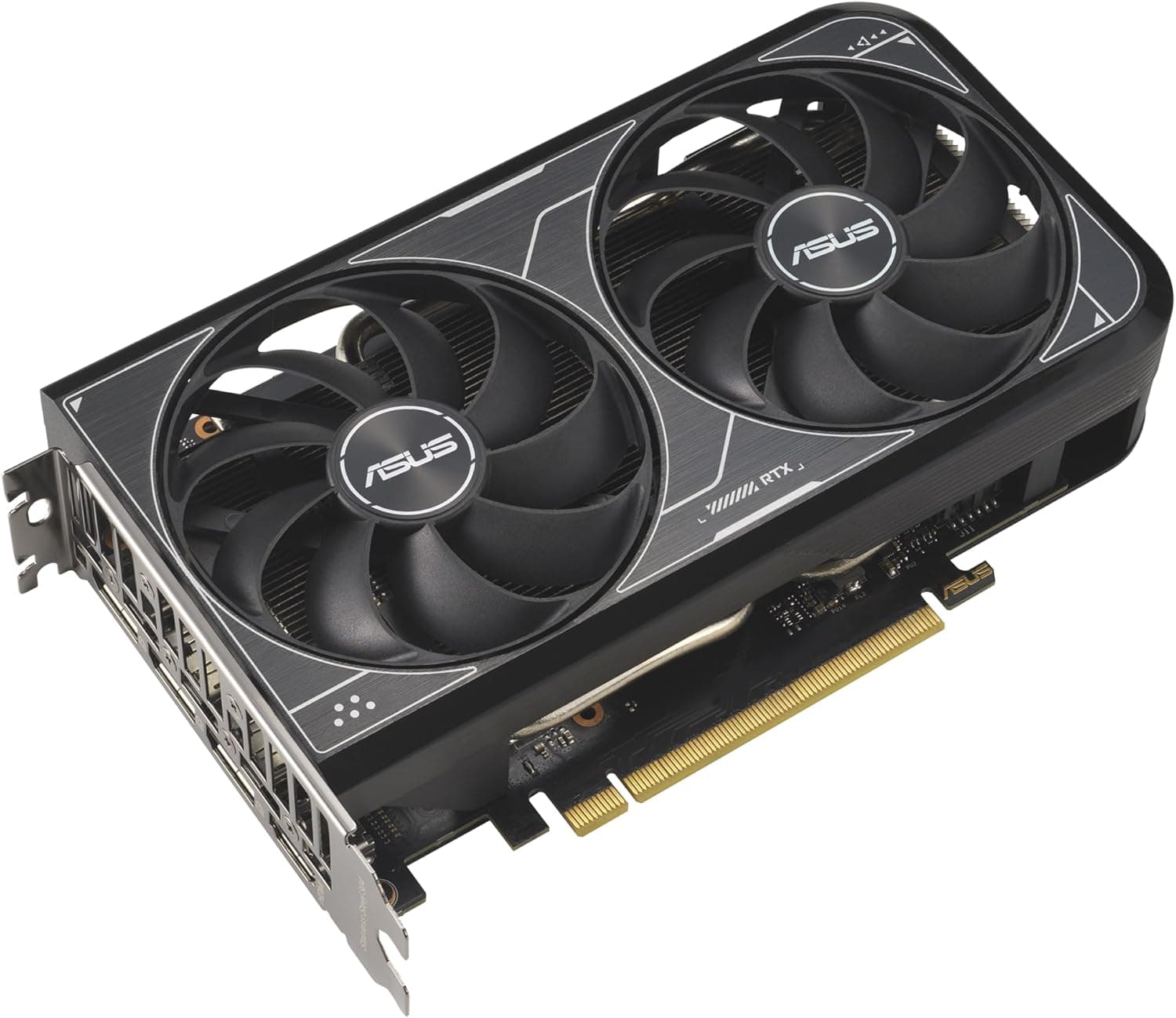
Steam Deck OLED
AvailableSafe
For players who need a device now and value the current SteamOS baseline.
- available
- Now
- screen
- OLED
Every few months, a new rumour about the Steam Deck 2 release date circulates, and every few months, people ask whether to hold off buying a Steam Deck OLED and wait for whatever is coming next.

Every few months, a new rumour about the Steam Deck 2 release date circulates, and every few months, people ask whether to hold off buying a Steam Deck OLED and wait for whatever is coming next. The honest answer, based on what Valve has actually said on record across three years of public statements, is that nothing is imminent. Valve has been unusually transparent about its own timeline, and the consistent message across multiple senior staff is that the Steam Deck 2 will not arrive until AMD’s silicon roadmap produces a chip capable of a genuine generational leap without raising the price or destroying the battery life. Reading that roadmap carefully, the realistic Steam Deck 2 window is 2027 at earliest, with 2028 a more plausible target. If you are sitting in 2026 deciding whether to buy a Steam Deck OLED or wait, this piece is for you.

| Signal | Status | Buyer meaning |
|---|---|---|
| Valve comments | Confirmed posture | No rush |
| Silicon roadmap | Watch item | Sets window |
| Steam Frame | Related hardware | Not Deck 2 |
Valve does not do traditional hardware announce cycles. There is no Steam Deck 2 keynote on a calendar. What exists is a trail of on-record statements from the people responsible for the hardware, spread across interviews and public appearances between 2023 and 2025, and those statements are unusually coherent.
Pierre-Loup Griffais, one of the Steam Deck’s designers, was direct in June 2023: “It’s gonna be a couple years at least before we think it’s possible.” That was three years ago from today, which means the “couple of years” window he described starts landing around late 2025 to mid-2026. Griffais did not say the device would arrive in that window; he said the possibility of a meaningful device might exist in that window. The distinction matters.
Lawrence Yang, the other primary Steam Deck designer, expanded on that in a published interview in October 2024: “We’re not going to rush it. The Steam Deck 2 will arrive when the silicon makes a meaningful generational leap that doesn’t sacrifice battery life or price.” That sentence contains three simultaneous criteria: the silicon leap must be meaningful, it must not cost more to run on battery, and it must not push the retail price into a range that breaks the Deck’s positioning. Meeting all three at once is a harder target than it reads.
Gabe Newell reinforced the same posture during the December 2024 Steam Awards stream. His framing was brief: “We’re working on it. Don’t expect anything imminent.” Brief is useful here. It confirms existence and rules out the near term.
The clearest hard ruling came from a Valve blog post in March 2025, which explicitly excluded both a 2025 and an early 2026 launch. The blog post did not specify when; it closed off the near-term window.
Read together, these statements establish one position consistently: the Steam Deck 2 is a real project, it is not coming soon, and the trigger condition is a silicon milestone rather than a calendar target.
AMD’s APU roadmap is the external clock that Valve is waiting on, and reading it gives a clearer picture of when that milestone could arrive than any rumour does.
The original Steam Deck used a custom Valve-AMD APU called Van Gogh: Zen 2 cores, RDNA 2 graphics, 7nm. When the Steam Deck OLED launched in November 2023, Valve upgraded to Aerith Plus, a 6nm refresh of the same Zen 2 plus RDNA 2 architecture. The improvement was primarily efficiency, which is why the OLED battery is better than the LCD’s, and not raw performance. The OLED is not a generational leap. Valve said as much at launch.
The AMD chips that have shipped since then have moved the category forward, but not necessarily in the direction Valve needs. Phoenix (Zen 4 plus RDNA 3, 4nm) shipped in 2023 and powered the first ROG Ally and the Legion Go. Strix Point (Zen 5 plus RDNA 3.5, 4nm) arrived in 2024, improving efficiency but not transforming the GPU performance ceiling. Strix Halo followed in 2025: still Zen 5 and RDNA 3.5, but with a significantly expanded 40 compute unit GPU die that finally gives a portable chip something close to discrete GPU performance. Strix Halo is genuinely exciting for the category, but its power draw characteristics under load make it a stretch for the Steam Deck’s price and battery model without careful binning.
The chip AMD has in the roadmap that matches Valve’s three criteria most closely is Medusa Halo, the Strix Halo successor. Medusa Halo is expected to bring Zen 6 architecture and RDNA 4 graphics, a genuine two-generation compute and graphics jump from what the Steam Deck OLED is running today. Sampling is rumoured for 2026 to 2027, with retail silicon availability expected in 2027 to 2028.
A Steam Deck 2 built around Medusa Halo, or a mobile derivative of it tuned for Valve’s TDP and thermal targets, would clear Yang’s bar: meaningful generational leap, manageable power draw, defensible price. No chip currently shipping clears that bar convincingly while maintaining what the Steam Deck costs. Medusa Halo is the plausible answer, and its timeline is 2027 to 2028.

The Steam Deck’s price and battery constraints are not marketing copy. They are structural to what the device is, and Valve has held both lines even when competitors have shipped faster chips at higher power budgets.
The original Steam Deck launched at £349/$399 in the UK, which positioned it below a mid-range PC component purchase and above a traditional console. The Steam Deck OLED sits at £479/$549 for the 512 GB model and £569/$649 for the 1 TB. Valve has held this band deliberately. Devices like the ROG Ally X retail at £699 to £799 and compete on raw performance; the Steam Deck competes on price, software, and usability. A Steam Deck 2 that arrives at £699 to maintain the GPU leap is not a Steam Deck 2. It is a different category of device.
The battery ceiling is the other hard constraint. The Steam Deck OLED carries a 50 Wh battery and delivers three to eight hours depending on TDP and workload, which is the range that covers a real commute or an evening session without needing a cable. Every watt of additional TDP compresses that range. Strix Halo at full performance can exceed 50W in sustained workloads. Running that inside a 50 Wh battery with Valve’s thermal targets is not a design exercise that ends with the product Yang described. A mobile-binned variant with tighter TDP headroom is a different proposition, and that kind of silicon binning adds time to the production pipeline.
The lineage from Steam Deck 1 to Steam Deck OLED to Steam Deck 2 is the clearest signal of how Valve thinks about this. The OLED was a measured efficiency refresh, not a performance leap, delivered eighteen months after launch. If Valve were willing to trade performance targets for speed, the OLED would have used Phoenix. It used Aerith Plus instead. The next step is waiting for a chip that passes the test on all three axes simultaneously.
The practical figure for a 2026 buyer is this: the Steam Deck OLED purchased today is a two-to-three year device before the Steam Deck 2 becomes a realistic alternative.
At a 2027 earliest and 2028 more plausible window, a Steam Deck OLED bought mid-2026 has at least eighteen months before the Steam Deck 2 arrives, and probably closer to two years. In consumer electronics terms, that is a full device cycle. The Steam Deck OLED launched in November 2023; a purchase in mid-2026 is thirty months into the device’s life. SteamOS will continue to receive updates across that period regardless of the Steam Deck 2’s release, because Valve’s platform model ties software support to the ecosystem rather than the hardware generation. Valve has committed to continued support for current Steam Deck hardware through at least 2028, which means a mid-2026 OLED purchase has confirmed software support for at minimum two years after the Steam Deck 2ships.
Resale value will decline when the Steam Deck 2 launches, as it does with any hardware generation transition. The Steam Deck library transfers completely, because it is a Steam library. No game you own on an OLED becomes unavailable on a Steam Deck 2 at launch.
The tuning investment is the consideration that cuts the other way. If you have spent time configuring a Decky Loader setup, per-game TDP profiles via SimpleDeckyTDP, and CryoUtilities settings tuned to your most-played games, that configuration does not transfer automatically. Building an equivalent loadout on the Steam Deck 2 from scratch is an afternoon, not a weekend, but it is time you spend again. Whether that matters depends on how much time you have already put in and how much the next-generation performance is worth to you.
The number to hold: two to three years from a mid-2026 purchase. If you want a working device now and are happy to use it for two to three years before considering an upgrade, the Steam Deck OLED is the right choice today. If you are not willing to wait that long for the next generation, you are probably not in a position to wait at all.
AvailableSafe
For players who need a device now and value the current SteamOS baseline.
WatchUnconfirmed
For buyers who can wait for a meaningful silicon jump rather than a rumor cycle.
DifferentVR route
Important for Valve hardware context, but not a handheld replacement.
Buy the Steam Deck OLED now if you want a device that works today and you are comfortable using it for eighteen months or more. The OLED covers the real use cases: the commute, the evening session, the cosy indie back catalogue, the AAA title at 30 fps in performance mode. Set the Frame Rate Limit to 40 in the Quick Access Menu and the TDP to 10W for the games that handle 40 well. Hades II and Hollow Knight will run at 60 fps at 6W and cover a return train journey with battery to spare. You are buying a finished, stable product with a mature software ecosystem and a plugin scene that has had three years to settle. The Steam Deck OLED reviewed by SpawningPoint at [/article/steam-deck-oled-review-2026] is the version worth owning; the one-year retrospective at [/article/steam-deck-oled-one-year-on] covers how that assessment has held up under real use.
Wait for the Steam Deck 2 if you genuinely can hold off eighteen to thirty or more months and you want next-generation silicon above everything else. The Steam Deck 2 will be a meaningful upgrade. The question is whether you can sit out that window without a device. If you are currently using a smartphone or a PC for gaming, the wait is more viable. If you are a Steam Deck owner with a working device already, the wait is easy. If you have neither and want to play portable games in 2026, the wait has a real cost.
Buy the Steam Deck OLED now and plan to upgrade if you expect to want next-generation performance when it arrives but you also want a device in 2026. The OLED becomes the carry device, the cosy-title machine, the always-available option you take on trains. The Steam Deck 2 becomes the AAA device when it arrives. At the price points Valve is likely to target, running two Steam Deck generations in the same household is plausible, and the library is fully shared between them. This is the two-device household pattern, and it works cleanly with Valve’s platform model because there is no licence separation between devices.
Ignore most of the rumour traffic. The Steam Deck 2 release date speculation cycle generates a lot of noise from supply chain reports, patent filings, and AMD roadmap slides that are frequently misread. The signal-to-noise ratio is low, and the false-positive rate from secondary sources has been high enough across the past two years that acting on any single rumour would have been a mistake.
The sources worth monitoring are three. First, Valve’s own channels: the Steam blog at store.steampowered.com/steamdeck, Valve’s YouTube channel, and the Steam News Hub. When Valve is ready to say something, they say it directly. The blog post that ruled out a 2025 and early 2026 launch was a direct Valve communication. Valve does not do hints or teases in the traditional marketing sense.
Second, GDC and major developer conferences. The Steam Deck’s original announcement and the OLED launch were both preceded by developer tooling updates and SteamOS SDK changes visible in the developer forums. If Valve is preparing hardware, the developer ecosystem usually gets signals before the consumer side does.
Third, AMD’s silicon announcements. When Medusa Halo or its mobile derivative has a confirmed sampling or tape-out milestone, the Steam Deck 2 window closes from a two-to-three year estimate into a twelve-to-eighteen month one. AMD’s Financial Analyst Days and product roadmap presentations are the primary venue for that kind of milestone.

One piece of speculation worth addressing directly: the Steam Frame is a separate Valve hardware project, not an alternative name for the Steam Deck 2. The Steam Frame refers to Valve’s VR handheld platform, a different device category targeting the spatial computing market rather than the portable PC gaming market. If you have seen Steam Frame mentioned alongside Steam Deck 2 in the same article, the writer is conflating two distinct product tracks.
The Steam Deck 2 is a portable gaming PC in the lineage of the original Deck and the OLED. The Steam Frame is Valve’s answer to the VR handheld market, which is a different form factor with different silicon requirements, a different use case, and a different buyer. They are parallel product lines running on parallel timelines with different teams and different silicon targets. A Steam Frame announcement does not tell you anything about the Steam Deck 2’s schedule, and vice versa.
– Confirmed Valve Statements: 9.0 out of 10 (Valve has been unusually transparent across three years of on-record statements; the directional message is consistent and clear, even without a date)
– Silicon-Roadmap Reading: 8.0 out of 10 (Medusa Halo is the plausible target, but the mobile-binned variant’s specific TDP and cost characteristics are unconfirmed; the window is real, the spec is inference)
– Buyer-Routing Clarity: 9.0 out of 10 (three routes cover the realistic decision space; the two-to-three year figure is honest and defensible given the available evidence)
– Verdict: Plan around 2027 to 2028; buy the Steam Deck OLED if you want a device in 2026.
The Steam Deck 2 is coming. Valve has said so on record, across three years and multiple senior staff, and every statement has pointed in the same direction: not yet, not until the silicon warrants it. The AMD roadmap gives a plausible window of 2027 to 2028, and the evidence points toward Medusa Halo or a mobile derivative as the chip that finally meets Valve’s three simultaneous criteria. Until that window arrives, the Steam Deck OLED is not a device you are settling for. It is a finished, stable, well-supported product with a two-to-three year runway ahead of it. If you need a portable gaming device in 2026, that is the answer today. The Steam Deck 2 answer comes when Valve tells you it does.
Valve has not announced a release date, and on-record statements from Pierre-Loup Griffais (June 2023), Lawrence Yang (October 2024), and Gabe Newell (December 2024) all point away from anything imminent. A March 2025 Valve blog post explicitly ruled out a 2025 or early 2026 launch. Reading the AMD silicon roadmap alongside those statements, 2027 is the earliest realistic window and 2028 is more plausible. The trigger is a silicon milestone, not a calendar target.
A Steam Deck OLED purchased in mid-2026 is a two-to-three year device before the Steam Deck 2 becomes a realistic alternative. Valve has confirmed software support for current hardware through at least 2028, so the OLED is not a device you are left stranded with. If you want a working portable gaming device in 2026 and you are prepared to use it for eighteen months or more, buy the OLED. If you are waiting specifically for next-generation silicon and can sit out eighteen to thirty or more months without a device, the wait is viable.
Nothing is confirmed. The most plausible candidate based on the AMD roadmap and Valve's stated criteria (meaningful generational leap, no battery-life sacrifice, no price ceiling breach) is Medusa Halo, the successor to Strix Halo, expected to carry Zen 6 architecture and RDNA 4 graphics. A mobile-binned variant tuned to Valve's TDP targets is more likely than a full desktop-class implementation. Medusa Halo retail silicon is expected in the 2027 to 2028 window.
Yes. Valve has committed to continued support for current Steam Deck hardware through at least 2028. SteamOS updates, game compatibility work, and platform maintenance are tied to the ecosystem rather than the hardware generation. Your Steam library transfers completely to the Steam Deck 2 when you eventually upgrade; no game purchased on the OLED becomes unavailable on the next device.
No. The Steam Frame is a separate Valve hardware project targeting the VR handheld market, not the portable PC gaming market. It is a different form factor, a different use case, and a different buyer. The two products run on parallel development tracks. A Steam Frame announcement or timeline carries no information about the Steam Deck 2's schedule.
Every few months, a new rumour about the Steam Deck 2 release date circulates, and every few months, people ask whether to hold off buying a Steam Deck OLED and wait for whatever is coming next.