The thing Phantom Blade Zero has been doing across eighteen months of showcase appearances is something the soulslike-adjacent genre rarely manages in pre-release footage: it has been teaching its combat system in public, one demonstration at a time, in a way that makes the system legible before a single player has touched the final build. That is unusual. Most action game trailers stage spectacle. Phantom Blade Zero stages encounters. Whether the full release arrives in 2026 or slips into 2027, the question worth tracking is not whether the release date window holds. It is whether the combat logic visible across those showcases survives contact with the full game.
S-Game has not announced a release date. What it has announced is the shape of the game.
What S-Game Has Actually Confirmed
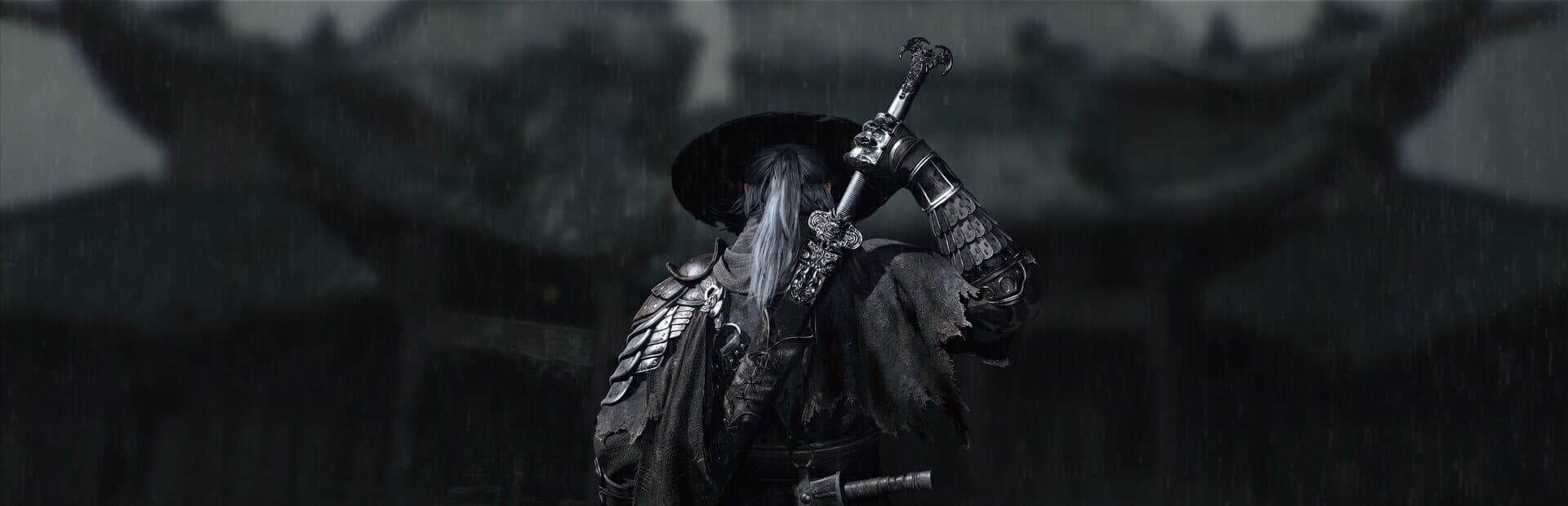
The confirmed facts are these. Phantom Blade Zero is a single-player action-RPG built around a wuxia setting drawn from the Phantom Blade mobile series, though S-Game has been consistent that the two exist in the same universe rather than the same continuity. The protagonist is Argent, a member of the Soul organisation who wakes after being condemned to death and spends the game investigating who ordered the execution. The premise is structurally familiar as a vehicle for building a world through encounters, which is the correct use of a revenge narrative in an action game.
The game is planned for PS5 and PC. Console exclusivity for PlayStation has been indicated for a timed period, with no confirmed duration. No Xbox release has been announced. A playable demo was made available to players at Summer Game Fest 2024 and through Sony-adjacent showcase events, which is the most substantive public communication S-Game has made about where the game sits in its development cycle. Demos at that stage typically represent vertical-slice builds, not final combat tuning, but the design decisions visible in the demo are consistent enough across multiple public showcases to treat them as representative of the intended system.
No price has been confirmed. No collector’s edition or pre-order programme has been announced as of mid-2026. S-Game has not indicated a specific launch quarter. The 2026-2027 window they have communicated is the extent of the public commitment.

The Demo Showcases: What the Combat Argues
The combat demonstration that has circulated most widely shows Argent at the centre of an encounter economy built around three interdependent elements: a parry window, a weapon-stance switching system, and a posture-adjacent break mechanic. These are not cosmetically different from the soulslike grammar the audience already knows. What the demo argues is that their sequencing has been thought about.
The parry window appears to be tight, calibrated toward Sekiro’s end of the genre rather than Elden Ring’s, which carries a specific design implication. A tight parry window requires the game to have taught the player the enemy’s attack tells at a sufficient level of clarity before the fight begins asking for perfect parries. The showcase footage shows enemy animations that are legible rather than spectacular: the overhead tells differently from the sweep, the sweep telegraphs with body-weight transfer before the swing arc, the feint has a distinct recovery animation. This is the right architecture. Whether the final game teaches that vocabulary at the correct pace is a question the demo cannot fully answer, but the vocabulary exists and it is readable.
The weapon-stance system allows Argent to switch between combat modes mid-encounter, with different stances appearing to carry different parry thresholds and attack patterns. This is the interesting design question in the combat showcase. A stance system that functions as a build variable, selected before an encounter and fixed during it, is a different design choice from a stance system that functions as a mid-fight resource, where switching is part of the combat loop. The demo suggests the latter, which is the harder system to balance but the more satisfying one to execute if it works. The moment a stance switch recontextualises a fight that was going badly is the moment that system earns its existence.
The break mechanic, which appears to interrupt enemy attack cycles when the timing is correct, is doing a specific structural job: it creates an opening for burst damage that the player can plan for rather than rely on the enemy to deliver accidentally. That is design thinking about player agency within the encounter, and it is the correct problem to solve in a parry-heavy system.

Sekiro vs Dark Souls Pacing: Where Phantom Blade Zero Sits
The framing question that follows Phantom Blade Zero through every showcase comparison is whether it is closer to Sekiro or closer to Dark Souls. That is partly a pacing question and partly a design-philosophy question, and Phantom Blade Zero appears to have answered it clearly. It is not a stamina-managed combat system. The game does not appear to have a stamina bar governing attack chains in the Dark Souls tradition. What it has is a posture economy of the Sekiro type: the pressure is on both sides of the fight, both player and enemy are building toward a break state, and the optimal play is aggression within the parry window rather than evasion and spacing.
That choice has structural consequences. Sekiro-paced combat tends to require more precise enemy telegraph reading and rewards players who have internalised the specific tells of each encounter. Dark Souls-paced combat creates a different kind of space: recovery and spacing and stamina management become the analytical vocabulary rather than parry timing. Phantom Blade Zero, if the showcase footage represents the final system, will be asking its player to learn tells, not to manage stamina. That is a combat philosophy commitment, not just a cosmetic difference.
It is also a philosophy with a failure mode. Sekiro-paced combat that does not graduate its teaching correctly produces a wall where a learner arrives at an encounter whose attack vocabulary they have not been prepared for. The showcase suggests S-Game understands this risk: the enemy design in the visible encounters is notably readable, with clear visual differentiation between attack types. Whether that continues across a full game’s enemy roster is the verification the demo cannot provide.
The weapon variety in the showcase extends past what Sekiro offers. Multiple weapon types with distinct move sets suggest a system where the player is building an encounter approach from a larger vocabulary than a single sword. If those weapon types are balanced against each other without collapsing to a single optimal stance, the combat has room to develop a genuine range of encounter strategies. That is the right ambition.
The Wuxia Setting and What It Brings
The wuxia setting is not decorative. In the context of a parry-heavy action game, the genre’s established vocabulary of exaggerated speed, aerial combat, weapon-stance philosophy, and choreographed exchange between equally matched opponents is load-bearing design language. Phantom Blade Zero is not translating a European fantasy combat grammar into Chinese aesthetics. It is building on a wuxia action-RPG lineage where the combat philosophy and the aesthetic register were always the same conversation.
That matters for what the game can legitimately ask of its encounter design. A fight where both combatants move at the stylised speed that wuxia establishes has a different parry-window logic than a fight grounded in slower, weight-simulated European sword combat. The tells work differently, the spatial language of the encounter is different, and the satisfaction of a successful parry sequence is a different thing. S-Game is building in a setting where the genre conventions support the combat system rather than competing with it.
The Phantom Blade mobile series established a visual and tonal vocabulary that S-Game is drawing on without treating it as a constraint. The architecture visible in the showcase footage, the scale of the environmental design, the enemy variety, the boss staging, none of it reads as a mobile game expanded to a console frame. It reads as a team that has spent years developing a setting and is now using it for the first time at a fidelity level the combat system requires.
The 2026-2027 Window
S-Game has not published a specific release date. The 2026-2027 window they have communicated publicly represents a development stage, not a marketing calendar. The playable demo presence at Summer Game Fest 2024 and the consistency of the showcase appearances across major Sony-adjacent events suggest a game that was substantively playable from at least mid-2024, which places the 2026 end of the window within a plausible development timeline if the team is targeting a polished final build rather than a soft launch.
The factors that would push the release toward late 2026 are straightforward: if S-Game has the combat tuning and performance targets where they want them, the remaining work is primarily level completion, enemy variety, and platform certification. None of those are unpredictable in the way that core systems work is unpredictable. The factors that would push the release into 2027 are also predictable: combat rebalancing after demo feedback, platform-performance issues on PS5 that require a second optimisation pass, or a release schedule decision on Sony’s side to space the launch from competing titles in the same window.
What the current evidence does not support is treating the window as in doubt. The game is clearly in a late development phase. The question is which quarter, not which year. Placing firm confidence in a 2026 holiday window requires treating the demo and showcase consistency as evidence of a near-complete build, which is a reasonable inference but not a confirmed one. The more defensible position is that 2026 is the target and 2027 is the fallback, and the release date announcement when it arrives will probably not surprise the people who have been watching the showcases closely.
How S-Game Could Get the Launch Wrong
The specific failure mode that the combat showcase raises is the parry-window pacing problem. A tight parry window in an early encounter without sufficient telegraph teaching is not a difficulty setting; it is an information failure, and information failures produce frustration rather than learning. The demo encounters visible in public footage are readable. The question is whether S-Game has maintained that readability through whatever the game presents as its mid-section difficulty escalation.
The weapon-stance switching system introduces a second potential failure mode. If the system creates a dominant strategy that makes other stance choices suboptimal against most encounters, the combat variety the showcase implies is not actually available to the player in practice. The showcase suggests this risk has been considered, with different weapon types appearing to have different effectiveness profiles against different enemy types. If that is a structural mechanic rather than a soft suggestion, it addresses the problem. If it is a soft suggestion, the combat will simplify in the direction of whatever the player finds most comfortable.
A third risk is specific to the setting and the team’s development history. S-Game’s background is in mobile games with established combat loops calibrated for short session play. A twenty-to-thirty-hour action-RPG with a Sekiro-paced combat system and a sustained difficulty curve requires a different kind of encounter-design thinking than a mobile game combat system. The year-one retrospective on Khazan is a useful reference point for what that calibration looks like when a soulslike launch navigates the difficulty curve correctly. The showcase suggests S-Game understands this. The final game will confirm it or it will not.

What to Watch
The release date announcement will not resolve the interesting questions about Phantom Blade Zero. The questions worth tracking are: whether the combat pacing holds across the full difficulty curve, whether the weapon-stance system retains strategic variety in the late game, and whether S-Game has addressed the performance targets on PS5 that the demo suggested were still being worked on.
If the launch trailer includes footage from encounters beyond the opening hours, that footage will be the most informative public communication S-Game makes before release. The early encounters shown in the showcase are optimised for demonstration. The mid-game encounters will show whether the teaching curve survives the point at which the game assumes the player has internalised the combat vocabulary.
Watch also for the structure of the review period, if there is one. A game that S-Game is confident in tends to receive a generous review window. A game where the team has concerns about the pacing or the difficulty calibration tends to receive a short one, because the problems that surface in a long review window are the problems that a long play session reveals.
The combat system as shown is built on correct principles. The release date, when it comes, will narrow the remaining questions. The final game will answer them.
Final Word
Phantom Blade Zero has spent its pre-release period doing the thing a parry-heavy action game should do: teaching its vocabulary before asking the audience to trust it. The combat showcases read as design communication, not spectacle, and that is a meaningful signal about where S-Game’s priorities sit. A game that stages legible encounters in its public-facing demonstrations has usually solved the core design problem. Whether it has maintained that legibility across a full game’s worth of escalation is the question the release will answer.
The 2026-2027 window is plausible and the demo evidence points toward the closer end of it. The wuxia setting is load-bearing rather than decorative, the combat philosophy is clearly articulated, and the team has demonstrated sustained development discipline across a long showcase period. If the parry window teaches correctly and the stance system stays strategically varied, Phantom Blade Zero has the structure to be the most interesting action-RPG release in its window.
That verdict is provisional. The contract has two sides, and only the final build confirms whether S-Game has held theirs.
FAQ
What is the Phantom Blade Zero release date?
S-Game has not confirmed a specific release date for Phantom Blade Zero. The studio has communicated a 2026-2027 launch window, with the game confirmed for PS5 and PC. Showcase appearances through 2024 and 2025 suggest the title is in an advanced development phase, with the 2026 end of the window representing the current working target based on publicly available information. An official announcement has not been made as of mid-2026.
Is Phantom Blade Zero coming to PS5?
Yes. Phantom Blade Zero is confirmed for PS5, and the majority of the public showcase material has been presented in partnership with Sony at PlayStation-adjacent events including Summer Game Fest. A timed console exclusivity arrangement for PlayStation has been indicated, though S-Game has not confirmed the duration. A PC release is also confirmed. No Xbox version has been announced.
What kind of combat does Phantom Blade Zero have?
Phantom Blade Zero uses a parry-centred combat system with weapon-stance switching and a posture-break mechanic. The pacing sits closer to Sekiro than to Dark Souls: the system rewards reading enemy attack telegraphs and timing parries within a tight window rather than managing stamina through spacing and evasion. The weapon-stance system allows switching between combat modes mid-encounter, with different stances carrying different attack patterns and apparent effectiveness against different enemy types. A playable demo was available at Summer Game Fest 2024.
Is Phantom Blade Zero related to the mobile game Phantom Blade?
Phantom Blade Zero is set in the same universe as the Phantom Blade mobile series from S-Game, though S-Game has indicated the two games share a world rather than a direct narrative continuity. Players coming to the console game without mobile series background will not encounter story prerequisites. The setting and visual vocabulary carry across from the mobile series, but Phantom Blade Zero is designed as a standalone experience.
Will there be a Phantom Blade Zero demo before launch?
A playable vertical-slice demo was available to players at Summer Game Fest 2024 and through Sony showcase events in the period since. Whether S-Game plans to release a public demo ahead of the final launch has not been confirmed. The studio's approach to the game's public showcase period has been consistent with a team that is confident in the combat system it is demonstrating, which makes a pre-launch demo more likely than not, though no announcement has been made.