
Lies of P is not valuable because it is difficult. It is valuable because its difficulty is taught through readable attack patterns, escalating boss phases, and a parry economy that gives failure a purpose. Krat remains effective when its world design turns sightlines and civic machinery into encounter information. The story is strongest when it lets systems carry the question of obedience before dialogue names it. The design verdict is clear: Lies of P remains one of the cleaner modern examples of difficulty earning its cost.
Game Snapshot
| Developer | Round8 Studio/Neowiz |
| Publisher | Neowiz |
| Release Date | 18 September 2023 (PC, Mac, Xbox One, Xbox Series X/S); 19 September 2023 (PS4, PS5) |
| Platforms | PC (Windows), macOS, Xbox One, Xbox Series X/S, PlayStation 4, PlayStation 5 |
| Price | Check price on Amazon |
| Rating | PEGI 16/ESRB T (Teen) |
| Genre | Soulslike action RPG |
| Length | Approximately 25-30 hours (main story); 35-40 hours (full completion with optional content) |
| Install Size | Approximately 50 GB (PC; per published system requirements) |
Presentation and World Design
Krat is strongest when its art direction becomes encounter information. The streets are arranged as narrow sightline problems: alleys hold enemies just outside the first readable angle, staircases stage overhead attacks from above the camera line, and workshop interiors compress movement before the next patrol route can be read. The city teaches distrust.
The Belle Epoque machinery has weight in the level geometry. Automata stand in places that explain labour, security, and civic collapse without requiring a lore catalogue, and the hotel works because it is a stable hub against which the streets can become more hostile. The route is part of the argument: spatial memory is not decoration when the game keeps asking the player to act on it.
There are weaker stretches where corridors repeat their lighting grammar too neatly, but the major districts keep their function. The atmosphere is structural.

Gameplay and Combat
The combat is the reason this retrospective still matters. Lies of P asks the player to learn fixed-cadence defence, then keeps changing the question without changing the rule. Perfect Guard is not a style option: blocking, guard regain, weapon durability, stagger pressure, and Fatal Attack timing all orbit the same exchange.
King of Puppets is the first proof. The first phase teaches large puppet movement through readable sweeps and recovery gaps; the second narrows the space and asks whether the player can transfer that reading to Romeo’s faster strings. The same vocabulary remains true and is now slightly wrong. Laxasia is cleaner still: phase one teaches shielded commitment, while phase two reintroduces the contract at speed and adds lightning returns that catch early celebration.
This is where Lies of P differs from the games discussed in other retrospectives. Khazan treats parry as economy; Lies of P treats it as ritual. Wuchang depends more on patch-shaped recalibration. Lies of P has the cleaner foundation, even when a few elite enemies blur teaching into withholding.
The encounter earns it.
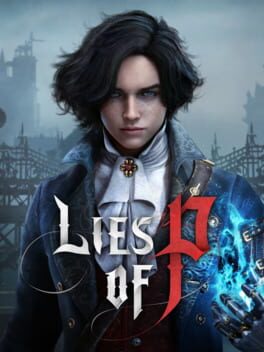
Lies of P review 2026: one year on, the contract still holds
7.8/10
Buy on Amazon
Price and availability from Amazon
Story and Characters
Lies of P works best when the story is staged through systems. The puppet frenzy matters because the player spends the whole game fighting bodies built for service, labour, theatre, policing, and spectacle. Every district turns function into violence, which gives the fairy-tale frame a harder edge than the premise suggests.
P is thin by design, which helps. The player reads him through choices, animations, and the gradual accumulation of human gestures rather than through confession. Geppetto is more direct, sometimes too direct, but the late-game argument lands because the mechanics have already built the question of obedience.
The comparison point is useful: other retrospectives looked at how party combat carries character argument. Lies of P is narrower, but the staging is cleaner. Its characters work when the encounter design has prepared the moral shape before the dialogue names it.

Value and Longevity
Value here is not hours per pound. It is encounter density. Lies of P has enough optional routes, weapon combinations, Legion Arm choices, and New Game Plus pressure to make a second run meaningful. The game changes less than the player does, which is the point.
That makes the 2026 question cleaner than a normal buying guide. A player asking whether Lies of P is worth it in 2026 should look first at appetite for repeated encounter study. This is not a broad RPG built around build variety at the scale discussed in other retrospectives. It is a tighter combat document. The value holds if the player wants to learn the game back.
Technical Notes
The relevant question is whether frame-time holds in boss arenas where parry timing and camera readability are load-bearing. Instability during Laxasia, Nameless Puppet, or Romeo would affect the combat contract directly. Audio timing also matters, because impact cues and guard feedback teach the response window. Performance is broadly stable across PC and console platforms on current hardware; the game has received post-launch patches addressing earlier frame-pacing concerns on console.
Final Word
Laxasia remains the image that matters. The fight is not strong because clearing it proves anything about the player. It is strong because everything required to read it has been placed earlier, then reassembled under pressure at the correct moment. Lies of P earns the cost. Its weakest encounters sometimes hold a delay past useful signalling, but the central combat contract survives. Recommended to players who want a soulslike’s old question answered plainly: the difficulty is not the virtue. The staging is.
Is Lies of P worth playing in 2026?
Lies of P is worth playing in 2026 if the player wants a compact soulslike built around encounter study rather than exploration sprawl. Its systems remain coherent because the combat has a clear centre: parry timing, guard regain, stagger pressure, and weapon commitment all serve the same exchange. That makes the answer practical rather than nostalgic.
Is Lies of P good for beginners to soulslikes?
Lies of P is calibrated to a player willing to build vocabulary through repetition, not necessarily to a player already fluent in the genre. The opening is readable, but it expects attention. Summons, build choices, and defensive play can lower the cost of learning without changing the encounter structure. The question is patience, not credentials.
How does Lies of P compare with other soulslikes?
Lies of P is more ritualised than many genre peers: it asks for precise response to precise timing and then escalates that demand through boss design. The distinction is structural, not atmospheric. Its best fights are less about endurance than about whether the player has read the attack grammar correctly. This is grammar, not scale.
Does Lies of P have meaningful New Game Plus value?
New Game Plus pressure and optional routes make a second run meaningful. The game changes less than the player does: weapon combinations, Legion Arm choices, and the accumulated vocabulary from the first pass turn the same encounters into a confirmation test rather than a new problem.
Is the camera a consistent problem?
The camera is load-bearing in boss arenas where parry timing and recovery windows are the contract. Instability during Laxasia or Romeo would affect the combat contract directly. Where the camera holds the body cleanly, the fight is honest. Where it does not, the contract narrows.