REVIEW
8.9· Great
Final Fantasy Tactics The Ivalice Chronicles Review 2026: Matsuno’s Masterpiece Restored

Game Snapshot
| Field | Detail |
| Developer | Square Enix |
| Publisher | Square Enix |
| Release Date | 30 September 2025 |
| Platforms | PS5/PS4/Switch/Switch 2 /PC (Steam) |
| Price | £39.99 | $49.99 |
| Rating | PEGI 12 | ESRB T (Teen) |
| Genre | Tactical RPG |
| Length | ~40-50h main story/80h+ completionist |
| Install Size | ~8 GB |
The job system in Final Fantasy Tactics does not teach itself through failure. It teaches itself through deliberate wrong choices, sustained long enough that the player understands what was miscalibrated and why. That is the correct method for a game whose strategic depth exceeds almost every tactical RPG released in the twenty-eight years since the original. The Ivalice Chronicles delivers that system intact, with voiced cutscenes, a modernised interface, and sufficient visual care that the argument holds on current hardware without apology.
Final Fantasy Tactics The Ivalice Chronicles
8.9/10
Buy on Amazon
Price and availability from Amazon
Presentation and World Design
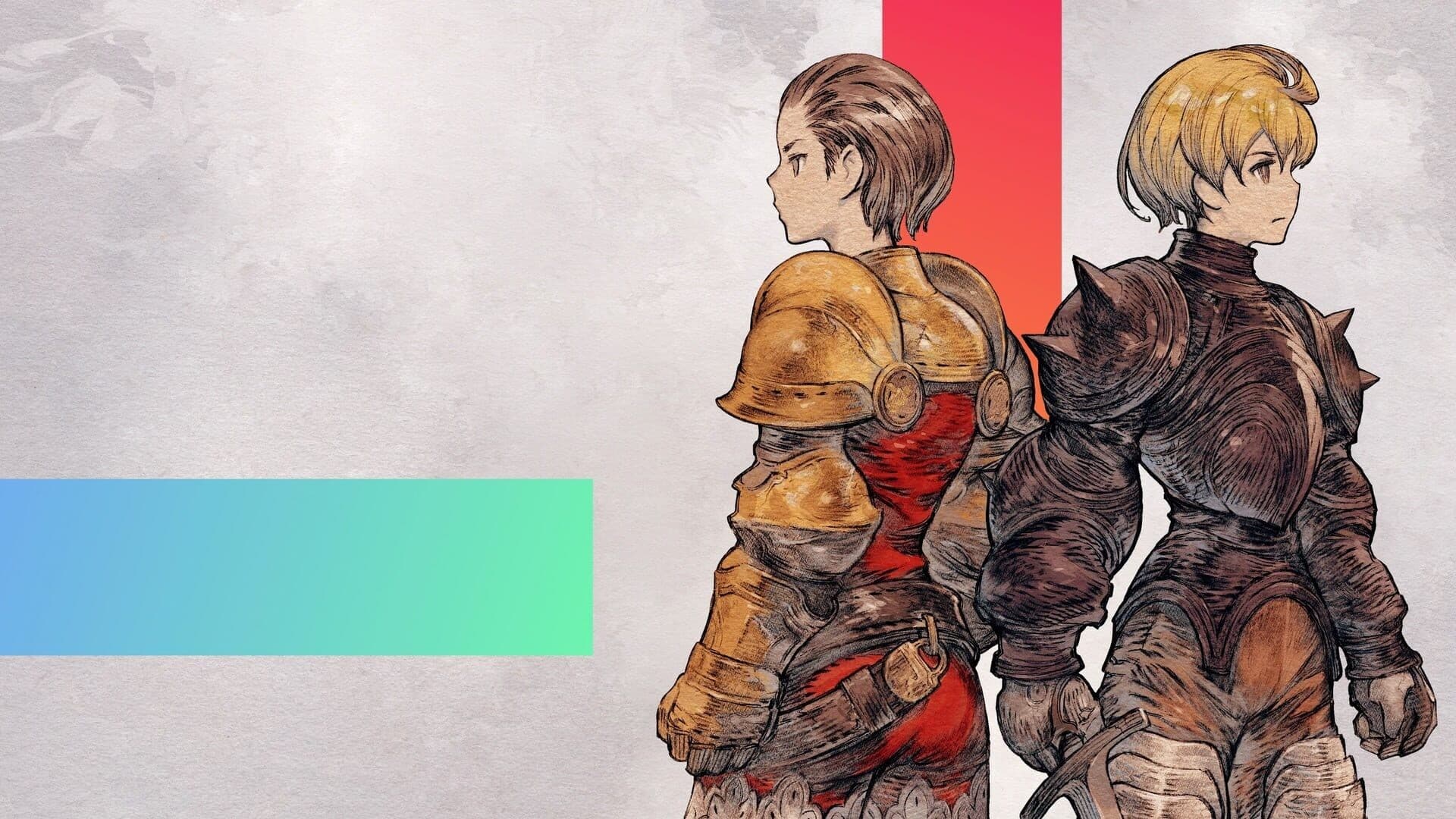
The Ivalice Chronicles does not attempt to rebuild Ivalice from the ground up. The visual language is the 1997 isometric battlefield aesthetic, translated into higher-resolution sprites and environmental detail that sharpens the original without substituting a different visual argument. The church interiors, the sand-dusted plains at Mandalia, the geometric precision of Orbonne Monastery: the geometry is identical. The detail layer has been elevated. That is the correct decision.
Where the remake earns its visual budget is in the portrait and cutscene work. The original’s static character stills have been replaced with fully illustrated and animated portraits during dialogue sequences, and the new voiced cutscenes commission art that reads as a coherent extension of Akihiko Yoshida’s character design rather than a reimagining of it. Agrias reads as Agrias. Ramza reads as the same uncertain noble the 1997 sprite communicated, now with a voice that supports that reading rather than contradicting it.
The battlefield presentation is deliberately restrained. No particle effects have been retrofitted to disrupt the legibility of unit positioning. The overhead clarity that makes this game’s spatial reasoning tractable has been preserved. This matters structurally: FFT’s encounter design depends on the player reading threat vectors across the grid in a single visual pass. An art direction that obscures that geometry for spectacle would break the game. The Ivalice Chronicles does not break the game. Clean geometry. Legible.

Gameplay and Combat
The job system’s core argument is ability inheritance: skills learned under one job carry over when the character equips a different class, which means every job-switch decision is a question about which vocabulary the character should accumulate and in which order. A Squire who masters Chemist before transitioning to Knight carries potion-use at no action-point cost. A Geomancer who cross-trains in Time Mage can deploy Haste before accessing it natively. The system rewards forethought, penalises random progression, and does not explain its own depth at the point of first contact. That is a structural choice, not an oversight.
The Ivalice Chronicles provides over twenty jobs across the class tree, with the Dark Knight unlock representing the system’s maximum investment: the class requires mastery of Knight, Dragoon, Geomancer, and Samurai before it becomes available, which means a player who does not understand job interactions will not encounter it until well past the midpoint, if at all. The encounter design scales to match. The game’s mid-act battles, particularly the sequence around Lionel Castle and the encounters staged in the second half of Act 3, are built on the assumption that the player has been developing cross-job vocabularies since the opening chapter. A player who has been assigning jobs based on surface appeal rather than inheritance planning will find those encounters difficult in ways that cannot be resolved by grinding levels alone. The difficulty is a test of preparation, not of reflexes.
The zodiac compatibility system adds a layer to party composition that some players will engage with deliberately and others will discover retrospectively when they notice that certain pairings are producing unexpectedly strong or weak chemistry modifiers. It is a system that rewards attention without demanding it. That is good design: a depth layer that enriches the experience of players who locate it without penalising players who don’t.

Story and Characters
Yasumi Matsuno’s script is a class-warfare narrative staged as a war story, which is how it earns the complexity it asks the player to track. Ramza Beoulve is the younger son of a noble house who gradually loses his class assumptions against the evidence of who actually prosecutes Ivalice’s Lion War and who benefits from its resolution. Delita Heiral is the commoner whose intelligence and rage at the same structures produce a parallel arc with a very different terminal point. The game’s argument, stated plainly, is that history is written to serve those who commission it, and Ramza’s role in the real events of the Lion War will be erased precisely because his interventions were inconvenient.
The Ivalice Chronicles’ recovered translation, which restores Matsuno’s original political framing after the 1997 localisation compressed and softened much of it, makes the argument readable in a way the original English release did not. The church politics are specific. The class distinctions between the noble houses and the Corpse Brigade are named and consequential. The voiced performances in the new cutscenes support the script without overplaying it: the principal actors have been directed toward the same measured register the script requires, which is harder to achieve in a game with this much expository dialogue than it sounds.
The supporting cast is larger than most players initially track. Agrias, Mustadio, and Beowulf each carry enough character specificity that their recruitment feels meaningful rather than mechanical, and the game stages each introduction as a narrative event before it becomes a tactical resource. The Beowulf recruitment sequence, in particular, is structured as a small political thriller that uses the job system as its resolution mechanism rather than its premise.

Value and Longevity
The main story takes most players forty to fifty hours to complete, with significant variance depending on how much time is spent in the job system’s side-progression. A player who optimises party composition early, understands the inheritance structure, and moves efficiently through chapter transitions will land closer to thirty-five. A player working through the system deliberately, rotating jobs to build ability sets before committing to final class assignments, will see fifty hours before the endgame.
The optional content extends that considerably. Midlight’s Deep, the fourteen-floor optional dungeon accessible in the late game, is staged as a sustained mechanical exam: the encounters assume a party built across the full job tree, and the rewards are calibrated to players who have completed that investment. The dungeon does not hold its hand. It is the correct place to take a party that has been developed thoroughly.
New Game Plus retains all job progress, ability unlocks, and equipment, which means a second playthrough functions primarily as a narrative revisit with an already-fluent tactical vocabulary. The story gains from that fluency: the political architecture of the Lion War reads differently when the player is not also learning the encounter-design language simultaneously. For players interested in the Matsuno narrative, a second pass is worth the time. For players whose primary investment is in the job system, the first playthrough is where that system is fully engaged.
The £39.99 / $49.99 price point is honest for a game of this scope. Nothing has been withheld for DLC. The War of the Lions content, the Balthier recruitment chain included, is in the base release.

Technical Notes
The PS5 and Switch 2 versions hold 60 frames per second across all encounter types, including the multi-unit battles with active particle effects in the late-game boss encounters. There are no frame-rate exceptions worth noting. Load times between battles are under five seconds on both platforms. The PS4 version targets 30 frames per second and achieves it consistently; players on that hardware are not receiving a degraded encounter-design experience, only a different rendering cadence.
The Switch 2 touchscreen controls, available in handheld mode, allow unit selection and ability assignment via direct tap on the isometric grid. The controls are responsive and well-mapped to the grid geometry. The traditional d-pad and analogue navigation remains available and is the faster input method for players who know the system. The touch implementation does not introduce input lag on the grid and does not conflict with the standard control scheme.
The PC version ships without any verified stability issues at launch. The resolution and frame-rate options are comprehensive: the game scales correctly to ultrawide displays without stretching the isometric viewport. The accessibility options include adjustable battle speed, a configurable auto-advance for dialogue, and colour-blind modes across all encounter UI elements including status condition indicators.
Final Word
The encounter that confirms The Ivalice Chronicles’ argument is the Orbonne Monastery sequence in the game’s closing act, where every variable the job system has been building across sixty hours converges in a single tactical problem. The encounter does not introduce new mechanics. It requires the existing mechanics to be applied correctly under pressure, from a party composition the player constructed, using ability sets the player chose to develop. A player who has engaged with the inheritance architecture seriously arrives prepared. A player who has not will be sent back to restructure their party and return. The game does not apologise for either outcome. That is a tactical RPG doing its job correctly after twenty-eight years, and the Ivalice Chronicles gives it the presentation those systems have always deserved. Recommended without qualification for players literate in the genre, and for new players willing to read the job tree as an argument rather than a menu.
FAQ
Is Final Fantasy Tactics: The Ivalice Chronicles worth playing if I completed the original?
The remake is worth the return for two reasons: the recovered translation restores the political specificity of Matsuno's original script, which changes how the Lion War's class dynamics read in English, and the voiced cutscenes are performed and directed with enough care that they add register to scenes the original left as static portraits. The tactical systems are unchanged, which means a player fluent in the job system is entering a familiar encounter-design language with a clarified narrative argument. The upgrade is real. The replay investment is around forty hours for a player who knows the system and moves efficiently.
What is new in The Ivalice Chronicles compared to War of the Lions?
The principal additions are full voice acting for the main cutscene sequences, a redesigned interface that surfaces job ability costs and inheritance paths more clearly than the PSP version, and visual upgrades to the character portraits and battlefield art. The Balthier and Luso recruitment content from War of the Lions is present and unchanged. The core tactical system, the zodiac compatibility layer, and the Midlight's Deep dungeon are all carried across without modification. The touch controls are new on Switch 2 and Switch. The load times are substantially improved over the original PSP port.
What is the best platform to play Final Fantasy Tactics: The Ivalice Chronicles on?
The PS5 and Switch 2 versions are equivalent in performance: both target and hold 60 frames per second, and both deliver the full visual package. The Switch 2's handheld mode adds the touchscreen input option, which is a genuine quality-of-life addition for grid navigation during longer play sessions away from a television. Players who primarily play at a desk will find the PC version the most flexible in terms of display configuration. The PS4 version is 30fps and is the correct choice only for players without access to the other platforms.
How does the job system work in Final Fantasy Tactics?
Each character equips one primary job and one secondary job, with the secondary slot allowing abilities learned under a different class to be used alongside the primary job's native skills. Abilities are learned by accumulating job points within a class and are retained when that class is changed or moved to the secondary slot. The central strategic question is which abilities to prioritise, in which order, given how long each job takes to master and what downstream classes that mastery unlocks. The system requires forward planning from the opening hours: decisions made in Act 1 about which jobs to develop determine which classes and ability combinations are available in Act 3.
Does The Ivalice Chronicles spoil the story of the original Final Fantasy Tactics?
The Ivalice Chronicles is a remake of the original game, not a continuation or a reimagining. The story, characters, and plot outcomes are identical to the 1997 release and the 2007 War of the Lions port. Players who completed either version are not receiving new narrative information in the main storyline. The translation differences do not change the events, only the precision and register with which the political framing is communicated. If the story of the original is known, the remake's narrative value is in how it is told rather than what happens.
8.9
Great
SpawningPoint Verdict
Review summary
Final Fantasy Tactics: The Ivalice Chronicles is the definitive format for a tactical RPG whose job system has not been meaningfully surpassed since 1997. The encounter design is staged to teach the ability-inheritance architecture through accumulation rather than instruction, the zodiac compatibility layer adds a depth tier that rewards deliberate party construction, and the Orbonne Monastery sequence remains among the most honest difficulty tests in the genre. The recovered translation clarifies the Lion War's political argument in ways the 1997 localisation could not, and the voiced cutscenes are performed with the correct register. On PS5 and Switch 2, the presentation holds without compromise. At £39.99 / $49.99 with all content included, the case is straightforward.