Eight years is a long time to hold a contract open. Bethesda announced The Elder Scrolls 6 at E3 2018 with a teaser that confirmed a location and nothing else, and in the years since the gap between what the studio has confirmed and what the internet has decided to believe has grown into something remarkable. The confirmed information fits on a single notecard. The rest is pattern-matching, platform speculation, and the kind of optimism that flourishes in information vacuums. This piece draws the line. Below: what Bethesda and Microsoft have actually said, what the industry signals actually suggest, and what the 2028+ window means for a franchise whose last mainline entry came out in 2011.
What Bethesda Has Actually Confirmed
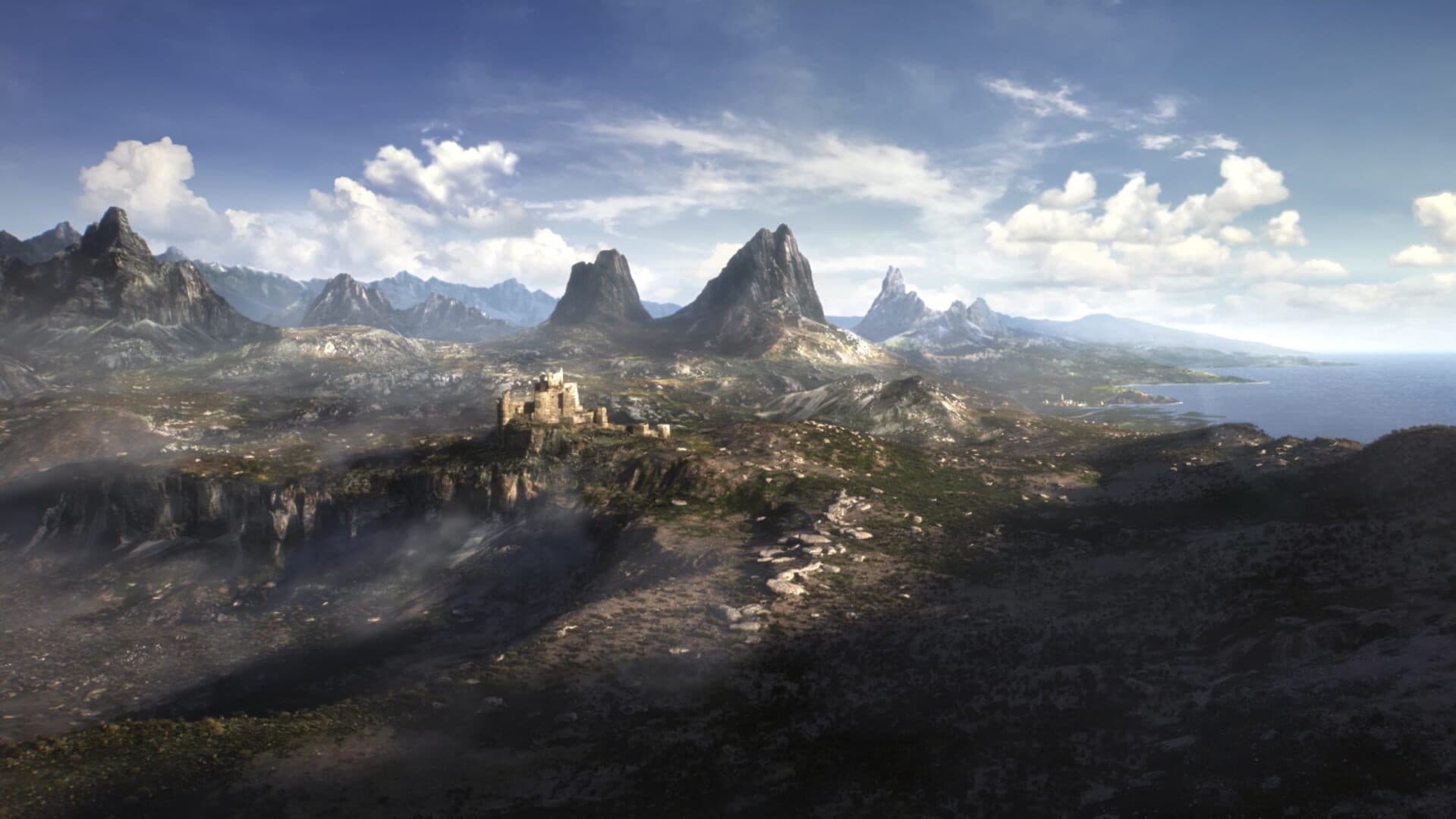
The confirmed list is short. Bethesda announced The Elder Scrolls 6 on 10 June 2018 during their E3 showcase. The teaser is a landscape shot, approximately 36 seconds long, scored to a string theme. There is terrain. There is a logo. The footage confirms the game exists and that Bethesda intends to make it. Nothing else from that teaser is confirmed information.
Todd Howard has stated publicly, on multiple occasions since 2018, that the game remains in a pre-production or early design phase. In a 2022 interview he described the project as in “early development” with significant conceptual work ahead. A further 2024 statement positioned the game as still in design phase following Starfield’s release. Neither statement included a platform list, a release window, or a price point.
Microsoft confirmed the acquisition of Bethesda’s parent company ZeniMax Media in 2021. Bethesda is now a first-party Microsoft studio. That is confirmed. What it means for Elder Scrolls 6’s platform situation is a separate question, addressed below.
The confirmed facts are these: the game exists, it has been in some form of pre-production since at least 2018, and Bethesda intends to release it. Everything else is extrapolation.

The Eight-Year Teaser and Why It Mattered
The 2018 teaser did something unusual. It announced a game with no release window, no gameplay, no platforms, and no story premise, at a time when Bethesda was about to launch Fallout 76 and still had Starfield on the horizon. The announcement was structural: it was telling the Elder Scrolls audience that the franchise had a future without asking them to wait with any specific number in mind.
That logic made sense in 2018. The problem is that it produced a waiting room with no check-out time. Every subsequent Bethesda release, Fallout 76, Starfield, and their respective post-launch support cycles, extended the implicit queue. The audience has been waiting for eight years on the basis of a landscape and a logo.
The teaser also seeded the location debate. The terrain in the footage has been analysed to the point of diminishing returns, with the leading candidate being Hammerfell, the desert province of the Redguard people, or High Rock to the north, home to the Bretons. Nothing in the teaser is conclusive. Bethesda has not commented on location. The debate continues.
What mattered about the 2018 teaser was not what it showed. It was the signal it sent: Bethesda considers the Elder Scrolls franchise its primary long-form investment, and it intended to protect that expectation even when it could not name a date. That is a reasonable business position. It is not the same thing as a release date.
Post-Starfield Positioning and Microsoft’s Acquisition
Starfield launched on 6 September 2023. Its reception was mixed relative to Bethesda’s historical performance: the game reviewed well enough and sold in significant numbers, but it did not produce the cultural footprint that Skyrim had generated twelve years earlier. Post-launch support has continued through 2024 and into 2025, and Bethesda has remained committed to the title’s expansion content.
The relevance to Elder Scrolls 6 is this: Bethesda’s production pipeline runs one major project at a time at the lead creative level. Todd Howard has historically been the creative director on all flagship releases. Until Starfield’s core production cycle is genuinely complete and the studio has transitioned resources, Elder Scrolls 6 cannot begin full production. That transition had not definitively occurred as of early 2026 based on available public statements.
The Microsoft acquisition shapes this in two directions. On one hand, Microsoft’s resources mean Bethesda is no longer constrained by the development budget limits that governed their independent era. On the other hand, Microsoft now has portfolio considerations that did not previously apply: Game Pass monetisation strategy, platform exclusivity decisions, and the question of whether Xbox’s first-party slate needs Elder Scrolls as a tent pole more urgently than the production timeline allows.
Microsoft has navigated its own significant restructuring across 2024 and 2025, including studio closures and project cancellations elsewhere in the portfolio. None of those cancellations touched Bethesda’s core projects. That is the relevant signal: the game is still live and resource-backed. It is not the same as a confirmed date.

The Platform-Exclusive Question
The platform question is the most contested area of Elder Scrolls 6 speculation, and it is also the area where the gap between confirmed information and internet consensus is largest. Here is what is confirmed: Bethesda is a first-party Microsoft studio. Microsoft has the right to release their games where they choose.
Here is what is not confirmed: that Elder Scrolls 6 will be exclusive to Xbox and PC. Microsoft’s own public statements on exclusivity have been inconsistent across its first-party catalogue. Certain titles have remained multiplatform, including some Bethesda properties, while others have been held to Xbox and PC. No official statement has been made about Elder Scrolls 6’s platform strategy.
The industry signal, reading Microsoft’s platform strategy across its broader portfolio and the contractual context of the Activision Blizzard acquisition’s regulatory commitments, suggests a likely Xbox and PC release window with potential for later expansion. The UK Competition and Markets Authority’s review of the ZeniMax acquisition in 2021 produced public documentation about Microsoft’s platform commitments that is worth reading directly rather than through summarised coverage.
The 2028+ Window and What It Means for Skyrim’s Audience
The 2028+ window is an industry-analyst estimate, not a Bethesda announcement. It derives from the following chain of reasoning: Bethesda’s major titles have historically required five to six years of full production. Starfield released in 2023. If Bethesda transitioned full production resources to Elder Scrolls 6 in 2024 or early 2025 following Starfield’s post-launch cycle, a 2028 to 2030 release is the realistic outcome. Todd Howard’s own statements about the game being in design phase as recently as 2024 support the later end of that range.
The 2028 floor assumes everything proceeds without major production restructuring. Games at this scale do not always proceed without restructuring. The production context here is a Bethesda that is now operating as a Microsoft first-party studio for the first time in its history, on a project whose engine has been rebuilt for Starfield and will presumably be further evolved for Elder Scrolls 6. Engine transitions add time.
For the Skyrim audience, the 2028+ window means this: the players who were eighteen when Skyrim released in 2011 will be approaching thirty-five by the time the sequel arrives. The cultural moment Skyrim occupied, appearing at the intersection of mainstream gaming expansion and a particular appetite for open-world exploration, cannot be reproduced by design. Elder Scrolls 6 will arrive in a market where open-world RPGs are abundant rather than exceptional.
That changes what the game needs to do. It is not a sequel into an empty space; it is a sequel into a crowded one. The benchmark Elden Ring set for open-world RPG ambition remains the bar any major RPG launch is measured against in 2026. Bethesda knows this. Whether the production timeline allows them to respond to it is the question that no confirmed information currently answers.
How Bethesda Could Get the Launch Wrong
The structural risk for Elder Scrolls 6 is Starfield’s main lesson applied at a larger scale. Starfield was not a bad game; it was a game that arrived with expectations it had been allowed to accumulate unchecked, and the gap between expectation and delivery was visible in the coverage. Elder Scrolls 6 is carrying a larger expectation burden over a longer accumulation period.
The second risk is engine ambition outrunning production reality. Bethesda’s Creation Engine has been the same foundational architecture since Skyrim, substantially rebuilt for each generation. The Starfield build addressed some long-standing criticisms of the engine’s world-building limitations while introducing new constraints around procedural generation and space traversal. The Elder Scrolls franchise requires dense, handcrafted world design. How that requirement maps onto whatever the post-Starfield engine architecture looks like is a question the studio will resolve internally, but the answer has significant implications for scope.
The third risk is the open-world comparison problem. The games that will be released between now and Elder Scrolls 6’s launch will continue to evolve the genre. Bethesda will be measured against The Witcher 4, against Elden Ring’s successors, against whatever FromSoftware and CD Projekt Red have produced in the intervening years. How an RPG of comparable scope handles that pressure is visible in Avowed’s post-launch trajectory, where Obsidian navigated legacy expectations and a crowded genre simultaneously. The bar does not stay still.
None of these are failure predictions. They are the structural conditions that the game will have to navigate. Whether Bethesda’s current production approach positions them to navigate those conditions is not answerable from public information.
What to Watch
The signals worth tracking are not the rumour cycles. Those are structural noise produced by the information vacuum. The signals that carry information are these.
Bethesda’s hiring patterns. Job listings for a major production ramp up before the studio announces anything publicly. A sustained increase in senior systems designers, world designers, and quest designers across Bethesda Game Studios would indicate that pre-production has transitioned to full production. This is observable through LinkedIn and public job board monitoring. It is not a confirmed timeline, but it is closer to ground truth than analyst estimates.
Todd Howard’s public statements. Howard has been precise about production phase language in previous cycles. The shift from “design phase” to “development” is a meaningful transition in Bethesda’s internal vocabulary. Any public statement from Howard that drops the “early” or “design” qualifier is a signal.
Microsoft’s platform strategy announcements. If Microsoft makes further public commitments about multiplatform releases for its first-party catalogue, those commitments would apply to Elder Scrolls 6 unless explicitly excluded. The regulatory context of future acquisitions may produce more public documentation of platform strategy, and where the platform landscape sits heading into 2026 will shape which audiences those commitments are designed to reach.
The engine announcement. Bethesda has not publicised the engine technology for Elder Scrolls 6. When they do, the technical scope of the announcement will give a reasonably accurate signal of how far along the production is. Engine reveals precede gameplay reveals; gameplay reveals precede release windows. The sequence matters.
Final Word
The Elder Scrolls 6 release date question is, in mid-2026, a question about production pipeline and not about confirmed information. The game exists. It is in active development in some form. The studio making it has more resources than it has historically had. The 2028+ window is a reasonable estimate and not a confirmed date. The platform situation is unresolved.
The honest answer to “when is Elder Scrolls 6” is: not before 2028, and possibly not before 2030, depending on production decisions the studio has not made public. A player who is managing their expectations against confirmed information rather than aggregated speculation will be better positioned when the announcement eventually arrives. The teaser has held the contract open for eight years. The next confirmed signal will come when Bethesda decides the production is ready to be shown.
FAQ
When is The Elder Scrolls 6 release date?
No official release date has been confirmed for The Elder Scrolls 6. Todd Howard stated in 2024 that the game remains in the design phase following Starfield's release. Industry analysts estimate a 2028 to 2030 release window based on Bethesda's historical production timelines, which have run five to six years for major titles. Until Bethesda makes an official announcement, any specific date in circulation is speculation rather than confirmed information.
Will The Elder Scrolls 6 be Xbox exclusive?
Bethesda is a first-party Microsoft studio following the 2021 ZeniMax acquisition, which gives Microsoft the right to determine platform strategy. No official announcement has been made about Elder Scrolls 6's platforms. Industry analysts have suggested a likely Xbox and PC launch, with possible later multiplatform expansion, but this remains unconfirmed. Any coverage presenting the game as a confirmed exclusive is not drawing on official Bethesda or Microsoft statements.
What do we know about The Elder Scrolls 6's setting?
The 2018 teaser shows a landscape that has been widely analysed for geographical clues, with Hammerfell and High Rock cited as the leading candidates based on terrain features. Bethesda has not confirmed the location. The teaser footage is the only visual information officially released, and no story premise, protagonist, or faction details have been shared by the studio.
Has The Elder Scrolls 6 been confirmed after Starfield?
Yes, Todd Howard has confirmed in multiple post-Starfield interviews that The Elder Scrolls 6 is in development. The confirmation has consistently been paired with statements about the game being in an early or design phase, which places full production some years away. Bethesda has not cancelled or paused the project. The game is active and resourced; it is not yet in the production phase that precedes a release date announcement.
What engine will The Elder Scrolls 6 use?
Bethesda has not announced the engine for The Elder Scrolls 6. Starfield used a rebuilt version of the Creation Engine, and it is widely expected that Elder Scrolls 6 will use a further evolved version of that same architecture. No official technical details have been released. The engine announcement, when it comes, is likely to precede any gameplay reveal and will give a clearer signal of production progress.