REVIEW
8.2· Great
Elden Ring Nightreign Review 2026, FromSoftware’s Co-Op Spin-Off Made Coherent


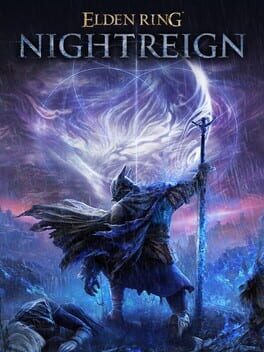
Nightreign does not ask whether FromSoftware could compress Elden Ring into a forty-minute co-op loop. It answers that question, stages the encounter between session design and the full-breadth open world that preceded it, and invites you to read what the argument produces. The Elden Ring Nightreign review that most players expect is a comparison piece: does it match the original? That framing misreads the object. Nightreign is not a lesser Elden Ring; it is a second argument made in the same vocabulary, directed at a different premise. Director Junya Ishizaki builds a spin-off that earns the cost of its constraints by making those constraints the creative load-bearing element. Three players, three days, one Nightlord: what FromSoftware proposes is not convenience but compression as formal discipline.

Game Snapshot
| Developer | FromSoftware |
| Publisher | Bandai Namco |
| Release Date | 30 May 2025 |
| Platforms | PS5, PS4, Xbox Series X/S, Xbox One, PC |
| Price | £34.99 | $39.99 |
| Rating | PEGI 16 | ESRB T (Teen) |
| Genre | 3-player co-op action-survival roguelike |
| Length | 40-minute sessions; 50-100 hours for full Nightlord completion |
| Install Size | ~30 GB |
The 40-Minute Session: What Compression Argues
The base Elden Ring is an argument for openness: time is yours, the map is yours, the order of confrontation is yours. Nightreign takes that map, shrinks it to the Limveld, introduces a collapsing-circle mechanic that forces movement across three in-game days, and stakes everything on the proposition that encounter density can replace encounter autonomy.
Day one and day two are escalating field sweeps. A squad of three drops into a shared area, scavenges Sites of Grace equivalents to level, locates and defeats field bosses drawn from the Elden Ring roster and the wider Souls library, and works toward the night-boundary that closes each day. The Centipede Demon from Dark Souls surfaces here, in modified form; the Tree Sentinel and Crucible Knight return from Limgrave. The encounter argues each time: the familiar moveset reads differently when three players must coordinate aggression windows rather than spacing them around a single stamina bar.
Day three is the Nightlord. The preceding two days are not prologue; they are the stagger economy accumulation and the flask-top-up that determines what the squad brings into the final confrontation. A weak field run produces a diminished squad; a clean field run produces a squad that has internalised the dodge window rhythms the Nightlord will demand at elevated speed. The compression is not cosmetic: the forty-minute shape is the design.
Combat: Encounter Design Under Co-Op Pressure
The contract Nightreign writes with its players is specific: collective attention management. Every other FromSoftware game writes the contract between one player and one adversary; Nightreign adds a third variable and demands the squad read the contract together. Solo Elden Ring trains the player to control where the boss is looking. Co-op Nightreign distributes that management across three bodies, and the encounter design accounts for the distribution by building bosses whose phase transitions and tracking patterns reward positional spread rather than punishing it.
Gladius the Black Blade establishes the template in the opening Nightlord slot. The dodge window on his overhead combination is wide enough for a single player to exploit but tight enough that two players catching the same window simultaneously will clip each other’s positioning. The encounter argues for triangulation: one player baiting the tracking swing, two players maintaining offset angles that force Gladius to choose between threat vectors. When the squad reads the moveset correctly, the stagger economy opens: Gladius staggers on accumulated stance damage, the critical window fires, and the forty-second reprieve before phase two allows flask recovery. When the squad misreads it, the phase two enrage arrives at full HP and the run collapses.
This is not approachability tuned downward. The co-op structure redistributes difficulty rather than reducing it: individual mechanical demand drops modestly, but the coordination layer is a separate competence the game does not explain. It stages the encounter between two skill categories and makes the space between them legible through repetition.
Field encounters with the Crucible Knight and Tree Sentinel operate at lower stakes but the same structural logic. Both bosses track a single target; the remaining two players hold flanking positions; the parry window on the Crucible Knight’s shield bash is unchanged from its base-game form, which means players who have internalised that timing carry a genuine advantage into the Limveld. The encounter design rewards prior vocabulary without gatekeeping the run behind it.
The Nameless King variant deserves specific attention. FromSoftware has stripped the Wyvern phase and rebuilt the King as a pure-aggression encounter with widened slam arcs that demand lateral spacing rather than the circling the base encounter trained. The moveset reads as a restatement of the original argument under different premises: the King’s aggression pattern exists to pressure the squad’s spread discipline, not to test the dodge window timing the Lordran version demanded.

The Eight Nightfarers: Class Design and Replay
Nightreign’s class architecture earns the cost of its roguelike framing by making each Nightfarer a different encounter-reading instrument. The eight classes are not stat distributions: they are propositions about how to engage the stagger economy.
Wylder is the baseline: a balanced warrior whose charged attacks build stance damage at a measured rate. The class is not simple; it is unambiguous, which is a different quality. A Wylder squad can always identify which player failed the dodge window because no ability obscures the read.
Guardian operates as the true tank, with a damage-reduction shell that absorbs Nightlord punishment during phase transitions; the class incentivises drawing aggression during the dodge window rather than exploiting it, which inverts the solo-FromSoftware habit of gap-closing on the boss’s recovery.
Ironeye’s ranged toolkit functions best in trios where a Duchess or Revenant holds melee pressure: the bow’s charged shot interrupts a narrow category of windup animations, and understanding which animations qualify is itself the Ironeye skill expression.
Duchess is precision incarnate; her backstep slash builds to a critical that the encounter must be staged to deliver, which means Duchess players are reading three steps ahead of the current hit for opportunities to position. The class is punishing alone and devastating in a coordinated trio.
Recluse applies the sorcery vocabulary: the encounter design does not slow for incantation cast times, which means the class demands pre-positioning that reads the boss’s next state before it executes. The payoff is significant stance damage from a safe angle; the cost is spatial awareness that other classes do not require.
Raider is aggression made legible: the heavy striker moveset trades parry window access for raw poise damage, and the stagger economy opens faster with a Raider in the squad than in any other configuration. The class earns that advantage through a recovery animation that the Nightlord can punish during its own stagger.
Revenant introduces a spirit-call system that generates additional stagger-check pressure during Nightlord phases; the class reads as a force multiplier rather than a primary damage instrument and is accordingly undervalued by squads building around burst-damage configurations.
Executor’s curved-blade stance chains are the most technically demanding moveset in the roster, with a timing requirement that sits between the parry window and the dodge window and rewards players who have internalised both. The class is the argument for mechanical depth at the top of the Nightfarer ceiling.
The Eight Nightlords: Final-Boss Architecture
The Nightlord roster is where Nightreign makes its most direct statement about what encounter design means under co-op pressure. Eight bosses; eight different claims about how three players should divide attention.
Gladius the Black Blade (opening slot) teaches the triangulation contract described above. He is the tutorial expressed as threat: survivable for an underprepared squad, demonstrably easier for a coordinated one.
Adel Baron of Night stages the encounter around projectile management: Adel fires tracking volleys that target whichever player holds aggression, and the squad must cycle aggression deliberately to distribute the damage load. The parry window on his close-range slash chain is narrow and consistent; learning it converts his aggression pattern from overwhelming to legible.
Gnoster Wisdom of Night is the encounter arguing for positional discipline in its most demanding form. Gnoster’s area-denial pattern creates ground-level hazards that eliminate fixed-position flanking and require continuous lateral movement, which means the stagger economy opens only during brief repositioning windows when all three players have maintained safe zones simultaneously.
Maris Fathom of Night operates in an aquatic arena that reduces sprint speed and alters the dodge window physics: the timing window remains the same but the recovery distance shortens, which forces players trained on land encounters to recalibrate. The moveset reads as a deliberate dislocation of internalised habits.
Libra Creature of Night introduces a balance mechanic that punishes asymmetric squad aggression: Libra’s phase transition fires earlier when one player has accumulated significantly more stance damage than the others, which means a trio that allows a single player to carry the stagger economy will reach phase two underprepared. The encounter argues for parity as an explicit structural demand.
Fulghor Champion of Nightglow is the speed tier: an aggression pattern calibrated to punish the recovery animation of heavy weapons, which means Raider players must re-evaluate their standard combo chains and Executor players earn unusual access to their curved-blade stances. The encounter’s design is built around creating tension between the class that hits hardest and the class that fits best.
Caligo Miasma of Night is the roster’s atmospheric statement: a visibility-reduction mechanic that converts the standard positional read into an inference problem. The encounter argues that the squad’s internalised dodge window timing is more reliable than its real-time visual processing; the moveset reads through the obscuration because FromSoftware preserves the audio cues that telegraph each phase. A squad that has fought Caligo ten times will perform better blind than a fresh squad with full visibility.
Heolstor the Nightlord is the Final Boss and the culminating argument. Heolstor consolidates the demands of the preceding seven encounters: positional discipline from Gnoster, parity awareness from Libra, audio-cue reliance from Caligo, triangulation from Gladius. The encounter does not introduce new vocabulary; it stages the full lexicon simultaneously. A squad that has earned the cost of reaching Heolstor will recognise the argument. A squad that rushed to the Final Boss via fortunate field runs will find the encounter argues back.

Story and the Limveld Loop
Nightreign’s narrative frame is deliberate minimalism; the Limveld is an Elden Ring region caught in a temporal loop, the Nightlords are the distortion anchoring the cycle, and the Nightfarers are exterminators hired to break it. There is a Roundtable Hold equivalent, the Highroad Chair, where inter-session lore is delivered through environmental storytelling and fragmentary dialogue rather than extended cutscenes.
This is a design position, not an absence of ambition. The session structure resists the kind of extended lore delivery that base Elden Ring embedded in item descriptions and NPC questlines; forty minutes cannot sustain a Fia’s questline. What Nightreign offers instead is encounter-adjacent lore: each Nightlord’s moveset carries thematic content about their relationship to the night-cycle distortion, and players who read that content closely will find the final confrontation with Heolstor operates as a coherent summation. The narrative earns less than the encounter design; the 6.5 out of 10 score for Story/Narrative Frame reflects genuine thinness, not structural failure.
Solo Play and the Co-Op Pressure Question
The game’s co-op-first intent does not conceal itself. Solo runs are possible, supported by AI Nightfarer companions, and meaningfully harder in ways that are informative rather than punishing: the AI companions engage field bosses competently and struggle with the coordination-layer demands that human players handle through communication.
Solo Nightreign reads as a training mode for the encounter vocabulary rather than the intended mode of play. A player who clears Gladius solo has acquired a detailed understanding of his phase-transition timing but has not experienced the encounter’s designed argument about triangulation. The forty-minute structure tolerates solo runs because the roguelike loop sustains repeated attempts; it was built for three.
Value and the £34.99 Standalone Question
At £34.99, Nightreign is not proposing a full-price expansion. It is proposing a discrete game built on shared infrastructure, and the value question reduces to whether the roguelike replay loop sustains the price across the fifty-to-one-hundred hours required to complete the full Nightlord roster across all eight Nightfarers.
For players who engage the class system seriously, the loop earns the cost. Each Nightfarer changes how the encounter is read; each Nightlord offers different reads across different class configurations; the variation space is not cosmetic. The game runs best as a regular-session discipline with a consistent trio: three players who share a session vocabulary will find the stagger economy opens more reliably with each run, and the convergence on Heolstor across eight different Nightfarer pairings produces genuine replay depth.
For players seeking a solo experience or a contained narrative, the price is harder to justify. Nightreign does not pretend to be both things.

Final Word
Nightreign earns the cost of its compression by making compression the argument. The forty-minute session is not a concession to shorter attention spans; it is a formal decision that changes what encounter design can propose. Heolstor’s final phase, when a practised trio triangulates through the accumulated vocabulary of the seven preceding Nightlords, is one of FromSoftware’s most coherent boss statements: the encounter argues everything it has built, simultaneously, at a pace the Nightfarer who has done the work can read. Solo players and narrative-first players will find the contract does not write to them. Players who bring two capable partners and the patience to internalise eight class perspectives will find that Nightreign, at £34.99, stages its encounter correctly. The moveset reads. The stagger economy opens. The loop earns what it asks for.
FAQ
Is Nightreign worth it for solo players?
Solo runs in Nightreign are supported through AI Nightfarer companions and provide a workable experience, but the encounter design was built around a human trio's coordination capacity. AI companions manage field bosses adequately; they cannot execute the triangulation logic that Nightlord encounters demand. Solo play functions as a way to learn the encounter vocabulary at lower pressure; it is not the game at full capability. Players committed to solo FromSoftware experiences will find the sessions serviceable but will miss the core encounter argument.
Do I need the Elden Ring base game to play Nightreign?
Nightreign is a standalone purchase at £34.99 and does not require the base Elden Ring to install or run. The game shares assets, engine, and encounter vocabulary with the original, which means players familiar with Elden Ring's field bosses and mobility systems will carry a genuine advantage into the Limveld. New players can learn the vocabulary through the session loop itself. Both paths are viable, though familiarity with how FromSoftware stages encounters shortens the adaptation period.
How long is a Nightreign session?
A standard session runs approximately forty minutes: two field days of escalating boss encounters, followed by the Nightlord confrontation on the third day. The forty-minute shape is the designed experience, not an average. Failed runs end earlier; exceptional field sweeps do not extend it significantly. The session length was chosen to make the roguelike loop sustainable across multiple playthroughs in a single sitting, and the structure rewards repeated sessions rather than extended individual runs.
How does Nightreign compare to Elden Ring?
Nightreign and Elden Ring are different arguments made in the same vocabulary. The base game proposes openness: your time, your map, your confrontation order. Nightreign proposes compression: a collapsing circle, a fixed session shape, and a co-op coordination layer that replaces open-world autonomy. Neither is a lesser version of the other. Players who want the breadth of the Lands Between will not find it here; players who want encounter design refined to its sharpest form, delivered in forty minutes with two capable partners, will find the spin-off is exactly what it proposes to be.
Will there be DLC for Nightreign?
Bandai Namco and FromSoftware have not announced post-launch content for Nightreign at time of writing. The game shipped with eight Nightfarers and eight Nightlords; the roguelike structure and session framework would accommodate additional Nightlords or Nightfarers naturally. Whether FromSoftware pursues that expansion is a business decision that falls outside what the current release argues. The base package earns its value on the roster it ships with; any additions would extend rather than correct the core experience.
8.2
Great
SpawningPoint Verdict
Review summary
Nightreign is FromSoftware applying its encounter-design vocabulary to a premise the base Elden Ring never tested: forty minutes, three players, one Nightlord. Junya Ishizaki's spin-off earns the cost of that compression by making the structural constraint do creative work. The eight Nightlords are each distinct encounter arguments; the eight Nightfarers are eight different instruments for reading those arguments; the stagger economy and triangulation logic that govern the final confrontation with Heolstor reward the player who has completed the curriculum. The narrative frame is thin by design. Solo play is functional without being the intended mode. At £34.99, a regular trio will find the replay depth genuine and the price proportionate. Nightreign does not replace what came before it. It stages its own encounter, and the encounter argues coherently.


