The tile makes a sound when it settles: a low, soft click, slightly longer than necessary, that the game did not need to include. Dorfromantik on Switch 2 is still the game it was on PC in 2021, still the quiet act of placing hexagonal landscape tiles until a meadow becomes a field becomes a valley. The Switch 2 edition asks only one new question: does playing this on the sofa, docked at a sharper resolution or held loosely in two hands, change what the game is? The answer is yes, more than it should.
Game Snapshot
| Developer | Toukana Interactive |
| Publisher | Toukana Interactive |
| Release Date | June 2025 (Switch 2 enhanced edition); original 2021 (PC) |
| Platforms | Nintendo Switch 2, Nintendo Switch, PC, PS4, PS5, Xbox |
| Price | £11.99 | $14.99 |
| Rating | PEGI 3 | ESRB E (Everyone) |
| Genre | Cosy puzzle/tile-placement |
| Length | 5-10 hours (main objectives); 30+ hours (completionist/creative mode) |
| Install Size | Approximately 500MB |
Presentation and World Design
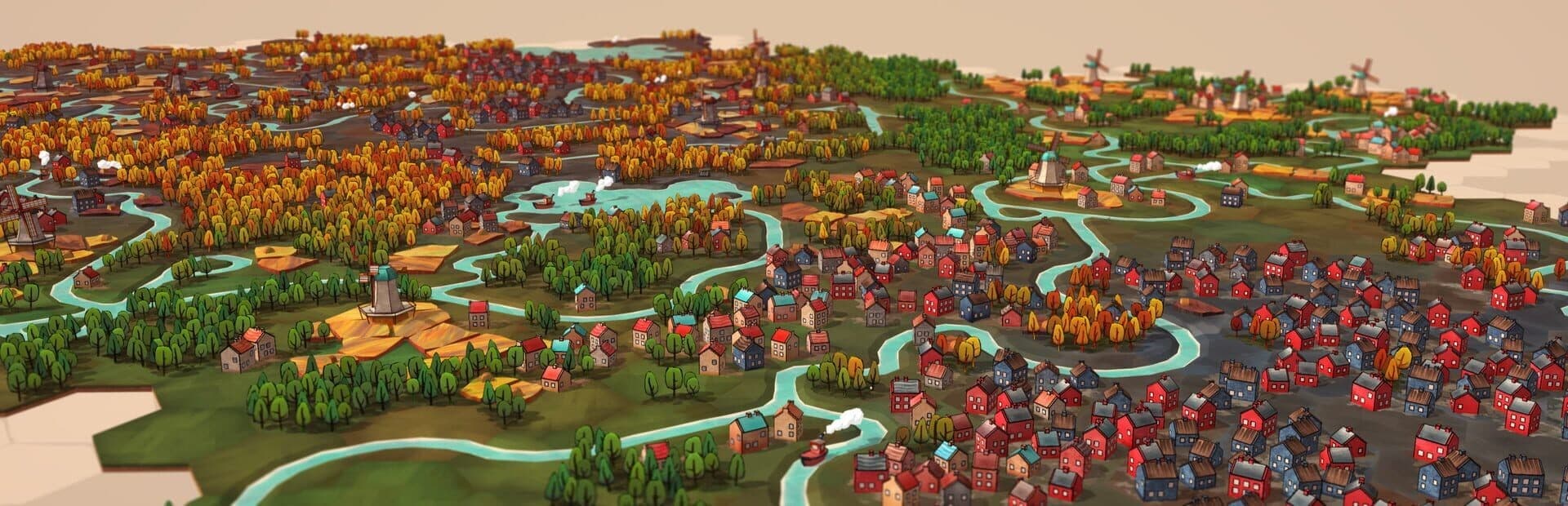
The palette in Dorfromantik has always been its quietest argument. Soft greens for the grassland tiles, a particular shade of blue-grey for the river, warm amber for wheat fields in the afternoon light: these are not colours trying to impress. They are colours doing a job, which is to make the landscape readable at a glance whilst remaining gentle to look at for a long session.
The Switch 2 edition runs docked at a noticeably crisper resolution than the original Switch version, and the difference is not trivial. The tile edges are cleaner. The tree details, which on the original Switch occasionally blurred at distance, hold their shape. This is the kind of visual upgrade that the game’s design actually earns: Dorfromantik is a game about noticing small adjacencies, about whether a river tile is pointing the right direction or whether a forest matches its neighbour. Clarity of rendering is not a luxury in that context. It is the game working at its intended precision.
In handheld mode the picture holds well, which is the result that matters most for this platform. The tiles remain legible on the smaller screen, the colour language reads clearly in most lighting conditions, and the game’s ambient art direction, which has always been understated, does not suffer from the reduction in size. There is a particular quality to playing Dorfromantik on a winter afternoon with the screen at half brightness: the palette does something there that the PC version, for all its fidelity, cannot replicate.

Gameplay and Combat
Dorfromantik is not a game with combat, which is not a shortcoming. The loop is this: draw a tile from a shuffling stack, decide where it fits in the growing landscape, and try to match the edges, the river alignments, and the occasional flag-bearing quest tile that asks for a certain number of forest or water segments in a connected group. There is a score. There is a tile count. Neither one insists on your attention.
What the Switch 2 edition changes about this loop is the mode of touch. On PC, the mouse gives each tile placement a finality, a single click that commits the choice. On Switch 2 in handheld mode, the placement is done through a combination of the right stick and the A button, or via touchscreen when the console is held like a tablet. The touchscreen path is the one worth mentioning: it restores a directness to the act that the stick navigation slightly abstracts. The tile follows the finger. The decision feels immediate.
The game remains forgiving in the sense that it has always been forgiving. There is no wrong placement, only a placement that earns fewer segments toward the next quest. The loop does not punish uncertainty. It waits. A tile placed in the wrong position is not a failure so much as a fork: the landscape will grow around it, the river will eventually curve away from it, and the meadow will close over the gap. The kindness here is structural, not decorative.
Sixty frames per second docked is the headline technical claim for this edition, and it holds. On the original Switch the game was smooth enough that the frame rate was not a constraint. On Switch 2 the smoothness is simply the absence of a thing you might have noticed: the tile rotations are marginally more fluid, the zoom animation cleaner. It does not transform the experience. It removes a small friction that most players probably never consciously registered.

Story and Characters
Dorfromantik does not have a story in the traditional sense, which is the correct decision for what the game is. There is a progression: biomes unlock as quests are completed, new tile types enter the stack as the player reaches certain milestones. But this is a sequence of openings rather than a narrative arc. The game is not building toward a resolution. It is building toward more of itself.
The absence of story is not a silence that needs filling. Dorfromantik’s world has atmosphere precisely because it has no characters, no voiced dialogue, no event that interrupts the placement rhythm to deliver a plot point. The landscape is the subject. The player is not a protagonist with an objective; they are someone tending a view.
What the game offers in place of story is a kind of visual diary: each session’s landscape is a record of the choices made, the river that curved one way rather than another, the wheat field that grew long because the tiles came in that order. Two sessions of the same game produce two entirely different geographies. The game does not annotate this. It trusts the player to recognise it as the form of meaning available here, which is the only form this kind of game can honestly offer.

Value and Longevity
At £11.99, Dorfromantik on Switch 2 is priced where the game’s content earns it. The core mode, which is the scored endless mode with the tile stack and the quest flags, will occupy most players for five to ten hours before the loop becomes familiar enough to feel settled. That settled feeling is not boredom. The game is not hiding complexity behind the early sessions. It is simply a game that has a floor, and the floor arrives at a point where the player knows the landscape well enough to work within it rather than explore it.
The creative mode, which removes the tile count and the score entirely, extends this considerably. Creative mode is where the game becomes something closer to a landscaping tool than a puzzle: the player can build indefinitely, place tiles without pressure, and pursue a visual outcome rather than a mechanical one. There will be players who come to Dorfromantik for the puzzle tension and find creative mode too unstructured. There will be others for whom the scored mode is a constraint they were tolerating, and for them creative mode is the game’s true register.
Owners of the original Switch version can upgrade to the Switch 2 edition at a reduced price, which is a sensible arrangement. The enhancements, sharper resolution, 60fps, and touchscreen support in handheld, are real but not transformative. If the original Switch version runs adequately on your existing hardware, the upgrade is a refinement rather than a necessity. If the Switch 2 is your primary device, the enhanced edition is the correct version to own.
For context on how this fits the SpawningPoint cosy library, our Nintendo Switch 2 review covers the platform’s cosy credentials in full, and our original Dorfromantik review covers the base game for anyone arriving at this franchise for the first time.

Technical Notes
The Switch 2 edition runs without incident. No crashes across the sessions played, the autosave writes reliably, and the audio layer, which is one of the game’s quietest achievements, holds its gentle ambient mix across all tile types and biome states. The music is present in the way good cosy game music should be: audible when the player pauses, receding when they are in the rhythm of placement.
Handheld battery life sits at approximately three to four hours under normal play conditions, which is adequate for the session length this game suits. Dorfromantik is structured in a way that makes the natural pause point obvious: the tile stack runs down, a score is registered, and the game presents a clean moment to stop. It does not drag sessions longer than the player wants them to be, which is a form of technical courtesy.
The touchscreen in handheld mode is responsive and the tile-selection interaction works cleanly. The one minor friction is in the tile rotation gesture: rotating a tile via touch requires a swipe rather than a tap, and the gesture detection occasionally requires a second attempt. This is not a significant issue, but it is the only moment in the handheld experience that does not feel settled.
Final Word
The tile still makes that click. The landscape still grows in the particular directions the session allows, and the afternoon still passes in the way this game has always permitted afternoons to pass: without urgency, without a plot insisting on its own importance, without anything being asked of the player except attention.
The Switch 2 edition earns its existence because it puts this game in the place it was always suited to: a device held loosely in two hands, a screen readable in the particular light of a winter afternoon, a session that ends at the moment the tile stack empties and not a moment later. The upgrade is not the revelation. The game is. The platform just stopped getting in the way.
FAQ
Is Dorfromantik Switch 2 worth it if you already own the original Switch version?
The Switch 2 enhanced edition delivers genuine improvements: crisper resolution that sharpens the tile edges meaningfully, a smoother frame rate at 60fps docked, and touchscreen support in handheld mode. These are refinements rather than transformations. If your original Switch version runs well and you play it docked on a television at distance, the visual gains are modest. If the Switch 2 is your primary device or you primarily play handheld, the enhanced edition is worth the upgrade price.
How does Dorfromantik Switch 2 compare to the PC version?
The PC version remains the sharper experience in absolute terms: mouse precision for tile placement is more immediate than the stick navigation on Switch 2, and PC resolution at higher settings exceeds what the console achieves. The Switch 2's answer to this is handheld mode and touchscreen placement, which restores directness to the act in a different way. Neither version is categorically better. They are suited to different contexts: desk versus sofa, mouse versus hand.
Is Dorfromantik good for short play sessions?
Dorfromantik is structured around short sessions in a way that few puzzle games manage honestly. The tile stack provides a natural session endpoint: it runs down, the score is registered, and the game presents a clean moment to stop. A session of twenty minutes is complete in itself. A session of ninety minutes is equally complete. The game does not penalise stopping, which is the correct design decision for a game of this kind.
Is Dorfromantik better played handheld or docked on Switch 2?
Both modes work well. Docked play benefits from the sharper resolution on a larger screen, where the tile adjacency details read clearly. Handheld play benefits from touchscreen tile placement, which gives the act of choosing a position a tactile directness that stick navigation cannot replicate. The game is quiet and unhurried in both contexts. The preference is a question of where you want to be when playing it, not which mode the game is designed for.
Does Dorfromantik Switch 2 have good replay value?
The scored endless mode has a natural ceiling where the loop becomes familiar enough that the player is working within a known system rather than discovering one. That ceiling arrives between five and ten hours for most players, and the game is honest about it. Creative mode extends the experience significantly for players who find the scored pressure unnecessary. The game does not pretend to be longer than it is, which is a form of honesty that the genre does not always manage.
8.3
Great
SpawningPoint Verdict
Review summary
Dorfromantik on Switch 2 is the same patient tile-placement game it has always been, now running at a resolution and frame rate that allow the game to work at its intended precision. The improvements are real: sharper tile edges make the adjacency decisions cleaner, and touchscreen support in handheld returns a directness to placement that suits the game's unhurried rhythm. None of this transforms the experience. What it does is remove the small frictions that the original Switch version carried, and for a game that asks the player to spend an afternoon tending a landscape rather than conquering one, the removal of friction is the point. At £11.99 with both scored and creative modes, the price is proportionate to what the game honestly offers.