RETROSPECTIVE
Donkey Kong Bananza Retrospective: One Year On
One year on, our Donkey Kong Bananza retrospective reads the Switch 2 platformer by the marks it leaves: altered layers, readable routes, lasting damage.

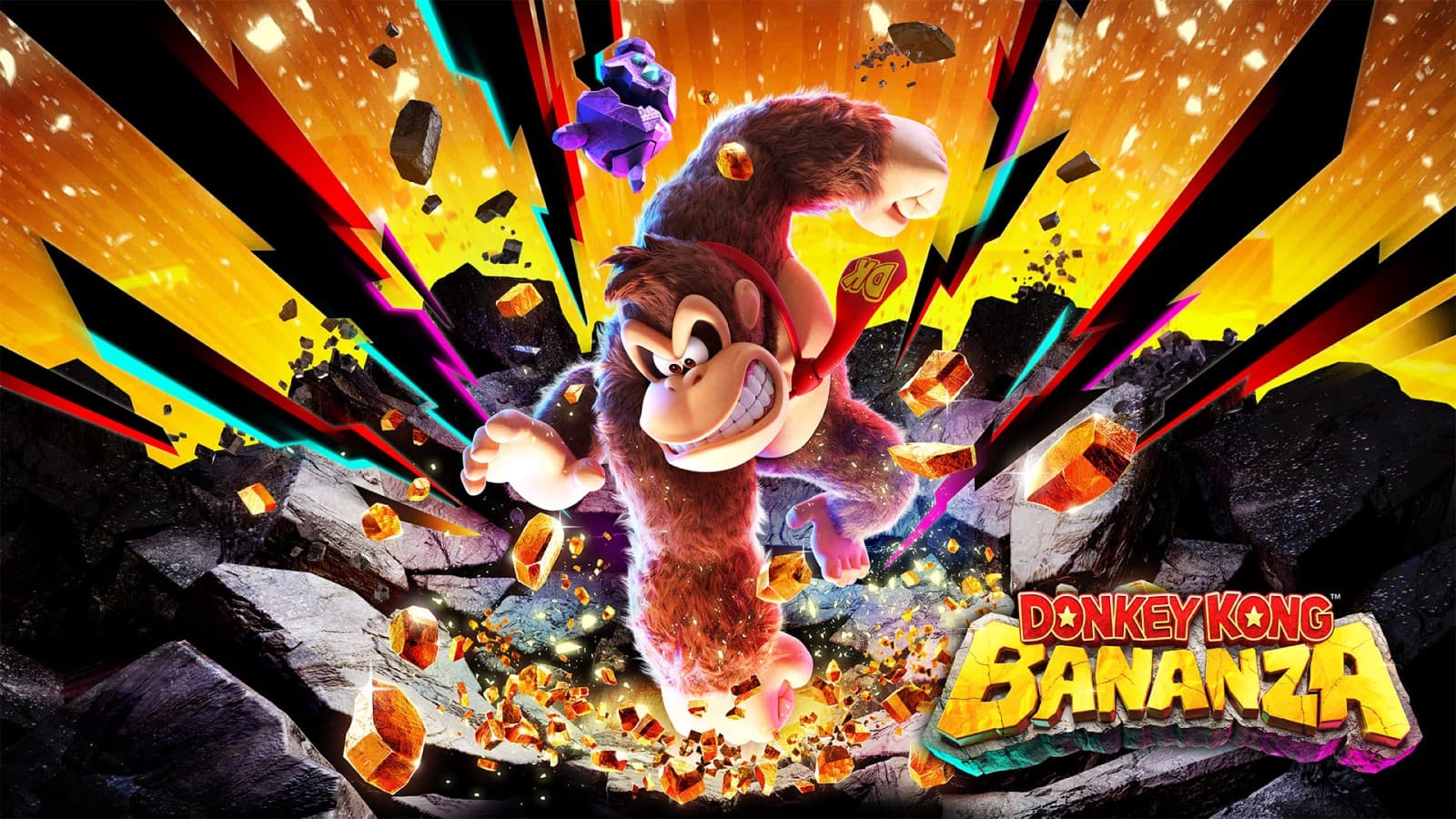
Donkey Kong Bananza is loudest when it is asking the player to notice texture. That is why it has lasted better than its launch spectacle suggested. The first week was about force: rock breaking, ceilings giving way, the small shudder when a tunnel opens. A year later, the more interesting part is the rhythm underneath that force. The destruction has become less surprising, which gives the quieter decisions room to register. This retrospective is not a replacement for our Donkey Kong Bananza review, which caught the launch argument. It is a second reading, after the launch dust settled into place.
Game Snapshot
| Developer | Nintendo EPD |
| Publisher | Nintendo |
| Release Date | 17 July 2025 |
| Platforms | Nintendo Switch 2 |
| Price | Check price on Amazon |
| Rating | E10+ (ESRB)/7 (PEGI) |
| Genre | 3D platformer, smash-em-up |
| Length | Varies |
| Install Size | Varies by platform |
Presentation and World Design
The best Bananza spaces have a sound before they have a view. A wall gives slightly, the bass note drops, and the player understands that the landscape is not a painted surface but a thing with grain. That matters because damage can become empty quickly. Here, at its strongest, the world reads like soft earth after rain: resistant enough to have shape, loose enough to remember the hand that pressed into it.
A year on, the presentation holds because it is less interested in polish than in legibility. The layered worlds are busy, but the route through them stays readable, which is the correct decision for a game about making a mess on purpose. Our Fae Farm review asked whether softness could last once routine became familiar. Bananza has the opposite problem. It has to keep impact from flattening into noise. Most of the time, it does.

Gameplay and Combat
The loop is blunt in outline and more careful in the hand. Donkey Kong breaks terrain, gathers rewards, opens new routes, then returns to a layer that now means something different because it is scarred. That last part is the craft. A destructible space only matters if returning to it changes the way the player reads it.
The combat sits inside that rhythm rather than above it. Enemies are less interesting as opponents than as interruptions to the work of reading a room. The best fights are the ones that make the player look again at the floor, the ceiling, the nearest seam in the rock. The weaker ones ask only for another hit, which is where the system feels thinnest after repeated play.
What still works is the weight. Donkey Kong moves like a body that negotiates with the ground, not glides over it, and that gives ordinary movement a satisfying heaviness without turning every action into labour. It shares one useful value with our Unpacking on Switch 2 review: the action is strongest when it treats space as something the player has arranged, not merely crossed.
Story and Characters
The story is simple enough to stay out of the way, which is mostly a strength. Bananza does not need a dense text layer to explain why a large ape is happier underground than above it. The character work lives in posture: the squat pause before a blow, the small recovery after a leap, the way a celebration animation lasts just long enough.
That restraint matters because the game is already visually and physically busy. A heavier script would have crowded the shelf. Instead, the player reads character through repetition, which is where Nintendo’s older platforming instincts still feel confident. In that sense, it sits closer to our A Short Hike review than the genre labels suggest. Both games understand that a journey can have an emotional line without underlining it. Bananza is brasher, plainly, but its best character moments are still the small ones.

Value and Longevity
The question a year on is not whether Bananza had enough content at launch. It is whether the loop still invites return once discovery loses its first brightness. The answer is yes, with a visible limit. Revisiting a layer has the quality of returning to a garden path after weather has changed it: familiar, but not identical.
The limit arrives when the player has learned the game’s grammar too completely. Some late returns become extraction rather than attention, a search for what remains rather than a renewed pleasure in the place itself. Our Dorfromantik review made the opposite case, about a landscape that gains meaning through repetition. Bananza gains meaning through alteration. Once the alteration is understood, the return is still enjoyable, but less generous.
Technical Notes
The game runs without incident here, which is the correct outcome for a Switch 2 first-party release built around heavy terrain interaction. The important technical note is not spectacle. It is continuity. The ground breaks, the camera keeps the action legible, and the save state returns the player to a world that remembers what changed.
Final Word
The thing Bananza earns after a year is not surprise. Surprise was always going to fade. What remains is the particular pleasure of returning to a space that still bears the marks of earlier attention: a crooked tunnel, an obvious route, a floor that used to be a wall. The game is at its best when it lets that record sit quietly under the noise. The player who wants constant novelty will eventually reach the edge of it. The player who likes a world that remembers the shape of their passage will find enough reason to return.
Is Donkey Kong Bananza worth it in 2026?
Donkey Kong Bananza is still worth considering in 2026 if the appeal is physical platforming with a clear sense of weight. It is less persuasive as a forever game. The first pass has the strongest energy, while return visits work best for players who enjoy reading altered spaces and completing routes they left half-open.
Is Donkey Kong Bananza good for short sessions?
Bananza makes different choices about where to put its stopping points, and those choices are mostly legible. A single layer or route fits inside a short evening session without the stop feeling like an interruption. Longer sessions work, but the texture of the game is better when each return has a clear purpose.
Does the game still hold up after the launch period?
It holds up because the main idea was formal, not only technical. Breaking terrain still matters when the broken terrain changes how the player reads the map. The weaker parts are the repeated combat beats, which have less to reveal once their first rhythm is understood. The durable pleasure is spatial memory, not novelty.
Is the destruction still satisfying a year on?
The immediate pleasure of force remains, but the stronger argument a year on is the quieter one: the marks last, and reading them is the better half of the game. The first week was about ceilings giving way. The later pleasure is finding your own history in the rock.
Does Bananza reward exploration or completionism?
It rewards both, but the texture is different. Exploration has the strongest energy on the first pass. Completionism suits the later visits, when the pleasure shifts from finding a route to closing one. The game is at its best when it lets the record of earlier attention sit quietly under the noise.