Opening
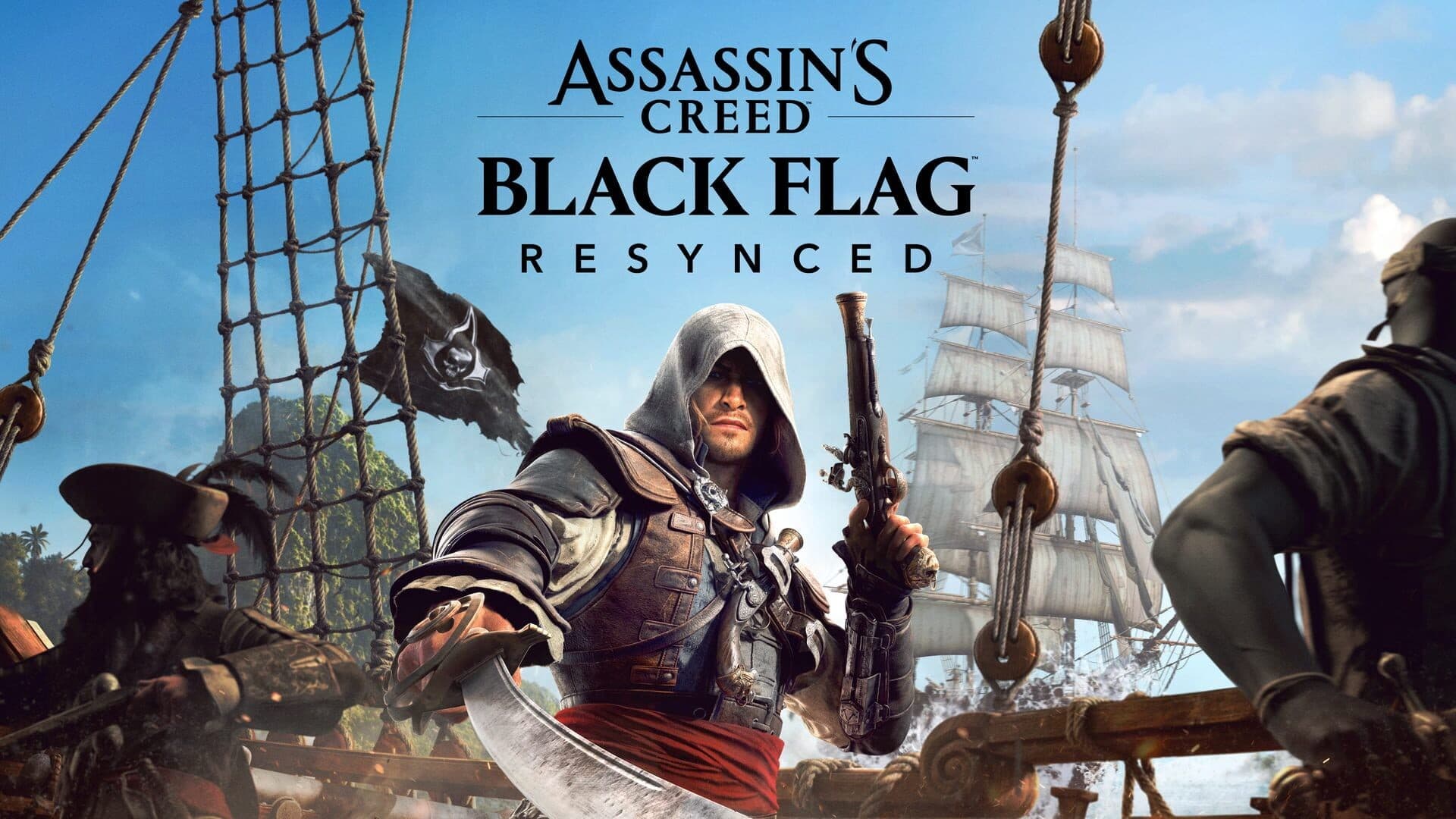
The man directing this remake is the same man who designed the original thirteen years ago. The rebuild honours Black Flag; the storefront does not. Paul Fu helped build Assassin's Creed 4 in 2013, and Ubisoft Singapore has now rebuilt it under his direction on the modern Anvil engine that powered Shadows. That lineage matters, because it is the difference between a studio polishing someone else's work and a studio returning to correct its own, a distinction our look at how the industry handles remakes explores in depth. What you get is the best-selling entry in the series, its Caribbean recreated with dynamic weather and extended ray tracing, wrapped around an always-present Animus Hub that keeps interrupting the voyage with battle-pass notifications. The craft is real. So is the friction.
Game Snapshot
| Developer / Publisher | Ubisoft Singapore (lead, ~15 Ubisoft studios total) / Ubisoft |
| Release Date | 9 July 2026 |
| Platforms | PS5, PS5 Pro, Xbox Series X/S, PC, Nvidia GeForce Now, Blacknut |
| Price | £49.99 | $59.99 (Standard Edition) |
| Rating | PEGI 18 | ESRB M (Mature 17+) |
| Genre | Action-adventure, open-world naval (single-player) |
| Length | Main story: ~25-30 hours; Main + sides: ~45-50 hours; Completionist: ~60-70 hours |
| Install Size | ~65 GB (PS5, with day-one patch headroom) |
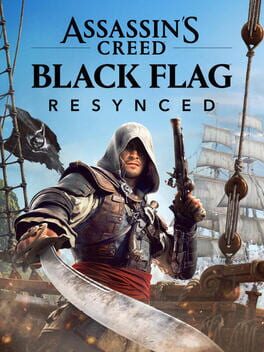
Presentation and World Design: Black Flag Resynced's Caribbean
The West Indies of 1715 has been rebuilt from the ground up, not resurfaced. Running on the latest Anvil engine, the same technology lineage as Shadows, Resynced roughly doubles the original's footprint to around 65 GB and spends that budget on density. A dynamic weather system, internally named Atmos, rolls squalls across the open sea so a calm approach to a fort can turn into a pitched fight in driving rain. Edward Kenway's hair is strand-based simulation now, moving strand by strand rather than as a solid mass. The Caribbean has always been the reason this game endured, and the rebuild treats it as the star rather than the backdrop.
The technical uplift is genuine. Where the recreation strains is at the seams of its 2013 skeleton. This was a handsome game whose open world leaned on activity icons and repeated outpost structures, and no amount of ray-traced water hides that the density of things to do has not grown at the same rate as the fidelity. The world is gorgeous. The map is still a checklist.
For a comparison of how Ubisoft's engine handles a newer, purpose-built open world, our Assassin's Creed Shadows review covers the same technology serving content designed for it from the start.

Gameplay and Combat: How Black Flag Resynced Plays
Combat has been rebuilt around parries and takedowns, and this is where the remake most clearly borrows from a decade of Ubisoft's later work. The old rhythm-and-counter loop is gone, replaced by a parry-driven system with visceral takedown animations, quick-fire rope-dart and pistol moves, and a new Demolitionist enemy archetype that forces you to break position. Stealth has been overhauled to match: a dedicated Observe mode, crouch-anywhere and dive-anywhere movement, a new visibility meter, and low-light shadow mechanics that reward staying in the dark. Parkour gains a manual jump, side ejects, height-gaining back ejects, and ziplines, several of these traversal tools lifted directly from the Shadows toolkit. The moment-to-moment feel is markedly more modern than the game it descends from.
The tension is between that modern layer and the design underneath it. The new systems are capable, and the parry loop is satisfying once it clicks. What they cannot fully modernise is the mission architecture: the eavesdrop-and-tail structure and the tail-a-target beats that defined the 2013 game are still the connective tissue, and thirteen years of the genre moving on makes them show. The result is a game that plays better than it is designed. That is a real improvement and a real ceiling in the same breath.
The stealth overhaul is the standout. Where the systems-driven combat of a game like Nioh 3 on PS5 Pro is built around encounter design from first principles, Resynced is retrofitting new toys onto old scaffolding, and the joins are visible.

Story and Characters
Edward Kenway's story is the reason the original is still remembered, and it survives the rebuild intact. Matt Ryan returns as Edward and recorded brand-new lines specifically for Resynced, which keeps the performance anchored rather than recycled. The arc from privateer opportunist to reluctant Assassin still lands, and the writing that grounded a pirate fantasy in something more thoughtful about ambition and consequence is untouched by the mechanical overhaul around it.
Roughly six hours of new content layers on top. That takes concrete shape: new storylines for Blackbeard and Stede Bonnet, three ship officers who join the main narrative rather than sitting in a menu, additional sea shanties alongside the originals, ship pets, and a photo mode. The officer system is the most substantial addition, because it threads new characters through the story you already know rather than bolting a side activity onto the edge.
Some of that new material is stronger than the rest. The Blackbeard and Bonnet threads add welcome texture to a cast that was already this game's strength, while a few of the officer beats feel more like systems justification than story. The core remains one of the more human narratives the franchise has produced. For a franchise whose storytelling ambitions have grown more complicated over the years, our Shadows retrospective traces where the series went after Black Flag.

Value and Longevity
The raw numbers are generous. A main-story run is around 25 to 30 hours, a main-plus-sides playthrough lands at 45 to 50, and a completionist should budget 60 to 70 hours, all of it a genuine rebuild rather than a resolution bump. At £49.99, the hours-per-pound sum is sound on paper.
The paper is where it stays clean. This is a full-price standalone purchase that ships without Freedom Cry, the well-liked Adewale expansion, and without the remainder of the 2013 season pass, and no publicised upgrade discount was found for owners of the original. Multiplayer is gone entirely. Sitting over all of it is the Animus Hub, a persistent layer with battle passes and a premium store whose pop-up notifications for finished projects and currency rewards intrude on something as basic as opening the map. The friction is not cosmetic. It is the single most consistent complaint the game invites, and it works against the very thing the rebuild does well. A remake this respectful of its source deserves a storefront that stays out of the way.
For a remake that restores a beloved older game without an in-game storefront attached, our Final Fantasy Tactics: The Ivalice Chronicles review offers the contrast.

Technical Notes: Black Flag Resynced on PS5 Pro
On PS5 Pro, the game runs in three modes, all upscaled to 4K via PSSR 2.0: Performance at 60 fps, Balanced at 40 fps on a 120Hz display, and Fidelity at 30 fps. Sony's framing is that PSSR 2.0 narrows the visible gap between them, and in practice the Performance mode is the one most players will settle on. The Pro advantage is specific and worth naming. Extended ray tracing, both global illumination and specular reflections, runs in all three Pro modes, including Performance. On base PS5, full ray-traced reflections are limited to the Balanced and Fidelity modes, so the Performance mode there gives up the most visible part of the effect. Fidelity mode on Pro additionally extends strand-based hair simulation to nearby crowd characters, where the base console keeps it to Edward alone. The Pro is the better way to play this, and the reason is concrete rather than marketing: it is the only configuration that keeps the full ray-tracing pass at 60 fps.
Final Word
Black Flag Resynced is the rare remake made by the people who made the original, and that shows in how carefully the Caribbean has been rebuilt rather than merely repainted. The rebuild is handsome, the parry combat is a genuine step forward, and Edward Kenway's story earns its return. What holds it back is not the age of the bones but the storefront bolted to them: a hub that turns opening the map into an interruption, on a full-price release that leaves Freedom Cry behind. On the Pro, extended ray tracing at 60 fps makes this the best way to sail the Jackdaw. It is a faithful, good-looking return to the series' commercial peak, dragged a half-step back by a live-service layer its source never needed, a compromise a design as durable as the one in our Prince of Persia: The Lost Crown retrospective never had to make. Come for the ships. Tolerate the notifications.
FAQ
Is Black Flag Resynced a remake or a remaster?
Black Flag Resynced is a full remake built anew on Ubisoft's modern Anvil engine rather than an up-resolutioned version of the 2013 release. The install size is roughly double the original's, the combat and stealth systems are new, and the studio has described the approach as faithful to the source while reworking it beneath the surface. It is a rebuild, not a resurfacing.
Is Black Flag Resynced worth it?
Black Flag Resynced is worth it if you value the rebuild and can tolerate the storefront. The Caribbean recreation, the modernised parry combat, and Edward Kenway's arc make a strong case, and 60 to 70 completionist hours justify the £49.99 asking price on content alone. The intrusive Animus Hub monetisation layer and the absence of the Freedom Cry expansion are the real drawbacks to weigh before buying.
Is Black Flag Resynced on Xbox Game Pass?
Black Flag Resynced is not available on any Xbox Game Pass tier and is a standalone paid purchase. The original 2013 Black Flag remains on Game Pass separately, but the remake is not included there. There is a subscription route on PC and Xbox through Ubisoft+ Premium, which includes the game and its Deluxe Edition contents day one, but that is a different service from Game Pass.
Does Black Flag Resynced have multiplayer?
Black Flag Resynced has no multiplayer and is single-player only. The original game's competitive multiplayer mode has been removed, and the creative director has stated the team chose to focus entirely on Edward Kenway's story. That decision also removes the multiplayer-linked season pass content the 2013 release shipped with, so the remake is a purely solo experience from start to finish.
Does Black Flag Resynced include Freedom Cry?
Black Flag Resynced does not include Freedom Cry, the single-player Adewale expansion from the 2013 game. The rest of the original season pass content is also absent from the remake. The developers have not ruled out revisiting Freedom Cry as future content, but nothing has been confirmed, so at launch the standalone package covers Edward Kenway's campaign and the new material only.
How long is Black Flag Resynced?
Black Flag Resynced takes between 25 and 30 hours for the main story alone. A main-plus-side-content playthrough runs roughly 45 to 50 hours, and a full completionist clear sits in the 60 to 70 hour range. Those figures reflect the remake specifically, which adds roughly six new hours of story, officer quests, and related activities on top of the original campaign's structure.
8.7
Great
SpawningPoint Verdict
Review summary
Assassin's Creed Black Flag Resynced is a ground-up remake of the 2013 pirate adventure, rebuilt by Ubisoft Singapore on the studio's current Anvil engine and directed by a designer from the original team. Combat now favours parries and takedowns, stealth and parkour borrow from the series' later entries, and naval battles gain new weapons and an officer system. Matt Ryan voices brand-new Edward Kenway material, with added threads for Blackbeard, Stede Bonnet, and three ship officers. On PS5 Pro, every display mode keeps extended ray tracing, with performance reaching 60 fps. A persistent Animus Hub storefront and Freedom Cry's absence are the notable drawbacks. A faithful, handsome return dented by its live-service layer.