Pearl Abyss shipped Crimson Desert on 2026-03-19. Two months on, what the launch actually argued is easier to read than the pre-release signal ever was: a studio that changed what it was making mid-development, committed to completing the new version, and delivered it to a market that had been watching the pattern for six years. Whether that pattern produced the game it was pointing toward is the question the 60-day mark answers.
What Pearl Abyss Shipped
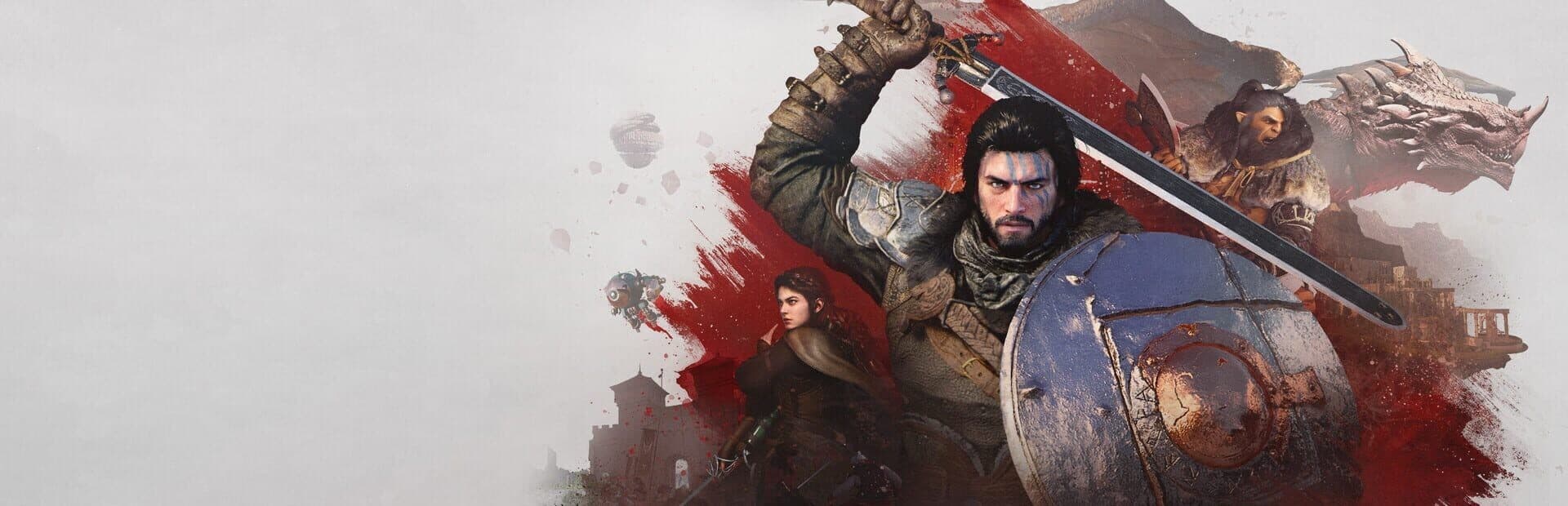
The confirmed shape of Crimson Desert at launch aligns with the repositioning Pearl Abyss had been signalling since 2022. The game shipped as a standalone title, not an expansion or successor to Black Desert Online. It launched simultaneously on PC and console, which represented a meaningful departure from the studio’s historical PC-first posture. The open world structures around mercenary protagonist Macduff, with mount-based traversal and combat delivered as a designed system rather than a convenience feature. The pricing tier was premium, without a live-service subscription gate.
What Pearl Abyss did not clarify until launch was the commercial model’s full shape. The monetisation structure shipped with cosmetic post-launch content positioned as optional, which answered the most structurally significant pre-release question about whether Black Desert’s live-service revenue architecture would migrate into the new product. It did not, at least not at the core gameplay layer.
The distinction between confirmed and signal, which mattered when tracking the pre-release pattern, resolves at launch: the game Pearl Abyss showed in two years of sustained showcase cadence is the game that shipped. The demonstrations were not misleading. That is itself an argument worth noting in a development history that produced multiple repositionings.

The Delay History: Six Years and What Each Slip Argued
Crimson Desert was announced in 2019 and shown publicly in late 2020 with footage that suggested a 2021 launch. That window slipped without a public explanation from Pearl Abyss. The subsequent communication positioned the delay as scope expansion rather than technical failure: the game was described as growing in ambition between the 2020 reveal and the 2022-era repositioning away from Black Desert’s live-service structure entirely.
The repositioning is the structurally significant moment in Crimson Desert’s development history. The original framing presented Crimson Desert as set in the same world as Black Desert Online with an implied narrative relationship to that game’s audience. The revised framing removed that dependency entirely: Crimson Desert is now a standalone product with no assumed familiarity with Black Desert. That is not a cosmetic change. It represents a fundamental decision about the game’s audience, its monetisation posture, and the systems Pearl Abyss was willing to design around a single-player framework rather than a live-service one.
A studio that makes that repositioning decision after a delay is not a studio that delayed because production ran late. It is a studio that changed what it was making. Each subsequent slip, and there were at least three visible ones between 2021 and 2024, should be read in that context: Pearl Abyss completed a different game than the one it announced. The shipped product is consistent with that conclusion.
The Mount and Combat Systems
The combat system Pearl Abyss shipped is built around three distinct ranges: mounted, standing, and environmental. Macduff fights differently on horseback than on foot, and the transition between those states functions as a combat option rather than a movement tool that happens to allow attacking. The mounted combat incorporates the horse’s momentum and turning radius as variables in encounters rather than as background movement the player ignores. The system was built with conceptual depth; whether that depth holds under sustained play is the question the two-month mark begins to answer.
The large-scale battle sequences that featured prominently in pre-release demonstrations are present in the shipped game. Encounters involving dozens of enemies simultaneously, with the player character navigating through that density using area-of-effect attacks, mounted charges, and a physics-reactive environment, were not demonstration theatre. The environmental reactivity carries some encounter-design consequence rather than operating purely as visual texture, though the degree to which it requires deliberate use rather than passive benefit varies across encounter types.
The combat vocabulary the demonstrations suggested is wide. That is not inherently praise. Wide combat vocabulary in an open-world action-RPG frequently means the player identifies two systems that work and ignores the rest. It is a pattern that distinguished Avowed’s action-RPG combat from titles that offered similar breadth on paper but delivered it unevenly in practice. The question the demonstrations left open, whether Pearl Abyss designed the encounter variety to require the full vocabulary or whether the width is largely cosmetic, is answerable at two months: the vocabulary is used, but unevenly, with mounted and heavy on-foot options dominating in a way that makes the finer environmental system feel supplementary.

What Pearl Abyss Shipped: The Standalone Argument
The repositioning from Black Desert-adjacent to fully standalone has a mechanical consequence that the shipped game clarifies. Black Desert Online is built around a particular kind of progression architecture: deep character customisation, action combat designed for the online environment, and systems that reward long play sessions with incremental advancement. Transferring that architecture to a standalone single-player or co-operative product required re-engineering the encounter design from the loop level.
Pearl Abyss completed that re-engineering. The shipped progression system reflects the action-RPG lineage associated with large-budget singleplayer releases: a world to explore, a protagonist with a fixed identity rather than a customisable vessel, and combat designed around that protagonist’s specific capabilities rather than a buildable character sheet. Whether the underlying systems still carry Black Desert DNA in ways that surface in the long run remains a question for players deeper into the game, but the surface architecture is distinct.
The standalone argument also resolved commercially. A game requiring Black Desert familiarity would have found its audience size structurally capped at that playerbase. The game Pearl Abyss shipped competes for the broader action-RPG audience. The post-launch reception has engaged that audience, not primarily the Black Desert community, which is the outcome the pre-release positioning was targeting.
What Pearl Abyss Got Right and Wrong at Launch
The risk case for Crimson Desert was never that the game would be bad. The risk case was structural, with two components. Two months on, those components can be assessed directly.
The first was the scope management problem. Crimson Desert spent enough time in development that the games it would be compared to at launch included titles that did not exist when its architecture was designed. Our earlier impressions, captured in our PS5 Pro build coverage, noted precisely this tension: ambition outpacing the moment it was designed for. That concern has partially materialised. Crimson Desert is technically accomplished in ways that the 2024 and 2025 showcase footage accurately represented, but the open-world design grammar, the mission structure rhythm, and the traversal pacing carry the assumptions of a game designed before the reference points shifted. It is excellent in execution and occasionally dated in conception. That is a specific kind of success, and an honest one.
The second was the live-service residue problem. Pearl Abyss’s commercial model had historically depended on Black Desert’s live-service revenue. The question was whether Crimson Desert would ship with microtransaction infrastructure grafted onto a premium structure. It shipped with optional cosmetic post-launch content and a conventional premium pricing model. That is the better outcome of the two plausible ones. The post-launch support plan suggests Pearl Abyss intends to treat Crimson Desert as a premium product with content updates rather than a live-service with a premium entry point. The distinction will matter for how the game ages.

Where Crimson Desert Goes Next
The post-launch trajectory matters for a game with Crimson Desert’s development history. Pearl Abyss has committed publicly to post-launch content support, which is consistent with the premium positioning. The first major content update is the signal worth watching: whether it expands the encounter design or the world geography will indicate whether Pearl Abyss is treating Crimson Desert as a live product with design ambitions or as a completed release being supported at maintenance level.
The standalone positioning also creates a sequel question that did not exist before launch. For open-world games of this size and ambition, the post-launch window typically clarifies whether the studio is building toward a second instalment or treating the first as a complete standalone statement. Pearl Abyss has not addressed that question publicly. The sales reception and the post-launch content cadence will indicate the answer before any announcement arrives.
Final Word
Crimson Desert’s multi-delay history is readable, two months on, as a studio that changed what it was making and committed to completing the new version rather than shipping the original scope early. That reading is supported by the standalone repositioning, the sustained showcase cadence, and the shipped product’s coherence with what those showcases described. Pearl Abyss did not overpromise. The game it showed for two years is the game that arrived.
What the 60-day mark confirms is that the combat system’s conceptual depth holds under play, the standalone repositioning was executed rather than gestured at, and the live-service concern was the worse of the two possible outcomes. What it leaves open is whether the scope management cost is visible enough at the design level to matter to the broader audience Crimson Desert is competing for. That is a question the next six months will answer more clearly than the first two have.
FAQ
Did Crimson Desert release?
Crimson Desert launched on 2026-03-19 on PC, PlayStation, and Xbox. Pearl Abyss shipped the game as a fully standalone action-RPG with a premium pricing structure, following a development history that included multiple delays and a significant repositioning away from Black Desert Online's live-service framework.
Is Crimson Desert connected to Black Desert Online?
Pearl Abyss repositioned Crimson Desert as a fully standalone title with no required familiarity with Black Desert Online. The two games share a development studio and may share underlying engine architecture, but Crimson Desert features a different protagonist, a different narrative world, and a design structure built around a single-player or co-operative experience rather than an MMO framework. No Black Desert account or knowledge is required.
What platforms is Crimson Desert on?
Crimson Desert launched simultaneously on PC, PlayStation 5, and Xbox Series. Pearl Abyss confirmed simultaneous cross-platform release as part of the repositioning away from the studio's historical PC-first posture. PlayStation 4 and Xbox One compatibility was not part of the launch.
What is the combat system like in Crimson Desert?
The shipped combat system operates across three states: mounted, on foot, and environmental. Macduff fights differently on horseback than standing, with the mount's momentum incorporated as a variable in attack chains rather than as background traversal. Large-scale encounters involving many simultaneous enemies are a core feature. The vocabulary is wide, with mounted and heavy on-foot options proving most dominant in practice, while the environmental reactivity system functions as a supplementary layer rather than a required mechanic.
Why was Crimson Desert delayed so many times?
Pearl Abyss did not provide a public explanation for the multiple delays since the 2020 reveal. The evidence from the repositioning away from Black Desert adjacency toward standalone suggests the studio changed the scope and audience of the product during development rather than experiencing a straightforward production failure. A game that repositions its commercial and design model mid-development typically takes longer to finish than one whose scope is fixed from the beginning. The shipped product is coherent with that explanation.