RETROSPECTIVE
8.7· Great
Black Myth: Wukong Retrospective 2026: A Year On, the Transformations Are the Argument


The transformations are not a feature. They are the argument. Black Myth: Wukong’s chapter structure is a sequence of encounter-architectures designed to teach when each transformation matters, and the order in which the system unlocks tracks exactly to the order in which the player needs to be using it. A year on, in a Black Myth Wukong retrospective that has the benefit of post-patch stability and a completed run on all three platforms, the encounter-staging argument is more legible than it was at launch. Game Science built a soulslike that earns its difficulty not through resistance alone but through deliberate sequencing: each boss teaches the transformation it unlocks, and the chapter ends when the lesson is confirmed.
Game Snapshot
| Developer / Publisher | Game Science/Game Science |
| Release Date | 20 August 2024 (PS5/PC); Xbox Series X|S in 2025 |
| Platforms | PS5, PC (Steam, Epic, WeGame), Xbox Series X|S |
| Price | £59.99 | $69.99 Standard; up to £89.99 | $109.99 Collector’s Edition |
| Rating | PEGI 16 | ESRB M |
| Genre | Souls-like action-RPG |
| Length | 35-40 hours main story; 60+ hours main + side content |
| Install Size | ~130 GB |
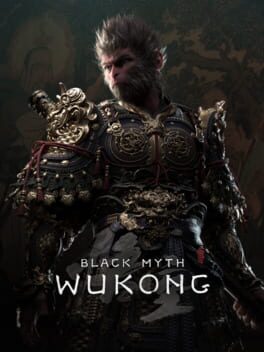
Presentation and the Visual Argument
Unreal Engine 5 gave Game Science a specific kind of visual leverage: the capacity to render mythological architecture at a fidelity where every courtyard column and every moss-covered altar reads as something that has been rained on. The game uses that leverage consistently. The temple districts of Chapter 1 are not background dressing; they are encounter-staging geometry that the visual direction and the fight architecture share. The lighting design understands what information the player needs: shadow pools mark the edges of arenas, sightlines are cleared or closed by where the bamboo grows, and the fog in the Chapter 2 dunes removes information the encounter does not yet want the player to have.
The visual direction is the game’s highest achievement: it is functional as well as beautiful, which is the correct relationship between art and encounter design. A game can be photographically impressive without its environments doing design work; Black Myth: Wukong is both, and the combination is rarer than the reviews at launch suggested. The mythological vocabulary, drawn from Journey to the West’s dense bestiary and architectural tradition, gives the visual direction a coherence that high-fidelity games often lack. Every region reads as a distinct chapter not only because the flora changes but because the fight geometry changes to match it. The narrow corridors of Chapter 1 give way to the open sand-blasted arenas of Chapter 2, and the encounter design changes accordingly.

The Transformations as Teaching Arc
The 72 Transformations system is the game’s core mechanic and its primary design argument. The Destined One, the game’s protagonist and Sun Wukong’s successor within Journey to the West’s reworked frame, unlocks transformation forms across all six chapters. These include Spell Bindings (spirit-form transformations tied to specific defeated enemies) and full-body transformations that temporarily replace the Destined One’s combat vocabulary entirely. What distinguishes the system from a conventional unlock tree is the sequencing: the game stages the encounter that teaches a transformation before it confirms that transformation as the correct response.
Chapter 1 establishes the contract. Lingxuzi, the Whiteclad Noble, is the game’s first proper named boss: Game Science stages the encounter around a fast, stance-shifting opponent whose attack cycles are readable but whose timing requires precision from a player who is still learning the focus-meter and the three-stance system simultaneously. What the fight teaches is that committing to a transformation window, the brief pause after a dodge that opens a Spell Binding opportunity, is not a bonus action but a structural requirement. Black Bear Guai, encountered mid-chapter, reinforces this: the fight is heavier, slower, and rewards the player who has understood that transformation timing is a resource to be managed, not a spectacle to be triggered. By the time Chapter 1 closes, the transformation economy is established.
Chapter 2 builds on it directly. The Yellow Wind Sage, the chapter’s climax encounter, stages an arena where the wind-column hazards are the encounter argument: they punish the player who is standing still and reward the player who has learned to use dodge windows as the activation window for transformations. The Tiger Vanguard, encountered in the same region, teaches the same lesson through a different mechanical axis: the fight’s attack vocabulary forces the player to identify which of the three stances (Smash, Pillar, Thrust) opens the correct response to each attack type, and the transformation forms available at that point in the game are designed to complement the stance-switching the fight demands. The semicolon between stance economy and transformation timing is Chapter 2’s design contribution; Chapters 1 and 2 together complete the foundational argument.
Chapter 4 is where the system makes its most sophisticated demand. Yellowbrow stages the encounter on two registers simultaneously: the fight’s surface pattern is readable, but the transformation forms the player now has access to are the only tools that can efficiently manage its second phase. The encounter argues that the transformations are not a supplement to the combat system; they are the combat system, and a player still treating them as optional spectacle will fail here not through a lack of skill but through a misunderstanding of the contract. The game is correct to make this argument at Chapter 4 rather than earlier: the player needs all the preceding encounters to have built the vocabulary the fight now tests.
Chapter 5’s Hundred-Eyed Daoist Master is a mastery test in the strict sense: the design stages the encounter without introducing new mechanics. It takes every element the player has been building across four chapters, the focus-meter management, the stance-switching, the transformation timing, the dodge window as activation condition, and requires all of them to be applied correctly in a sustained encounter that does not offer many recovery windows. The fight earns the cost: it is hard because it is confirming the vocabulary, not because it is miscalibrated.
Chapter 6 completes the arc. Erlang Shen is the de-facto final reckoning: the encounter stages a multi-phase opponent whose attack vocabulary escalates in a way that demands the full transformation toolkit, and the dodge window as timing mechanism is tested at the narrowest point in the game. The Great Sage’s Broken Shell, the true ending’s final encounter, is more compressed but structurally honest: it is the game’s last argument that the transformations are the answer, not the answer’s instrument.

Combat and the Stance System
The three stances, Smash, Pillar, and Thrust, are not cosmetically different approaches to the same combat loop. They serve distinct encounter functions: Smash provides reach and heavy stagger; Pillar provides vertical reach and gap-closing; Thrust provides speed and the narrow, precise openings that specific boss attack cycles create. The game’s encounter design is built around this distinction. A player who identifies which stance the current phase requires and switches to it is using the combat system as designed; a player who commits to a single favourite stance and adjusts their dodge strategy to compensate is working against the system’s architecture.
The focus-meter is the pacing mechanism: charged focus attacks deal significantly higher damage and generate the stagger economy that several boss encounters depend on. Managing focus across a sustained fight, generating it through successful dodges and standard combos and spending it at the correct point in the boss’s attack cycle, is the skill the game is teaching across its first three chapters. The moveset reads as a considered answer to Sekiro’s parry-centred approach: where Sekiro’s difficulty centres on a single high-precision timing window that the entire system builds toward, Black Myth: Wukong distributes its timing demands across dodge windows, stance choices, and focus expenditure simultaneously. The breadth is the argument; the teaching arc is longer because the contract asks more from the player at once.
The perfect-dodge is the combat system’s most important timing mechanism. It functions as the game’s parry equivalent: a dodge executed within the correct window produces a brief advantage state that the player can use to activate a Spell Binding transformation, trigger a focus-fuelled finisher, or reposition for the next attack cycle. The dodge window is consistent across stances and contexts, which is the correct design decision: a timing window that varies by stance would undermine the teaching arc that makes the encounter design legible. The game teaches this window early and relies on it throughout. A player who has internalised the dodge window in Chapter 1 is equipped for the demands Chapter 6 places on it.

Story and the Journey to the West Frame
Black Myth: Wukong does not adapt Journey to the West; it occupies a position after it. The Destined One is not Sun Wukong but a successor figure, tracing a path through the relics and remnants of the original journey. Game Science uses this displacement deliberately: the game can draw on the source material’s dense character ecology, its regional geography, and its theological framework without being bound to reproduce its narrative sequence. The six chapters map loosely to journey-stages, each with a distinct regional identity and a presiding antagonist drawn from the source material’s extended bestiary.
What the game adapts most successfully is the source material’s understanding of power as a form of knowledge: the 72 Transformations in Journey to the West are a demonstration of Sun Wukong’s mastery over form, his refusal to be fixed. The game’s transformation system is a mechanical argument in the same register. What it adapts less successfully is the middle chapters’ pacing, where the narrative frame loosens and the connection between the Destined One’s journey and the transformation system’s logic becomes less clearly staged. The story sections that route narrative through systems, where a boss encounter’s mythology informs what transformation it unlocks, are the game’s strongest narrative moments. The sections that deliver mythology through cutscene alone are the weakest, because they ask the player to hold a lore context the encounter design does not engage with.

A Year of Patches: What Changed
The PC version at launch had a well-documented Unreal Engine 5 problem: shader compilation stutter on first encounter with new visual effects, traversal stutter on region transitions, and frame-pacing inconsistency in the open areas of Chapter 3. These were not performance problems in the aggregate sense; the average frame rate was acceptable on recommended hardware. They were timing-specific problems, and timing-specific problems matter more in a soulslike than in most genres, because the game’s dodge-window teaching assumes the player can build a reliable tactile model for the input.
Post-launch PC patches addressed the shader compilation stutters progressively across the first six months. The traversal stutter was reduced significantly by the 1.1x patch cycle and is now at a level that does not interfere with the encounter-design assessment. Frame-pacing in Chapter 3’s open area, which was the most consistent performance failure at launch, held longer as a problem: the Unreal Engine 5 open-world traversal load is genuinely demanding, and the patch cadence prioritised boss arena stability first, which was the correct priority order. By late 2024 and into early 2025, the Chapter 3 frame-pacing issue had been addressed to the point where it no longer constitutes a criticism of the encounter design.
The PS5 version launched in a stronger state: the parry-equivalent dodge windows were not affected by frame-time drops in any of the boss arenas in the first two chapters. The Chapter 3 open area showed the same pacing slowdown as PC, resolved on a similar timeline. The PS5 version is now the cleanest platform argument for the encounter-staging thesis: the arena geometry and the dodge-window teaching are both legible without technical interference.
Xbox Series X|S launched in 2025 and arrived into a game that had already been patched substantially. The result is that Xbox players had an experience the launch PC and PS5 players did not: a version of the game where the technical issues that complicated the encounter-staging argument had largely been resolved before they first saw it. Frame-pacing on Xbox Series X holds through all six chapters. The encounter design now reads cleanly across all three platforms.
Value at One Year
At £59.99 Standard a year on, Black Myth: Wukong is a 35-to-40-hour main-story commitment with a 60-plus-hour ceiling if the full transformation unlock tree and the hidden bosses are the objective. The price point reflects a game that has had its patch lifecycle substantially completed: a player purchasing today is buying the version of the game that the launch player was waiting for. The encounter-staging argument that is the game’s central achievement is now legible without the technical caveats that attended the launch window. That changes the value calculus.
The transformation system is the reason to play. A player who engages with it as the encounter-design teaches it will find one of the most considered unlock sequences in the genre in recent years: each chapter’s bosses are not difficulty gates but vocabulary tests, and the vocabulary has been supplied in the correct order before the test arrives. The game earns the cost.
Final Word
The game holds its side of the contract. The Hundred-Eyed Daoist Master in Chapter 5, which is the moment Black Myth: Wukong confirms everything the preceding fifty hours of the encounter-design arc have been teaching, is the test by which the verdict is issued: a player who has been paying attention passes it not because they are skilled but because the game has taught them. A player who has been proceeding without engaging the transformation system will fail it because the contract has a second party. Recommended to players who want encounter design that treats difficulty as a teaching mechanism; the transformation system is not optional decoration, and a player who treats it as such has misread the game’s argument from Chapter 1. The skip case is a player seeking a conventional soulslike with a single central timing mechanic: that game is Lies of P or Sekiro, and the comparison is not a criticism of either.
FAQ
Is Black Myth: Wukong worth playing a year on?
Yes, and the timing is defensible: the post-patch version is significantly more stable than the launch window, particularly on PC. The Unreal Engine 5 shader-compilation stutters that affected the launch experience have been progressively resolved, and frame-pacing is now consistent enough that the dodge-window teaching the game's encounter design depends on is no longer complicated by technical interference. The transformation system is the reason to play, and it reads more clearly now than it did in August 2024.
What does the transformation system actually do?
The 72 Transformations system unlocks Spell Bindings, spirit-form transformations tied to specific defeated enemies, and full-body transformations that temporarily replace the Destined One's combat vocabulary. The system is the encounter-design's primary argument: each chapter's boss sequencing is structured to teach which transformation the player needs before the encounter that tests it arrives. A player who engages with the system as designed will find that the chapter-end bosses function as confirmation tests rather than difficulty walls.
How does Wukong compare to Sekiro or Elden Ring?
The comparison that holds is not difficulty but architecture. Sekiro centres its difficulty on a single high-precision parry window that the entire combat system builds toward; Black Myth: Wukong distributes its timing demands across dodge windows, stance choices, and transformation timing simultaneously. The contract is broader and the teaching arc longer. Elden Ring builds difficulty into geography and enemy placement; Black Myth: Wukong builds it into the transformation unlock sequence. These are different designs answering a similar question, and each is honest about its own terms.
Is the PC version stable in 2026?
The traversal stutter and shader-compilation issues that characterised the launch window have been substantially resolved by the post-launch patch cycle. Frame-pacing in Chapter 3's open area held longest as a problem; it is now at a level that does not factor into the encounter-design assessment. The PC version on current mid-to-high-end hardware runs without the timing-specific instability that made the launch dodge-window teaching harder to internalise. The recommendation is clear: the version available today is the version the game was designed to be.
Does the Xbox version match PS5?
Xbox Series X|S launched in 2025 into a game that had already completed most of its patch cycle, which means the Xbox experience is closer to the post-patch PS5 experience than the PS5 launch experience was. Frame-pacing on Xbox Series X holds consistently across all six chapters. The encounter-staging argument is legible on both platforms without technical interference. If a preference exists between the two versions, it is marginal and hardware-adjacent rather than meaningful to the encounter design.
8.7
Great
SpawningPoint Verdict
Review summary
Black Myth: Wukong is a soulslike action-RPG from Game Science that released on 20 August 2024 for PS5 and PC, with Xbox Series X|S following in 2025. The game's central argument is the 72 Transformations system: a chapter-by-chapter unlock arc where each set of boss encounters is designed to teach the player which transformation to deploy before the chapter-end test confirms that knowledge. The combat system's three stances, focus-meter, and perfect-dodge mechanism are well-designed and honestly taught. The visual direction is the game's highest individual achievement. After a year of post-launch patching, the PC and PS5 versions are both stable, and the Xbox launch was clean from day one. At £59.99 Standard, the encounter-staging argument is worth the contract.


