REVIEW
8.4· Great
Assassin’s Creed Shadows Review 2026, the Dual-Protagonist Decision One Year On
The dual-protagonist decision was Assassin's Creed Shadows' loudest argument before launch; a year on, it's the one that has settled cleanest. The Assassin's Creed Shadows review conversation at launch was dominated by the historical questions around Yasuke and by the series' accumulating open-world debt.


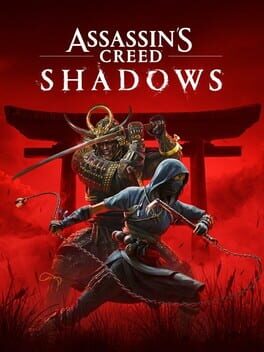
The dual-protagonist decision was Assassin’s Creed Shadows‘ loudest argument before launch; a year on, it’s the one that has settled cleanest. The Assassin’s Creed Shadows review conversation at launch was dominated by the historical questions around Yasuke and by the series’ accumulating open-world debt. Both were legitimate discussions. Neither is the most interesting thing the game is doing. What Ubisoft Quebec built, when the staging is read clearly, is a design contract between two opposing encounter philosophies held inside a single engine: Naoe as the grammar of patience and vertical geometry, Yasuke as the grammar of weight and attrition. One year of patches and the Claws of Awaji DLC later, the contract holds more cleanly than it had any structural right to. The retrospective case is stronger than the launch case, and that matters.
Game Snapshot
| Developer | Ubisoft Quebec (lead), Ubisoft Bordeaux, Sherbrooke, Singapore (support) |
| Publisher | Ubisoft |
| Release Date | 20 March 2025 |
| Platforms | PlayStation 5, Xbox Series X/S, PC, Mac, iPad |
| Price | £59.99 | $69.99 (Standard); up to £109.99 | $129.99 (Collector’s) |
| Rating | PEGI 18 | ESRB M (Mature 17+) |
| Genre | Open-world action RPG |
| Length | ~60 hours main story; ~100+ hours full completion with DLC |
| Install Size | ~60 GB (base, platform-variable) |
Presentation: Sengoku Japan as Visual Argument
The visual design of Sengoku-era Japan is not Shadows’ novelty. It is its argument. Ubisoft Quebec has spent considerable internal resources on the dynamic weather system, and the reason is legible in play: the lighting register changes the encounter grammar. A night raid on a castle in Yamashiro under heavy snowfall is not the same encounter as the same raid at noon. The visual state is not cosmetic; it is stage design. Shadows understands this more consistently than any open-world game in the series since Origins, and the weather-lighting integration is the strongest evidence.
Iga reads differently from Settsu. Tamba’s forested ridgelines establish different verticality grammar for Naoe’s grappling-hook traversal than Harima’s open coastal plains do for Yasuke’s overland approach to siege objectives. The regions are not interchangeable dressing: they are encounter contexts that the game is staging for its two protagonists in differentiated ways. This is rare in open-world design. Most open-world games present a terrain that is narratively flavoured but mechanically neutral. Shadows treats the terrain as a mechanical participant, and the visual direction earns that reading.
The audio is quieter in its ambition and more consistent in its execution. The score retreats during stealth sequences rather than underlining them, and that restraint is correct: Naoe’s contract requires silence as a precondition of approach. Yasuke’s combat register gets a fuller orchestral signature, which stages the encounter correctly for a protagonist whose moveset reads as spectacle rather than concealment.

Naoe and the Shinobi Contract
Naoe’s design contract is specific: every mechanic exists to make the stealth-first approach legible as a grammar rather than a mode. The prone-crawl, the kusarigama, the kunai scatter, the grappling-hook traversal from the Iga shinobi tradition, none of these are presented as optional tools in a sandbox. They are a vocabulary, and the encounter design in Naoe’s missions stages them as such.
The grappling-hook is the most load-bearing element. Shadows treats vertical geometry as the primary spatial register for Naoe’s movement, and the hook makes that legible: traversal is not a gap-fill between encounter spaces, it is itself a stealth mechanic. Positioning above a patrol route changes the encounter entirely; the grappling-hook is what earns the cost of the vertical level design. The parry window in Naoe’s melee kit is narrow by design, which is the correct choice. A shinobi whose parry window is as generous as a samurai’s would lose the encounter argument that her moveset reads as avoidance and positioning rather than stand-and-exchange.
The kusarigama stages the encounter at mid-range in ways the series has rarely managed cleanly. It is not a better-than-sword option; it is a different grammar. Crowd management through the kusarigama’s chain-interrupt mechanic, the capacity to neutralise a patrol’s alert timing by pulling a target out of sightline before the kill registers, is the most precise expression of stealth-as-encounter-design Shadows offers. The kunai is a simpler tool with a clearer function: it stages the encounter as a timing problem, spending ammunition to buy movement windows that the stealth contract requires.
The encounter argues, in Naoe’s case, that commitment to the vertical and the patient approach earns the cost of the slower discovery pace. This is correct. The missions designed specifically around her moveset, which constitute the majority of the Iga and Yamashiro story content, stage that argument with real conviction.

Yasuke and the Open-Warfare Contract
Yasuke’s contract is the mirror: where Naoe’s moveset reads as concealment and precision, Yasuke’s moveset reads as attrition and presence. The katana, the kanabō, the naginata, the teppō matchlock rifle; each weapon stages the encounter differently, but all of them operate from the same core grammar: Yasuke’s design contract is to dominate ground rather than navigate it.
The kanabō is the most precise expression of this. The stagger economy in Yasuke’s combat system is not identical to the posture systems in the soulslike genre, but it draws from the same vocabulary. The kanabō converts raw offensive pressure into enemy stagger windows, and the moveset reads as a system that rewards aggression calibrated to positioning: close the distance, generate stagger, convert the window. The dodge window is wider than Naoe’s parry window, which is the correct choice; a warrior in open battle who survives by positioning rather than exact timing creates a different encounter grammar than a shinobi who survives by concealment. The distinction earns the cost of having two protagonists.
The naginata stages the encounter as range control rather than stagger accumulation. Against mounted targets and grouped infantry in open-field skirmishes across Settsu and Omi, the naginata’s reach establishes the encounter argument as crowd geometry rather than single-target attrition. The teppō is both a tactically interesting choice and a historically coherent one: Yasuke’s access to firearms under Oda Nobunaga’s sponsorship is not a player-convenience graft; it is a staging decision that makes the open-warfare encounter read as historically situated.
The katana occupies the encounter’s standard register: balanced exchange, punish windows scaled to enemy type, parry window tight enough to reward pattern reading without making exchange-heavy play feel like an endurance test. Against named adversaries, including Akechi Mitsuhide’s lieutenants, the katana fights are the cleanest expression of Yasuke’s contract: stand, read, convert.

The Dual-Protagonist Decision and What It Argues
The encounter staging differs between Naoe and Yasuke, and the design contract differs accordingly. This is the argument that the dual-protagonist system is making: not that two playstyles are available, but that the encounter design is calibrated differently for each, so that switching is a design choice rather than a preference expression.
Shadows allows the player to toggle between protagonists at most story beats, and the mission design signals which protagonist the encounter was staged for. A fortress in Harima with multiple elevated patrol routes and a target who cannot be reached without vertical approach is a Naoe encounter; the game is not forbidding Yasuke in that space, but the encounter argues against him at the level of design rather than gate. This is the correct way to implement the system. Gating the protagonist to a mission type would have resolved the design question too cleanly; leaving it as argument rather than rule gives the player something to read.
The toggle frequency is lower than expected in the main story and higher in the open world. Naoe handles the majority of the assassination-focused mission structure, which is historically and narratively coherent: the shinobi contract is the series’ original vocabulary. Yasuke is the encounter escalation mode, the protagonist the game reaches for when the staging argument is about display rather than concealment. The Awaji DLC content, added in September 2025, expands the Yasuke encounter design into a longer open-warfare arc that the base game’s pacing did not fully explore.
The Hideout System and the Settled-Life Layer
The Iga hideout is Shadows’ attempt at a settled-life counterpoint to the journey structure, and it earns more than it costs. The construction and customisation system is not a deep management layer; it is a spatial argument about what the player is building towards between missions. Expanding the hideout unlocks recruitable agents, additional intel gathering options for mission planning, and cosmetic customisation for the compound itself.
The recruitable agent network stages the encounter preparation grammar: before entering a target location, the player can send agents to gather patrol-pattern intelligence, which changes the approach options available. This is a stealth-design choice, not an open-world padding mechanic. The intel feed earns the cost of the hideout system by making it a functional encounter tool rather than a cosmetic distraction. The seasonal weather cycle, refined across the post-launch title updates, is visible from the hideout view and changes the visual register of the compound across the game year. Short declarative observation: the hideout knows what it is for.
Story: Revenge, Outsider, Honour
Naoe’s arc is the revenge narrative, and it is the better-staged of the two. Her pursuit of those responsible for the destruction of the Fujibayashi clan through the Iga period establishes the encounter sequence as a purpose-driven investigation rather than an open-world checklist. The targets have narrative identity before they have combat identity, which means the assassination encounter earns the cost of the investigation content preceding it.
Yasuke’s arc is the outsider narrative: an African man navigating a Japan that reads him as spectacle and object before it reads him as person, and finding within Oda Nobunaga’s patronage both opportunity and the weight of being instrumentalised. This is the more difficult story to stage, and Shadows is more uneven in its handling. The most honest moments are the quieter scenes in which Yasuke is not fighting and the encounter argument is social rather than martial. The Hattori Hanzō antagonist thread weaves the two arcs together through the Iga clan’s political positioning under the late Sengoku order, and the convergence in the final act earns the cost of the parallel structure across the middle game.
Neither arc is arguing that its protagonist is the more important story. The encounter staging of the story content reflects the same calibration as the gameplay: Naoe’s missions are positioned as the primary investigative grammar, Yasuke’s as the contextualising counterpoint. The convergence is clean, and the final sequence earns the contract it was building towards.
Claws of Awaji DLC and the Patch Cycle
The Claws of Awaji DLC, released September 2025, adds the Awaji island region and a new boss arc that is the base game’s most concentrated expression of the dual-protagonist contract. The Awaji content is staged around a conflict that requires both protagonists’ grammar to resolve: the opening section is Naoe’s infiltration vocabulary, the midpoint pivots to Yasuke’s open-warfare staging for the siege sequence, and the final boss encounter is built for the katana at a parry-window precision that the base game’s combat only approached in the Akechi Mitsuhide confrontation.
The DLC earns its cost. Approximately 12-15 additional hours of content, priced separately from the base game or included in the higher-tier editions, Awaji is not a cosmetic extension. The new boss design demonstrates that Ubisoft Quebec absorbed the post-launch criticism of the base game’s mid-tier encounter staging and applied the correction to the DLC design. The Awaji bosses argue their mechanics more clearly than several base game equivalents.
The post-launch title updates improved the dynamic weather system’s readability in low-light conditions, refined the enemy perception cone logic (which had been a point of criticism for Naoe’s stealth contract), and introduced new equipment sets for both protagonists. The patch cycle was responsive to mechanical criticism rather than merely cosmetic iteration. A year on, the game at its current patched state is meaningfully more coherent than at launch, and Awaji is the evidence that the development team understood which direction to push.
Final Word
A year on, Assassin’s Creed Shadows resolves into a game that understood its own argument and staged it more consistently than the open-world context made easy. The scene that holds: Naoe in prone-crawl position on the snow-covered rooftop of a Yamashiro castle at night, the grappling-hook engagement line calculated, the kusarigama ready, the patrol timing understood through the hideout’s intel feed. The encounter is patient, geometric, earned. That is the Naoe contract at its highest expression, and the game knows how to build to it.
The audience for this is players who want an open-world that thinks about encounter design at the level of vocabulary rather than content volume; players prepared to engage with both protagonists’ grammars rather than optimising one. The skip case is specific: players who came to the series primarily for its fictional historical tourism and have limited patience for encounter-design argument will find the dual system more demanding than the franchise’s previous entries. The rest will find a Shadows that has grown into its decision.
FAQ
Is Assassin's Creed Shadows worth playing in 2026?
Yes, more so than at launch. The post-launch title updates addressed the most significant mechanical criticisms, particularly the enemy perception logic affecting Naoe's stealth contract, and the Claws of Awaji DLC adds 12-15 hours of content that applies the dual-protagonist encounter grammar with more precision than several base game sequences. At the current standard price, the base game alone represents fair value for players engaged with the dual-protagonist system. The Awaji DLC is worth adding for those who want the encounter design at its most concentrated expression.
Naoe or Yasuke: which protagonist is better?
The design contract differs between them by intention rather than balance. Naoe's moveset reads as concealment and vertical positioning: the grappling-hook, kusarigama, prone-crawl, and kunai stage the encounter as patience and geometry. Yasuke's moveset reads as attrition and presence: the kanabō's stagger economy and the naginata's range control stage the encounter as ground domination. Naoe handles the majority of the main story's assassination structure. Yasuke is the correct choice when the encounter argues for open warfare. Players who engage with both vocabularies get the fuller design argument.
Is the Claws of Awaji DLC worth it?
Yes, and for a specific reason: the Awaji boss arc is staged with more encounter-design precision than the base game's mid-tier content. The new boss encounters demonstrate that Ubisoft Quebec absorbed the post-launch mechanical criticism and applied the correction directly to the DLC design. Approximately 12-15 hours of content, Awaji is not cosmetic extension. The Awaji siege sequence in particular is the best expression of the dual-protagonist grammar in the game, requiring both Naoe's infiltration vocabulary and Yasuke's open-warfare staging in sequence.
How does Shadows compare to other recent entries in the series?
The dual-protagonist system is the design decision that separates Shadows most clearly. The series' Origins entry remains the benchmark for encounter-design clarity within the open-world format, and Shadows approaches that standard in its best regional content, particularly Iga and the Yamashiro fortress sequences. The visual direction, specifically the dynamic weather and lighting integration with encounter staging, is the strongest the series has produced. The open-world density is more restrained than the series' recent pattern, which is the correct adjustment: the terrain's role as mechanical participant requires legibility that content saturation would undermine.
Do I need to have played earlier Assassin's Creed games first?
No. Shadows is self-contained as both narrative and system vocabulary. The game introduces its two protagonists' encounter grammars through the opening Iga sequences before placing them in the wider Sengoku context. Prior series familiarity may deepen the appreciation for how the dual-protagonist contract revises the series' original shinobi vocabulary, but the game does not require that context to be legible on its own terms. New players can enter through either protagonist and find the encounter design staged with sufficient teaching that the grammar becomes readable within the first eight to ten hours.
8.4
Great
SpawningPoint Verdict
Review summary
Assassin's Creed Shadows built its central argument on the dual-protagonist design decision and spent a year earning it. Naoe's shinobi contract, staged through grappling-hook verticality, kusarigama mid-range precision, and the patience grammar of prone-crawl approach, and Yasuke's open-warfare contract, built on kanabō stagger economy and the naginata's range control across Settsu's open-field engagements, are not competing playstyles. They are differentiated encounter grammars held inside a single game. The Claws of Awaji DLC added the most concentrated expression of that grammar yet. The regional visual design of Sengoku Japan earns its 9.2 out of 10 by making terrain a mechanical participant rather than backdrop. At 8.4 out of 10 average, Shadows is Ubisoft Quebec's most considered series entry since Origins.


