RETROSPECTIVE
9.0· Outstanding
Animal Well Retrospective 2026: Eighteen Months On, the Route Is the Puzzle


The route through Animal Well is the work. Billy Basso’s solo-developed puzzle-metroidvania arrived on 9 May 2024 with a deceptively simple premise: explore a luminous, creature-filled underground world, collect eggs, survive without fighting anything. Eighteen months on, the cleanest argument this Animal Well retrospective can make is a structural one. The bubble wand is not a traversal-unlock; it is a puzzle-solving vocabulary the game teaches by withholding the second use until the player has demonstrated the first. The slinky is not a downward-movement tool; it is a spatial logic puzzle dressed as a piece of kit. Every item in this game is a contract, and the contract is this: the route resolves once the player has learned to read it.
Game Snapshot
| Developer / Publisher | Billy Basso/Bigmode |
| Release Date | 9 May 2024 (PS5/PC); Switch and Xbox Series X|S in late 2024/early 2025 |
| Platforms | PS5, PC, Switch, Xbox Series X|S |
| Price | £19.99 | $24.99 |
| Rating | PEGI 7 | ESRB E10+ |
| Genre | Puzzle-metroidvania |
| Length | Layer 1: 6-10 hours; full Layer 3 completion: 30+ hours (community-supported) |
| Install Size | ~250 MB |
Presentation and the Custom-CRT Visual Argument
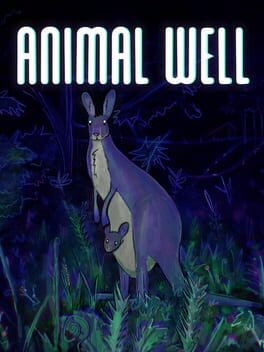
Basso built a custom engine specifically to achieve a CRT-like pixel rendering quality: phosphor-glow atmospherics, bespoke lighting that treats the underground world as a place where darkness has texture rather than simply absence. The result is immediately legible as something designed rather than assembled. Each zone has a visual signature that is simultaneously decorative and functional: the lighting in the Bird Area stages the route before the puzzle-vocabulary does; the Sea’s green-tinged luminosity tells the player that spatial logic has shifted before they have solved a single water puzzle.
The visual argument is not ornamental. Basso uses light and pixel-density as a puzzle-vocabulary signal: darker regions tend to require the firecracker; softly glowing floors respond to the flute. The game teaches through atmosphere before it teaches through item use, and those two teaching channels are calibrated so closely that they feel like one. The custom engine earns its own cost; the CRT-pixel aesthetic is not nostalgia-play but a deliberate design choice that ties visual language to puzzle architecture. Eighteen months on, the aesthetic has not aged in the way borrowed-retro visuals typically do, because it was purpose-built rather than borrowed.

Route Design and the Item Economy
The second-use logic is Animal Well‘s central design argument: every item the player acquires has a surface use that is taught immediately, and a second use that is withheld until the player has demonstrated fluency with the first. Name the mechanism, because it drives every major puzzle-design decision in the game.
The bubble wand creates platform-bubbles: the surface use. Walk into a vertical shaft, blow bubbles upward, ride them. The contract appears to be a traversal tool; the player rides bubbles to reach new zones. This is what Layer 1 asks for. The second use, the one the route withholds, is this: certain creatures in the underground world can be distracted, redirected, or trapped by bubbles. The puzzle that requires this second use is not flagged. The game does not say “use the wand differently here.” The architecture stages the route so that the player arrives at a zone where the surface use is demonstrably insufficient, carrying a tool whose second use they have not yet been told exists. The puzzle reads, in this game, are route-reads: the player must identify that the tool they are holding is doing something other than what they assumed. That recognition is the game’s primary satisfaction.
The slinky follows the same logic; descends edges and triggers floor-switches as its surface use, a physical object with spatial weight. The second use is lateral spatial problem-solving: the slinky’s arc, deployed from height, can reach puzzle-targets that no direct movement can reach. The disc is a throwable tool that returns to hand; the surface use is reach-extension, the second use is timing-puzzle vocabulary. The firecracker lights dark zones and scares specific creatures on its surface use; the second use is trigger-timing, where the creature’s scare-response itself becomes the mechanism that solves the puzzle. The flute plays melodies that interact with specific zones: the surface use is environmental response, and the second use requires the player to understand that the melody itself is a key, structured, not improvised. The b. ball is the calibration tool: a yo-yo deployed to test distances and spatial relationships, the item that lets the player measure a puzzle before committing to a solution. Its contract is precision: it earns its cost not by unlocking new zones but by letting the player understand whether they have read the route correctly before acting.
Against Tunic (Andrew Shouldice, 2022), Animal Well is its closest structural peer: both games are puzzle-metroidvanias where the item economy is a puzzle-vocabulary rather than a traversal-vocabulary, and both teach by withholding the manual until the player has earned the context to read it. The contrast with Hollow Knight (Team Cherry, 2017) is sharper. Hollow Knight is a traversal-metroidvania: the Mantis Claw expands where the player can go; the Crystal Heart changes the physics of movement. Each unlock is an expansion of traversal logic. Animal Well’s unlocks expand puzzle-vocabulary logic. The distinction sounds academic until you notice that Hollow Knight’s challenge is navigation plus encounter survival, while Animal Well’s challenge is route-discovery plus puzzle-vocabulary fluency. They are different games wearing a similar structural skin, and the difference matters because it changes what the player is asked to do at every moment.
The item economy earns its own cost: at £19.99, the player is buying a puzzle-vocabulary system dense enough to sustain thirty-plus hours of second-pass and third-pass discovery, built by a single developer working in a custom engine, releasing it complete.

The Layer Structure: Surface, Second-Pass, ARG
Animal Well has three named progression layers, and the contract changes between them in a way that the game does not announce. This is structural design, not gatekeeping; the layers represent three different versions of what the player has agreed to.
Layer 1 is the surface contract: collect 64 eggs, explore the underground world, complete the reachable route. An attentive solo player completes this in six to ten hours. The puzzle-vocabulary is taught and deployed; the item economy is comprehensible; the route argues for itself. Layer 1 is a complete game. Basso designed it to be solvable and satisfying at this level, and it is.
Layer 2 is the puzzle-vocabulary-as-route-reveal layer: the secret-rabbit puzzles and the second-pass discoveries. This is where the second-use logic compounds. Items the player thought they understood reveal new applications; zones thought fully explored produce new geometry when approached with correct item combinations. Layer 2 requires either extended solo exploration or, more commonly, community-supported puzzle decoding; it is the layer where Animal Well shifts from individually solvable to collectively rewarding. The contract here is different: the game is no longer promising a completable solo route; it is promising that the vocabulary the player has learned is deeper than they suspected.
Layer 3 is the cryptography and ARG layer. Some puzzles in this layer took weeks or months of coordinated community effort to crack after the May 2024 launch. This is not a failure of design; it is an intentional third contract with a different audience. Layer 3 acknowledges that the deepest puzzle architecture in the game was not built for a solo player working in a single session. The puzzles are community-scale. They earn their cost in this sense: they are the game’s argument that puzzle-design can scale outward from a single brain.

The Zones and Their Architecture
Each zone in Animal Well is an architectural puzzle: not a themed environment with puzzles placed inside it, but a space whose geometry is the puzzle.
The Bird Area stages the route through vertical movement; it is where the bubble wand’s surface use is taught most cleanly, and where the first hints of the second-use logic begin to surface. The Bunny Forest introduces the flute’s environmental-response mechanic through spatial density: creatures and flora respond to melody, and the zone teaches the player that sound is a puzzle-solving tool before the game states this directly.
The Sea is the water-traversal puzzle zone, where the slinky’s spatial weight becomes the primary vocabulary: swimming routes that require the player to think in three dimensions, using the slinky’s arc to reach switches that direct water-flow. The Mainframe is the late-game digital-puzzle layer, visually distinct from the organic zones, and the zone where the disc’s return-to-hand mechanic is most rigorously staged. The Pearl region, home to the egg-collecting deep layer, is where the firecracker’s timing-puzzle vocabulary is deployed most densely; the puzzle architecture here requires the player to use creature-scare responses as triggers, timing the firecracker’s detonation against spatial events.
Every zone earns its named role in the item economy. There is no decorative geography in Animal Well; each space exists because it requires a specific item-vocabulary interaction that could not be taught cleanly elsewhere.
No Combat, and What That Argues
Animal Well has no combat. The player cannot kill anything. Creatures can end a run, but the punishment-loop is minimal: respawn costs are light, and the game does not ask the player to replay encounter sequences. The absence of combat is not a concession; it is an argument.
The argument is this: the metroidvania shape does not require encounter-stress to generate forward momentum. Hollow Knight’s traversal-metroidvania structure relies on encounter-survival as the primary tension; reaching a new zone costs the player something, and the cost is measured in combat difficulty. Animal Well’s puzzle-metroidvania structure relies on route-discovery as the primary tension; reaching a new zone costs the player puzzle-vocabulary fluency, and the cost is measured in understanding.
Removing combat isolates what the route-design is actually doing. Without encounter-stress, every forward-movement moment in Animal Well is purely a puzzle-vocabulary moment. The player is not navigating toward a boss encounter; they are navigating toward a puzzle-vocabulary test. The route argues for the game’s design in this: by stripping the genre of its combat layer, Basso reveals that the route-design itself was always the architecture, and the combat in traversal-metroidvanias has historically been load-bearing for forward-momentum in ways that Animal Well simply does not need.
Eighteen months on, the no-combat argument reads as confident rather than constrained. The puzzle-vocabulary is sufficient architecture.
Value at Eighteen Months
At £19.99, the surface contract is six to ten hours for an attentive solo player completing Layer 1. That is a credible price-to-hour ratio for the genre. But the second-pass and third-pass contracts alter the calculation substantially.
Layer 2 adds a minimum of ten to fifteen additional hours for players who engage with the secret-rabbit and second-pass puzzle-vocabulary discoveries, and those hours are qualitatively different from Layer 1 hours: they require the player to apply the item economy to routes they believed were already solved. Layer 3 adds community-scale puzzle-solving that some players will not complete solo, but whose existence enriches the second-pass experience by confirming that the game’s puzzle-architecture is genuinely deeper than any solo run can exhaust.
At eighteen months, with the Switch and Xbox Series X|S versions delivering the same complete experience across four platforms, and with the patch record demonstrating that the game shipped complete without needing structural revision, the value argument holds cleanly. £19.99 for a puzzle-metroidvania with thirty-plus hours of layered depth, built by a single developer, designed to be complete at every layer the player engages with: the contract earns its price.
Final Word
Eighteen months on, the route through Animal Well is still the work; the game has not softened or over-explained. Pick up the bubble wand in the Bird Area and blow three platform-bubbles upward, and you will understand the surface contract. Return to that same shaft twenty hours later, in Layer 2, carrying the understanding that the wand distracts, redirects, and traps, and you will understand why this game earns the cost of replaying routes you believed were already solved.
Animal Well suits players who find puzzle-vocabulary discovery intrinsically satisfying: the “I understood this tool incorrectly” moment is the game’s primary pleasure, and it recurs at every layer. It suits players willing to engage with community-supported puzzle-solving for Layer 3, and players who want a complete, polished experience without combat tension. Skip it if you need encounter-stress to generate forward momentum, or if back-pocket-discovery puzzle design, where items reveal uses the game never stated, is a friction type rather than a reward type for you.
Billy Basso built something structurally distinct. The route is the argument.
9.0
Outstanding
SpawningPoint Verdict
Review summary
Animal Well is a puzzle-metroidvania developed solo by Billy Basso and published by Bigmode, released on 9 May 2024 for PS5 and PC, with Switch and Xbox Series X|S versions following in late 2024 and early 2025. The game is structured across three progression layers: a six-to-ten-hour surface egg-collection run, a second-pass puzzle-vocabulary layer requiring community support for full completion, and a community-scale ARG layer whose deepest puzzles took months of coordinated effort to decode. The item economy operates on a second-use logic: each of the game's six named tools has a surface use taught on acquisition and a second use withheld until the player has demonstrated fluency with the first. At £19.99, the three-layer architecture represents credible value. The game's absence of combat isolates the route-design argument cleanly. Eighteen months on, Animal Well earns a retrospective score of 8.7/10.


