The next Xbox does not exist yet, which is why the language around it is so revealing. When a platform holder talks about its next hardware generation in terms of “the biggest technical leap in a generation” before a product has been announced, the framing is the signal. It is not a specification claim. It is a positioning decision made eighteen months before the product brief has been finalised, chosen because the platform needs the next generation to do something that the current one was not able to do. Understanding what that something is requires reading the last four years of Microsoft Gaming decisions structurally rather than sequentially.
What Microsoft Has Actually Confirmed
As of mid-2026, Microsoft has confirmed nothing about the next Xbox in the traditional product-announcement sense. No name, no silicon spec, no release window, no price point. What it has confirmed is a posture.
Phil Spencer and Sarah Bond have both used language consistent with a hardware generation in active development. Spencer’s “biggest technical leap” framing, deployed in multiple public settings across late 2025 and 2026, is specific enough to constitute a positioning brief. It names the ambition before the product exists. Sarah Bond’s role anchoring the Microsoft Gaming leadership reorg after the Activision Blizzard integration completed is a structural signal of its own: Bond took responsibility for platform and devices at a moment when the Activision integration had absorbed the organisational bandwidth that would otherwise have gone toward hardware preparation.
The Xbox hardware timeline from Series X/S launch in 2020 through the mid-generation period places a successor on a plausible 2027 to late 2028 window, consistent with the AMD silicon roadmap cadence and the PS6 cycle that Sony appears to be targeting in the same period. A 2027 release is the aggressive end. A 2028 release is more consistent with what the confirmed development posture suggests.

Phil Spencer’s “Biggest Leap” Framing: What It Implies for the Silicon Brief
The language matters because it sets a floor, not a ceiling. “Biggest technical leap in a generation” is a comparative claim against the Series X to Xbox One generation transition, which was itself a significant performance step. If the claim is accurate, the successor’s silicon brief is targeting a jump that makes the current console feel like the predecessor felt when Series X launched.
The AMD silicon roadmap gives structural support to that ambition. The same RDNA architecture families that power the PS5 and Series X have moved through two significant generations since 2020. A 2027 to 2028 Xbox successor drawing on RDNA 4 or RDNA 5 derivatives, paired with a Zen 4 or Zen 5 CPU configuration, would produce a performance profile materially ahead of the current generation in ways that are legible to consumers: resolution without frame-rate compromise, significantly faster loading, and AI upscaling performance that changes what frame delivery looks like at the practical level.
The AI silicon component is where Microsoft has structural leverage that Sony does not. Microsoft’s Azure compute investments and its partnership with AMD on Neural Processing Unit silicon means the next Xbox likely integrates dedicated AI inference capacity at the SoC level. That matters for upscaling, for frame generation, and for the Game Pass streaming pipeline. It is the part of the silicon brief that has no historical precedent in console hardware and therefore no established expectation to manage.
The Multi-Device Strategy: Console, Handheld, PC, and Cloud Convergence
Xbox’s deliberate multi-device positioning is the context in which the next gen console has to be understood. The current generation already runs across Series X (£479/$499), Series S, PC via Game Pass, and cloud. The next generation is not a single hardware product brief; it is a platform-layer strategy that has a new console as one node in a wider surface.
That distinction changes what the next Xbox needs to do. It does not need to be the only way to access the platform. It needs to be the best way to access the platform on the television, at the performance ceiling, for the audience that wants that. This is structurally different from where PlayStation sits, where PS5 is the primary access point and every other surface is supplementary. Xbox’s multi-device architecture means the hardware generation transition carries less existential weight on the console itself and more weight on the platform layer that sits above all the devices.
The consequence is that the next Xbox’s announcement cycle will likely be different from a traditional console reveal. The hardware reveal matters less than the platform announcement: what Game Pass tier structure supports the new hardware, how backwards compatibility works across the device stack, whether the handheld positions below or alongside the console in terms of capability.

The Handheld Question: Microsoft’s Response to Steam Deck, ROG Ally, and Switch 2 Dominance
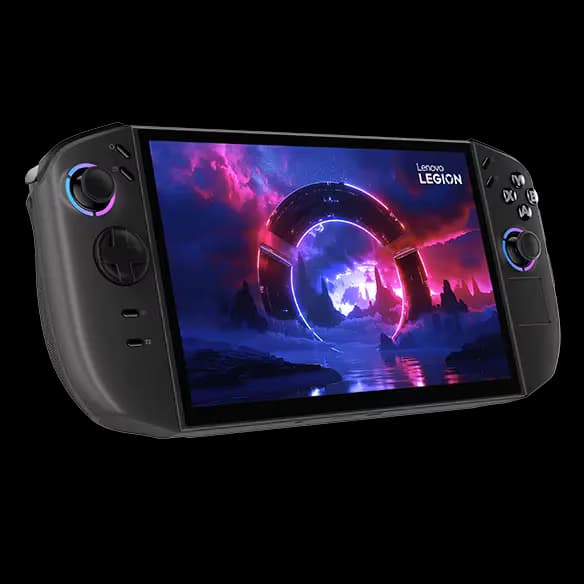
The ROG Xbox Ally, released as a co-designed device with ASUS, is Microsoft’s current handheld answer. It is explicitly positioned as a PC gaming handheld running Xbox software, not as a dedicated console-tier handheld. That distinction is load-bearing.
The market signal that the ROG Xbox Ally is responding to is the sustained growth of PC handheld gaming, led by Steam Deck and the Ally platform ASUS had already established. Tying an Xbox software layer to a mature PC handheld hardware platform is the pragmatic path to handheld presence without the investment of a ground-up custom silicon design. It is also the path that leaves the handheld segment open for further development if the platform strategy changes.
The Keystone successor codename that has circulated in the reporting ecosystem refers to a dedicated Xbox cloud streaming device, a different product category from a full handheld. The distinction between a streaming-first handheld and a compute-capable handheld is the central question for Microsoft’s next move in portable gaming. Nintendo Switch 2’s strong launch in 2025 confirmed that a first-party native gaming handheld at £299/$299 can define a market segment. Whether Microsoft builds to that spec or routes around it via cloud is the unresolved strategic question that the current ROG Xbox Ally does not answer.
The Activision Blizzard Cycle: First-Party Software Pipeline as Launch-Window Evidence
The Activision Blizzard acquisition completed in late 2023. The integration cycle that followed absorbed roughly two years of Microsoft Gaming’s leadership bandwidth. Spencer has said publicly that the first generation of games built natively for Xbox under the Activision Blizzard structure is ahead of the current pipeline, not yet in the current release window.
That matters for a 2027 to 2028 launch window in a direct way. Call of Duty, Diablo, Overwatch, Starcraft, and the rest of the Activision Blizzard catalogue going day-one on Game Pass changes the value proposition of the platform at launch in a way that no previous Xbox generation has been able to claim. The question is whether those franchises will have next-gen versions ready for the launch window or whether they arrive as forwards-compatible titles from the current generation. A fully native Call of Duty built for the next Xbox, available on Game Pass at launch, would be the single most significant launch-window software event in Xbox hardware history.
The Bethesda integration, one generation ahead of Activision Blizzard in integration maturity, has not yet produced the headline launch title the Series X generation needed. The next generation has more studio production capacity behind it than any previous Xbox launch. Whether that production capacity aligns with the launch window is the unsolved variable.
What the Next Xbox Product Brief Has to Be
Reading the signals structurally, the next Xbox brief has three non-negotiable requirements, each of which has a specific failure mode if it is not met.
Backwards compatibility must extend to the full Xbox One and Series X/S catalogue without compromise. The Series X maintained this through the Xbox 360 and original Xbox back catalogue and it is the clearest user-trust signal in Xbox hardware history. Breaking it, for any reason, would inflict the same brand damage the Xbox One suffered in 2013 when digital rights management and used-game restrictions torpedoed the launch before the hardware had been reviewed.
AI silicon integration must be functional at launch, not a firmware promise. Frame generation and AI upscaling that visibly changes what games look like at 4K is a concrete, demonstrable product claim. If the AI silicon is present at the SoC level but the software stack to use it is not ready for launch, the technical advantage is invisible to consumers until it is patched in, which is the wrong order for a generation-defining claim.
Game Pass integration must be the structural centre of the platform, not a subscription layer on top of it. The multi-device strategy only works if Game Pass is the continuity layer across all devices. A pricing or tier restructure that fragments access across device types would undermine the architecture Microsoft has spent a decade building.
How Microsoft Could Get the Launch Wrong: The Series X/S Split Lesson
The Series X and Series S launched simultaneously in November 2020 with a significant performance and price gap between them. The Series S’s lower memory bandwidth and storage spec produced a generation-long constraint on what studios could target for the platform: any game that needed to ship on Series S had to fit within the Series S ceiling, which held back what the Series X could do in practice.
A three-tier hardware launch (handheld, mid-tier console, high-performance console) carries the same risk at a larger scale. If the next Xbox launches across three form factors with meaningfully different capability profiles, the studio development target becomes the lowest common denominator. The “biggest technical leap” claim requires the main console to be the development target. If it is not, the leap is aspirational rather than delivered.
The second failure mode is brand fragmentation. “Xbox” currently names a software platform, a gaming service, a handheld PC, a mid-tier console, a high-performance console, and a cloud streaming service. Adding a next-generation console name to that stack without retiring or clearly repositioning the current generation risks the same naming confusion that has followed the Xbox brand since the Series X/S era began. PlayStation 6 benefits from a single noun that refers to a specific product. Xbox next gen needs an equivalent clarity of identity at launch.
Final Word
Microsoft’s cycle position in mid-2026 is stronger than it was in 2020, when the Series X launched into a pandemic, an absent first-party slate, and a naming confusion that took months to resolve. The Activision Blizzard integration is the production capacity shift that the earlier generation never had. The multi-device architecture is genuinely differentiated from what Sony or Nintendo offers. The AI silicon direction is the right direction.
The question is whether the execution of the next launch delivers on the structural advantages Microsoft now has, or whether it introduces a new round of self-imposed constraints. Spencer’s “biggest leap” framing is only true if the software is there at launch, if the backwards compatibility holds, and if the brand clarity is present from day one. All three are achievable. None of them are automatic.
The Xbox next gen watch is worth tracking through 2026 as AMD silicon announcements, Game Pass tier restructuring, and Microsoft Gaming developer events fill in the brief. What Microsoft has confirmed is the ambition. What it has not yet confirmed is the execution.
FAQ
When will the next Xbox release? The next Xbox release date has not been announced. The most plausible window based on AMD silicon roadmap signals and Phil Spencer’s public language about development progress is 2027 to late 2028. A 2027 launch would align with the aggressive end of the current development cycle; 2028 is more consistent with a platform-layer strategy that is still absorbing the Activision Blizzard integration’s first native development cycle.
Will Microsoft make an Xbox handheld? Microsoft has a co-designed handheld already in the market via the ROG Xbox Ally, built with ASUS on a PC handheld platform. Whether the next generation includes a first-party dedicated gaming handheld rather than a PC-based device is unconfirmed. The strategic question Microsoft has not yet answered is whether to match Nintendo Switch 2’s native-compute portable format or to route around that category via cloud streaming.
Will the next Xbox be backwards compatible? Backwards compatibility with the full Xbox One and Xbox Series X/S catalogue is the single most credible commitment in Xbox hardware history, and there is no structural reason for Microsoft to break it at the next generation. The backwards compatibility architecture is built into the platform layer rather than emulated per-game, which makes extending it to the successor technically straightforward compared to building it from scratch as original Xbox did.
Will Game Pass be required to use the next Xbox? Game Pass has never been required to use Xbox hardware, and nothing in the current platform strategy suggests that changes with the next generation. The multi-device strategy makes Game Pass the most compelling way to access the platform across all surfaces, but physical and digital game purchases remain part of the model. A mandatory subscription requirement would contradict the backwards compatibility commitment by making pre-subscription library ownership a second-class feature.
What will the next Xbox cost? No pricing has been announced. The Xbox Series X launched at £449/$499 in 2020. A next-generation console targeting the “biggest technical leap” claim would carry a higher component cost than the current generation at equivalent margins, which puts the starting price in the £549 to £599/$549 to $599 range as an informed estimate rather than a confirmed figure. If Microsoft positions a mid-tier console alongside the flagship at launch, a sub-£400/sub-$400 option in the Series S tradition is plausible.