REVIEW
Lenovo Legion Go 2 Review: The Windows Handheld in 2026
Lenovo Legion Go 2 review 2026: Windows handheld tested at 90 minutes on a realistic TDP, with detachable controls, screen size, and suspend-resume all under scrutiny.

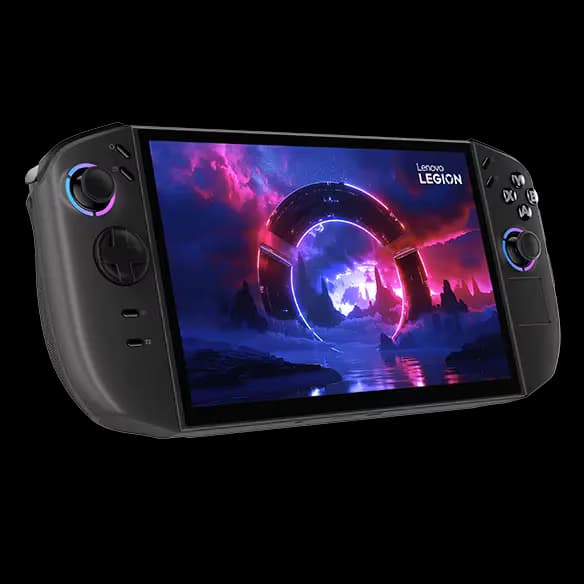
The Legion Go 2 has to earn its weight away from a socket. This Lenovo Legion Go 2 review is about that contract. A Windows handheld in 2026 cannot win by quoting a higher APU ceiling if it drains before the outward and return journey or resumes with audio routed through the wrong device. The useful test is narrower: ninety minutes at a realistic TDP, fan audible on a still evening service, battery reading still trustworthy. The question is whether the larger screen, detachable controls and Windows library still make sense when the charger stays in the bag.
Device Snapshot
| Manufacturer | Lenovo |
| Model | Legion Go 2 |
| Category | Windows handheld PC hardware |
| Release Date | October 2025 (Windows edition); June 2026 (SteamOS edition) |
| Platforms | Windows 11 (Windows edition); SteamOS (SteamOS edition) |
| Price | From $1,099 (Windows, 1TB/16 GB RAM); from $1,199 (SteamOS edition) |
| Rating | Not yet rated |
| Genre | Handheld gaming PC hardware |
| Battery capacity | 74 Wh |
| Storage configuration | 1 TB NVMe SSD (base); 2 TB NVMe SSD (Ryzen Z2 Extreme configuration) |
Build Quality and Design
The first build question is whether the Legion Go 2 remains manageable after a ninety-minute session. At 74 Wh, the battery is larger than the ROG Ally X’s 80 Wh cell by a narrow margin, which means the device is carrying meaningful weight in that cell alone. The ergonomic verdict stays tied to how that mass distributes across the detachable-controller frame.
The detachable-controller idea still has a useful brief. It turns a handheld into a small tabletop device without needing a separate pad. It also adds seams, rails and grip geometry that have to hold up under repeated removal. The Lenovo Legion Go S review showed the same category truth: detachable controls only work when the device remains coherent before the controllers come off.
Build value also includes the cost of making the device carryable. A case, a short USB-C cable and a power bank are not optional if the Go 2 is a daily bag device. That is why the Best Lenovo Legion Go Accessories tested list belongs beside the hardware verdict, not after it.

Performance and Software
The Legion Go 2 uses the AMD Ryzen Z2 Extreme APU in the high-end configuration, paired with up to 32 GB of DDR5X RAM and an 8.8-inch 1920×1200 OLED 144 Hz display. Those specifications sit above the Steam Deck OLED and the ROG Ally X in raw ceiling terms. The question is what they deliver once the TDP is brought into a portable band.
Published testing puts the Go 2 in the 2 to 4 hours range at balanced gaming loads, with short sessions on 2D or indie titles extending past 5 hours and AAA gaming at performance settings dropping toward 1.5 hours. At a 12 to 17W working band, the realistic figure for a commute-length session sits at 2 to 2.5 hours at the lower profile. That supports a full day’s portable play on one fill on most routes when the TDP is kept under 15W.
Windows is the second half of the performance story. Game Pass access, broad launcher support and standard PC file handling are real advantages, but the wake cycle has to resume cleanly. Audio routing failures, cloud-sync delays and full-screen launcher interruptions affect the category, not one manufacturer specifically. The Windows version of the Go S showed the same trade, and our full S review is the cleaner reference point for that SteamOS-versus-Windows split.
In practice: before the first commute run, set `Settings > System > Power & battery > Power mode` to `Best power efficiency`, then use Lenovo’s Legion Space overlay to cap at 40 fps and around 12W TDP. Forty fps is cleaner than uncapped play because the device stops chasing peaks it cannot sustain on battery.
Lenovo Legion Go 2 Review: The Windows Handheld in
7.5/10
Buy on Amazon
Price and availability from Amazon
Daily-Use Experience
Daily use is where a Windows handheld either becomes a device or stays a project. The Go 2 has to boot quickly, resume without losing the controller state, and keep its fan below the loudest-object-in-the-carriage point. The 74 Wh battery curve at 12 to 15W is the figure that decides whether this device fits a working week of commutes without requiring the charger in the bag.
The 8.8-inch OLED panel earns its place for evening and dim-room use. The contrast gap against the IPS panels in the Ally X is the same gap identified in the Legion Go S review: absolute blacks in dark scenes reward the technology difference, and in direct-light use the OLED’s brightness holds well. Text legibility at 1920×1200 on the 8.8-inch screen is better than the Deck’s 1280×800 at the same viewing distance.
Accessories matter because daily carry is not just the device. A rigid case changes bag weight; a right-angle cable changes charging comfort; a power bank changes whether the battery warning interrupts the last stop before home. The broader Best Handheld Gaming Accessories tested guide covers that carry kit, and the Go 2 should be judged with those costs visible.

Value and Verdict
At $1,099 for the Windows base configuration and $1,199 for the SteamOS version, the Legion Go 2 sits above the ROG Ally X’s launch price. The OLED panel, larger screen real estate, and detachable-controller design justify some of that gap; whether they justify all of it depends on whether you use the features the higher price pays for.
The value case is strongest if the Go 2 delivers three things at once: a comfortable detachable-controller body, a realistic return-journey battery figure at 12 to 15W, and Windows or SteamOS performance that does not require constant menu work. The 74 Wh cell is the structural advantage over the Ally X’s 80 Wh at comparable wattage, but at the higher TDP settings the Go 2 needs to reach its performance ceiling, that advantage narrows. The Go S or Steam Deck OLED remains the more coherent answer if battery longevity takes priority.
Technical Notes
The confirmed hardware: AMD Ryzen Z2 Extreme APU, up to 32 GB DDR5X RAM, 8.8-inch OLED 144 Hz 1920×1200 touchscreen, 74 Wh battery, 1 TB or 2 TB NVMe SSD (user-accessible slot), Wi-Fi 6E, Bluetooth 5.2, USB-C (charging and display), detachable controllers with Hall effect thumbsticks. The Hall effect sticks are the specification detail that matters most for long-term carry: they resist dead-zone creep better than potentiometer sticks across months of bag use. Windows 11 edition released October 2025; SteamOS edition releasing June 2026.
Final Word
The Legion Go 2 is easiest to overrate from a spec sheet and easiest to underrate from Windows frustration. Both readings miss the useful question. A Windows handheld succeeds when its performance ceiling can be brought down into a quiet, repeatable, battery-honest profile. The 74 Wh OLED configuration is the clearest articulation of that ambition in the category: the panel is genuinely better, the Hall effect sticks are the right long-term choice, and the battery is large enough that a 12W cap returns a working commute. The detachable design adds mass and seams; those are costs worth paying for tabletop and shared-play use, and not worth paying if you carry the device solo in a jacket pocket every day.
Is the Legion Go 2 worth buying in 2026?
It depends on which configuration and which use case. The $1,099 Windows edition with 74 Wh battery and OLED panel is a credible step in the category if the detachable-controller design fits your routine. Published testing puts battery life at 2 to 4 hours at balanced loads and 1.5 hours or less at AAA performance settings. If battery longevity matters more than the detachable design, the Go S or Steam Deck OLED remains a more focused answer.
How does the Legion Go 2 compare to the ROG Ally X?
The Go 2 brings the detachable-controller design, an 8.8-inch OLED panel, and Hall effect sticks; the Ally X has an 80 Wh cell and a compact fixed chassis. The Go 2's 74 Wh cell is slightly smaller than the Ally X's but the OLED panel and larger screen make it the better display device. The comparison is feature-first: OLED and detachable design versus proven battery ceiling and lighter carry weight.
Do I need a power bank for the Go 2?
At 12 to 15W the published range is 2 to 2.5 hours of realistic gaming, which supports a full day's portable play on one fill on most commute routes. At the 25 to 35W performance profiles the battery drops toward 1 to 1.5 hours and a power bank becomes a practical requirement. Test your actual route at your actual profile before treating the device as charger-free.
Are the detachable controllers comfortable for long sessions?
The Hall effect sticks are the right long-term choice: they resist dead-zone drift better than potentiometer alternatives across months of daily carry. The seams, rails and grip geometry add mass and require reliable re-attachment. The Go S review showed the same category truth: detachable controls earn their place when the device remains coherent before the controllers come off.
Does the Go 2 run SteamOS?
The SteamOS edition of the Legion Go 2 launched in June 2026 at $1,199, running the same hardware as the Windows edition. The Windows 11 edition launched in October 2025 at $1,099. Both share the Ryzen Z2 Extreme APU, 74 Wh battery, and 8.8-inch OLED panel; the operating system is the difference between them.