RETROSPECTIVE
Potion Permit Review 2026: The Chemist Whose Evening Ritual Still Holds
A quiet Potion Permit review 2026 revisit on Switch 2, asking whether Moonbury’s chemist loop still earns its gentleness in short evening sessions in 2026.

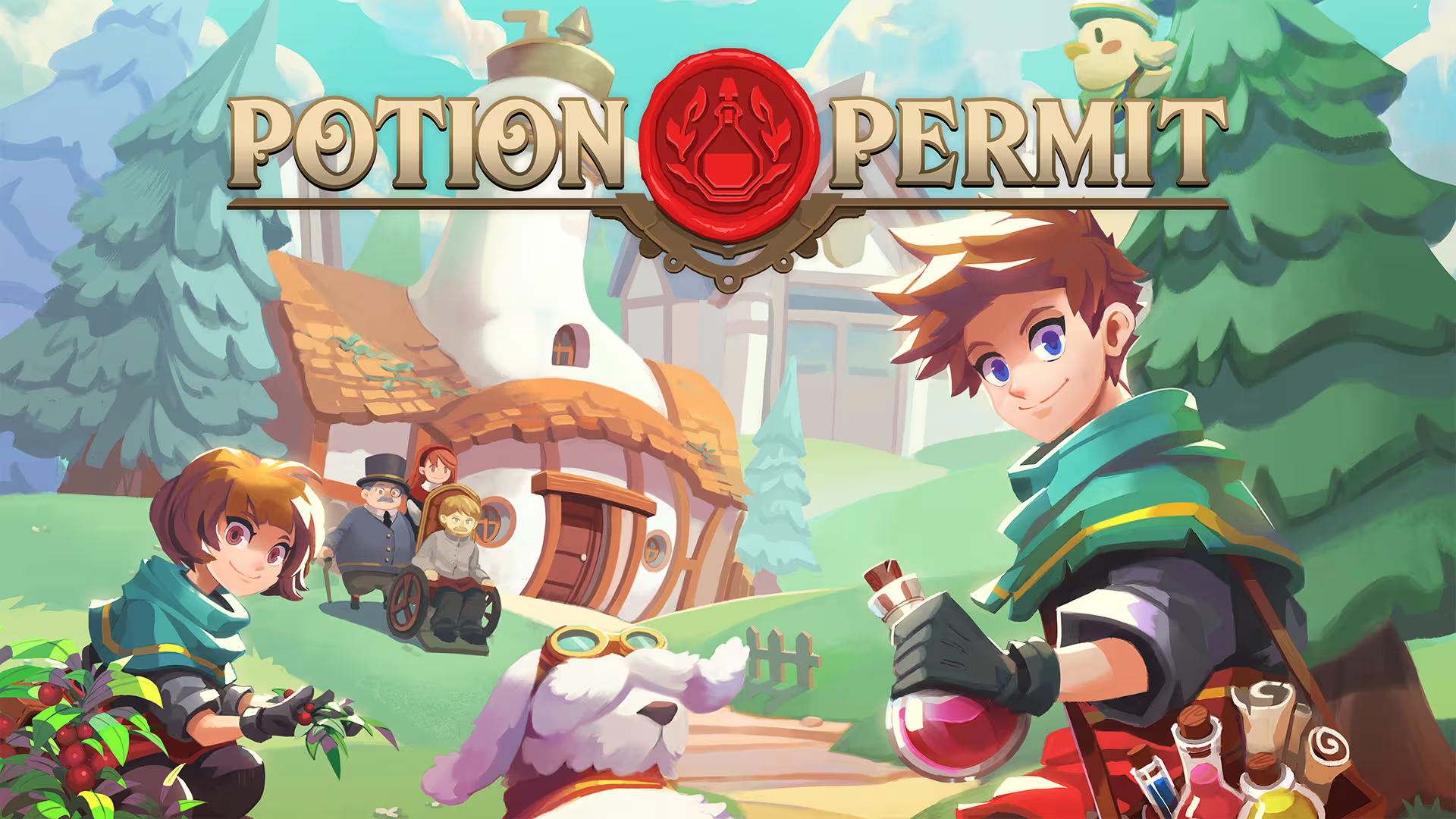
Moonbury’s clinic matters more on Switch 2 than the extra sharpness does. Potion Permit still earns its gentleness by making care procedural. The player reads symptoms, gathers ingredients, arranges shapes in the cauldron, and returns to a bedside with something useful in hand. That order still has a pleasing plainness to it. This retrospective is not a replacement for our full Potion Permit review. It asks a narrower 2026 question: in shorter handheld sessions, does the daily rhythm still hold, or has the obligation underneath the softness become easier to hear?
Game Snapshot
| Developer | MassHive Media |
| Publisher | PQube |
| Release Date | 22 September 2022 |
| Platforms | Xbox Series X/S, PS4, Android, PC, iOS, PS5, Xbox One, Switch |
| Price | Check price on Amazon |
| Rating | Not yet rated |
| Genre | Cosy life-sim/crafting RPG |
| Length | Varies; suited to short evening returns |
| Install Size | Varies by platform |
Presentation and World Design
Potion Permit’s best visual decision is still its restraint. Moonbury is not a town that insists on being admired. Low roofs, narrow paths, clinic shelves, and rooms arranged for use matter more than display. The colour work is plain in the right way: greens and browns outside, warmer rooms inside, a clinic palette that makes bottles and beds read before decoration. That matters in handheld play, where the eye is closer and the afternoon session is shorter.
Switch 2 does not change the town’s argument; it makes the edges cleaner. A bench by a path has a different purpose from a shelf in the clinic, and the game is better when it trusts those differences. Our Fae Farm review made a similar distinction between clarity and genuine readability. Potion Permit lands on the quieter side of that line. The world is not fuller now. It is easier to read.

Gameplay and Combat
The loop is simple, which is not the same as thin. A patient needs help, the diagnosis creates an object of attention, and the potion grid turns ingredients into a small spatial problem. The cauldron is the game’s quiet centre. It asks the player to think about fit, waste, and preparation without turning the task into a test of cleverness.
Gathering is where the rhythm becomes less settled. Wood, stone, plants, and monster drops all feed the same clinic routine, but the route between them can feel more dutiful than deliberate. The combat is light enough to remain part of the day rather than its subject. Even so, the repeated swings have a dry texture after several evenings, like a chore that knows it is necessary but cannot make itself interesting.
This is where the retrospective angle matters. On Switch 2, Potion Permit is strongest in sessions that have one clear intention: cure a patient, improve a tool, finish one errand, stop. It respects that shape better than long, acquisitive play. That puts it closer to A Short Hike on Switch 2 than to a forever loop. Beside Dorfromantik on Switch 2, it feels busier and less graceful about endings.

Potion Permit review 2026: the chemist whose evening ritual still holds
7.2/10
Buy on Amazon
Price and availability from Amazon
Story and Characters
Moonbury’s suspicion of the chemist is the correct starting point. The game understands that care is not trusted because the player has arrived with a uniform and a bag of tools. It has to be earned through repetition, attention, and the quiet return to people after they have been helped. That gives the relationship system a firmer base than a gift calendar alone would have done.
The writing is at its best when it lets habit do the work. A resident’s route, a clinic visit interrupting a morning, a conversation shifting after trust moves by one degree: these are the details that hold. Our Unpacking on Switch 2 review praised a game for telling a life through objects. Potion Permit is rougher, but it understands the same principle. The story is not only what Moonbury says. It is what Moonbury lets the player repeat until it becomes familiar.

Value and Longevity
The question “is Potion Permit 2026 worth it” depends on what kind of return the player wants. As a long-term life-sim, it has a ceiling. The errands begin to show their seams, and the material economy can feel like an answer already known. As a game returned to in careful evenings, it works better. One cure, one route through the woods, one cauldron solution, one conversation on the way home: that is the scale where its design is most generous.
It is not lavish. It is not empty. It sits in the middle, where the loop finds its floor.
Technical Notes
Confirmed technical fields still need checking before publication: patch level, price, install size, platform listing, and any Switch 2-specific update path. In experiential terms, the important note is simpler. Potion Permit needs the hardware to disappear, because its work is in the small pauses between diagnosis, gathering, and return. Capture should check menu clarity, save reliability, handheld legibility, and whether gathering routes hold their rhythm across short sessions.
Final Word
Potion Permit’s best image is still the return to the clinic with a potion ready. Not the reward screen, not the relationship increase, but the walk back through town with a purpose the player made by hand. That is where the game earns its claim. It is a game about care as process, and it is strongest when the process is allowed to stay small. In 2026, on Switch 2, the cleaner play context helps but does not transform it. Potion Permit remains a kind, slightly repetitive game with one good argument. The argument is enough, provided the player meets it in the right length of evening.
Is Potion Permit 2026 worth it on Switch 2?
Potion Permit still earns its gentleness by making care procedural. The player reads symptoms, gathers ingredients, arranges shapes in the cauldron, and returns to a bedside with something useful in hand. In shorter handheld sessions, the daily rhythm holds better than long acquisitive play, provided the player meets it in the right length of evening.
Does Potion Permit have combat?
The combat is light enough to remain part of the day rather than its subject. Even so, the repeated swings have a dry texture after several evenings, like a chore that knows it is necessary but cannot make itself interesting. The loop is simple, which is not the same as thin.
Is Potion Permit good for short sessions?
On Switch 2, Potion Permit is strongest in sessions that have one clear intention: cure a patient, improve a tool, finish one errand, stop. It respects that shape better than long, acquisitive play. That puts it closer to A Short Hike on Switch 2 than to a forever loop.
How does the clinic loop work?
A patient needs help, the diagnosis creates an object of attention, and the potion grid turns ingredients into a small spatial problem. The cauldron is the game's quiet centre. It asks the player to think about fit, waste, and preparation without turning the task into a test of cleverness.
Does the town feel alive on return?
Moonbury's suspicion of the chemist is the correct starting point. The writing is at its best when it lets habit do the work: a resident's route, a clinic visit interrupting a morning, a conversation shifting after trust moves by one degree. The story is what Moonbury lets the player repeat until it becomes familiar.