Game Pass-first player
ValueStrong
Xbox still makes sense when the subscription library is the main product.
- core
- Game Pass
- case
- Value
Xbox in 2026 still offers strong value through Game Pass, but pricing pressure and mixed messaging raise questions about its long-term console focus.
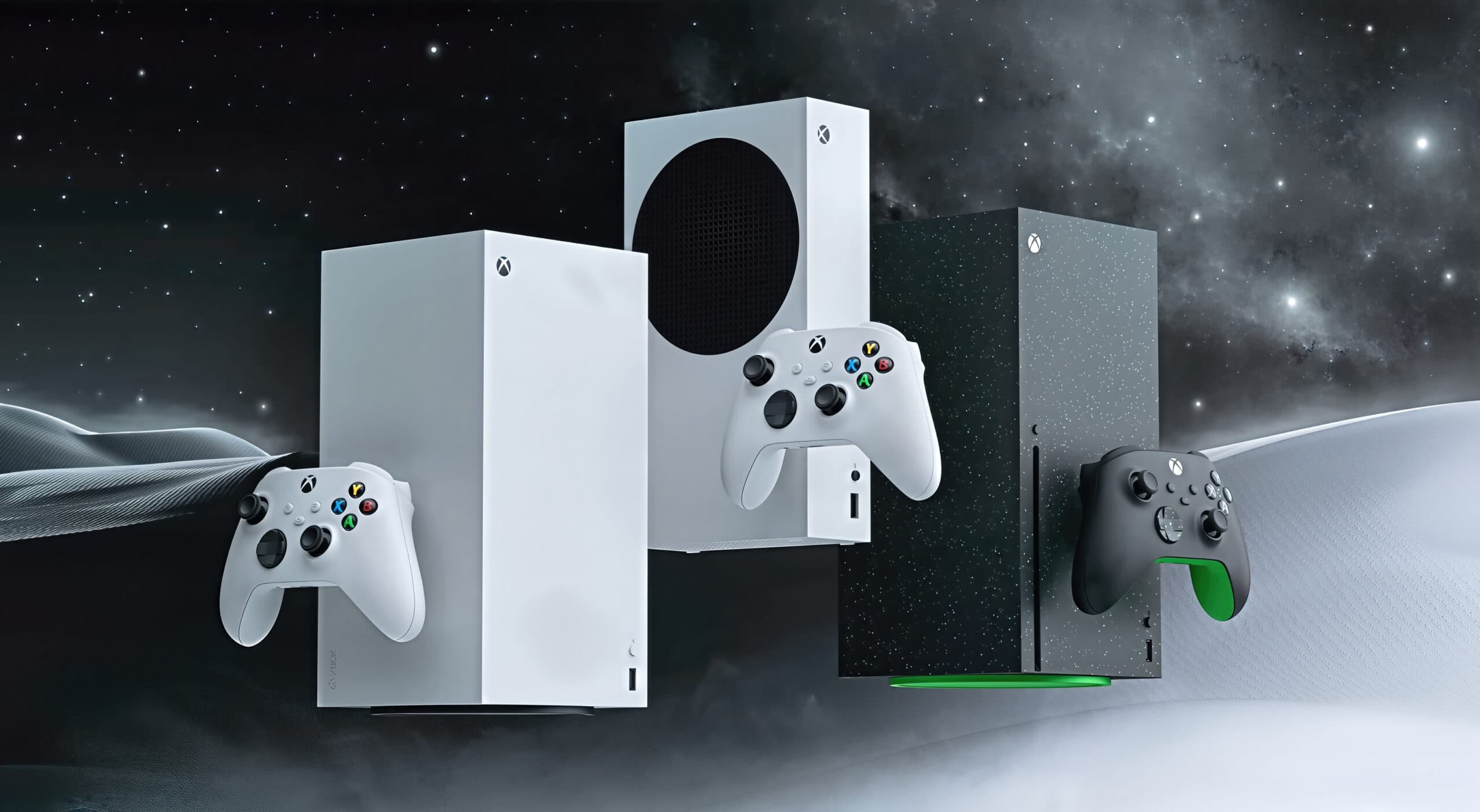
Xbox had the deepest game library, the most backwards-compatible catalogue, and the cheapest entry point in its hardware tier. It still finished third. That outcome carries the DNA of a specific lineage of decisions made between 2014 and 2026, not of hardware failure or bad software execution, but of a platform that chose a different audience than the one that traditionally decides console-market winners. The question of whether Xbox offers the best value or has lost focus is answerable by reading those decisions structurally. The answer depends entirely on which audience you are asking the question for.
The Series X launched in November 2020 as the most capable console Microsoft had shipped, and the 2026 version of the experience is a direct continuation of that launch thesis. Performance is stable, load times are fast, and backwards compatibility remains the broadest in the industry, covering four console generations with consistent fidelity. For players who have accumulated a library since the Xbox 360 era, that continuity is a genuine structural advantage.
July 2024 was when that continuity met its first visible cost. A hardware price increase across the Series X and Series S line shifted the console away from its "best-value hardware" identity for the first time since the Series S launched in 2020 at £249. A second adjustment followed in 2025, placing the Series X closer to PlayStation 5 pricing than it had been at any point in the generation. The value proposition did not collapse, but it changed in character. Xbox hardware in 2026 is no longer cheap. It is good hardware at a price that requires the subscription thesis to justify it. Current Series X pricing is available on Amazon.
The subscription thesis runs on a disclosed base of 34 million Game Pass subscribers at the end of 2024, which was the last publicly confirmed figure Microsoft released before moving away from subscriber-count disclosures. That base represents the audience Microsoft chose to serve when it launched Game Pass in 2017 and accelerated the build-out with the ZeniMax acquisition in 2021 and the Activision Blizzard acquisition completion in 2023.
The 2025 tier restructure is what the platform decision did to that audience in practice. A Standard tier was introduced below Ultimate, and the Ultimate price moved to a level that required active evaluation rather than reflexive renewal. The restructure formalised something that had been building since the 2022 price increase: Game Pass is now a considered purchase, not an automatic one. For players who use it as it was designed, sampling widely across genres, revisiting backwards-compatible titles, accessing Call of Duty day-one on Game Pass as part of the Activision integration, the model still delivers. For players who play one or two titles a year, the monthly measurement model is harder to justify. The value is real but conditional.
The 2021 ZeniMax purchase, which brought Bethesda Game Studios, Obsidian Entertainment, inXile Entertainment, The Coalition, and Compulsion Games under the Xbox umbrella, was the lineage call that made the subscription thesis credible at scale. Starfield launching day-one on Game Pass in September 2023, Avowed doing the same in February 2025, South of Midnight from Compulsion in April 2025, these are the orbital bodies around the Game Pass core that Satya Nadella's acquisitions were assembling toward.
February 2024 is when the platform debate sharpened into something that will take years to fully resolve. Microsoft announced that Sea of Thieves, Grounded, Hi-Fi Rush, and Pentiment would release on PlayStation 5 and Nintendo Switch, reversing the exclusivity position that had defined Xbox's competitive posture since the generation began.
The lineage call that produced that decision traces back to 2017, when Game Pass launched as the thesis that subscriptions are the platform. If subscriptions are the platform, then the hardware the game runs on is secondary. Multi-platform first-party is the logical conclusion of that thesis, not a contradiction of it. Microsoft is not trying to win console-unit market share. It is trying to put Game Pass subscribers on every device that can run a screen.
The structural cost of that decision is legible: the exclusive software proposition that had historically driven console purchase intent weakened further. A player choosing between an Xbox Series X and a PlayStation 5 in 2025 had fewer Xbox-exclusive reasons to choose Xbox, because several of those games now ran on PlayStation. Whether that trade-off was correct depends on whether Game Pass subscriber growth outpaced the console-market-share loss it accelerated. That answer is not yet fully part of the record.
The handheld move announced in late 2024 through the Asus ROG Xbox Ally partnership is the most structurally interesting decision Xbox made in the 2024-2025 period, because it is the one that most clearly names the audience Microsoft is building toward. Rather than developing a proprietary handheld, Microsoft layered Xbox branding, Game Pass integration, and Xbox services onto the ROG Ally X hardware that Asus had already shipped. The advantage is reach without development cost. The ROG Ally hardware has been in the market since 2023, and the silicon predecessor validated the Windows-on-handheld category before Microsoft committed to it as a product surface.
The lineage that paid off here is the 2014 pivot toward devices-and-services thinking, when Microsoft was widely criticised for trying to be too many things at once. In 2026, that pivot looks more coherent. Xbox is not trying to win a handheld format war. It is extending the Game Pass surface to a hardware category it does not have to manufacture. The trade-off is complexity. Windows on a handheld requires more configuration than Nintendo's native Switch 2 experience, and that complexity is a real barrier for players who are not comfortable in a PC environment. Current ROG Xbox Ally listings can be found on Amazon.
The studio map that Xbox assembled between 2018 and 2023 is the most significant investment Microsoft made in the generation, and it is still working through the publishing window. Bethesda Game Studios delivered Starfield in September 2023, the first major new IP from the studio in twenty-five years. Elder Scrolls 6 remains in development with no announced release window. The Coalition announced Gears of War: E-Day in 2024. Halo Studios, rebranded from 343 Industries in 2024-2025, is managing a Halo property reset that is still working through what that means for the next release. Obsidian Entertainment shipped Avowed in February 2025 and has The Outer Worlds 2 announced for 2026. inXile Entertainment's Clockwork Revolution, announced in 2023, is still in development.
The Activision integration brought Call of Duty onto Game Pass day-one as part of the annual release cycle, alongside Blizzard's properties including Diablo IV and Overwatch 2, and King's mobile gaming portfolio, which adds a scale of audience to the Game Pass ecosystem that none of the first-party studios could deliver alone. Mojang and Minecraft represent the most played game in the world by some metrics.
The Tango Gameworks story is the one that sits most awkwardly in this studio map. The team that made Hi-Fi Rush in 2023 was closed by Microsoft in May 2024, one of several studio closures that year. Tango was subsequently revived under Krafton in August 2024. The closure was the platform decision that did the most damage to Game Pass's creative credibility, because Hi-Fi Rush had been one of the clearest demonstrations that Game Pass day-one releases could be genuinely distinguished work. The revival is good news, but the closure happened, and it is part of the record.
The breadth of the Xbox ecosystem in 2026 is a deliberate choice, not confusion. Microsoft made the decision to compete across console, PC, mobile, cloud streaming, and partner handheld hardware rather than concentrate on a single surface. Nintendo's hybrid clarity works because Nintendo built a proprietary format. PlayStation's premium-ladder coherence works because Sony decided that the living room is the platform. Xbox's multi-surface model works, but it requires a more informed buyer to navigate it than either rival demands.
That gap between what the platform offers and how easily a first-time buyer can understand what they are buying is the structural challenge that no single product decision has resolved since 2017. The audience that understands the model values it. The audience that does not understand it tends to choose elsewhere.
| Axis | Xbox | Rival pressure |
|---|---|---|
| Value | Game Pass and library access | Nintendo clarity / PlayStation premium |
| Hardware | Series X plus handheld expansion | Identity is blurrier |
| Focus | Multi-platform strategy | Messaging burden |
Nintendo's Switch 2 launches with a clear hybrid proposition, the same one that made the original Switch the best-selling console in UK history by 2024. PlayStation 5 offers a premium first-party line-up with Sony's studio acquisitions, a consistent release cadence, and a hardware-first living-room pitch. Xbox offers a broader surface and a deeper back catalogue, at the cost of a more complex pitch and a first-party pipeline that is still resolving the multi-platform question.
None of those positions is objectively wrong. They are three different bets on which audience is most valuable to own. Microsoft's bet is on the subscriber. Sony's bet is on the hardware buyer. Nintendo's bet is on the format.
ValueStrong
Xbox still makes sense when the subscription library is the main product.
FlexibleEmerging
A better fit for people who want Xbox to become a portable ecosystem.
BlurredRisk
Less compelling if a single, exclusive console identity is what you want.
For players who sample widely across genres, revisit older titles, want access to Activision's annual release cycle without per-game purchase cost, and are comfortable managing subscriptions as part of their gaming budget, Xbox's 2026 ecosystem is the strongest value model in the market. The backwards compatibility depth, the Bethesda and Obsidian studio catalogue on Game Pass, and the multi-device flexibility across Series X, PC, and the ROG Xbox Ally all reinforce that position.
For players making a first console purchase, for households without existing Xbox ecosystem investment, or for players who want a simple, single-surface recommendation, Xbox requires a longer explanation than its rivals provide at the shelf. The Best Console to Buy in 2026 guide breaks down where Xbox fits across different player types.
The 2026 verdict on Xbox is not a hardware verdict. The hardware is capable and the studio pipeline, once it resolves its current publishing window backlog across Gears of War: E-Day, Elder Scrolls 6, and the Halo Studios reset, is the most ambitious Microsoft has assembled. The verdict is an audience verdict. Microsoft chose, across a sequence of decisions from 2014 through 2026, to serve the subscriber rather than the console buyer. That choice is coherent, it is working at 34 million subscribers, and it explains every significant strategic move the platform has made: the Game Pass launch in 2017, the acquisition strategy from 2018 to 2023, the multi-platform first-party decision in 2024, the ROG Ally partnership in late 2024, and the tier restructure in 2025.
Xbox in 2026 is not losing focus. It is the logical outcome of a decade of decisions that accepted a specific trade-off: lose the console-unit competition, win the subscription surface. Whether that trade-off ultimately pays off is still working through the record. For the audience it is built for, it already has. For the full brand-by-brand analysis, this piece supports our Who Won Console Gaming in 2025 feature.