The Calvard arc gives Van Arkride a different kind of contract than the Erebonian one ever offered: not soldier to empire, but operative to city, where the terms of engagement are written in grey and the people asking for help are rarely clean. Trails through Daybreak 2 extends that contract across a hundred hours of political investigation, a time-rewind mechanic that costs the player something each time it fires, and a hybrid combat system that adds coherent layers without dismantling what already worked. The question is not whether the game is generous with content. It is whether that content earns its length. On both counts, the answer is mostly yes.
Game Snapshot
Developer: Nihon Falcom
Publisher: NIS America
Release Date: 14 February 2025
Platforms: PlayStation 5, PlayStation 4, Nintendo Switch, PC (Steam/GOG/Epic Games Store)
Price: £49.99/$59.99
Rating: ESRB T (Teen)/PEGI 12
Genre: JRPG
Length: 60 hours (main story)/90-100 hours (main + side content)
Install Size: Varies by platform
Trails through Daybreak 2
PlayStation 5, PlayStation 4, Nintendo Switch, PC (Steam / GOG / Epic Games Store)
£49.99 / $59.998.2/10
Buy on Amazon
Price and availability from Amazon
Presentation and World Design
Edith does not change much between the first Daybreak and the sequel. The capital’s districts are the same geometry the player learned in the previous game: a republic that is prosperous but anxious, architecture wide and rational, backstreets beneath it considerably less so. That familiarity is part of the design contract. A player who has invested sixty-plus hours in the first Daybreak arrives here with spatial memory the investigation design later uses as a constraint: you know where the CID offices are, which means you understand why it matters when the route to them closes.
The Märchen Garten, a virtual-space dungeon maintained by the Marduk Security Company, stages its architecture as deliberate abstraction. Floors are procedural but objectives per floor are legible, so the space reads as designed rather than generated. Environmental detail throughout is functional rather than spectacular, and the game does not waste visual information. When lighting in a cutscene changes, something structural is happening in the scene.
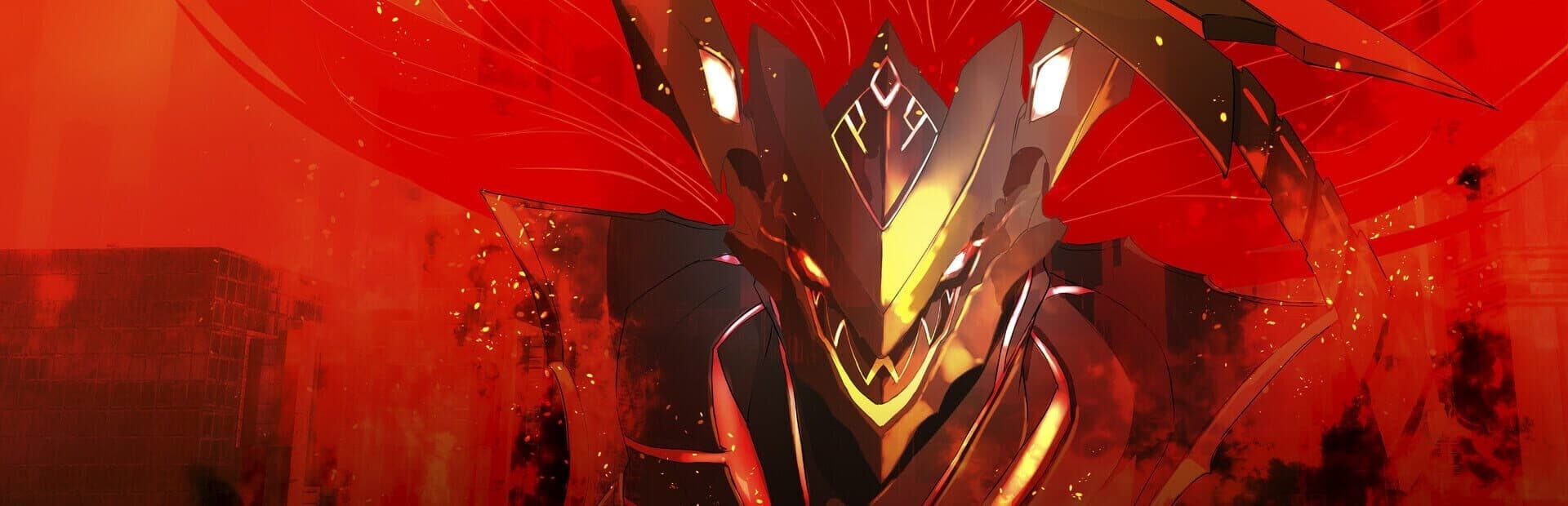
The Crimson Grendel, introduced in the opening sequence, is the visual argument for the sequel’s darker register: a monster whose silhouette carries enough of Van’s Grendel form to register as a wrong-echo. That first encounter is staged well. The image lands before the explanation.

Gameplay and Combat
The first Daybreak built its combat around a single decision made at the start of each fight: stay in field-action mode and manage positioning, or release Shards to drop into command battle. That decision has not been replaced in the sequel; it has been enriched. EX Chains are the central addition, allowing two linked party members to perform their Crafts in sequence when Shard Boosts activate. The mechanic is learnable through play rather than tutorial, and it adds a resource-management layer to the Shard economy without disrupting its base logic.
Cross Charge is the other meaningful addition: a perfectly timed dodge in field combat triggers a swap to the prompted party member and a stun-capable attack. A player who reads field-combat patterns and uses Cross Charges consistently arrives in command battle with positional advantages already established. The field layer is not a preamble to the real game; it is part of the same transaction.
Dual Arts, new to the Orbment system, allow two characters to exploit the same enemy weakness simultaneously. The system rewards forward planning: understanding which enemy types have exploitable weaknesses before the encounter opens is the correct preparation, and the game teaches that preparation through graduated enemy variety rather than instruction. Compared to the depth-building that Granblue Fantasy Relink achieves through a similar late-game customisation loop, Daybreak 2’s Orbment system is denser but less immediately legible to the first-time builder.
The difficulty range is wide. The game does not hide its combat complexity from players who engage fully, and it does not penalise players who prefer reduced damage settings. The contract holds in both directions.

Story and Characters
The Oct-Genesis time-rewind mechanic does not function as a cheat: it costs something. Introduced when Van and Elaine are killed in the opening hours, each rewind requires that the player has witnessed the worst outcome, and the game does not cut away. The investigation of Grendel-Zolga and the Garden-Master accumulates meaning through failed timelines, so that by the time a success path opens, the player understands what surviving cost the characters who managed it.
Swin and Nadia’s inclusion, carrying threads from the Crossbell-adjacent _Reverie_ entry, functions as connective tissue between arcs of the wider Zemuria narrative. Their presence expands scope without forcing exposition. The connections are routed through character interaction rather than briefing documents: lore that arrives through relationship, which is how the series earns its world-building reputation.
Where the structure is less successful is in the third act’s pacing. The Fragment sections, which split the party across parallel objectives, work because intersection points are legible. The third act consolidates those threads and in doing so slows the information rate for a stretch measurably longer than the narrative stakes require. The resolution is a longer journey to a destination the player has correctly anticipated for several hours. That plateau registers.
Van himself is the most morally specific protagonist the series has produced. The game routes Calvard’s republican idealism and its costs through character rather than set-piece, which is the correct choice for a story that asks this much of the player’s time.

Value and Longevity
Ninety to a hundred hours is the honest number for a completionist first playthrough. The side quests use the same investigation logic as the main content and are not structurally separate from it. The Märchen Garten adds post-game floors with additional story content and two further playable characters; the rewards are meaningful enough to justify the investment for players who want the full system expressed.
The Alignment System is reduced here, its expressive weight transferred to the time-rewind mechanic. That is the correct trade. In the sequel, the rewind structure takes over the moral-positioning function the Alignment System carried in the first game, and its reduced presence in optional content rather than main narrative is not a loss. It is a system that has done its job and ceded the floor.
The game is a direct sequel that assumes the first Daybreak. For the intended audience, the value proposition is high. The Atelier Yumia review and Dragon Quest 3 HD-2D Remake review cover JRPGs that are more accessible entry points if the Trails investment feels daunting; Daybreak 2 is specifically for players who have already made it.

Technical Notes
Performance is stable on PS5. Frame rate holds through the investigation chapters and the major command-battle sequences; the EX Chain animations are denser than anything in the first Daybreak and the PS5 sustains them without compromise. Load times are short. The field-to-command-battle transition is fast enough to be functionally seamless, which matters in a game that asks the player to make it frequently.
The Switch version runs capably, consistent with Falcom’s in-house porting history on that hardware. The NIS America localisation carries the series’ established proper nouns, faction names, and Orbment terminology without inconsistency across prior entries. For series veterans, the translation infrastructure holds.
Nothing here requires a footnote that would affect the combat-design assessment.
Final Word
The Calvard arc earns its hours. That verdict is confirmed by the late-game EX Chain sequences, where two characters the player has been building toward linked Crafts for sixty hours fire together and the combined output is the argument for everything the Orbment system has been teaching. The time-rewind mechanic, which costs the player each time it fires, is the story’s structural equivalent: understanding what the resolution cost is the reason it lands. The third act loses momentum for a stretch, and the main antagonist’s arc is resolved a chapter after the player has stopped being surprised by it. Neither is a structural failure. The contract holds across the full runtime. Recommended to series-literate players; the first Daybreak is the prerequisite and it is worth satisfying.
FAQ
Is Trails through Daybreak 2 worth playing in 2026?
Yes, for players who have completed the first Daybreak and are current with the wider Trails arc. The combat system is the most refined the Calvard entries have produced, the time-rewind mechanic adds a narrative cost structure the first game lacked, and the side content is dense enough to fill the runtime meaningfully. The character-relationship stakes require prior investment; the lore refreshers in early chapters cover the broad strokes but not the relational weight.
Do I need to play the first Trails through Daybreak first?
Yes. Daybreak 2 is a direct sequel that carries its character relationships, political history, and Calvard world-building as given knowledge. The weight of its stakes depends on prior investment in Van Arkride's established relationships and the Republic of Calvard's factional tensions. The first Daybreak is the prerequisite entry.
How long is Trails through Daybreak 2?
The main story runs approximately 60 hours. A completionist playthrough including the 4SPG side quests, Märchen Garten optional floors, and post-game content reaches 90 to 100 hours. The side quests use the same investigation logic as the main content and are not structurally separate from it.
How does the combat system work?
The game uses a hybrid field-and-command system. In field combat, players move freely, attack, and trigger Cross Charges on perfectly timed dodges. Releasing Shards shifts combat into a turn-based command layer. EX Chains allow two linked characters to combine Craft attacks; Dual Arts allow paired characters to exploit enemy weaknesses simultaneously. The Orbment and Quartz system governs character build depth.
Is the story standalone or part of a larger series?
Daybreak 2 is the second Calvard entry in the Trails series and connects directly to the overarching Zemuria narrative. Swin Abel and Nadia Rayne carry threads from the Crossbell arc, and explicit references to Ouroboros and the Garden mean the game is in active conversation with entries outside Calvard. New players will find it legible on its own terms but will miss the relational weight that series-literate players bring.
8.2
Great
SpawningPoint Verdict
Review summary
Trails through Daybreak 2 is a careful expansion of the hybrid combat and political-investigation structure Falcom established in the first Calvard entry. The EX Chain system adds a resource-management layer to Shard-based combat without overwriting the decision logic the previous game built, and the time-rewind mechanic gives the story a cost structure that earns the investigation's darkness. Where the game loses ground is in a third act whose pacing plateau is measurably longer than its narrative stakes demand. Van Arkride remains the series' sharpest protagonist, and the Calvard arc's political framing routes its thematic argument through character rather than through set-piece. For players who have invested in the first Daybreak and want to see the Calvard arc completed on its own terms, the runtime is justified. The contract holds.