REVIEW
8.5· Great
The Outer Worlds 2 PS5 Review – Sharper Satire, Bigger Space Opera
Our The Outer Worlds 2 PS5 review explores Obsidian’s ambitious sci-fi RPG sequel, with deeper choice-driven storytelling, flexible first- and third-person combat, and sprawling questlines, offset by weaker PS5 performance compared to Xbox and some rough technical edges at launch.

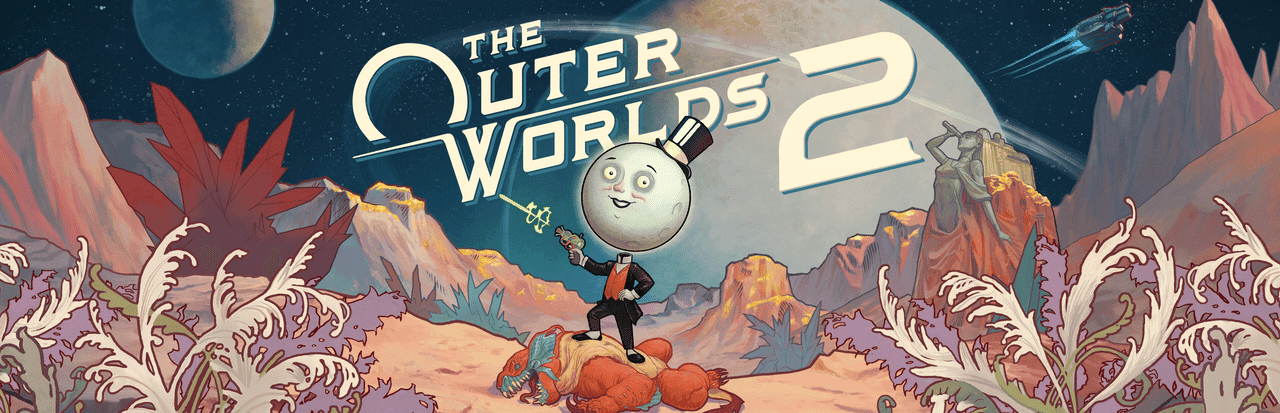
The Outer Worlds 2 arrives on PS5 carrying two big expectations. First, it has to follow a cult-favourite RPG known for sharp writing and player choice. Second, it has to prove that Obsidian’s brand of Fallout-style role-playing can scale up without losing its wit. Set in a new system with a new cast, the sequel moves away from Halcyon to Arcadia, where megacorporation Auntie’s Choice and assorted factions are tearing the colony apart. On PlayStation, it lands as a generous, choice-heavy RPG packed with quests and dense hubs, albeit one whose Unreal Engine 5 ambitions sit uncomfortably with base PS5 performance.

 Visually, the jump to Unreal Engine 5 allows for denser geometry and more dramatic lighting, though the stylised look keeps it from chasing pure photorealism. Character models and armour sets are more detailed and expressive, especially companions, whose animations sell their personalities better than before. On PS5, however, occasional asset pop-in and temporal anti-aliasing shimmer are noticeable in busy hubs, particularly in Performance mode.
Audio rounds things out nicely. Obsidian’s team leans on a mix of pulpy orchestral cues and eerie synths, with strong voice acting across both returning corporate mascots and new faction leaders. The banter between companions as you explore is a constant highlight, and positional audio helps you track gunfire and wildlife in crowded firefights.
Visually, the jump to Unreal Engine 5 allows for denser geometry and more dramatic lighting, though the stylised look keeps it from chasing pure photorealism. Character models and armour sets are more detailed and expressive, especially companions, whose animations sell their personalities better than before. On PS5, however, occasional asset pop-in and temporal anti-aliasing shimmer are noticeable in busy hubs, particularly in Performance mode.
Audio rounds things out nicely. Obsidian’s team leans on a mix of pulpy orchestral cues and eerie synths, with strong voice acting across both returning corporate mascots and new faction leaders. The banter between companions as you explore is a constant highlight, and positional audio helps you track gunfire and wildlife in crowded firefights.
 Combat remains a flexible mix of shooting, abilities, and companion support. Gunplay has more punch than before, with a broader arsenal of corporate firearms, experimental science weapons, and melee options that support wildly different builds. Slowdown-style tactical modes and status effects give fights a considered rhythm, while stealth and speech-focused characters can bypass many encounters entirely.
Choice is still the defining feature. Skill checks crop up constantly in dialogue, environmental interactions, and quest resolutions, and many missions offer several plausible outcomes based on which factions and companions you side with. The downside is that some late-game fights can feel bullet-spongey on higher difficulties, and inventory and crafting menus remain on the clunky side, especially with large loot hauls.
Combat remains a flexible mix of shooting, abilities, and companion support. Gunplay has more punch than before, with a broader arsenal of corporate firearms, experimental science weapons, and melee options that support wildly different builds. Slowdown-style tactical modes and status effects give fights a considered rhythm, while stealth and speech-focused characters can bypass many encounters entirely.
Choice is still the defining feature. Skill checks crop up constantly in dialogue, environmental interactions, and quest resolutions, and many missions offer several plausible outcomes based on which factions and companions you side with. The downside is that some late-game fights can feel bullet-spongey on higher difficulties, and inventory and crafting menus remain on the clunky side, especially with large loot hauls.


Game Snapshot
| Developer | Obsidian Entertainment |
| Publisher | Xbox Game Studios |
| Release Date | 29 October 2025 |
| Platforms | PS5, Xbox Series X|S, Windows PC (Steam, Microsoft Store) |
| Price | £69.99/$69.99 (Standard Edition RRP) |
| Rating | PEGI 18 | ESRB M (Mature 17+) |
| Genre | Single-player action RPG |
| Length | ~25-35 hours (main story) and ~50-70 hours (story + side content) |
| Install Size | ~70-80 GB on PS5 (base game) |
Presentation and World Design
Art direction remains one of The Outer Worlds 2’s biggest strengths. Arcadia leans into bright, slightly grotesque retro-futurism, with neon-lit settlements, corporate propaganda, and alien landscapes that feel more varied and expansive than the first game’s worlds. Each major zone is a curated slice of space frontier rather than true open world, but they are layered vertically and horizontally with side alleys, rooftops, and hidden interiors that reward nosy players.
Visually, the jump to Unreal Engine 5 allows for denser geometry and more dramatic lighting, though the stylised look keeps it from chasing pure photorealism. Character models and armour sets are more detailed and expressive, especially companions, whose animations sell their personalities better than before. On PS5, however, occasional asset pop-in and temporal anti-aliasing shimmer are noticeable in busy hubs, particularly in Performance mode.
Audio rounds things out nicely. Obsidian’s team leans on a mix of pulpy orchestral cues and eerie synths, with strong voice acting across both returning corporate mascots and new faction leaders. The banter between companions as you explore is a constant highlight, and positional audio helps you track gunfire and wildlife in crowded firefights.
Gameplay and Combat
Mechanically, The Outer Worlds 2 feels like a confident evolution rather than a reinvention. You still create an Earth Directorate Agent with a spread of stats and skills that govern everything from gunplay and hacking to dialogue checks and leadership perks. The big structural change is the ability to switch between first- and third-person perspectives, with the latter requested heavily by fans and implemented surprisingly well on a pad.
Combat remains a flexible mix of shooting, abilities, and companion support. Gunplay has more punch than before, with a broader arsenal of corporate firearms, experimental science weapons, and melee options that support wildly different builds. Slowdown-style tactical modes and status effects give fights a considered rhythm, while stealth and speech-focused characters can bypass many encounters entirely.
Choice is still the defining feature. Skill checks crop up constantly in dialogue, environmental interactions, and quest resolutions, and many missions offer several plausible outcomes based on which factions and companions you side with. The downside is that some late-game fights can feel bullet-spongey on higher difficulties, and inventory and crafting menus remain on the clunky side, especially with large loot hauls.
Story and Characters
The sequel tells a fresh story that only lightly references the first game. As an Agent sent to Arcadia, you are quickly pulled into a conflict between Auntie’s Choice, rebellious colonists, scientists obsessed with mathematical prophecy, and various cults and mercenary outfits. Your job is to investigate strange rifts threatening the system, but how you interpret and respond to that crisis is largely up to you. Writing is characteristically sharp. Obsidian balances biting corporate satire with genuine warmth for its oddball companions, who often bring their own quest chains, loyalties, and ideological clashes. It is easily possible to lock yourself out of content or radically alter the political map based on a single decision, and the game rarely signals a “correct” path, which is part of its appeal. If there is a weakness, it lies in the main plot’s pacing. Several reviews note that the central mystery around the rifts builds brilliantly but resolves in a comparatively abrupt, slightly underwhelming fashion. Side quests and faction arcs, by contrast, are consistently strong, and for many players they will become the real spine of their playthrough.
Value and Longevity
The Outer Worlds 2 is a big, but not bloated, RPG. A focused run that sees most major areas and a handful of faction quests will land around 30 hours, but completionists chasing every companion arc, ending variant, and optional dungeon can easily double that. Multiple endings, background choices, and build paths give it significant replay value if you enjoy exploring different moral angles and character archetypes. On PS5, you are paying full price rather than getting it on Game Pass, but that cost is balanced somewhat by a robust base game and a Premium Edition that bundles in two future story expansions. Given Obsidian’s track record with DLC, that add-on content has a good chance of being substantial. As it stands at launch plus its first major patch, the core package already feels generously packed.Technical Notes
Technical performance is where the PS5 version falls behind its Xbox sibling. The game offers typical Quality and Performance modes, but the PS5 version exhibits lower internal resolution and more frequent frame-rate dips than its Xbox counterpart, particularly in dense cities and during heavy combat. PS5 Pro’s PSSR upscaling can improve clarity, yet it also introduces visible noise in some lighting conditions. On the positive side, the November 2025 patch has fixed several major quest blockers, crashes, and odd visual bugs such as over-bright effects and unstable shadows. Loading times are rapid thanks to the SSD, and general stability is now solid enough for extended sessions. Still, if performance is your top priority, this is one of the rare cases where PS5 is not the lead console experience.Final Word
The Outer Worlds 2 on PS5 is not the most technically polished version of Obsidian’s latest RPG, but it is still a standout sci-fi adventure. Its blend of punchy combat, granular character building, and branching questlines delivers exactly the kind of reactive storytelling fans hoped for, while Arcadia’s factions and companions provide plenty of narrative grey areas to push against. Base PS5 performance lags behind Xbox and PS5 Pro, yet patches have brought it to an acceptable state and the underlying game is strong enough to carry some rough edges. If you value player choice, witty writing, and compact but dense worlds over pristine frame times, this is one of 2025’s essential RPGs.
FAQ
Do I need to play The Outer Worlds before starting The Outer Worlds 2 on PS5?
No. The sequel features a new protagonist, a new star system, and largely self-contained factions. There are nods to the first game and returning brands like Auntie Cleo’s, but they are more flavour than essential lore. Playing the original helps you appreciate the evolution, yet The Outer Worlds 2 is designed to stand on its own.
How long does a typical playthrough of The Outer Worlds 2 take?
A reasonably thorough run that resolves most main and faction quests will take around 30–40 hours. Going all-in on every companion quest, optional dungeon, and alternate ending, or experimenting with multiple builds, can easily push total playtime beyond 60 hours across several characters.
How does performance on PS5 compare to PS5 Pro and Xbox?
PS5 offers Quality and Performance modes but generally runs at lower internal resolution and with more frequent dips than Xbox Series X, according to technical breakdowns. PS5 Pro improves image clarity and frame-rate consistency, though some PSSR artefacts remain. All versions are playable after patches, but the Xbox port is considered the smoothest overall.
Is there any multiplayer or co-op in The Outer Worlds 2?
No. Like the original, The Outer Worlds 2 is a purely single-player RPG. Its focus is on narrative choice, companion relationships, and character builds rather than shared-world systems, which keeps the design tight and reactive to your decisions.
Will there be DLC for The Outer Worlds 2?
Yes. The Premium Edition on PS5 includes a DLC Pass for two future story expansions. Details are still limited at the time of writing, but based on Obsidian’s previous DLC work, expect substantial new questlines and areas rather than small cosmetic packs.
8.5
Great
SpawningPoint Verdict
Review summary
On PS5, The Outer Worlds 2 delivers an expansive, often brilliant follow-up to Obsidian’s cult RPG. Deeper choice-and-consequence systems, improved combat, and a richly sketched new star system make Arcadia a joy to unravel, especially if you like experimenting with different builds and moral stances. Performance compromises on Sony’s hardware and a slightly rushed main-story finale keep it from outright masterpiece status, but the sheer density of quests, memorable companions, and reactive storytelling more than compensate. For players who prize role-playing flexibility and razor-edged satire over flawless frame graphs, this is one of the strongest sci-fi adventures currently available on PS5.