ROUNDUP
Silent Hill 2 vs Silent Hill f: Which PS5 Horror Remake Should You Play?
Silent Hill 2 vs Silent Hill f compared. Scores, gameplay, story and value side by side to help you choose the right PS5 horror game.

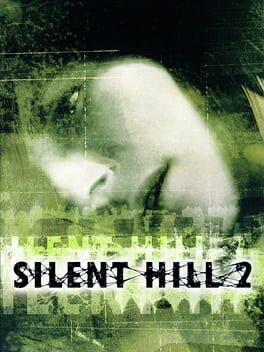
Score Comparison: Silent Hill 2 PS5 vs Silent Hill f PS5
| Category | Silent Hill 2 PS5 | Silent Hill f PS5 |
| Graphics | 9/10 | 8/10 |
| Gameplay | 7/10 | 6/10 |
| Story | 10/10 | 7.5/10 |
| Value | 8/10 | 7.5/10 |
| Psychological Horror and Atmosphere | 9/10 | – |
| Atmosphere and World Design | – | 9/10 |
| Overall | 8.6/10 | 7.6/10 |
Atmosphere: Two Different Stagings of the Same Fog
Silent Hill 2 treats fog as memory; Silent Hill f treats it as territory. That distinction is not cosmetic. It is the load-bearing question in both games, and understanding it explains almost every score gap in the table above.
Bloober Team’s remake builds fog around James Sunderland’s inability to see himself clearly. South Vale’s mist is thick because James is thick-skulled about his own guilt. The town distorts in proportion to what he refuses to acknowledge: Pyramid Head arrives not because the world demands a punisher but because James does. Every corridor, every locked door, every body on the floor is a projection. The fog is the game’s central argument: the environment is a symptom, not a setting.

NeoBards constructs Ebisugaoka differently. Here the fog is physical geography, the landscape of a community that is already rotting before the horror formalises. The red spider lilies that carpet the streets of 1960s rural Japan are not metaphors in the same inward register; they are external pressure made visible, the weight of a conservative social order literalised as invasive bloom. Where SH2 stages horror as private collapse, Silent Hill f stages it as communal infection. Where James’s guilt pulls the world inward, Hinako Shimizu’s world presses outward against her.
Both games earn a 9/10 in atmosphere. The routes are different. The fog still does the work.
Encounter Staging: Where Each Game Keeps the Contract
Silent Hill 2 stages its central encounters around named figures, and the naming is the point. Pyramid Head does not simply attack James; it appears, it recedes, it reappears, and each time the meaning shifts. By the third encounter the player understands that Pyramid Head is not an obstacle but a verdict. Maria’s substitution arc is constructed the same way: her resemblance to Mary is not a surprise to be sprung but a slow pressure the game applies across hours, until you cannot look at her without understanding what she costs James to believe in. Eddie’s confrontation earns the cost precisely because the game has spent the preceding runtime making his psychology legible, not sympathetic, but legible.
Silent Hill f stages its horror around social pressure scenes rather than symbolic individuals. The school sequence, in which Hinako navigates the everyday cruelties of her classmates alongside the supernatural ones, is where NeoBards’ design argument is clearest: the horror is not arriving from outside, it was already inside the institution. The shrine otherworld sequences work the same register, mapping the village’s buried history of pollution and arranged marriage onto impossible architecture. Where SH2’s encounters name a psychological truth through a single monstrous figure, Silent Hill f’s encounters stage that truth through a network of relationships.
This is where the story gap in the scores earns its keep. SH2’s 10/10 Story reflects a design in which every encounter is also a plot event; the symbolic and narrative layers are inseparable. SH f’s 7.5/10 reflects sharper writing than most horror games manage alongside a structure that can feel abrupt on a single run, because the full emotional coherence of Hinako’s arc asks for New Game Plus scenes the first playthrough withholds.
Combat Readability: The Gameplay Gap
Silent Hill 2: 7/10. Silent Hill f: 6/10. Both scores sit below the atmosphere figures, and the reason is structural rather than accidental: these are games that subordinate combat to mood, and in both cases the subordination shows.
Bloober’s over-the-shoulder camera makes SH2’s combat readable in a way the original’s fixed angles never needed to be. The scrappiness of pipes and planks against Mannequins and Lying Figures is, to a point, a deliberate tonal choice. James’s inability to fight cleanly matches his inability to think clearly. The problem is repetition: a limited enemy roster and backtracking through familiar streets means that by the third hour, encounters blur together in a way the symbolic weight cannot fully redeem.
Silent Hill f’s combat asks for more precision than the inputs reliably deliver. There are no firearms. Hinako’s melee system, stamina-governed and parry-dependent, creates attritional rhythms that work well in contained encounters and collapse under the gauntlet sequences NeoBards deploys too often. The 1-point gap between the two games is not a commentary on which game handles combat better in absolute terms; it reflects how frequently each game allows the mismatch between its combat ambition and its execution to surface. In SH f, that mismatch surfaces more often, and it surfaces at moments the game wants you to take seriously.
A horror game that does not earn its sound is a horror game with nothing. Both games earn their audio. But a horror game that loses the plot in its own combat systems is a different kind of problem, and SH f bumps against that ceiling more than SH2 does.

Story and Theme: Whose Guilt, Staged How
Silent Hill 2 personalises guilt; Silent Hill f socialises it. James Sunderland’s breakdown is a closed system: the town exists to reflect one man’s refusal to face what he did to Mary, and the game’s 10/10 story score is a direct consequence of how completely every element serves that interiority. Angela and Eddie are not there to provide a supporting cast; they are there to show James other versions of the same problem, other ways trauma deforms a person.
Hinako’s story opens the frame. Her guilt is partly personal and partly inherited: the abusive father, the expectations around marriage, the schoolyard economies of rumour and silence are not solely her failures, they are her community’s. Ryukishi07’s writing, unusually layered for a game at this budget level, rarely underlines its metaphors, which is both the source of SH f’s thematic intelligence and the reason its 7.5/10 feels right rather than harsh. The first ending lands like a chapter break. The full coherence of Hinako’s arc is a New Game Plus proposition, which places genuine demands on the player before the story delivers its full weight.
Both games are about guilt. The question is whose guilt the player is asked to carry, and how completely the game’s structure commits to staging that.
Audio Design: The Unifying Rubric
A horror game that does not earn its sound is a horror game with nothing. Applied comparatively: SH2 has Akira Yamaoka returning to his own score, reworking familiar pieces into a more cinematic mix that makes headphones functionally mandatory. The creaking floorboards and distant sirens and the scrape of steel on concrete are not ambient texture; they are argument. SH f pairs Yamaoka’s familiar unease with period-appropriate folk influences and a psychedelic register that suits Ebisugaoka’s 1960s setting. It is the less iconic score and the more disciplined one: it does not try to summon the nostalgia of the 2001 original, which is precisely the right call for a game trying to be something genuinely new.
Both games pass the rubric. Neither is a horror game with nothing.
Which Should You Play?
Play Silent Hill 2 PS5 if you want the genre’s structural high-water mark: a game where every encounter, every monster, every locked door is doing double duty as psychological argument. Bloober’s remake earns the cost of its reverence by committing to what made the original matter. The fog still does the work, and on PS5 it has never looked more purposeful.
Play Silent Hill f PS5 if you want a Silent Hill that is actually new rather than grateful. NeoBards stages horror as a social contract breaking down rather than a single man breaking apart, and when that staging lands, particularly in the school sequences and the shrine otherworld, it is the most formally interesting thing the series has attempted in years. The combat will ask for patience the inputs do not always reward. The first ending will leave you wanting more, which is partly the design and partly the ask.
Both contracts hold. The question is which one suits where you are as a horror player right now.
Read our full Silent Hill 2 PS5 review for the detail behind the 8.6/10. Read our full Silent Hill f PS5 review for the reasoning behind the 7.6/10. Browse all our scored reviews on the All Reviews page.