REVIEW
7.6· Great
Pokémon Legends Z-A Review 2026: Lumiose City Rebuilt for a New Kalos Adventure

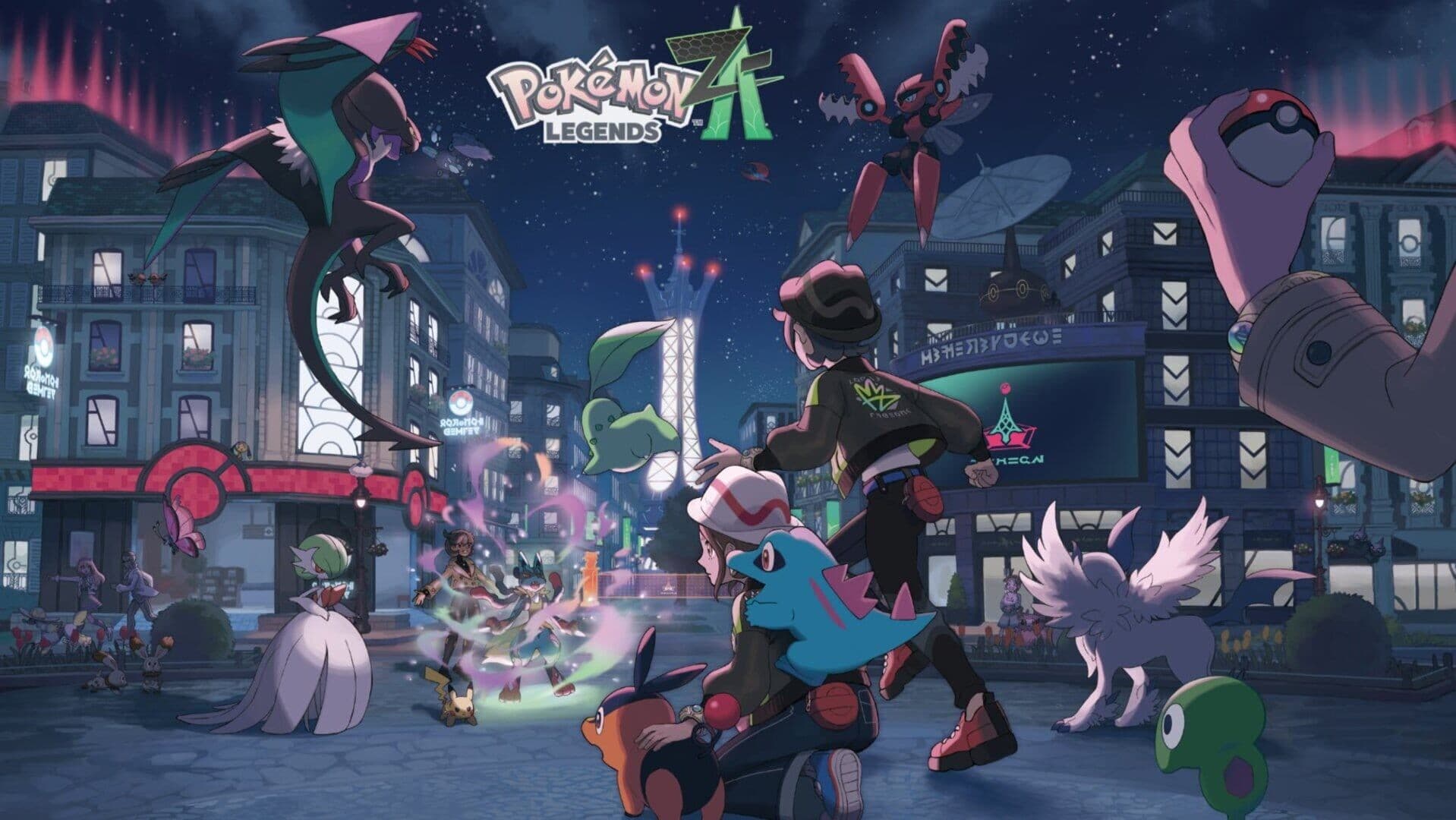
Pokemon Legends: Arceus built its argument on distance, and Z-A builds its counter-argument on density. Where Arceus spread the player across open tundra and spent its design energy on discovery mechanics, Z-A contracts the entire game into Lumiose City and asks whether vertical layering and street-level granularity can do equivalent work. The answer is yes, with reservations that matter. Z-A is the better combat game; it is the lesser world.
Game Snapshot
| Field | Detail |
| Developer | Game Freak |
| Publisher | The Pokemon Company/Nintendo |
| Release Date | 16 October 2025 |
| Platforms | Nintendo Switch 2/Nintendo Switch |
| Price | £49.99 | $59.99 |
| Rating | PEGI 7 | ESRB E |
| Genre | Action RPG |
| Length | ~25-30h main story/60h+ completionist |
| Install Size | ~10 GB |

Presentation and World Design
Lumiose City is a single location that functions as the entire game. The choice is architecturally coherent: the redevelopment plot requires the player to watch Lumiose evolve across a set area, and a sprawling open map would have diffused that cumulative sense of change. What Z-A gains from the constraint is the ability to make the city itself legible. The arrondissements have distinct visual signatures, and the elevation system adds a reading layer that Arceus’s flat biomes did not have: rooftop routes unlock mid-game and alter how familiar streets read below.
The light design carries weight. The afternoon filter on the commercial district differs from the gas-lamp texture of the outer avenues in ways that the encounter design actually uses, limiting visibility in specific zones to manage information rather than simply to create atmosphere. That distinction matters: the darkness is structural, not decorative.
The limitation is direct comparison with Hisui. Arceus gave the player wilderness with genuine spatial pressure. Lumiose’s compressed geography can feel managed rather than discovered, and the density that makes the city legible also makes it predictable. The world is well-constructed. It does not breathe the way Hisui did. That is a design trade-off, not a failure, but a player arriving from Arceus will notice the tighter ceiling.
The soundtrack anchors the urban register correctly. The main theme’s orchestral arrangement expands across the arrondissements with consistent harmonic logic, and the ambient layers shift credibly between market hours and night patrol without the seams showing.

Gameplay and Combat
The combat system is where Z-A earns its design argument. The real-time engagement model introduced in Arceus is extended here with a stance system that separates catching from battling as distinct mechanical vocabularies rather than merging them into a single awkward loop. The catching stance uses positional play, the time-of-day cycle, and the new lure-and-observe mechanic to construct catching as its own encounter type, with legible rules and room for error recovery. The battle stance is a third-person action system with a cooldown structure built around dodge timing and ability charge windows.
The Gardenia’s Challenge encounter in the third arrondissement is where these two vocabularies are first asked to operate simultaneously under time pressure: a Pokemon in the battle-agitated state cannot be approached in catching stance, so the player must first suppress the agitation through targeted ability hits and then switch modes within a narrowing window. The system makes the demand visible before it makes the demand. That is encounter design that teaches without insulting.
The weakness mapping is more readable than in Arceus. Type-advantage indicators have been redesigned to pulse at different rates for single and double weaknesses, which removes the need for mid-combat menu consultation on a player who knows the type chart but cannot always hold a precise number in working memory. Small adjustment. Significant cognitive relief.
The battle system has one structural issue: the dodge window is inconsistently telegraphed across enemy types. Pokemon with quadrupedal movement patterns give approximately 18 frames of pre-dodge ambiguity, compared to the biped standard of 10-12 frames. This does not break the system, but it introduces timing inconsistency in the mid-game that the encounter design never fully accounts for.

Story and Characters
The narrative is staged through the redevelopment contract rather than received through cutscenes, and that structural choice is largely correct for what Z-A is attempting. The player watches Lumiose change as a consequence of choices made between Team MZ and the urbanisation lobby, and the geometry of the city is the argument: blocks that were derelict in the opening section become populated or further cleared depending on which missions the player prioritises, which is story told through systems rather than through dialogue.
Team MZ’s motivation is the clearest antagonist framing in the Legends line. The conflict is not world-ending but civic: the redevelopment plan threatens specific habitats at the edge of the city, and the faction’s response is disproportionate in ways the game acknowledges without excusing. That proportionality question gives the story more to work with than the apocalyptic registers the main series defaults to.
The returning Kalos characters are handled with varying credibility. The Gym Leaders who anchor the arrondissement progression are well-integrated into the urban premise: Clemont’s role in the technical infrastructure of the city is specific enough to feel designed rather than nostalgic. The older cameos arrive with less structural purpose and read as reward content for players with Kalos attachment rather than as characters who earn their presence in this story.
The writing is not where Z-A’s design energy lives. The dialogue is functional. The civic narrative works. The character moments are sparse.

Value and Longevity
The main story runs approximately 25-30 hours for a player engaging with the arrondissement missions without optimising. That figure rises substantially with the Pokemon completion grind, which sits around 60-70 hours for a full Pokedex and is closer to 80 hours with post-game content factored in.
Post-game is where Z-A’s model differs most clearly from Arceus. Rather than a new area unlocking after credits, Z-A extends Lumiose itself: new building interiors open, the night cycle yields Pokemon that the day roster does not, and a post-game investigation chain runs across the city’s outer ring. For a player who has spent 25 hours reading Lumiose carefully, the post-game feels like a reward for that attention. For a player who found the city’s compression limiting during the main story, the additional content does not resolve the underlying geography problem.
Replay value is modest. The version split (Switch 2 visual upgrade versus Switch standard) does not introduce mechanical differences, which is the correct call: splitting encounter design across platforms would have created a fairness problem the player base would not have forgiven.

Technical Notes
The Switch 2 version targets a stable 60fps in the more densely populated arrondissements and largely achieves it. The outer ring of the city, where the encounter density is lower, runs cleanly. The commercial district during market-hours sequences, where NPC count is at its highest and the lighting model is doing additional work, drops to the mid-40s on Switch 2 with sufficient regularity that it is a known issue rather than an edge case. This is the zone where the game’s densest multi-target combat encounters are also positioned, which means the frame dip occurs at the highest-demand moment in the encounter loop.
The original Switch version runs at 30fps with dynamic resolution. The game is playable in this mode and the encounter design does not require inputs tight enough to make the frame budget difference critical. The visual gap between the two versions is substantial: the lighting model that does structural work in the Switch 2 version is simplified to a flat ambient pass on original Switch hardware. This affects the darkness zones discussed in Presentation and World Design, removing the sightline geometry the encounter design was designed to exploit.
Load times on Switch 2 are negligible. The save system is reliable across the reviewed period, with no reported data issues.
Final Word
Z-A is a more mechanically coherent game than Arceus. The stance system resolves a design tension that the first Legends title handled awkwardly, and the Gardenia’s Challenge encounter is the clearest single demonstration that the new vocabulary is being used well: two distinct modes, one time window, all of it visible in advance. What Z-A does not have is the spatial relief of Hisui. Lumiose is a well-built city, and after 30 hours of it, a well-built city is still just one city. Recommended for players who want the combat system to do more than Arceus permitted; the city’s compression is the trade-off the player accepts to get it.
FAQ
Is Pokemon Legends Z-A worth it?
Pokemon Legends Z-A is worth the asking price for players who want a more mechanically developed take on the Legends formula. The stance-split combat and catching system addresses the main structural criticism of Arceus, and the civic narrative gives the story a more specific conflict than the series normally provides. The spatial compression of Lumiose is a real limitation, but it is a known design trade-off rather than a mistake.
Is Pokemon Legends Z-A better than Arceus?
Pokemon Legends Z-A is the stronger game on combat mechanics, with the stance system separating catching and battling into distinct vocabulary sets more cleanly than Arceus managed. Arceus is the stronger game on world design: Hisui's open wilderness had spatial scale and discovery pressure that Lumiose's single-city premise cannot replicate. Which title is better depends on whether world breadth or combat depth is the priority.
Do I need to play Pokemon Legends Arceus before Z-A?
Playing Pokemon Legends: Arceus before Z-A is not required. The two games share a structural approach to real-time mechanics rather than a continuous narrative, and Z-A is set in a different region and time period. Familiarity with the catching-stance mechanics from Arceus will reduce the initial learning curve, but Z-A's tutorial sequence teaches all required systems from the first hour.
What is new in Lumiose City in Z-A?
Lumiose City in Pokemon Legends Z-A is structured across an elevation system that adds rooftop routes and vertical traversal not present in the original X and Y depiction of the city. The redevelopment plot changes the visible state of buildings and districts over the course of the game, and the arrondissements each carry distinct visual signatures and encounter pools. The night cycle adds Pokemon availability that the day roster does not include.
How long is Pokemon Legends Z-A?
The main story of Pokemon Legends Z-A takes approximately 25-30 hours to complete for a player engaging with the arrondissement missions at a standard pace. A full Pokedex completion run extends to around 60-70 hours. Post-game content, which opens additional city areas and an investigation chain across the outer ring, adds further playtime for players invested in the civic storyline.
7.6
Great
SpawningPoint Verdict
Review summary
Pokemon Legends Z-A builds on Arceus's real-time foundations with a stance system that finally separates catching and combat into distinct mechanical vocabularies. The urban Lumiose premise is architecturally coherent and the civic narrative is the Legends line's strongest story framing. The game's limitation is spatial: one city, however well-constructed, cannot match the exploratory scale of Hisui. Switch 2 performance is mostly solid with a notable dip in the commercial district at peak NPC load. For players who want the combat system to do more work, Z-A delivers. For players who want the world to do more work, the trade-off is visible from the second hour.