

There is a sound Palia makes when a fishing line goes taut, a short wooden pull that sits a half-second before the catch registers, and the game has been making that sound since its PC open beta in August 2023. It is the small thing that does most of the work in any Palia Switch 2 review, because the loop it belongs to is the same loop the game has always had: cast the rod at Jel’s bank, wait, attend, pull. The free-to-play frame is the structural complication. The game itself is not. On Switch 2 the rhythm of Kilima Village now runs at native sixty frames per second, the load times between districts have shortened to the point where the morning walk feels continuous, and the question this review has to answer is no longer whether Palia is cosy. It is whether the cosmetic-shop pressure that sits alongside the cosy loop is a price the player is willing to consider.
Game Snapshot
| Detail | Info |
| Developer | Singularity 6 Corporation |
| Publisher | Singularity 6 (self-published) |
| Release Date | 2 August 2023 (PC open beta), 25 November 2024 (Switch), mid-2025 (Switch 2 enhanced edition) |
| Platforms | PC, Mac, Switch, Switch 2, PlayStation, Xbox |
| Price | Free to play (in-app Premium currency for cosmetics) |
| Rating | PEGI 7 |
| Genre | MMO life-sim hybrid |
| Length | No defined end; ongoing seasonal content |
| Install Size | Approximately 10 GB |
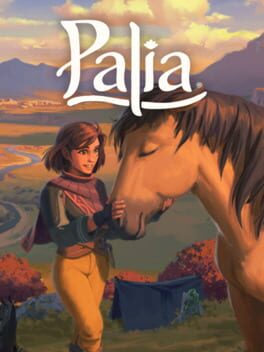
The Free-to-Play Frame for a Cosy Game
Comfort is a craft choice, not a default, which is the axiom every cosy game has to honour with its design before it earns the genre label. Palia honours it in the part of the experience that is free, which is most of the experience, and complicates it in the part that is not. The split is structural rather than accidental. The fishing minigame at Jel’s bank, the soil-preparation loop on the homestead, the cooking station in Tamala’s kitchen, the dialogue arcs with every named villager: all of these sit inside the free tier and have been since the PC beta. What sits in the paid tier is the decorative layer, the items that make a homestead match the player’s image of what their homestead should look like.
Read with a literary eye, this is a game that has separated content from costume. The kind of design that respects the player’s afternoon is the design that keeps the work of the day free and asks for money only at the level of personalisation, and that is what Palia does. The honest reading of the model is that the player who wants to attend to the village, the NPCs, and the seasonal rhythm pays nothing and loses nothing. The player who wants to decorate their homestead to a level that resembles the cosmetic store’s curated screenshots will feel the tug. That tug is real, and it is worth naming early rather than relegating to a closing aside.
The cosy loop is free. The question is what the player values alongside it.
Kilima Village: NPCs and the Dialogue-First Life-Sim
The thing Palia does that most farming sims do not is treat dialogue as the primary work of the village rather than as the connective tissue between activities. The eight named NPCs the player meets early all have arcs that move forward across the seasons, which is to say their conversations register the player’s choices and accumulate weight in the way a short story does when it returns to an image it laid down in its opening paragraph.
Mayor Kenyatta is the civic anchor, and the festival calendar runs through his dialogue: a village event is not announced through a menu but through a conversation, which gives the calendar the feeling of a community rather than a checklist. Hassian is the hunter, and his arc is the most structurally interesting of the village’s relationships, because it is about relearning how to share a territory with people who use it differently. Reth is the farmer whose practice runs parallel to the player’s own, and the small generosity of his dialogue is that he acknowledges what the player has been growing without being told. Tamala is the chef, and her deeper conversations gate gently behind the cooking skill, which turns mechanical learning into relationship progress without making either feel like a quest. Najuma is the innkeeper, and the inn is the part of the village where the player first hears about other characters before meeting them, which gives the social map a shape before the player has filled it in.
Tau is the smith, and his arc is the quietest one, about patience in craft and the value of work that does not announce itself. Jel is the fisher who shares his bank with the player from the first day and remains an easy presence to return to. Caleri runs the general store and holds the village’s economic layer in her dialogue: what is scarce, what is plentiful, what the seasons are turning toward.
The village at early morning, before the stalls open, has a particular quality of light that the game does not annotate and does not need to.

The Cosy-Loop Mechanics: Farming, Cooking, Fishing, Hunting, Foraging
There are five activities at the core of Palia’s day, and the right way to read them is not as a feature list but as five different textures of attention. The activities share a posture. Each one asks the player to attend to a thing before acting on it, which is the formal characteristic that separates cosy from merely easy.
The farming loop has a sound for soil preparation that distinguishes fertilised from unfertilised plots audibly as well as visually, which is the kind of design that trusts the player to learn through repetition rather than through tutorial. Cooking gates quality tiers through Tamala’s recipe progression, and the satisfying outcome of a well-timed recipe is a low-end sound that does not triumph, it settles. Fishing at Jel’s bank is the activity the opening of this review described, and the wooden pull of the line going taut is one of the small sonic decisions that does most of the atmospheric work. Hunting alongside Hassian is the activity that surprised me most, because the game treats it as a contemplative act rather than an action one: the player watches the prey for a long beat before the shot, and the rhythm is closer to fishing than to combat.
Foraging, bug-catching, and mining sit in the gather layer, and the game manages the repopulation of resources at a pace that gives every walk between districts something new to notice without making the world feel like a respawn farm. The day cycle is long enough that two or three activities fit inside a morning without the light feeling like a deadline. The difference between a fishing morning and a harvest afternoon is the difference between two textures of time in the same game, which is a craft achievement most farming sims do not attempt.

Multiplayer: 24-Player Shared Instances and Co-op Cosy
Palia places up to twenty-four players inside a shared instance of Kilima, which changes the social grammar of the genre in ways that take a few hours to register and that turn out to be the most distinctive thing about the game. In a solo farming sim, the NPCs are the community. In Palia, the NPCs are still the community in the sense of dialogue and quest progression, but the village also contains real players whose homesteads are visible, whose presence is registered as light in windows and movement on paths, and whose activities the player can join without negotiation.
The structural decision that matters most is that competition is not the social engine. No one can damage the player’s plot, no one can take the player’s fish, no one can interfere with the player’s cooking station. The texture of the multiplayer is observational rather than transactional. The player sees another homestead at a quiet evening hour and learns something about what is possible without being asked to compete for it.
Twenty-four players can tip the village toward busy on popular servers, which is a real trade against the solitary quality of Stardew. The trade is honest rather than concealed: the game is sociable by design, and a player who wants the solitary register of single-player farming sims will find Palia’s village fuller than that register prefers.
Switch 2 Native: 60fps, Improved Load Times, Expanded NPC Counts
Performance in a cosy game is not an achievement. It is the absence of a problem. The Switch 2 enhanced edition removes a particular kind of problem the base Switch release had: a frame cadence that broke the rhythm of moving between districts. On Switch 2 the game runs at native sixty frames per second, the visual fidelity sits at 1080p docked and 720p handheld, and the loading screen between the homestead and the village has shrunk to a beat shorter than the player’s attention can fasten onto.
The result, in the part of the game that matters most, is that the walk from the fishing bank back to the homestead now feels like one continuous gesture rather than two stitched ones. The shared instances also hold more NPCs and more rendered players visible at once, which thickens the village without making the engine strain. The handheld posture suits the game’s late-afternoon use case: the Switch 2 in the armchair, the day cycle running at its natural pace, no break in the rhythm long enough to remind the player they are operating a machine.
The game runs without incident in handheld, which is the correct outcome for a game of this kind.
The Free-to-Play Tax: Honest Numbers
The cosmetic store sits adjacent to the loop rather than inside it, and the honest accounting of what it asks is worth stating plainly. Individual furniture pieces in the Premium currency tier sit in a range of approximately £8 to £15 / $10 to $20 depending on the rarity and the seasonal bundle they belong to. The seasonal cosmetic releases run on a roughly monthly cadence, with thematic items grouped around the in-game season. There are no pay-to-win mechanics. There is no premium currency for time-skipping, resource purchasing, or skill levelling. The shop is decorative.
A player on a modest indulgence budget of around five pounds per month will earn enough Premium currency to acquire perhaps one item every month or two, which is enough to mark the seasons on the homestead without fully personalising it. A strictly free player has access to the full cosy loop, a workable base homestead, earned in-game currency that converts to a smaller portion of the cosmetic catalogue, and the entire NPC and multiplayer experience.
The structural tension the model creates is that a game whose promise is comfort sells the curtains separately. This is not a moral failure of the design. It is a working-life consideration the cosy player has to factor in before starting.
The loop is free. The curtains cost money.
Versus Stardew Valley and Animal Crossing: New Horizons
Palia is not a replacement for either of the two cosy games it will inevitably be measured against, and the right way to place it is by structural distinction rather than by ranking. Stardew Valley is single-player by design, with farming mechanics that hold deeper optimisation ceilings than Palia attempts, and an economic model that asks for nothing beyond the purchase. Palia is broader in social scope, narrower in per-mechanic depth, and asks for cosmetics in the way Stardew does not.
Animal Crossing: New Horizons is a lifestyle game whose real-time clock anchors a different texture of attention, where Palia is a session-based game whose day cycle compresses time into the hour the player has available. The Animal Crossing cosmetic economy is internal: items are earned through play rather than purchased through a store. Palia’s NPC dialogue layer is deeper than Animal Crossing’s, and the village arcs accumulate weight that Animal Crossing’s villagers do not attempt.
Palia is the structural answer to a different question than either of these games asks. The player who knows which question they are bringing to it will know whether Palia is the game they want.
Final Word
The evening that lands hardest in Palia is a quiet one, with the rod cast at Jel’s bank, another player visible across the water working on a recipe, and the village lights coming on one by one across the homesteads. The line goes taut with the wooden pull sound that opened this review, and the catch registers, and the player has not opened the cosmetic store once this session because the loop did not ask them to.
This is the game for the player who wants a cosy life-sim that is free to access at its core, has enough patience with the cosmetic layer to treat it as optional rather than obligatory, and is willing to share a village with strangers who turn out, mostly, to be quiet neighbours. The player who wants a strictly solo experience without the homestead-personalisation pull should return to Stardew Valley. The player who wants deeper per-mechanic optimisation will find more of that in Stardew too. For the cosy player who wants a populated village, real-player presence, and a fishing bank that earns its silences, Palia on Switch 2 is the version of the game that works.
FAQ
Is Palia really free to play?
Palia is free to download and free to play in full at its core loop. The entire farming, cooking, fishing, hunting, and NPC dialogue progression is available without purchase, as is the multiplayer layer of up to twenty-four shared players per instance. The Premium currency tier covers cosmetic items only, including furniture, character customisation, and seasonal-themed decorations. There are no pay-to-win mechanics, no resource purchases, and no time-skipping options behind paywalls.
Does Palia run well on Switch 2?
Palia on the Switch 2 enhanced edition runs at native sixty frames per second, with 1080p resolution in docked mode and 720p in handheld. The load times between Kilima districts have shortened materially compared to the base Switch port, and the engine holds steadier NPC counts in shared instances. The rhythm of the day cycle, which depends on smooth movement between fishing bank, homestead, and village, is the part of the game that benefits most from the native frame rate.
How is Palia different from Stardew Valley?
Palia is an MMO life-sim, where Stardew Valley is a single-player farming sim. Palia places up to twenty-four players in shared village instances, has dialogue-driven NPC arcs that accumulate across seasons, and is structured around session-based play rather than the years-long accumulation Stardew rewards. Stardew has deeper per-mechanic optimisation ceilings and an economic model with no cosmetic store. Palia has broader social scope, real-player presence, and a free-to-play model with paid cosmetics. They answer different questions.
Do I need to buy Premium currency to enjoy Palia?
Premium currency is not required to enjoy the core game. Every cosy mechanic, every NPC relationship, the entire multiplayer experience, and a workable base homestead are accessible without spending. Premium currency purchases sit at the cosmetic-furniture and character-customisation layer, with individual items in the range of approximately eight to fifteen pounds. A player who values the loop, the NPCs, and the village rhythm can enjoy Palia indefinitely at no cost. A player who wants extensive homestead personalisation will feel the cosmetic-store pressure.
Can I play Palia with friends?
Palia supports up to twenty-four players per shared instance, with a friends list that lets players join each other's villages and a housing-plot system that allows neighbours to design adjacent homesteads. Every core activity supports cooperative play: farming, cooking, fishing, hunting, foraging, and community board projects can all be completed together. The multiplayer architecture is cooperative by default rather than competitive, so no player action can damage another player's plot or take their resources.
8.1
Great
SpawningPoint Verdict
Review summary
Palia on Switch 2 is the version of Singularity 6's free-to-play life-sim that the rhythm of the loop has needed since the PC open beta in 2023. The native sixty frames per second and shortened load times turn a passable port into a continuous experience, and the village of Kilima holds a dialogue-driven NPC layer that accumulates weight across seasons rather than cycling through static gift loops. The twenty-four-player shared-instance architecture changes the genre's social grammar in ways that reward observational play. The cosmetic-store layer sits adjacent to the core loop rather than inside it, which is honest design but a real consideration for the cosy player who values homestead personalisation. The loop is free. The curtains cost money.


