REVIEW
8.6· Great
Ori and the Will of the Wisps Review: A Radiant Sequel
Our Ori and the Will of the Wisps review covers Moon Studios' Metroidvania sequel, its combat system, hand-painted art style, and difficulty curve on PC.

Game Snapshot Developer: Moon Studios Publisher: Xbox Game Studios Release Date: 10 March 2020 (Xbox); 11 November 2020 (PC, Nintendo Switch) Platforms: PC (Microsoft Windows), Xbox One, Xbox Series X/S, Nintendo Switch Price: $29.99 | £24.99 Rating: PEGI 7 | ESRB E10+ Genre: Metroidvania platformer Length: ~15 hours (main story); ~30 hours (completionist)
Presentation and World Design
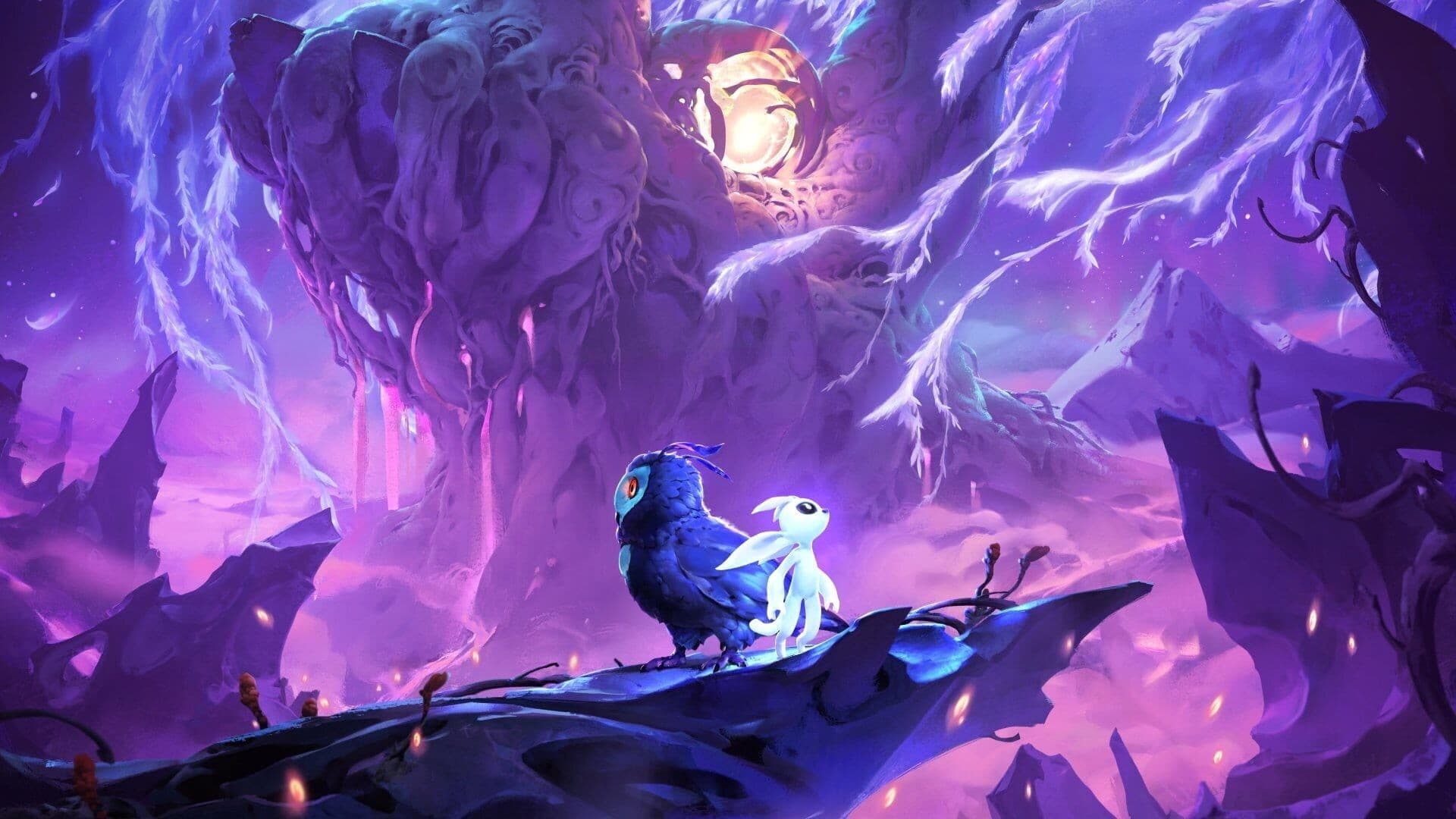
The hand-painted art style is doing two things at once: it is beautiful, and it is readable. That second function is the one that matters for how this game actually works.
The parallax backgrounds in Inkwater Marsh and Kwolok's Hollow convey terrain type and hazard proximity without demanding the player consult a HUD indicator mid-traversal. Foliage reacts to Ori's movement; ambient wildlife populates the inactive sections of each biome; environmental transitions between forest, cavern, and industrial spaces maintain visual cohesion without losing the distinct identity of each region. This is visual design serving encounter design: the player reads the geometry correctly under pressure because the geometry has been built to be read.
The orchestral score responds dynamically to location changes, reinforcing each biome's emotional register at the moment of transition rather than after the fact. Moon Studios stages the emotional information in the world itself, through background detail and animation quality, which means dialogue is not carrying weight it was never designed to carry. The photo mode exists. It is there for compositions worth capturing.
Gameplay and Combat
The dash chain is the game's argument: every traversal sequence in Inkwater Marsh and Kwolok's Hollow teaches a specific input the player will need at Willow's End.
Moon Studios stages the encounter from the first unlocked ability. Bash arrives early and rewrites the geometry of Niwen immediately: what was a wall is now a launch point, what was a ceiling hazard is now an elevation tool. The double jump and wall-run expand that grammar incrementally, so that by the time the Mouldwood Depths chase sequence demands precise chaining under time pressure, the vocabulary has been supplied in the correct order before the test arrives. The game earns the cost of each encounter by constructing the terms of that encounter across the preceding hours.
Hollow Knight stages its difficulty in route-discovery; Ori stages it in execution under time pressure. The distinction matters because the failure mode is different: in Ori, you know where you need to go, and the question is whether you can perform the sequence accurately enough to get there before the world closes behind you. The Mora pursuit in Silent Woods is the clearest statement of this: the encounter does not introduce a new mechanic. It requires every established traversal mechanic to be executed in rapid sequence, correctly, while the background is actively working against legibility. The difficulty is a confirmation, not a gate.
Boss encounters apply the same logic. The Foul Presence fight at Willow's End does not ask for improvisation: it asks whether the player has internalised the dash timing the game has been teaching since the first Howl confrontation. Checkpoints are placed far enough apart that failure carries a real cost; the cost is proportionate to how clearly the game has signalled what the correct execution looks like.
The optional Spirit Trials and the side-boss encounters in Luma Pools and Baur's Reach push the execution window narrower still. The main path remains accessible. The optional content does not. That gap is honest: the game is not trying to obscure what it demands.
Story and Characters
The story earns its emotional conclusions through staging rather than exposition, which is the only method available to it: there is almost no sustained dialogue.
Ku's characterisation in the opening sequence is efficient enough that the inciting separation lands with genuine weight. Ori's relationship to Ku is established through movement and physical proximity before any narrative device is deployed. When the storm separates them in the early hours, the player already understands what has been lost.
The deterioration of Niwen is caused by an absence, Shriek's grief in isolation, rather than active villainy, which keeps the narrative pointed toward what Ori is moving toward rather than what opposes the journey. Secondary characters encountered across Niwen, Tokk, Twillen, Opher, Lupo, carry their own needs and motivations, grounding exploration in relationship rather than pure mechanical discovery. Their presence provides narrative purpose to the backtracking that Niwen's ability gates demand: returning to Inkwater Marsh after unlocking Bash is not mechanical obligation, it is story-logical.
By the final sequence at Willow's End, the game has built sufficient emotional investment that its conclusion operates without requiring the player to be told what to feel. The Foul Presence fight works as a climax because the preceding hours have established the stakes clearly. Moon Studios trusts the staging to do the work.
Value and Longevity
Ori and the Will of the Wisps launched at £24.99 on Xbox One and PC, with Game Pass inclusion from day one. That pricing eliminates the risk calculus for subscribers entirely.
Main story completion runs 12 to 15 hours on the critical path. The completionist contract, optional bosses, Spirit Trials across each biome, collectibles in Wellspring Glades and the Silent Woods, extends the figure toward 30 hours. The Spirit Shard upgrade system supports this: investing in traversal skills independently of offensive abilities means the completionist run is a different execution problem from the critical-path run, not simply the same route revisited with additional waypoints marked.
Replay incentive is limited compared to procedurally varied genre entries. Niwen is a fixed authored world, and subsequent playthroughs offer improved player skill rather than new content discovery. That is an honest constraint rather than a failure: the game is designed around a specific traversal argument, and that argument does not require randomisation to hold.
For players who want a single authored experience with a clear end, the main path delivers on its terms and concludes without waste.
Technical Notes
Performance is encounter-design integrity, not a separate category. Ori and the Will of the Wisps holds 60 frames per second across Xbox One, Xbox Series X/S, PC, and Nintendo Switch under standard conditions. During the Mouldwood Depths chase and the Mora pursuit sequence, frame consistency is the precondition for correct execution: a drop at the moment the player needs to read the incoming wall is a failure the game has imposed rather than one the player has earned.
The Unity engine scales cleanly across platforms. Background parallax layers remain smooth during biome transitions; Ori's sprite work holds crisp edges at lower resolutions. No meaningful bugs were present at launch across any platform. Accessibility options include three difficulty settings adjustable mid-session, removing the penalty for recalibrating partway through. Checkpoint placement prevents excessive traversal repetition between combat encounters. Load times are short on SSD storage.
The technical execution does not break the contract.
Final Word
The geometry still does the work.
Unlocking Bash in Kwolok's Hollow rewrites the walls Ori has already crossed: what was a boundary is now a launch point, and the map the player has been building in memory requires revision. That is the game's teaching mechanism, and it earns the cost of every chase sequence and boss encounter that follows. The Foul Presence fight at Willow's End does not ask for improvisation; it asks whether the player has internalised what the preceding twelve hours have been demonstrating. Players who engage with the optional Spirit Trials and the side-boss encounters in Baur's Reach and Luma Pools will find execution windows that narrow considerably from the critical path. The main path does not impose that demand. The game is honest about which contract it is offering.
8.6
Great
SpawningPoint Verdict
Review summary
Ori and the Will of the Wisps expands Moon Studios' metroidvania formula with combat mechanics, a spirit companion system, and additional movement options including double jumps and wall runs. Niwen's interconnected map rewards exploration through locked paths accessible only after unlocking late-game abilities. Three difficulty modes accommodate different skill levels without penalising experimentation. The hand-painted visual style continues the series tradition of layering painterly backgrounds with particle effects that react to Ori's movements. Its combat system adds a layer of execution beyond simple evasion, though some encounters lean towards attrition rather than precision. At around 12 to 15 hours for a main story playthrough, it offers substantial content without overstaying its welcome.