RETROSPECTIVE
Mineko’s Night Market Retrospective: A Painterly Market-sim
Mineko's Night Market retrospective: the painterly market sim's stall-craft warmth, its uneven pacing, and who the island's quiet week suits in 2026.


The best sound in Mineko’s Night Market is the small clack of a stall being prepared, because the game understands a table as a promise before it understands it as a shop. This is a painterly market-sim that earns its warmth unevenly. At its best, it notices the ceremony of making something, carrying it through the day, and placing it under evening light. At its weakest, the gathering around that ceremony becomes flatter than the ceremony itself. That gap matters. A cosy game can look soft whilst asking for the player’s time carelessly. Mineko’s Night Market is more careful than that, but not always careful enough.
Game Snapshot
| Developer | Meowza Games |
| Publisher | Humble Games |
| Release Date | 26 September 2023 |
| Platforms | Xbox Series X/S, PS4, PC, PS5, Mac, Xbox One, Switch |
| Price | Check price on Amazon |
| Rating | PEGI 3/ESRB E |
| Genre | Market-sim, crafting, adventure |
| Length | Varies |
| Install Size | Varies by platform |
Presentation and World Design
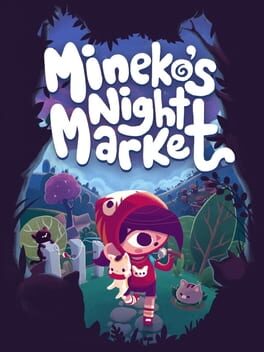
The island has the quality of a paper lantern left on after supper: bright, handmade and fragile. Its colour work is not trying to imitate natural light. It arranges pinks, yellows, deep greens, and flat evening blues into a world that feels printed rather than rendered. The place reads quickly, which matters when errands repeat.
The market is the quiet centre. Stalls sit like little rooms, and arranging goods has more weight than selling them. Here Mineko’s Night Market sits near our Tiny Bookshop review: the object matters because it records attention. A doorway, a path, cats, a shopfront, all of them ask the player to look rather than scan.
The limitation is that the world sometimes holds its pose too long. The painterly surface remains considered, but repeated routes become familiar before they become meaningful.

Gameplay and Combat
There is no combat in the useful sense, which is correct for preparation and ritual. The action rests on gathering materials, making objects, completing errands, and returning to the weekly market with enough stock. A week of work gathers into one public night, and the market gives that work a visible table.
The problem is not that the loop is slow. The loop should be slow. The problem is that some tasks ask for repetition without giving repetition enough texture. Gathering can feel like walking the same shelf after its labels have been read. Crafting is clearest when it behaves like a well-organised drawer: the right item in the expected place, the right result arriving without fuss.
Our Moonstone Island review looked at a life-sim that finds breadth through movement. Mineko’s Night Market wants breadth to come from ritual, which is a narrower ask. It works when market night completes the week. It thins when errands feel like admission. The sharper Wytchwood review is a useful neighbour here: both games know making can carry tension without becoming a test.
Story and Characters
The story has the shape of a folktale told in a village kitchen: a child arrives, the island has a secret, and everyone speaks around the thing that should be spoken plainly. The writing is strongest when it lets that shape stay plain. Cats are not just decoration. They are rumour, joke, myth, and sometimes the island’s only honest public language.
The human cast works best through small gestures rather than large revelations. A neighbour does not need a speech about belonging when a changed routine can do the same work. This is the kind of attention that made our Cattails Wildwood Story review focus on animal life as structure, not softness.
Where the story falters, it explains the outline more than it needs to. Our Strange Horticulture review praised labels, drawers, and silences. Mineko’s Night Market has moments of that trust, but it does not always stay with them.
Value and Longevity
The question of whether Mineko’s Night Market is worth it depends on what the player wants from repetition. If the pleasure is in making one more object, setting one more table, and seeing the evening market gather, the game has a clear rhythm. If the pleasure is in surprise, it spends that currency quickly.
An hours-per-pound reading would be the wrong measure anyway. The better question is whether an evening with the game feels well spent once the first novelty has passed. Often it does. Sometimes it asks for an errand where it needed a ritual.

Technical Notes
The note worth making is simple: a game built around small sounds, repeated errands, and readable menus needs steadiness before it needs spectacle. The save feel, menu response, and market crowding are the surfaces to watch across platforms. Those are quiet concerns, but relevant ones. If any version interrupts the ritual with hitching or delayed menu responses, the craft problem becomes experiential rather than cosmetic.
Final Word
Mineko’s Night Market is most convincing at the table, just before the selling begins. The goods are arranged, the evening has gathered, and the game briefly understands that a market is not a menu but a little public room. That is the version worth remembering. It is the reason to return. Around it sits a softer, less steady structure of errands, materials, and repeated routes, some earned and some merely present. The result is a careful recommendation: play it for the painterly island and the ritual of the weekly market, not for a loop that keeps deepening until the end.
Is Mineko's Night Market worth it in 2026?
It is worth approaching as a warm indie about place and ceremony rather than as a deep life-sim. The painterly island and the weekly market ritual remain distinctive, especially when the player is preparing a stall and watching evening settle around the table. The errands around that ritual are thinner.
What makes the market the quiet centre?
The market is where the weekly work becomes visible. Goods go down like objects in a room rather than entries in a menu, and the crowd arrives to look as much as to buy. Arranging the table carries more feeling than the selling does.
Does the gathering loop earn its time?
The gathering loop does not always earn its time. Repetition is the right speed for the island, but several tasks repeat without gaining texture, and late-week gathering can feel like stocktaking. Market night usually redeems it.
How does the story work?
The story has the shape of a folktale told in a village kitchen. Cats are rumour, joke, myth, and sometimes the island's only honest public language. The writing is best when it leaves that shape alone. Where it falters, it explains the outline more than it needs to.
Will the game feel repetitive after the first novelty?
The game often feels repetitive after the first novelty. The better question is whether an evening feels well spent once the first novelty has passed. The market night can complete the week. The loop thins when errands feel like admission rather than ceremony that has earned its keep.


