REVIEW
8.6· Great
Hi-Fi Rush Review 2026: Worth Playing in 2026?
Hi-Fi Rush is a rhythm-action character game from Tango Gameworks that constructs its entire design around one structural argument: that rhythm internalisation is a learnable skill. The beat-tied combat economy rewards timing without punishing imprecision through harsh checkpoint resets. The cel-shaded art direction encodes combat readability at every level, from enemy silhouettes to beat-synchronised environments. Boss encounters, notably the Korsica fight in chapter three, stage the difficulty across phases that build on the player's accumulated vocabulary rather than discarding it. At £24.99 / $29.99, or included with Xbox Game Pass, the twelve to fifteen hour campaign is appropriately valued. The PS5, PC, and Nintendo Switch versions all deliver the same design. In 2026, Hi-Fi Rush is worth playing.


Hi-Fi Rush builds its entire combat economy around a single structural argument: that rhythm internalisation is a learnable skill, not a gatekeeping device. The beat-tied attack system, the enemy-silhouette readability, and the boss encounters that escalate through distinct phases without changing the core vocabulary all support that argument. At three years old, the game is available on Xbox Game Pass, PlayStation 5, and PC at £24.99 / $29.99 standard digital. The twelve to fifteen hour main campaign holds its design integrity at every difficulty setting. The rhythm-mastery loop rewards a second run. The pop-punk corporate-satire wrapper is deliberately thin. The game earns its place in 2026.
Game Snapshot
| Developer | Tango Gameworks |
| Publisher | Bethesda Softworks/Krafton |
| Release Date | 25 January 2023 (Xbox Series X/S/PC); 19 March 2024 (PS5/PS4/Switch) |
| Platforms | PC, Xbox Series X/S, PlayStation 5, PlayStation 4, Nintendo Switch |
| Price | £24.99 | $29.99 (standard digital); included with Xbox Game Pass (PC and console) |
| Rating | PEGI 12 | ESRB T (Teen) |
| Genre | Rhythm action/Character action |
| Length | 12-15 hours (main campaign); 18-22 hours (full completion) |
| Install Size | ~30 GB (PC); ~22 GB (PS5) |
| Score | 8.6/10 |
Hi-Fi Rush arrived in January 2023 as an unannounced Xbox shadow drop and became the clearest argument that year for what character action can do when it commits to a single mechanical thesis. The thesis is this: rhythm internalisation, not reflex precision, is the skill the game is teaching. Three years on, that argument still holds. The cel-shaded corporate-rebellion wrapper ages well because it never asked to be taken seriously as narrative; what it asked for was that the player listen, read the attacks, and commit to the beat. That contract remains intact.
The question worth asking in 2026 is not whether Hi-Fi Rush was good. It is whether the game still functions as a complete design at the moment a new player enters it. The answer is yes, and the reasons are structural.

Presentation and World Design
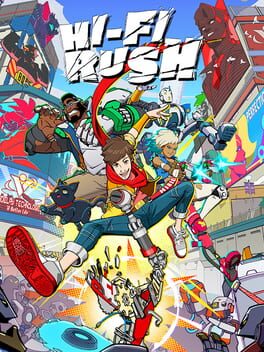
The visual language of Hi-Fi Rush is constructed around a single priority: combat readability. The cel-shaded animation style, the exaggerated silhouette work on enemy designs, and the colour-coded threat hierarchy are not aesthetic choices that happen to work in play; they are the product of an art direction brief that put legibility first. A player who cannot read the attack from the enemy shape alone is a player who cannot play the game correctly. Tango Gameworks built the world so that reading is possible before the fight has started.
The industrial environments pulse in synchronisation with each stage’s track. Platform positions shift on the beat, background machinery clanks on downbeats, hazard cycles complete at phrase boundaries. This is not decoration: it encodes information. A player who understands the beat already knows when the platform will move. The level design does not present rhythm as an obstacle layered on top of navigation; it structures the whole space so that rhythm comprehension is the navigation. The corridor chase that blends melee exchanges with timed platform leaps in a single continuous sequence is where this integration reaches its clearest expression: the two modes are not being alternated, they are the same mode expressed through different verbs.
The colour palette shifts between chapters to track energy level, and the animation intensity adjusts to match. The visual language is consistent from opening cutscene to final boss: bright, kinetic, deliberately theatrical. For players interested in how a distinct art direction can carry structural weight in an action game, our Lost Soul Aside PS5 review covers a recent case study in what happens when style and combat readability pull against each other rather than reinforcing each other.
The overall presentation does not decorate. It teaches.

Gameplay and Combat
The beat-tied combat economy works as follows: Chai’s basic strikes deal standard damage on any timing, but attacks that land on the beat deal increased damage and generate additional combo meter. Dodges and parries operate on the same metronomic logic. The system does not punish off-beat play by sending the player back to a checkpoint; it rewards on-beat play by increasing output, which creates a gentle ramp from tolerated imprecision toward earned precision. This is the correct architecture for a game that wants to be accessible without being structurally trivial.
Enemy design supports this architecture. Each enemy type presents a distinct silhouette that communicates its attack vocabulary before it acts. The first encounter with a shielded unit teaches the parry window through that unit’s specific animation. The first encounter with a ranged unit teaches the dodge timing through its wind-up. Tango Gameworks sequences these introductions carefully: the combat vocabulary is supplied in the correct order before the encounters begin testing it. The tutorial is embedded in the encounters, not delivered separately.
The boss encounters are where the design argument is most legible. Korsica, the third-chapter boss, stages her encounter across three phases that progressively narrow the timing window the player must work within. The first phase teaches the parry cue. The second phase adds a beat-stagger that changes the timing of the same cue. The third phase requires the player to hold the beat independently while processing a new attack pattern layered on top of it. Each phase transition recontextualises what came before without discarding the vocabulary the player has built. The encounter earns its difficulty by constructing the terms of the contract clearly.
The loop holds through the main campaign. Each chapter layers new enemy types and arena hazards that test adaptability rather than raw reflexes. A companion ability system extends the combat vocabulary in the mid-game: Peppermint, CNMN, and Macaron each add moves that require the player to integrate a new timing surface into the existing beat structure. The additions are sequenced rather than dumped. For players who want to know how Hi-Fi Rush compares to other action games that front-load their combat vocabulary, our Hollow Knight: Silksong PS5 review covers a different approach to building encounter complexity over a campaign.
The platforming sections extend the rhythm logic into traversal without breaking it. The seamless integration keeps pacing brisk across stages.

Is Hi-Fi Rush Worth Playing in 2026?
Three years after release, the design holds because it was built on a structural argument rather than novelty. The rhythm-action hook that made the game distinctive at launch is not a gimmick that dates; it is the foundation of every system in the game, from combat economy to level design to boss staging. A player encountering Hi-Fi Rush in 2026 encounters the same complete design that launched in 2023.
The platform situation has expanded. Hi-Fi Rush is now available on PlayStation 5, PlayStation 4, Nintendo Switch, PC, and Xbox Series X/S. It is included with Xbox Game Pass on both PC and console tiers at no additional cost beyond the subscription. Standard digital pricing sits at £24.99/$29.99 across platforms. For Game Pass subscribers, the acquisition cost is zero. For players on PlayStation who missed the original Xbox window, the PS5 version runs at 60fps with no meaningful performance degradation from the Series X/S release.
The argument for playing in 2026 is straightforward: the game is complete, well-priced, and structurally coherent at every difficulty setting. There is no degraded live-service skeleton. There are no missing content components. The twelve to fifteen hour campaign delivers its design argument in full and exits cleanly. For action game players who have not yet played it, the question is not whether it is worth playing. It is why it has taken this long.
Story and Characters
Chai, an aspiring musician, wakes inside Vandelay Technologies with a music player fused to his chest and rhythm-driven abilities that Vandelay’s security architecture was not designed to counter. The corporate satire is deliberate and thin: Vandelay’s efficiency doctrine and its robotic workforce exist as a backdrop against which Chai’s beat-driven rebellion is legible without requiring any investment in the world’s internal logic.
Story beats arrive via cutscenes that mirror the visual register of the game’s art direction: exaggerated expressions, snappy dialogue, musical numbers that turn narrative moments into miniature performances. The supporting cast includes Peppermint, whose scepticism of Chai functions as the story’s straight-man anchor; CNMN, a robot whose loyalty is played for comedy; and a roster of chapter bosses who double as antagonists. The bosses are characterised just enough that their encounter designs feel like personality expressions. Korsica’s phase structure maps to her precision-obsessed characterisation. The final villain’s encounter escalates the combat vocabulary beyond what the game has asked of the player before that point, which is the correct shape for a final boss.
The narrative does not overstay its welcome. The pacing suits players who want action over exposition. Chai’s pop-punk arc earns its sincerity not through dramatic weight but through consistency: the game never asks to be taken seriously as story, which means it never disappoints on that register. For a different approach to story integration in an action context, our Astro Bot PS5 review covers how a narrative wrapper can carry emotional weight without competing with the gameplay for attention.

Value and Longevity
The main campaign runs twelve to fifteen hours at standard difficulty. Full completion, including side missions, challenge stages, and collectible categories, extends the runtime to eighteen to twenty-two hours. The side content is structured around the rhythm-mastery loop rather than filler: challenge stages ask the player to demonstrate the combat vocabulary under stricter conditions, and the scoring system surfaces how much precision gap exists between a functional clear and a full-combo clear.
Higher difficulties compress the damage economy without changing the encounter design. The rhythm internalisation that the game is teaching is the same skill at Hard as at Easy; the difficulty settings calibrate the cost of imprecision, not the design itself. This is the correct approach: a player who wants to understand how tight the parry window is when timed correctly can access that understanding at any difficulty setting.
The replay value is genuine for players interested in the rhythm-mastery dimension. A second playthrough with the full companion ability set available from the start plays differently from the first, because the player is no longer building the vocabulary and can instead apply it from the opening encounter. The game is short enough that a second run is not a significant time commitment.
At £24.99/$29.99, the game is appropriately priced for its length. For Xbox Game Pass subscribers, it is included in the subscription. Our best Steam Deck games 2026 guide includes Hi-Fi Rush as one of the standout handheld-compatible picks, noting that the PC version performs well at the Deck’s resolution targets.
Technical Notes
The PS5 version targets 60fps and holds it across the main campaign. There are no meaningful frame rate drops in standard encounters or during the busier boss phases. The original Xbox Series X/S version performs identically. The PC version scales well across hardware tiers; at minimum specifications the game maintains 60fps without requiring significant settings compromises.
Load times are short on both SSD-equipped platforms. The Nintendo Switch version runs at a reduced resolution and frame rate, which introduces some visual degradation but does not affect the rhythm mechanics: the beat is carried in the audio track, and the timing windows are audio-cued rather than visually cued, so the Switch version delivers the same combat experience at lower graphical fidelity.
The difficulty options include a visual assist mode that adds on-screen timing indicators for players who struggle to hear the beat clearly, without removing any of the core mechanics. This is the correct implementation: the accessibility option does not change what the fight is teaching, only the display surface from which the player reads the cue. Our PS5 Pro review 2026 covers current PlayStation hardware context for players deciding which platform to pick up the game on.
Final Word
Hi-Fi Rush is a game that knows what it is. The rhythm internalisation argument runs from the opening tutorial encounter through the final boss phase transition, and nothing in the twelve to fifteen hour campaign contradicts it. The art direction communicates before the fight starts. The encounter design sequences the vocabulary before testing it. The boss staging, particularly Korsica’s three-phase structure and the narrowing timing window it constructs, demonstrates the design at its sharpest. Chai’s cel-shaded corporate rebellion is the wrapper, not the product. The product is a character action game built on a structural argument that holds. In 2026, across PlayStation 5, PC, and Xbox Game Pass at £24.99/$29.99, there is no good reason a player interested in action game design has not played it.
FAQ
Is Hi-Fi Rush worth playing in 2026?
Yes, and the reasons are structural rather than nostalgic. The rhythm-tied combat economy, the enemy silhouette readability, and the boss encounter staging that recontextualises each phase without discarding the player’s built vocabulary are design choices that do not date. The game is available at £24.99/$29.99 across PlayStation 5, PC, and Xbox Series X/S, and is included with Xbox Game Pass. A player entering it in 2026 encounters the same complete design that launched in 2023, with no degraded live-service components and no missing content.
Is Hi-Fi Rush on PS5?
Yes. The PlayStation 5 version launched on 19 March 2024 alongside PS4 and Nintendo Switch releases. It runs at 60fps with no meaningful performance differences from the original Xbox Series X/S release. Players on PlayStation who missed the original Xbox window now have full access to the standard version. The PS5 version is available digitally through the PlayStation Store and at retail.
Is Hi-Fi Rush on Xbox Game Pass?
Yes. Hi-Fi Rush has been included with Xbox Game Pass on both PC and console tiers since its original shadow-drop launch in January 2023. Game Pass subscribers can download and play the full game at no additional cost beyond their subscription. The Game Pass version is the complete release, with no content restrictions.
How long is Hi-Fi Rush?
The main campaign runs twelve to fifteen hours depending on difficulty setting and how much of the optional dialogue and environmental collectibles the player engages with. Full completion, including challenge stages, side missions, and all collectible categories, extends the runtime to eighteen to twenty-two hours. The game is completable in a weekend for most players at standard difficulty.
Is Hi-Fi Rush good for players who do not usually play rhythm games?
The game is designed for this audience. Early encounters function as extended vocabulary introductions before complexity ramps. The timing windows are wider than a traditional rhythm game and the damage economy tolerates imprecision without punishing it through checkpoint resets. The visual assist mode adds on-screen beat indicators for players who struggle to track the audio cue alone, without removing any of the encounter mechanics. The difficulty scaling calibrates the cost of imprecision, not the design itself.
8.6
Great
SpawningPoint Verdict
Review summary
Hi-Fi Rush is a rhythm-action character game from Tango Gameworks that constructs its entire design around one structural argument: that rhythm internalisation is a learnable skill. The beat-tied combat economy rewards timing without punishing imprecision through harsh checkpoint resets. The cel-shaded art direction encodes combat readability at every level, from enemy silhouettes to beat-synchronised environments. Boss encounters, notably the Korsica fight in chapter three, stage the difficulty across phases that build on the player's accumulated vocabulary rather than discarding it. At £24.99 / $29.99, or included with Xbox Game Pass, the twelve to fifteen hour campaign is appropriately valued. The PS5, PC, and Nintendo Switch versions all deliver the same design. In 2026, Hi-Fi Rush is worth playing.


