REVIEW
7.2· Great
Lost Soul Aside PS5 Review: Stunning Style, Sharper Combat, Shakier Foundations
Lost Soul Aside on PS5 delivers flashy, satisfying character-action combat and striking visuals, but uneven storytelling and some jank hold it back.


Lost Soul Aside has spent years in the gaming long grass, building a reputation on trailers that promised dazzling, Devil May Cry-adjacent combat and glossy, anime-inflected spectacle. The final PS5 release does deliver that central fantasy more often than not, and when it clicks it feels genuinely distinctive, a character-action RPG that wants you to learn timing, spacing, and weapon cadence, not simply chase bigger numbers.
This Lost Soul Aside PS5 review comes with an important asterisk, though. The game is at its best when you are fighting, and it is at its most vulnerable when it asks you to care about everything around the fighting. If you arrive for kinetic bosses, stylish ability layering, and the sheer joy of snapping between weapon forms, you will find plenty to like. If you want exploration, storytelling, and traversal to carry equal weight, you will notice the seams.
 There is no mistaking the ambition on display. Lost Soul Aside leans hard into high-contrast colour, dramatic lighting, and effects-heavy combat readability, which is a tricky balance to land in a game this fast. When the camera behaves, fights look excellent, with hit sparks, streaking trails, and Arena’s presence giving even routine encounters a sense of theatrical flourish.
World design, however, is more functional than evocative. The game tends to funnel you forward through clear routes, punctuated by arena-style combat spaces and occasional larger pockets that hint at freer exploration. That structure keeps pacing brisk, but it also means the world rarely earns the feeling of being a place, rather than a sequence. The most memorable stretches are the ones that commit to spectacle, big silhouettes, dramatic vistas, strong material contrast, while the in-between connective tissue can feel boxy, constrained, and a little too eager to steer you back onto the critical path.
There is no mistaking the ambition on display. Lost Soul Aside leans hard into high-contrast colour, dramatic lighting, and effects-heavy combat readability, which is a tricky balance to land in a game this fast. When the camera behaves, fights look excellent, with hit sparks, streaking trails, and Arena’s presence giving even routine encounters a sense of theatrical flourish.
World design, however, is more functional than evocative. The game tends to funnel you forward through clear routes, punctuated by arena-style combat spaces and occasional larger pockets that hint at freer exploration. That structure keeps pacing brisk, but it also means the world rarely earns the feeling of being a place, rather than a sequence. The most memorable stretches are the ones that commit to spectacle, big silhouettes, dramatic vistas, strong material contrast, while the in-between connective tissue can feel boxy, constrained, and a little too eager to steer you back onto the critical path.
 The good news is that it feels designed for expression. Different weapon forms push you towards different rhythms, some better for crowd control, others for single-target pressure, and the skill progression supports experimentation rather than locking you into a single “correct” path. Boss fights, when tuned well, are the real highlight, they demand attention to tells, punish sloppy greed, and make your defensive toolkit feel meaningful rather than ornamental.
The weaker side of the equation is movement and traversal. Platforming and environmental navigation can feel less precise than the combat system asks you to be, which creates friction during stretches that should be palette cleansers between battles. When the game is asking you to jump, climb, and thread narrow paths, the sense of control is not always as clean as it needs to be. That mismatch is one of the main reasons the game can feel uneven from chapter to chapter.
The good news is that it feels designed for expression. Different weapon forms push you towards different rhythms, some better for crowd control, others for single-target pressure, and the skill progression supports experimentation rather than locking you into a single “correct” path. Boss fights, when tuned well, are the real highlight, they demand attention to tells, punish sloppy greed, and make your defensive toolkit feel meaningful rather than ornamental.
The weaker side of the equation is movement and traversal. Platforming and environmental navigation can feel less precise than the combat system asks you to be, which creates friction during stretches that should be palette cleansers between battles. When the game is asking you to jump, climb, and thread narrow paths, the sense of control is not always as clean as it needs to be. That mismatch is one of the main reasons the game can feel uneven from chapter to chapter.
 Unfortunately, the wider narrative rarely capitalises on that foundation. Cutscenes and dialogue often exist to connect set-pieces rather than develop meaningfully distinct characters, and the pacing can feel like it is rushing to the next escalation. The result is a story that is easy enough to follow, but harder to invest in, especially when the writing leans on familiar beats without doing much to reframe them.
If you are mainly here for combat, the narrative shortcomings are not fatal. If you want the story to provide a second reason to keep pushing forward, it can feel thin, and at times unintentionally awkward in presentation.
Unfortunately, the wider narrative rarely capitalises on that foundation. Cutscenes and dialogue often exist to connect set-pieces rather than develop meaningfully distinct characters, and the pacing can feel like it is rushing to the next escalation. The result is a story that is easy enough to follow, but harder to invest in, especially when the writing leans on familiar beats without doing much to reframe them.
If you are mainly here for combat, the narrative shortcomings are not fatal. If you want the story to provide a second reason to keep pushing forward, it can feel thin, and at times unintentionally awkward in presentation.

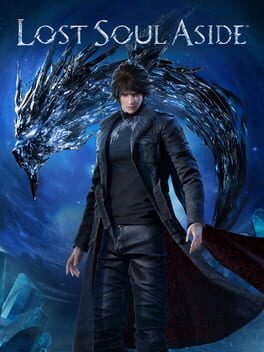
Game Snapshot
| Developer | Ultizero Games |
| Publisher | Sony Interactive Entertainment |
| Release Date | 29 August 2025 |
| Platforms | PS5 |
| Price | £59.99/$59.99 |
| Rating | PEGI 12 (Violence) | ESRB T (Use of Alcohol, Violence) |
| Genre | Action-adventure role-playing |
| Length | 16-20 hours (main story) and 20-25 hours (story+side content) |
| Install Size | ~70-80GBS |
Presentation and World Design
There is no mistaking the ambition on display. Lost Soul Aside leans hard into high-contrast colour, dramatic lighting, and effects-heavy combat readability, which is a tricky balance to land in a game this fast. When the camera behaves, fights look excellent, with hit sparks, streaking trails, and Arena’s presence giving even routine encounters a sense of theatrical flourish.
World design, however, is more functional than evocative. The game tends to funnel you forward through clear routes, punctuated by arena-style combat spaces and occasional larger pockets that hint at freer exploration. That structure keeps pacing brisk, but it also means the world rarely earns the feeling of being a place, rather than a sequence. The most memorable stretches are the ones that commit to spectacle, big silhouettes, dramatic vistas, strong material contrast, while the in-between connective tissue can feel boxy, constrained, and a little too eager to steer you back onto the critical path.
Gameplay and Combat
Combat is the heart of Lost Soul Aside, and it is where the game most consistently justifies itself. The core loop is built around weapon variety, rapid switching, and a layered set of offensive and defensive tools that reward fluency. In practice, you are encouraged to treat encounters like a choreography problem: open with safe pressure, pivot into higher-commitment strings when the window appears, and use Arena-powered options to extend combos, reposition, or cash out damage.
The good news is that it feels designed for expression. Different weapon forms push you towards different rhythms, some better for crowd control, others for single-target pressure, and the skill progression supports experimentation rather than locking you into a single “correct” path. Boss fights, when tuned well, are the real highlight, they demand attention to tells, punish sloppy greed, and make your defensive toolkit feel meaningful rather than ornamental.
The weaker side of the equation is movement and traversal. Platforming and environmental navigation can feel less precise than the combat system asks you to be, which creates friction during stretches that should be palette cleansers between battles. When the game is asking you to jump, climb, and thread narrow paths, the sense of control is not always as clean as it needs to be. That mismatch is one of the main reasons the game can feel uneven from chapter to chapter.
Story and Characters
The premise is straightforward and serviceable: Kaser is pulled into a crisis where dimensional invaders, the Voidrax, threaten humanity, and his bond with the entity known as Arena becomes both his lifeline and his burden. That central relationship is the story’s best asset, because it has a clean emotional hook and gives the game an identity beyond pure spectacle.
Unfortunately, the wider narrative rarely capitalises on that foundation. Cutscenes and dialogue often exist to connect set-pieces rather than develop meaningfully distinct characters, and the pacing can feel like it is rushing to the next escalation. The result is a story that is easy enough to follow, but harder to invest in, especially when the writing leans on familiar beats without doing much to reframe them.
If you are mainly here for combat, the narrative shortcomings are not fatal. If you want the story to provide a second reason to keep pushing forward, it can feel thin, and at times unintentionally awkward in presentation.
Value and Longevity
On length alone, Lost Soul Aside lands in a fairly approachable bracket for an action RPG. It is not a sprawling, map-clearing epic, and that is arguably to its benefit. A tighter runtime fits a combat-first design, and it reduces the risk of the game overstaying its welcome when traversal and storytelling are not its strongest pillars. Longevity hinges on how much you enjoy mastery. If you like replaying encounters to tighten execution, chasing cleaner clears, or experimenting with builds and weapon flow, there is plenty of runway. More importantly, post-launch support has targeted replayable combat content, most notably the free Surge of Voidrax mode, which reframes the game as a pure endurance test. That kind of addition matters, because it plays directly to the game’s strengths and gives combat specialists a reason to return even if the main campaign left them lukewarm.Technical Notes
On PS5, Lost Soul Aside offers the expected modern PlayStation feature baseline, DualSense support (haptics and trigger effects), Remote Play, and PS5 Pro Enhanced support for those playing on Sony’s mid-gen hardware. Accessibility support includes options such as colourblind mode, subtitle adjustments, partial button remapping, and a player damage reduction option that can trigger after repeated deaths, which helps smooth difficulty spikes for less execution-focused players. The more complicated conversation is stability and polish. The game’s launch reputation was mixed, and post-launch patches have leaned heavily into improving flow and presentation. The November update is particularly significant: it adds Surge of Voidrax, introduces new gameplay and quality-of-life improvements (including the option to skip the prologue), and rolls in a set of visual, audio, and performance upgrades. In other words, this is a game that has been actively sanding down rough edges, and if you bounced off early, it is worth noting that the current build is not the same as the launch build.Final Word
Lost Soul Aside is at its best when it stops talking and starts moving. The combat system has real personality, the kind that rewards time spent learning weapon cadence and defensive timing, and the game’s visual flair helps every successful exchange feel earned. The trouble is that everything around the fighting is less confident, with traversal and storytelling often feeling like they exist to bridge the next boss rather than stand on their own. If you want a PS5 action RPG that prioritises stylish combat above all else, this is a worthwhile pick, especially now that patches and new modes are sharpening the overall package. Just go in expecting brilliance in bursts, not consistency across every layer.
FAQ
Is Lost Soul Aside open world?
Not really. It is mostly linear, with occasional broader areas, but the structure is built around forward momentum and combat spaces.
How long is Lost Soul Aside on PS5?
Expect roughly 16-20 hours for the main story, and closer to 20-25 hours if you engage with additional content and optional challenges.
Is there extra endgame content?
Yes. The free Surge of Voidrax mode adds a wave-based combat gauntlet designed for replay and mastery-focused players.
Does Lost Soul Aside support PS5 Pro?
Yes, it is labelled PS5 Pro Enhanced, with PlayStation outlining improvements such as enhanced ray tracing elements and smoother performance on PS5 Pro.
Is there a demo or trial on PlayStation?
There is a free demo on PlayStation Store, and a time-limited game trial is offered via PlayStation Plus Premium.
7.2
Great
SpawningPoint Verdict
Review summary
Lost Soul Aside on PS5 is a combat-first action RPG that shines brightest when it leans into speed, weapon switching, and Arena-powered flair. Boss encounters are the headline, demanding timing and restraint rather than mindless aggression, and the game’s visual punch makes those victories feel properly cinematic. The trade-off is consistency: traversal and platforming can feel less precise, and the story rarely rises above functional set-up for the next set-piece. Post-launch support helps, with updates adding a wave-based challenge mode and quality-of-life improvements that play to the game’s strengths. If stylish combat is your priority, it is an easy recommendation at the right price.


