Gears of War Reloaded Review – A Brutal PS5 Time Capsule
Our Gears of War Reloaded review for PS5 looks at a sharp 4K remaster that keeps the classic cover-shooting intact but also its dated design. Is this £39.99 revival worth a return to Sera for PlayStation players?
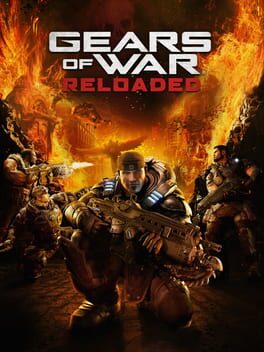
Gears of War Reloaded is a strange kind of debut. Nearly nineteen years after Marcus Fenix first roadie-ran across our screens, the Xbox poster child finally breaks cover on PlayStation, arriving as a second remaster of the original game rather than a brand-new entry. On PS5, Reloaded promises rebuilt 4K visuals, a slick 60 frames per second campaign, 120 fps multiplayer, DualSense support, and the complete Ultimate Edition content bundle, wrapped up as a £39.99 package. This is not a radical remake, nor a reimagining of Gears for 2025. It is, very deliberately, that 2006 game polished to a modern shine. The real question is whether a brutally linear, cover-driven shooter from the Xbox 360 era still lands in a post-The Last of Us, post-God of War landscape.
~6-8 hours (main campaign) and ~9-12 hours (campaign plus extra content and multiplayer)
Install Size
~63 GB on PS5 (plus day-one patch)
Presentation and World DesignReloaded immediately impresses as a technical uplift on both the 2006 original and the 2015 Ultimate Edition. Resolution, texture detail, lighting, and shadows have all been substantially upgraded, with rebuilt 4K assets, improved anti-aliasing, and fully seamless level transitions that remove loading breaks from the campaign. Ruined city streets now bristle with detail, from scorched masonry to drifting smoke, while the subterranean Locust lairs feel more oppressive thanks to deeper contrast and HDR support.It is not a total visual reinvention, however. Underneath the new lighting and sharper textures, Reloaded still has the chunky geometry and sparse set-dressing of a last-gen-era shooter. Character models benefit from better materials and animation, yet their proportions and armour designs remain pure mid-2000s excess. Crucially, the art direction holds up. Sera’s mix of war-torn neo-gothic architecture and industrial corridors is still striking, and the way firefights carve grisly trenches into these spaces gives the game a distinct identity even in 2025.Audio fares equally well. Remastered weapon audio and positional mix help sell the weight of every Lancer burst and Gnasher blast, while spatial audio support makes the clanking of Emergence holes and the screech of a distant Berserker easier to track. The soundtrack, a mix of pounding percussion and gloomy orchestral swells, still matches the series’ grim, slightly pulpy tone.
Gameplay and Combat
At its core, Reloaded remains a brutally focused, cover-based shooter. You sprint into position with the now-iconic roadie run, slam into chest-high walls, poke out for aimed shots or blind-fire, then advance as enemies are staggered or cut down. The active reload system, which rewards precise timing with faster reloads and damage boosts, is still a brilliant bit of risk-reward design that keeps even basic gunplay engaging.The weapon sandbox is comparatively small by modern standards, but it is cohesive. The Lancer’s chainsaw bayonet, the close-range dominance of the Gnasher, precise Longshot sniping, torque bow trick shots, and well-placed grenades all slot into clear roles. Encounters are built around locking down lanes, managing flanks, and exploiting emergence holes, and on higher difficulties they still demand deliberate team play rather than mindless rushing.On PS5 specifically, combat benefits from stable 60 fps in the campaign and an up-to-120 fps performance option in multiplayer, with VRR smoothing out fluctuations on compatible displays. DualSense support adds subtle texture rather than gimmicks: haptics sell explosions and the thrum of heavy weapons, while adaptive triggers give the Lancer’s chainsaw and the Gnasher’s pump a satisfying bite.The flip side is that Gears of War’s design age is very apparent. Enemy variety is limited, encounter structures repeat often, and AI can still behave erratically, occasionally breaking the tension in big set-pieces like the Act 1 Berserker chase. There are no modern systems such as mantling, slide-dodging, or deep build customisation, and the strict linearity means there is little room for experimentation beyond difficulty choice and co-op. For some, that purity will be a strength. Others will feel the restrictions long before the credits roll.
Story and Characters
Narratively, Reloaded reproduces the original campaign in full, including the bonus act from Ultimate Edition. You follow Marcus Fenix, freed from prison at the start of the game, as Delta Squad fights to deploy a super-weapon against the subterranean Locust Horde across the shattered world of Sera.
1 of 3
This is still very much a military sci-fi B-movie. Dialogue leans into macho banter and grim one-liners, and the wider lore is mostly implied through mid-mission chatter and environmental details rather than cutscene-heavy exposition. That approach gives the story a propulsive, boots-on-the-ground feel, even if characterisation is broad. Marcus, Dom, Cole, and Baird are sketched quickly and loudly, but their dynamic remains likeable and provides some heart within the noise.By today’s narrative standards, Gears 1 is lean and underdeveloped. Subplots are introduced then dropped, emotional beats often arrive with minimal build-up, and the abrupt sequel-hook ending will surprise anyone used to more self-contained stories. Yet there is still something refreshing about a shooter that largely lets you piece together the bigger picture while you are under fire, and the imagery of E-Day, deserted cities, and hulking Locust monsters has lost little of its punch.
Value and Longevity
As a package, Reloaded is generous in content but conservative in ideas. You get the full campaign including the once-exclusive extra act, all remastered multiplayer maps and modes, and a stack of classic characters and cosmetics, alongside cross-play and cross-progression across platforms. The main story will take roughly 7–10 hours depending on difficulty, with optional co-op runs and higher-difficulty achievements adding more time.Multiplayer is where long-term value really sits. The revived Versus suite, complete with 120 fps support and dedicated servers, remains a high-skill, shotgun-heavy ecosystem that feels unlike most modern shooters. There is no battle pass, store rotation, or aggressive monetisation, which many players will welcome, although it also means fewer progression hooks beyond personal mastery.The sticking point is price. At £39.99/$39.99, PS5 owners are paying full mid-tier retail for a second remaster that adds no new missions or systems, while Xbox and PC players who owned Ultimate Edition receive Reloaded as a free upgrade or get it via Game Pass. If you are new to Gears, the fee is easier to swallow. If you have already played through the campaign a few times elsewhere, it is much harder to justify at full price.
Technical Notes
Performance on PS5 is excellent. The campaign targets 4K with a near-locked 60 fps, while multiplayer can run uncapped up to 120 fps, particularly on PS5 Pro with VRR and PlayStation Spectral Super Resolution engaged. Load times are effectively instant and the seamless level streaming works as advertised, with no mid-mission loading screens.Stability on Sony’s console appears strong, with only minor visual pop-in and occasional AI glitches reported, a stark contrast to the widely documented crashes and configuration issues on Steam at launch. Two-player split-screen co-op is supported on console, even as the PC version initially drew criticism for removing that feature. Accessibility has seen some improvement, with input remapping and text-to-speech options, but subtitle controls and more advanced visual aids still lag behind the best-in-class.
Final Word
Gears of War Reloaded on PS5 is exactly what it sets out to be: a respectful, technically impressive preservation of the original game rather than a bold reinvention. The upgraded presentation, snappy performance, DualSense tweaks, and fully featured multiplayer make this comfortably the best way for PlayStation players to experience Marcus Fenix’s first outing. At the same time, the campaign’s brevity, strict linearity, and occasionally clumsy AI expose just how much third-person shooters have evolved in the last two console generations. For newcomers curious about a foundational piece of Xbox history, Reloaded is easy to recommend, especially in a sale. Veterans who have already run through Sera on Xbox, though, may struggle to see enough fresh reasons to chainsaw their way through it again at full price.
FAQ
Is Gears of War Reloaded a full remake or just a remaster?
Reloaded is an enhanced port of Gears of War: Ultimate Edition rather than a ground-up remake. The campaign, level layouts, enemy types, and story beats are unchanged, but visuals, audio, performance, loading, and accessibility have all been significantly improved. You also get all previous DLC and multiplayer maps bundled in. There are no new missions, weapons, or enemies created specifically for Reloaded, so expectations should be set accordingly.
How long does Gears of War Reloaded take to beat on PS5?
Most players can expect 7–10 hours for a first run on Normal, with time stretching out if you crank the difficulty, chase achievements, or replay in co-op. There are no major side activities, so runtime is very consistent between players. Versus multiplayer, however, can add dozens of hours if you get hooked on the Gnasher-heavy meta, especially now that frame rates and matchmaking are much improved.
Does Gears of War Reloaded support split-screen and online co-op on PS5?
Yes, the PS5 version supports two-player split-screen co-op for the campaign, as well as online co-op and cross-play with Xbox and PC players. That contrasts with the PC release, which drew criticism for removing local split-screen at launch. Gears remains at its best with a partner, and Reloaded’s stable performance and near-instant loading make co-op runs particularly smooth on Sony’s console.
How well does it run on PS5 versus PS5 Pro?
On a standard PS5, the campaign targets 4K60, while multiplayer supports up to 120 fps if your display allows it. PS5 Pro largely maintains higher frame rates in the 100+ range with VRR active in the 120 Hz mode and benefits from Sony’s PSSR upscaling for sharper image quality. In practice, both consoles deliver fluid gameplay; the Pro simply offers more headroom for competitive play.
Is Gears of War Reloaded worth buying if I already own the game elsewhere?
A: If you previously bought Gears of War: Ultimate Edition on Xbox or Windows before Reloaded was announced, you receive the remaster as a free upgrade there, and it is also included in Game Pass. On PS5, there is no upgrade path, so you are paying full price. The purchase makes most sense if PlayStation is now your main platform and you want a definitive, modern way to revisit or finally experience Gears 1, ideally at a discount.
7.2
Great
SpawningPoint Verdict
Review summary
On PS5, Gears of War Reloaded is a high-quality preservation job rather than a transformative remake. The Coalition’s second pass at this classic delivers crisp 4K visuals, near-instant loading, strong performance, and thoughtful DualSense support, all while keeping the cover-driven combat that defined the series feeling weighty and satisfying. Yet the unchanged campaign structure, limited enemy variety, and occasionally clumsy AI expose its age, and the £39.99 asking price is harder to justify if you already own the game on another platform. For PlayStation players who missed Gears the first time, though, Reloaded is a robust, if traditional, way to experience one of the defining third-person shooters of the HD era.
One email. Every Saturday. The reviews, guides, and analysis that mattered this week, distilled into a five-minute read. No sponsored content, no affiliate bait.

 Presentation and World Design
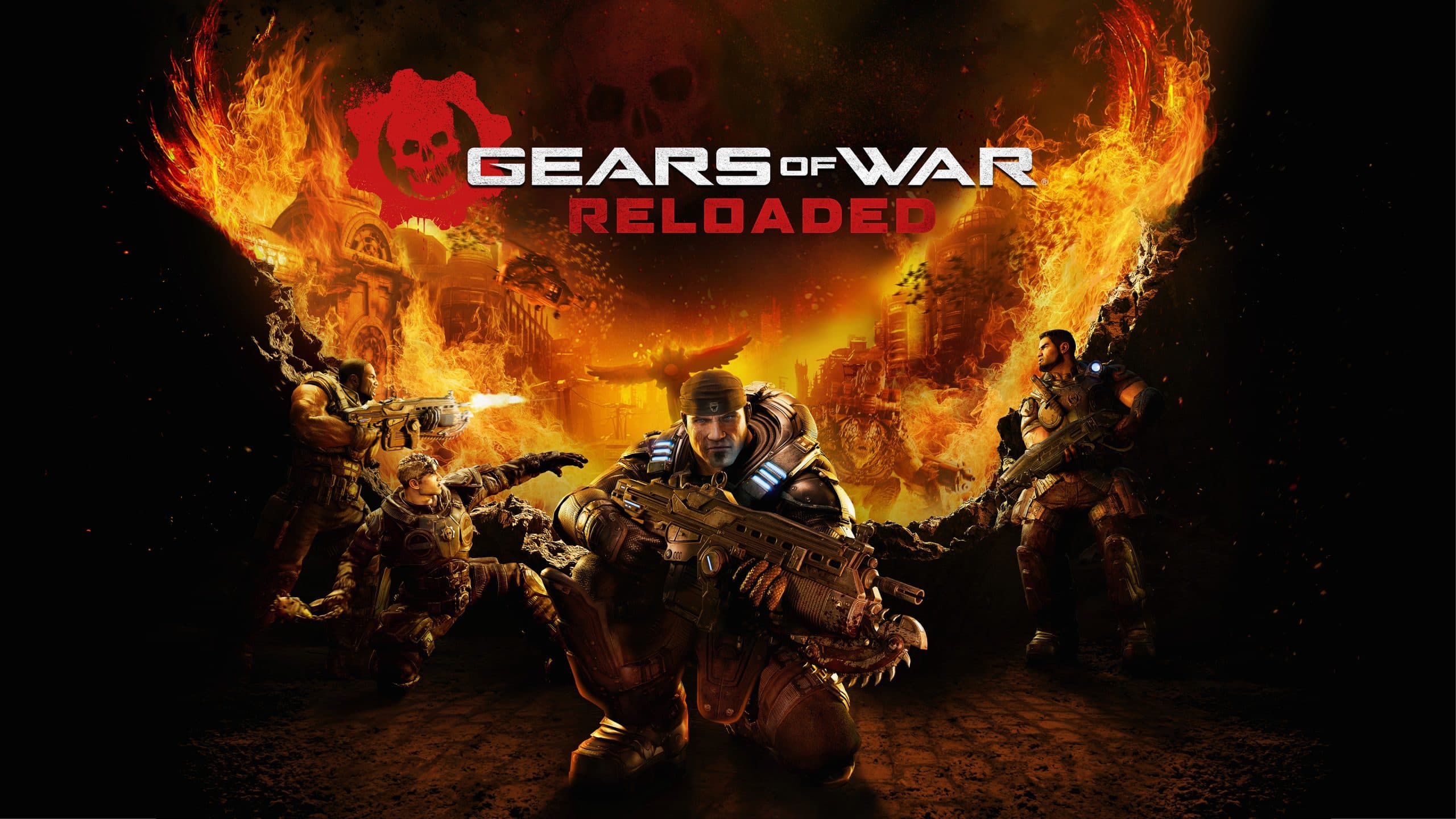
Reloaded immediately impresses as a technical uplift on both the 2006 original and the 2015 Ultimate Edition. Resolution, texture detail, lighting, and shadows have all been substantially upgraded, with rebuilt 4K assets, improved anti-aliasing, and fully seamless level transitions that remove loading breaks from the campaign. Ruined city streets now bristle with detail, from scorched masonry to drifting smoke, while the subterranean Locust lairs feel more oppressive thanks to deeper contrast and HDR support.
It is not a total visual reinvention, however. Underneath the new lighting and sharper textures, Reloaded still has the chunky geometry and sparse set-dressing of a last-gen-era shooter. Character models benefit from better materials and animation, yet their proportions and armour designs remain pure mid-2000s excess. Crucially, the art direction holds up. Sera’s mix of war-torn neo-gothic architecture and industrial corridors is still striking, and the way firefights carve grisly trenches into these spaces gives the game a distinct identity even in 2025.
Audio fares equally well. Remastered weapon audio and positional mix help sell the weight of every Lancer burst and Gnasher blast, while spatial audio support makes the clanking of Emergence holes and the screech of a distant Berserker easier to track. The soundtrack, a mix of pounding percussion and gloomy orchestral swells, still matches the series’ grim, slightly pulpy tone.
Presentation and World Design
Reloaded immediately impresses as a technical uplift on both the 2006 original and the 2015 Ultimate Edition. Resolution, texture detail, lighting, and shadows have all been substantially upgraded, with rebuilt 4K assets, improved anti-aliasing, and fully seamless level transitions that remove loading breaks from the campaign. Ruined city streets now bristle with detail, from scorched masonry to drifting smoke, while the subterranean Locust lairs feel more oppressive thanks to deeper contrast and HDR support.
It is not a total visual reinvention, however. Underneath the new lighting and sharper textures, Reloaded still has the chunky geometry and sparse set-dressing of a last-gen-era shooter. Character models benefit from better materials and animation, yet their proportions and armour designs remain pure mid-2000s excess. Crucially, the art direction holds up. Sera’s mix of war-torn neo-gothic architecture and industrial corridors is still striking, and the way firefights carve grisly trenches into these spaces gives the game a distinct identity even in 2025.
Audio fares equally well. Remastered weapon audio and positional mix help sell the weight of every Lancer burst and Gnasher blast, while spatial audio support makes the clanking of Emergence holes and the screech of a distant Berserker easier to track. The soundtrack, a mix of pounding percussion and gloomy orchestral swells, still matches the series’ grim, slightly pulpy tone.
 On PS5 specifically, combat benefits from stable 60 fps in the campaign and an up-to-120 fps performance option in multiplayer, with VRR smoothing out fluctuations on compatible displays. DualSense support adds subtle texture rather than gimmicks: haptics sell explosions and the thrum of heavy weapons, while adaptive triggers give the Lancer’s chainsaw and the Gnasher’s pump a satisfying bite.
The flip side is that Gears of War’s design age is very apparent. Enemy variety is limited, encounter structures repeat often, and AI can still behave erratically, occasionally breaking the tension in big set-pieces like the Act 1 Berserker chase. There are no modern systems such as mantling, slide-dodging, or deep build customisation, and the strict linearity means there is little room for experimentation beyond difficulty choice and co-op. For some, that purity will be a strength. Others will feel the restrictions long before the credits roll.
On PS5 specifically, combat benefits from stable 60 fps in the campaign and an up-to-120 fps performance option in multiplayer, with VRR smoothing out fluctuations on compatible displays. DualSense support adds subtle texture rather than gimmicks: haptics sell explosions and the thrum of heavy weapons, while adaptive triggers give the Lancer’s chainsaw and the Gnasher’s pump a satisfying bite.
The flip side is that Gears of War’s design age is very apparent. Enemy variety is limited, encounter structures repeat often, and AI can still behave erratically, occasionally breaking the tension in big set-pieces like the Act 1 Berserker chase. There are no modern systems such as mantling, slide-dodging, or deep build customisation, and the strict linearity means there is little room for experimentation beyond difficulty choice and co-op. For some, that purity will be a strength. Others will feel the restrictions long before the credits roll.