REVIEW
8.8· Great
Dispatch PS5 Review: Superhero Drama From Behind A Desk
Dispatch brings Telltale-style storytelling back with a sharp superhero workplace comedy on PS5. We dig into its writing, dispatch gameplay, cast, length, and value in this full review.

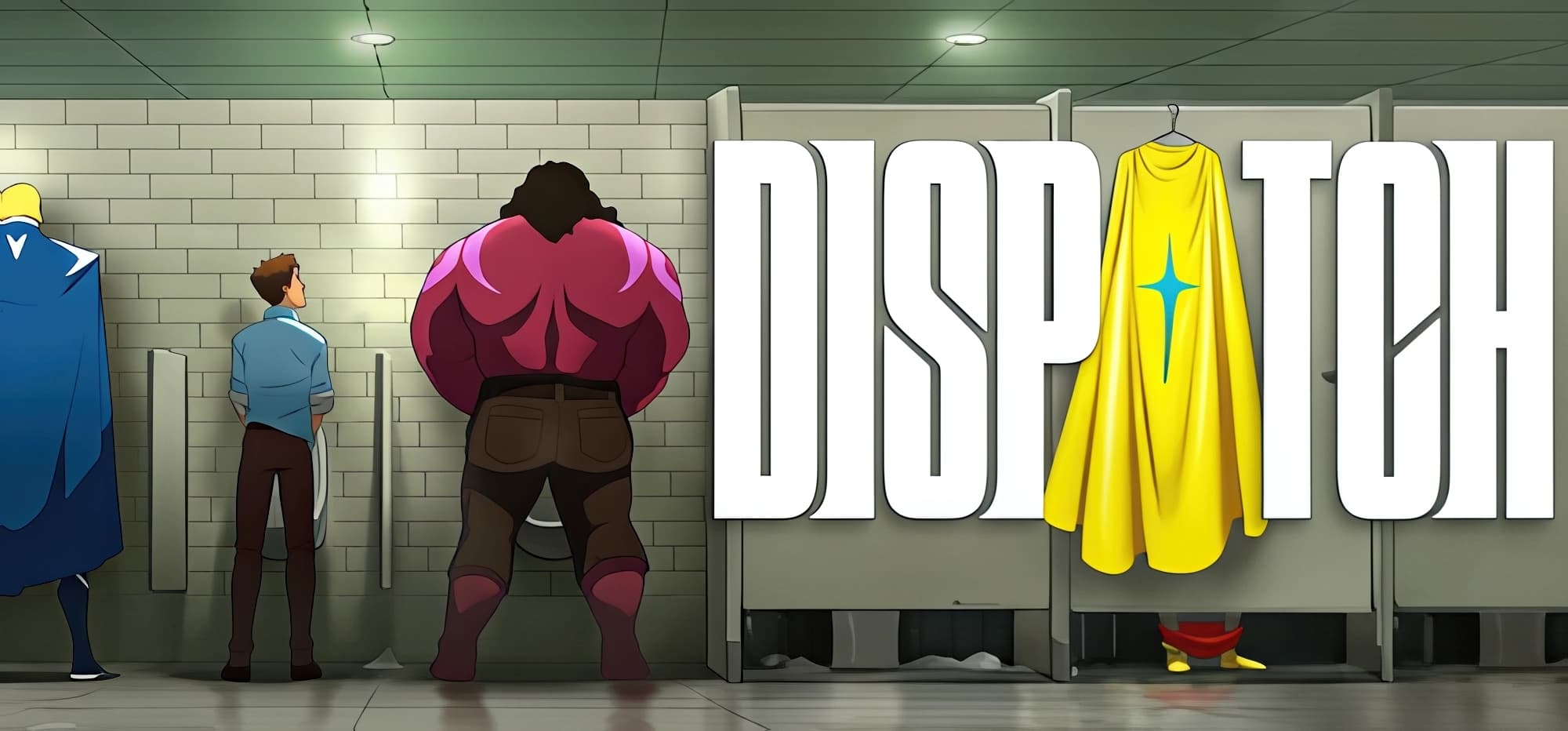
Dispatch arrives as ex-Telltale staff making a formal argument: that the most interesting thing about a superhero workplace is the work. Robert "Mecha Man" Robertson, decommissioned hero turned desk-bound dispatcher in an alternate Los Angeles, does not punch anyone. He routes crisis calls, manages a squad of reformed villains he inherited rather than chose, and sits with the particular exhaustion of being responsible for people he is not sure he likes. The Superhero Dispatch Network is unglamorous, understaffed, and running on ageing infrastructure. The game trusts that this is enough, and it is correct to trust it.
Game Snapshot Developer/Publisher: AdHoc Studio Release Date: 22 October 2025 Platforms: PlayStation 5, Windows Price: £28.99/$29.99 (Standard Edition); £36.99/$39.99 (Digital Deluxe) on PS5 Rating: PEGI 18 / ESRB M for mature content Genre: Narrative adventure/interactive film, superhero workplace comedy Length: ~8 hours (main story); ~10 hours (main story + side content, extra dialogue and optimisation) Install Size: ~14.1 GB on PS5
Presentation and World Design
The animated presentation is the kind of design that asks to be noticed rather than simply admired. Character animation is unusually expressive for the genre, with facial performances that carry weight in quiet moments as readily as in heightened ones, and staging that owes more to prestige television direction than to the stiff camera cuts that typically read as "interactive." The alternate Los Angeles around it is colourful without feeling weightless, which is a more precise craft choice than it sounds: office interiors, cramped apartments, villain bars, and the SDN's war-room map all carry specific, lived-in detail, using background texture to sketch class divides between supers and normies without pausing the story to explain itself.
The dispatch UI, with its chunky icons and flickering 90s-style computer overlays, earns its design brief. It sells the conceit that you are operating on ageing infrastructure in a world that has normalised capes and collateral damage, and it does this through aesthetic choice rather than exposition. The kind of design that trusts the player to understand context from texture alone.
Audio sits at the same register. The score moves comfortably between melancholy motifs and jazzy superhero swagger, and the voice cast, led by Aaron Paul, Laura Bailey, and Jeffrey Wright, finds nuance in punchlines and in breakdowns with equal ease. The world feels theatrical and strangely grounded in the same moment, which is exactly the tonal calibration the writing requires.
Gameplay and Combat
There is no combat in Dispatch, in the conventional sense. What there is, instead, is a three-part structure: dialogue-driven scenes where choices shape relationships and tone, a dispatch-management board where you assign Z-Team members to city incidents, and occasional hacking segments and light QTE interludes between. The design weight sits on the first two, which is the correct distribution for the game this is.
The dispatch board is a light management layer, which matters more for tonal pacing than for difficulty. Missions appear around the city, each tagged with stat requirements and flavour text. You assign team members based on ability and cooldown, try to avoid over-committing your best people to minor incidents while something more serious develops elsewhere, and live with the consequences of getting that balance wrong. It reads closer to a puzzle of attention than a tactics game, and the fit is right: you are the dispatcher in a call centre that has never quite caught up to the scale of the crises it handles.
The small honesty the game extends around its branching is that early-season choices tend to shape tone and relationship rather than plot direction, with the more significant divergences held for later episodes. This is a structural decision worth naming clearly because it sets accurate expectations: Dispatch is an interactive drama built on accumulating relationship texture, not a game where the first-episode choice determines which of several stories you are in. The hacking segments and QTEs are serviceable, which is the appropriate register for elements that exist to vary rhythm rather than to challenge the player.
In practice, the rhythm works. Episodes rarely outstay their welcome, which is itself a craft choice: the pacing trusts the player to know when they have had enough for one evening.
Story and Characters
The writing is the argument. On the surface, Dispatch is a workplace comedy about ex-villains trying to make good under corporate supervision. Underneath, it is a story about legacy, grief, and burnout, told through Robert's attempt to live in the shadow of a dead father's myth while keeping a mismatched team from falling apart. The game does not annotate this. The grief sits in the small structural decisions: the afternoon between two cases, the late-night debrief that goes slightly too long, the moment a character says something true and then covers it with a joke.
Episodes move between case-of-the-week emergencies and quieter character pieces, a pattern that mirrors the rhythm of a box set built for Tuesday evenings rather than weekend marathons. The bar hangouts and awkward performance reviews do as much work as the high-incident sequences. The script does not undercut its serious beats with irony; it lets trauma and insecurity bleed through the banter in ways that feel earned rather than scheduled.
Robert's arc is the structural core, moving from brittle defensiveness toward something resembling genuine leadership without a clean redemption sequence to close it. The Z-Team are memorable, though some supporting players receive less screen time than their introductions suggest is coming. One character's portrayal of a speech impediment sits awkwardly in the text, the writing too casual with the distinction between the character's difficulty and the joke, and that clumsiness is worth naming because it cuts against an otherwise careful script. The final episode compresses a few ideas that could have used an extra scene, but as a single-season narrative it lands with more consistency than it wobbles.
The narrative is the rhythm itself. Not an event, but a texture. That is what the game has been building toward, and it is correct to have built toward it.
Value and Longevity
A single playthrough runs to roughly eight hours, which is the right length for the story Dispatch is telling, in a good way. The eight-episode structure disciplines the pacing; nothing is padded to reach a round number, and the season ends when the arc ends rather than when a content budget has been exhausted. Stretch to around ten hours if you linger in conversations, pursue different dispatch outcomes, or return to a few key late-game decisions.
There is mild replay value in chasing alternate relationship states and different endings, but this is not a game that changes shape dramatically on a second run. Once the story is done, it is done, which is an honest proposition rather than a limitation. At £28.99/$29.99 for the standard edition, the price reflects the quality of production and writing more than the hour count, which is the correct thing for it to reflect.
The Digital Deluxe Edition adds a digital art book and four tie-in comics rather than additional story content, making it a supplement for players already committed to the world rather than a meaningful upgrade for a first playthrough. The base edition is the recommendation.
Technical Notes
At just over 14 GB on PS5, Dispatch is a compact install, a function of its pre-rendered approach rather than any compromise in presentation. Performance is correspondingly stable: episodes play out smoothly, load times between scenes are brief, and there are no widespread reports of frame-rate issues or crashes across the run.
The accessibility implementation is the kind of design that trusts the player to need different things from the same text. Sony's store listing flags 19 accessibility features covering visual, audio, and input options, alongside multiple subtitle languages, which extends the story's reach without announcing itself as an accommodation. The game does not showcase DualSense haptics or adaptive triggers in any meaningful way, a restraint that suits the material. Comfort is a craft choice, not a default, and the technical presentation here has made that calculation deliberately.
Final Word
Dispatch earns a particular quality of an ordinary Tuesday evening: the feeling that the time was well spent without the hour being accounted for. The dispatch board gives the hands something to do whilst the writing does the heavier work, and the eight-episode structure means the game never asks for more than a sitting or two. It is the quiet kind of superhero story, the kind where the drama lives in the conversation after the crisis rather than in the crisis itself.
Players who come for The Boys or Invincible's appetite for escalation and edge will find Dispatch calibrated at a different register, more interested in empathy than irony, more curious about what the job costs than what the powers enable. That is the correct register for what the game is. For narrative adventure players, and for anyone who has ever wanted a workplace comedy that also contends with grief without treating the grief as the twist, Dispatch respects the player's afternoon in the best sense. That is not a small thing to earn.
8.8
Great
SpawningPoint Verdict
Review summary
Dispatch on PS5 is an accomplished return to the choice-driven adventure, recast as a superhero workplace comedy that quietly wrestles with grief, legacy, and burnout. Across eight tightly paced episodes, it delivers sharp writing, a likeable but messy ensemble, and animation that genuinely feels TV-quality, elevated by a superb voice cast. The dispatch management layer adds flavour and light puzzle tension, even if its systems and hacking mini-games never reach the same heights as the story. With an eight-hour runtime and modest replay value, its price will feel fair to narrative fans and a touch steep to pure system hunters, but judged as an interactive season box set, Dispatch is easy to recommend on PS5.