ROUNDUP
Baldur’s Gate 3 vs Divinity: Original Sin II on PS5: Which Larian RPG Is Right for You?
Baldur's Gate 3 vs Divinity: Original Sin II on PS5 compared. Scores, combat systems, co-op features and value analysed to help you choose.

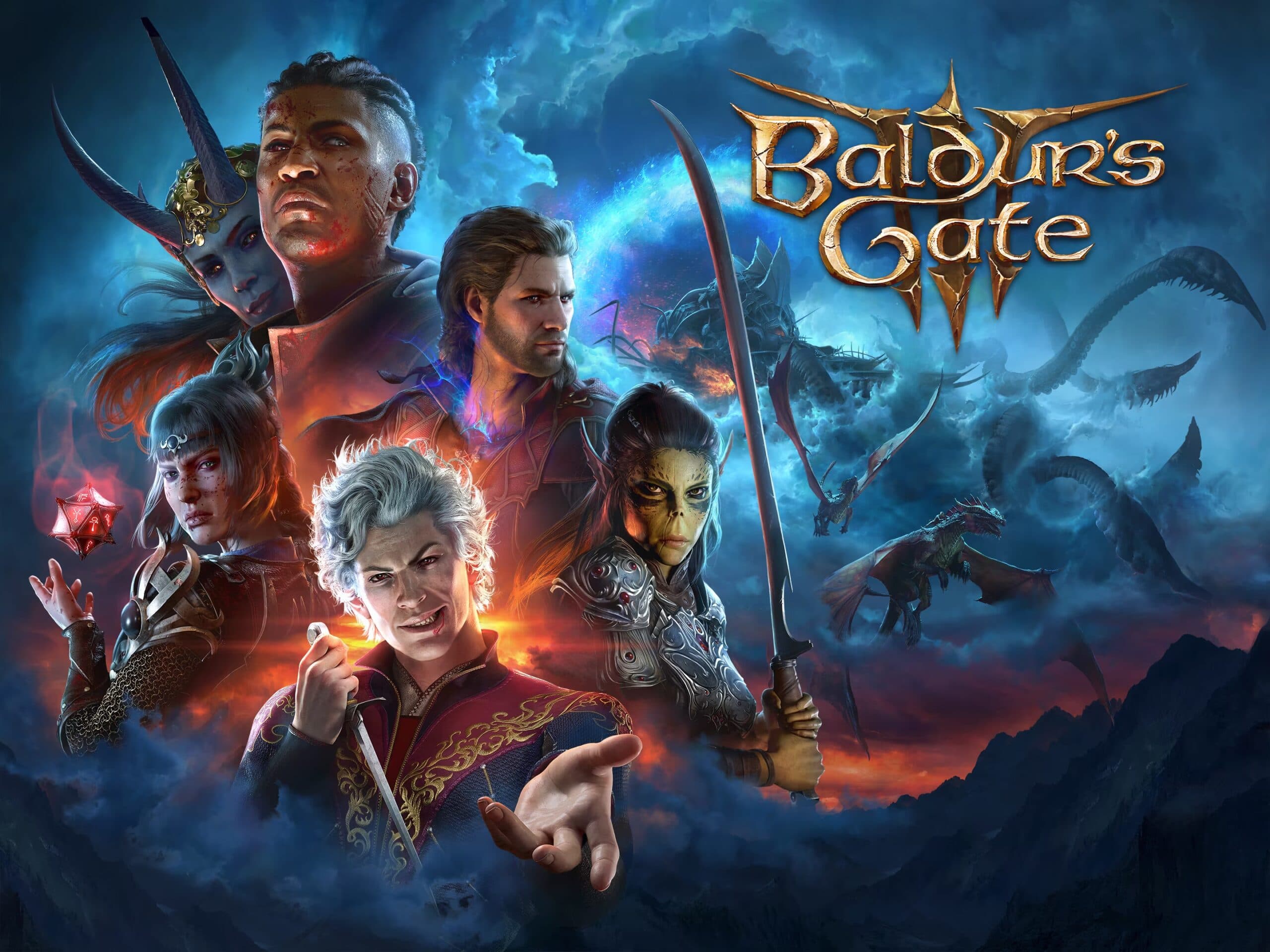
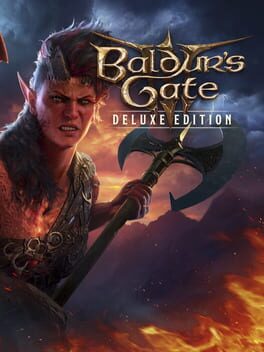
Score Comparison: Baldur’s Gate 3 PS5 Pro vs Divinity: Original Sin II – Definitive Edition
| Category | Baldur’s Gate 3 PS5 Pro | Divinity: Original Sin II – Definitive Edition |
| Graphics | 9/10 | 7.5/10 |
| Gameplay | 10/10 | 8.7/10 |
| Story | 9/10 | 9/10 |
| Value | 10/10 | 9/10 |
| Console Experience and Co-op | 9/10 | – |
| Player Freedom and Systems | – | 9.3/10 |
| Overall | 9.4/10 | 8.7/10 |
System Stack: Six Years Between Two Larian Arguments
The distance between Divinity: Original Sin II – Definitive Edition and Baldur’s Gate 3 is not merely six years of development time; it is six years of Larian refining what they believe a turn-based combat system should argue.
DOS2 makes a systems argument: every surface, every elemental interaction, every puddle of oil and arc of electricity is a compound variable. Fire touches oil and the problem escalates. Poison drifts into a lightning bolt and the whole grid reorganises around a new threat. The player who ignores these compound relationships does not lose by bad luck; they lose because they failed to read the environment as a system-stack puzzle, and the puzzle does not forgive misreading. That is the encounter design premise: DOS2 stages combat as a test of how well you understand the compound logic it has built around you.
BG3 makes a different argument entirely. D&D 5e’s action economy, action plus bonus action plus reaction plus movement, frames each turn as a performance rather than a calculation. The Fighter throws a weapon and uses a bonus action to close distance; the Sorcerer spends both action and bonus action to Quicken a Fireball; the Cleric burns a reaction to Shield an ally mid-round. The system is not a grid of variables compounding beneath you; it is a stage on which each class plays out its fantasy, and the encounter is designed around making that fantasy legible. The rules are the same rules D&D players already know. Larian’s contribution is making them work as a console experience without attrition.
DOS2 treats combat as environmental problem-solving; BG3 treats combat as class-fantasy theatre. Both systems are honest about what they are. The 1.3-point Gameplay gap in the scores reflects not a failure in DOS2 but a maturation in design language: BG3 earns the higher score because the action-economy system has fewer moments where the rules work against the player’s intent.

Encounter Staging: Where Each Game Keeps the Contract
The harder question is not which system is more mechanically complete; it is which game stages its encounters so that difficulty earns what it costs.
DOS2 stages the contract through mechanical consequence. Fort Joy’s opening sequence does not explain that the undead are resistant to physical healing; Fane’s presence in the party teaches that lesson through a failed battlefield restoration that heals the enemy instead. Reaper’s Coast’s tournament structure in Driftwood pits the player against opponents who have mastered the elemental grid in ways the player has not yet reached; it is a checkpoint, not a gatekeeper. And the Master Siva sequence in the Ancestor Tree is a pure system test: Lucian’s Crypt, late in the narrative, stages the game’s central argument about Source magic and sacrifice against the player’s accumulated build choices. The encounter earns its difficulty because every decision leading to it has been a build decision. Fail the prep, fail the room.
BG3 stages the contract through character consequence. The Goblin Camp resolution is not a combat encounter by default; it is a social encounter that can become a combat encounter if the player has not been paying attention to what each approach signals. The Last Light Inn assault stages Isobel’s survival as a direct consequence of the party’s positioning discipline: lose Isobel, lose the Last Light. The Gauntlet of Shar tests Shadowheart’s arc against the player’s loyalty to her, and the moment Shadowheart reaches the Spear, the encounter becomes a character test rather than a mechanical one. Cazador’s palace and the House of Hope both stage their set-pieces around Astarion and Wyll respectively, and the player who has been managing those relationships has structural advantages the distracted player does not.
Both games earns the cost: DOS2 via mechanical preparedness, BG3 via relational attention. The difference is where the game places the responsibility.
Companion Design: System Contract vs Social Theatre
DOS2’s companions are system-mastery agreements. Fane’s personal questline is, at its structural core, a teaching exercise in identity, permadeath, and the nature of Source: it pushes the player to understand why the undead interact differently with every major system in the game. Lohse’s Bigger Quest functions as a possession-arc reading test, the game checking whether the player has been tracking her dialogue shifts or treating her as a portable healer. Ifan’s contract with the Lone Wolves; Beast’s conflict with the Dwarven royalists; Sebille’s hunt for the Master who held her bound; Red Prince’s political exile. Each is a narrative delivery system for a mechanical or systemic argument about the world DOS2 is built inside.
BG3’s companions are a different proposition. Karlach is a barbarian with a malfunctioning infernal engine for a heart, and the game’s presentation of her arc as a ticking-clock tragedy is inseparable from how warmly the player has treated her across seventy hours. Astarion’s approval economy, the game tracking whether the player has enabled or resisted his predatory instincts, shapes whether the final act resolves his arc as liberation or tragedy. Shadowheart’s devotion to Shar is a player-curated relationship, not a static backstory. Wyll, Gale, Lae’zel: each runs a parallel approval and romance economy that constitutes its own play loop alongside the combat.
DOS2’s writing is sharper per line; Fane’s dialogue under a Source-drained sky is some of the tightest prose Larian has produced. BG3’s writing is more sustained per arc; the Karlach endgame, properly cultivated, earns its weight through accumulated hours of managed relationship rather than any single line. The Story score sits level at 9/10 for both; the nature of the achievement differs.

PS5-Specific Contrast: Two Console Ports
Both games reached PS5. The routes they took explain the 1.5-point Graphics gap more completely than any design failure in DOS2.
BG3 PS5 Pro delivers native 4K in quality mode, a 4K 60 upscaled performance mode, and improved split-screen stability across the full four-act runtime. The Pro enhancements are meaningful rather than nominal: the quality mode is the intended mode, and the performance mode holds its target without the frame-pacing inconsistencies that affected the base PS5 version at launch. Local co-op across the full campaign, including Act 3, is a genuine technical achievement given the scene complexity in Baldur’s Gate itself.
DOS2 Definitive Edition on PS5 runs at 60fps locked, with a controller mapping rebuilt from scratch for console rather than ported from the PC scheme, and split-screen support through the full campaign. There are no PS5 Pro enhancements because the Definitive Edition predates the hardware by several years; the visual baseline is a 2017 game with Definitive Edition polish applied in 2018. The 7.5/10 Graphics score is an accurate reflection of that baseline, not a criticism of the port work, which is competent throughout.
Recommendation: Which Larian, Right Now
Two games; two different asks.
Baldur’s Gate 3 PS5 Pro is for the player who wants full voice acting across a hundred-hour runtime, character-driven social theatre with companions who respond to sustained attention, and a D&D system presented with enough clarity that prior tabletop experience is an advantage but not a requirement. The PS5 Pro presentation is the definitive console version; the split-screen co-op makes it the better shared-screen option of the two. If you are new to Larian or new to CRPGs, this is the correct entry point.
Divinity: Original Sin II – Definitive Edition is for the player who wants the harder system-stack puzzle, the more demanding elemental grid, and a tactical sandbox where the encounter staging rewards mechanical preparation over relational management. Fort Joy to Reaper’s Coast is one of the most precisely designed difficulty ramps in the genre. If the BG3 action economy feels too forgiving or too framework-constrained, DOS2 stages its encounters as a direct challenge to that preference.
Both contracts hold. Neither game is the lesser version of the other.
Read our full Baldur’s Gate 3 PS5 Pro review for the complete verdict on Larian’s 2023 release. Read our full Divinity: Original Sin II – Definitive Edition review for the complete assessment of where the design vocabulary began. Browse all our scored reviews on the All Reviews page for the full SpawningPoint catalogue.