REVIEW
8.0· Great
Nintendo Switch 2 Review: A Hybrid That Finally Grew Up
Our Nintendo Switch 2 review covers DLSS performance, Joy-Con upgrades, and backwards compatibility. Worth £395.99? We weigh every trade-off.

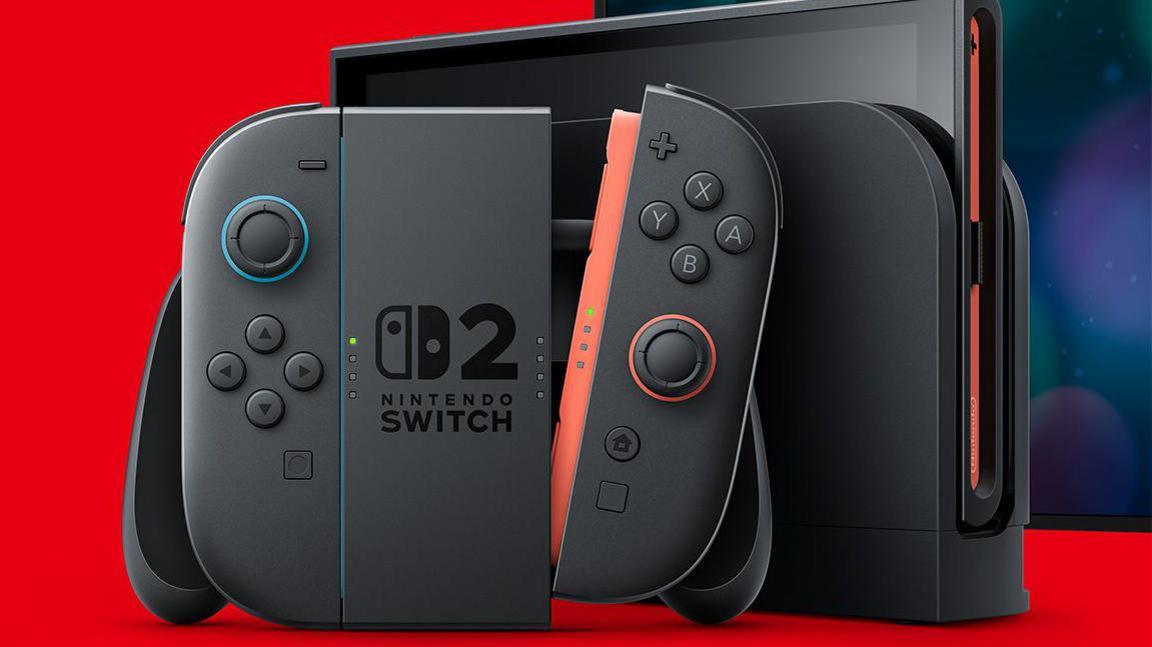
The device that sits in the kitchen on a Tuesday evening and then travels in a bag on Wednesday morning is not a common object. The Switch 2 does both things, and it does them without asking the player to choose. That is a formal claim the device has made about itself, and it is worth examining whether the design decisions honour it.
Product Snapshot Brand/Model: Nintendo Switch 2 Category: Hybrid home/portable games console UK Price: £395.99 (console) / £429.99 (Mario Kart World bundle) US Price: $449.99 (console) / $499.99 (Mario Kart World bundle) Release Date: 5 June 2025 Processor: Custom NVIDIA Tegra T239, octa-core ARM Cortex-A78C GPU: NVIDIA Ampere, 12 SM, 1,536 CUDA cores (1,007 MHz docked / 561 MHz handheld) Display: 7.9-inch LCD, 1080p, 120 Hz VRR, HDR10 Dock Output: Up to 4K at 60 Hz or 1440p at 120 Hz via HDMI 2.1 RAM: 12 GB LPDDR5X Storage: 256 GB UFS 3.1 (expandable via microSD Express up to 2 TB) Battery: 5,220 mAh, 2-6.5 hours estimated Key Features: DLSS upscaling, GameChat voice/video, backwards compatibility with Switch library Joy-Con Changes: Magnetic attachment, optical mouse sensor, larger sticks, C button for GameChat Weight: 534 g (with Joy-Con) / 401 g (console only) Warranty: Standard manufacturer warranty (varies by region) Best Alternatives: Steam Deck OLED, PlayStation Portal, ROG Ally X
Design and Build
The Switch 2 is larger and heavier than its predecessor, which turns out to matter less in the hand than it does on paper. At 272 x 116 mm and 534 g with the Joy-Cons attached, it sits comfortably on the kitchen table in tabletop mode, the screen wide enough that two people can read it from across a cup of tea. The bezels have slimmed, and the active display area is roughly 1.6 times what the original offered, which transforms handheld use from something you tolerate into something you choose.
The small structural decisions are where the build earns its keep. The full-width metal kickstand, which holds its angle without sagging, is the kind of design that respects how the device actually lives on a coffee table rather than how it looks in a product photograph. A second USB-C port on the top means charging in tabletop mode no longer requires routing a cable underneath the console, which is a small domestic fix that took eight years to arrive. The dock now includes built-in Ethernet and a cooling fan, in a good way: the fan is quiet enough to ignore, and Ethernet removes the friction of a wireless connection when the device is sitting next to the router anyway.
The material remains functional plastic, built for the bag and the kitchen surface, not for the shelf. That is a considered position, not an oversight.
Performance
The gap between what the original Switch could do and what the Switch 2 can do is best understood by what you are holding. In an ordinary afternoon on the train, Cyberpunk 2077 runs in your hands at 1080p, the neon districts of Night City rendered in real time on a 7.9-inch screen. On the same hardware, docked to the television in the family room, Mario Kart World runs at 1440p and 60 frames per second, which is smoother than most living-room gaming setups manage on a Wednesday evening. That is the same device.
The architecture underneath this is an NVIDIA Ampere GPU with 1,536 CUDA cores, which represents a sixfold increase over the original Switch’s 256 CUDA cores. Docked, the GPU runs at 1,007 MHz and delivers approximately 3 TFLOPS. Handheld, it drops to 561 MHz, prioritising the battery over raw throughput. DLSS upscaling runs at a hardware level via dedicated Tensor cores, and it arrives in two forms: a full CNN implementation used in titles like Cyberpunk 2077 and Street Fighter 6, and a lighter variant that costs roughly half the frame time and trades some anti-aliasing quality for efficiency.
Mario Kart World runs at 1080p and 60 fps in handheld mode, scaling to 1440p docked. Cyberpunk 2077 targets 30 fps docked, at a dynamic resolution between 720p and 1080p. The console runs warm under sustained load, but quietly. Battery life ranges from two hours on demanding titles to six and a half on lighter ones, which is enough for a return train journey on most things and less than an afternoon on Cyberpunk.
Display
The screen is 7.9 inches, which matters more on the kitchen table than it does on the sofa. At 1080p with a 120 Hz variable refresh rate and HDR10, it is a clear improvement over the original 720p panel: text reads without squinting, UI elements have the room to breathe, and VRR smooths the moments where a game dips below its frame-rate target.
The LCD-not-OLED decision is the one that requires honest examination. The Switch OLED offered deeper blacks and richer colour on a smaller 7-inch panel, and many who have spent time with that screen will notice the contrast difference in a dim room. By the late hour, when the room is darker and the screen is the primary light source, the shadow depth that OLED provides is a genuine absence. In a bright kitchen at noon, the LCD performs well; the trade-off is less visible in that register.
What Nintendo chose in place of OLED is size and refresh rate, which is a real craft exchange. A 7.9-inch 120 Hz panel with HDR10 is not a compromise reached by indifference; it is a different set of priorities. Whether those priorities match a given player’s register is the honest question rather than whether the screen is good.
Docked, the story shifts. HDMI 2.1 enables 4K at 60 fps or 1440p at 120 fps when docked, though the variable refresh rate stays handheld-only and does not carry over to TV output. For a console at this price point, that output is correct for its context.
Joy-Cons and Controls
The magnetic attachment is the small thing the device asks you to notice on the third pickup. Where the original Joy-Cons slid onto a rail with a click that felt provisional, the Joy-Con 2 connects with a soft magnetic certainty, and releases with a deliberate press that means it does not come away accidentally. This is the kind of design that changes how the player holds the device without announcing that it has changed anything.
The sticks are larger and built to tighter tolerances. An optical mouse sensor on the back of each controller allows both to function as a mouse pair when laid flat, which opens a practical lane for PC-port titles that assume a cursor. The C button on the right Joy-Con surfaces GameChat, Nintendo’s first-party voice and video chat system, the kind of design that trusts the player to use it without managing them to it. It is there when a multiplayer session wants it and out of the way when it does not.
The stick drift question is the one that requires the named cost. Nintendo confirmed that Joy-Con 2 uses conventional analogue potentiometers rather than hall effect sensors, because the magnetic attachment system interferes with magnetic position sensing. The tolerances are tighter, which matters. The underlying wear mechanism that produced the original Switch’s drift complaints persists, which also matters. Third-party hall effect replacement modules are available for buyers who want to address that before it becomes a problem. The small honesty is that the design has not resolved the issue; it has improved the conditions around it.
Software and Backwards Compatibility
The device respects what came before, which for a household that spent eight years building a Switch library is not a small thing. Nintendo tested roughly three-quarters of the 15,000-plus Switch catalogue before launch, identifying around 170 titles with compatibility issues. The sole first-party exception is Nintendo Labo VR Kit. Digital purchases carry over through a Nintendo Account, and original Game Cards slot directly into the new unit.
What the first-party slate convenes is a particular kind of household evening. Mario Kart World launched alongside the console on 5 June 2025, which means from the first week the family room had a reason to gather. Donkey Kong Bananza followed on 17 July, and Super Mario Party Jamboree Switch 2 Edition on 24 July. These are titles built around the idea of the shared screen, the sofa, the evening where the household plays together, which is the register the device has always understood and continues to serve.
Third-party support in the launch window includes Cyberpunk 2077, Street Fighter 6, and Star Wars Outlaws, with 46 announced third-party titles and 17 available at launch. The backwards-compatible library means that a new buyer who has never owned a Switch is not starting from a blank shelf; they are inheriting a decade of software on day one.
GameChat accommodates up to 12 participants for voice and video and integrates screen sharing during play. The C button surfaces it without requiring a menu. For families where coordination matters more than competition, this is a quiet addition that removes a small structural friction.
Value and Pricing
The Switch 2 launches at £395.99 / $449.99 for the console alone, or £429.99 / $499.99 with Mario Kart World bundled. Against the Switch OLED’s launch pricing of £309.99 / $349.99, this is a meaningful increase, and against the original Switch at £279.99 / $299.99, it represents a different relationship between Nintendo and the household budget.
The bundle is the entry point, and the £30 / $50 saving against buying the console and Mario Kart World separately reflects Nintendo’s positioning of it as the recommended package. Comfort is a craft choice, not a default, and choosing the bundle is the first craft decision the buyer makes: it assumes the household wants that particular evening on day one, which most households will.
First-party game pricing has moved to £67.99 / $79.99, which is worth naming plainly when considering what the device actually costs across the first year. Storage at 256 GB is sufficient for a considered library but not for a large one; demanding titles occupy substantial space, and buyers who want to carry their full collection will want microSD Express expansion at additional cost.
In a real afternoon of looking at total cost of ownership, the price that matters is not the headline figure but the figure after the first three games and a memory card. That is a different conversation, and one worth having before the device arrives.
Verdict
The Switch 2 earns, finally, what it has always claimed: a device that genuinely respects the player’s afternoon, whether that afternoon is on the sofa with the television or on a train with the screen in hand. The hybrid format is the piece of this device that has no equivalent elsewhere, and the hardware underneath it is now sufficient to hold that claim without apology.
The LCD panel is the real cost, most visible in a dim room by the late hour when the contrast gap with OLED becomes apparent. The price, once games and storage enter the calculation, is a serious number for a household that has not budgeted for it. These are named costs, not complaints.
For a buyer still on the original 2017 Switch, the case is immediate. For a Switch OLED owner who plays primarily first-party titles, the case is slower and depends on how much the increased power matters to the particular library they want. For a new buyer, the device offers a decade of software, a household-scale first-party slate, and a format that has no genuine rival. The small thing the Switch 2 asks, in the end, is whether the player values the afternoon as much as the evening. The device is built around the answer being yes.
Where to Buy
Nintendo Switch 2 on Amazon US.
Check for current availability in our console deals roundup.
8.0
Great
SpawningPoint Verdict
Review summary
The Nintendo Switch 2 launched on 5 June 2025 at £395.99/$449.99. It pairs a custom NVIDIA Tegra T239 processor with Ampere GPU architecture and DLSS upscaling, delivering up to 4K docked and 1080p at 120 Hz handheld on a 7.9-inch LCD. Joy-Con 2 controllers attach magnetically and offer improved ergonomics, though they lack hall effect sticks. Storage sits at 256 GB, expandable via microSD Express. Backwards compatibility covers the majority of the original Switch library, and the console sold 17.37 million units by December 2025. The trade-offs are an LCD rather than OLED panel, battery endurance that drops to roughly two hours with heavy titles, and an overall outlay that climbs sharply once software and expansion cards are added.


