REVIEW
8.6· Great
Ghost of Yōtei Review – Hokkaido’s Mercenary Tale | PS5 Exclusive
Our Ghost of Yōtei review for PS5: Sucker Punch's sequel trades Tsushima's heroic structure for raw freedom across 1603 Hokkaido. Is it worth the leap?

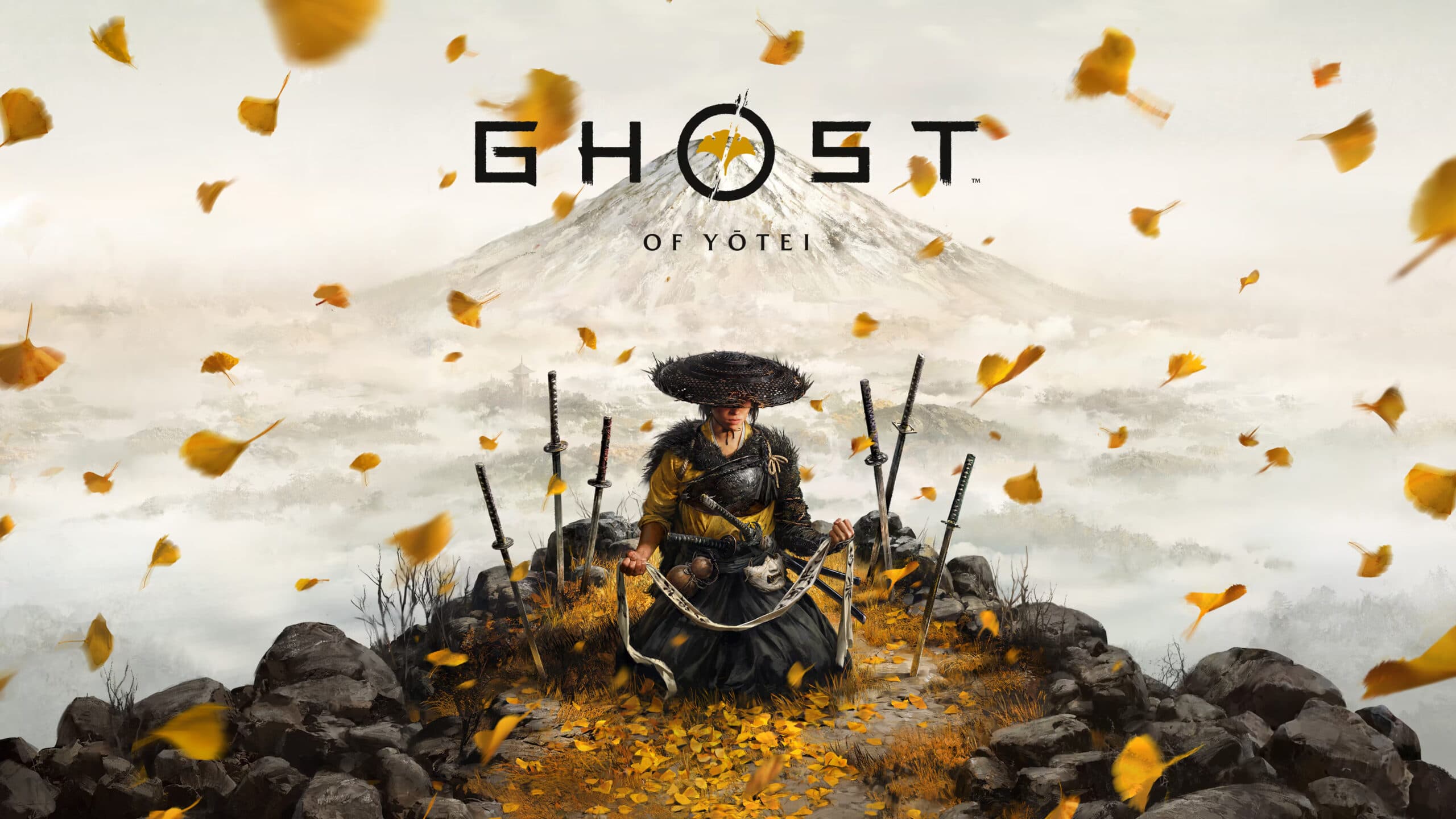
Sucker Punch Productions has delivered a confident sequel that evolves the Ghost formula in meaningful ways. Ghost of Yōtei shifts the action from Tsushima Island to Ezo (modern-day Hokkaido) in 1603, trading Jin Sakai’s noble quest for Atsu’s raw revenge story. The studio has committed to freedom-first design, stripping away excessive map markers and trusting players to discover content organically. After 50 hours exploring Hokkaido’s volcanic highlands and snow-dusted plains, it’s clear this is a deliberate refinement rather than a radical reinvention.
 Whether this feels liberating or frustrating depends on your tolerance for less guided exploration. The game never penalises you for missing content, which reduces the anxiety that checklist-driven open worlds often create. However, the guidance system can sometimes feel overly convenient. The way information reaches you (travellers stopping by with location hints, environmental markers pointing to upgrades) occasionally breaks immersion by making the design scaffolding too visible. You’re meant to feel like you’re discovering organically, but the mechanics sometimes reveal themselves too clearly.
The dynamic weather system impresses, with snow, rain, and even aurora borealis reflecting Mount Yōtei’s real climate. The development team recorded natural sounds at Shiretoko National Park, and that authenticity is evident. Blizzards muffle sound and force reliance on visual tracking during hunts. Dawn breaking over frozen lakes transforms routine travel into an unscripted spectacle.
Technical execution on PS5 is exceptional. The level of detail (individual pine needles catching light, realistic snow deformation) demonstrates hardware mastery. Three modes are available on base PS5: Quality (30fps at higher resolution), Performance (60fps at lower resolution), and Ray Tracing (30fps with RT enabled). PS5 Pro owners get an additional Ray Tracing Pro mode that targets 60fps with ray tracing at intermediate resolution using PSSR upscaling. Patch 1.008 addressed launch stability concerns, and performance remained consistently smooth throughout review.
Whether this feels liberating or frustrating depends on your tolerance for less guided exploration. The game never penalises you for missing content, which reduces the anxiety that checklist-driven open worlds often create. However, the guidance system can sometimes feel overly convenient. The way information reaches you (travellers stopping by with location hints, environmental markers pointing to upgrades) occasionally breaks immersion by making the design scaffolding too visible. You’re meant to feel like you’re discovering organically, but the mechanics sometimes reveal themselves too clearly.
The dynamic weather system impresses, with snow, rain, and even aurora borealis reflecting Mount Yōtei’s real climate. The development team recorded natural sounds at Shiretoko National Park, and that authenticity is evident. Blizzards muffle sound and force reliance on visual tracking during hunts. Dawn breaking over frozen lakes transforms routine travel into an unscripted spectacle.
Technical execution on PS5 is exceptional. The level of detail (individual pine needles catching light, realistic snow deformation) demonstrates hardware mastery. Three modes are available on base PS5: Quality (30fps at higher resolution), Performance (60fps at lower resolution), and Ray Tracing (30fps with RT enabled). PS5 Pro owners get an additional Ray Tracing Pro mode that targets 60fps with ray tracing at intermediate resolution using PSSR upscaling. Patch 1.008 addressed launch stability concerns, and performance remained consistently smooth throughout review.
 With so much to juggle, mistakes prove punishing. Glancing at your health or matching an opponent’s weapon change can mean missing a vital parry warning, especially during boss fights against the Yotei Six. The difficulty gets intense (expect frequent deaths even on regular difficulty), but those stakes mean the satisfaction of executing perfectly never diminishes.
The Yotei Six structure provides a non-linear framework. These boss-tier targets can be tackled in any order, though the map opens in stages with pre-determined progression. This isn’t complete freedom à la Assassin’s Creed Shadows; Sucker Punch maintains narrative control, which benefits the pacing and ensures Atsu’s journey remains coherent.
Stealth remains viable but feels less emphasised than the predecessor. You can infiltrate enemy camps unseen, but the expanded combat toolkit encourages experimentation with direct approaches. The wolf companion deserves clarification: it’s not a constant ally you can summon. Instead, it appears as a random combat event that occurs occasionally.
Completing wolf dens across the open world increases appearance frequency, but don’t expect it to be present for every encounter. It’s a nice bonus when it shows up, capable of killing enemies and providing a distraction.
With so much to juggle, mistakes prove punishing. Glancing at your health or matching an opponent’s weapon change can mean missing a vital parry warning, especially during boss fights against the Yotei Six. The difficulty gets intense (expect frequent deaths even on regular difficulty), but those stakes mean the satisfaction of executing perfectly never diminishes.
The Yotei Six structure provides a non-linear framework. These boss-tier targets can be tackled in any order, though the map opens in stages with pre-determined progression. This isn’t complete freedom à la Assassin’s Creed Shadows; Sucker Punch maintains narrative control, which benefits the pacing and ensures Atsu’s journey remains coherent.
Stealth remains viable but feels less emphasised than the predecessor. You can infiltrate enemy camps unseen, but the expanded combat toolkit encourages experimentation with direct approaches. The wolf companion deserves clarification: it’s not a constant ally you can summon. Instead, it appears as a random combat event that occurs occasionally.
Completing wolf dens across the open world increases appearance frequency, but don’t expect it to be present for every encounter. It’s a nice bonus when it shows up, capable of killing enemies and providing a distraction.
 The narrative uses playable flashbacks to flesh out the backstory, with two timelines playing off one another to provide context for both past and present. Key reveals are drip-fed throughout the campaign, maintaining mystery while developing Atsu as more than just a revenge archetype. She’s characterised as a ’17th century Clint Eastwood’ (charismatic yet quick to violence), and Sucker Punch doesn’t shy away from the uglier aspects of that nature. In one scene, she takes grim satisfaction in shooting and beheading a soldier who killed farmers.
This makes Atsu more compelling than Jin Sakai’s conflicted samurai. Where Jin struggled with honour versus pragmatism, Atsu embraces violence as her form of justice. The distinction creates a harder-edged protagonist that suits the mercenary premise.
The game acknowledges Ezo’s cultural landscape, including the Ainu people. The development team consulted with Ainu communities during production, and that respectful approach shows in how indigenous culture is presented as living practice rather than historical set-dressing. It’s not a deep exploration of colonialism’s darker aspects, but the effort toward authentic representation is evident.
Side content emphasises discovery and folklore elements. Activities like Sumi-E paintings, fox dens (returning from the original), hot springs, shrines, and bounties are deliberately positioned across the map to prevent fatigue from repetition. Most importantly, they reward meaningful upgrades rather than padding completion percentages.
That said, pacing issues emerge in the main quest’s latter stages. Too many fights feel like unnecessary padding, and the sheer number of climbing sequences (mindlessly hopping from one white-marked rock to another) becomes tedious. These are dated quirks that make the game seem uncertain about how to bridge story beats.
The narrative uses playable flashbacks to flesh out the backstory, with two timelines playing off one another to provide context for both past and present. Key reveals are drip-fed throughout the campaign, maintaining mystery while developing Atsu as more than just a revenge archetype. She’s characterised as a ’17th century Clint Eastwood’ (charismatic yet quick to violence), and Sucker Punch doesn’t shy away from the uglier aspects of that nature. In one scene, she takes grim satisfaction in shooting and beheading a soldier who killed farmers.
This makes Atsu more compelling than Jin Sakai’s conflicted samurai. Where Jin struggled with honour versus pragmatism, Atsu embraces violence as her form of justice. The distinction creates a harder-edged protagonist that suits the mercenary premise.
The game acknowledges Ezo’s cultural landscape, including the Ainu people. The development team consulted with Ainu communities during production, and that respectful approach shows in how indigenous culture is presented as living practice rather than historical set-dressing. It’s not a deep exploration of colonialism’s darker aspects, but the effort toward authentic representation is evident.
Side content emphasises discovery and folklore elements. Activities like Sumi-E paintings, fox dens (returning from the original), hot springs, shrines, and bounties are deliberately positioned across the map to prevent fatigue from repetition. Most importantly, they reward meaningful upgrades rather than padding completion percentages.
That said, pacing issues emerge in the main quest’s latter stages. Too many fights feel like unnecessary padding, and the sheer number of climbing sequences (mindlessly hopping from one white-marked rock to another) becomes tedious. These are dated quirks that make the game seem uncertain about how to bridge story beats.
 Ghost of Yōtei: Legends, planned for 2026, will offer 2-player story missions and 4-player survival mode against gigantic versions of the Yotei Six and Japanese mythology-inspired enemies. This follows the original’s popular co-op format, though specific mission details and progression systems haven’t been announced.
Compared to recent competitors like Rise of the Ronin and Assassin’s Creed Shadows, Ghost of Yōtei distinguishes itself through tighter combat choreography and more focused open-world design. Where Rise of the Ronin sprawls with excessive systems, Yōtei demonstrates confidence through restraint.
Ghost of Yōtei: Legends, planned for 2026, will offer 2-player story missions and 4-player survival mode against gigantic versions of the Yotei Six and Japanese mythology-inspired enemies. This follows the original’s popular co-op format, though specific mission details and progression systems haven’t been announced.
Compared to recent competitors like Rise of the Ronin and Assassin’s Creed Shadows, Ghost of Yōtei distinguishes itself through tighter combat choreography and more focused open-world design. Where Rise of the Ronin sprawls with excessive systems, Yōtei demonstrates confidence through restraint.

Game Snapshot
| Developer | Sucker Punch Productions |
| Publisher | Sony Interactive Entertainment (PlayStation Studios) |
| Release Date | 2 October 2025 |
| Platforms | PlayStation 5 exclusive |
| Price | £69.99/$69.99 (Standard Edition) |
| Rating | PEGI 18 | ESRB M (Mature) |
| Genre | Action-adventure, open world |
| Length | 25-30 hours (main story) | 35-40 hours (story + side content) |
| Install Size | ~85 GB (PS5, launch version) |
Presentation and World Design
Ezo provides a striking contrast to the original’s autumnal palette. The open world spans six explorable regions (Yotei Grasslands, Ishikari Plain, Tokachi Range, Nayoro Wilds, Teshio Ridge, and Oshima Coast), with Mount Yōtei serving as a constant visual landmark. Sucker Punch has embraced what they call ‘freedom-first design,’ which translates to fewer icons cluttering your map and more reliance on environmental observation. In practice, this means fog of war covers the entire map until you physically visit locations. Landmarks spotted through your spyglass appear as scribbled rumours rather than confirmed waypoints. Quests aren’t spoon-fed to you; instead, objectives are earned by helping NPCs and interrogating enemies. The approach creates a different rhythm, one that rewards curiosity over efficient route-planning.
Whether this feels liberating or frustrating depends on your tolerance for less guided exploration. The game never penalises you for missing content, which reduces the anxiety that checklist-driven open worlds often create. However, the guidance system can sometimes feel overly convenient. The way information reaches you (travellers stopping by with location hints, environmental markers pointing to upgrades) occasionally breaks immersion by making the design scaffolding too visible. You’re meant to feel like you’re discovering organically, but the mechanics sometimes reveal themselves too clearly.
The dynamic weather system impresses, with snow, rain, and even aurora borealis reflecting Mount Yōtei’s real climate. The development team recorded natural sounds at Shiretoko National Park, and that authenticity is evident. Blizzards muffle sound and force reliance on visual tracking during hunts. Dawn breaking over frozen lakes transforms routine travel into an unscripted spectacle.
Technical execution on PS5 is exceptional. The level of detail (individual pine needles catching light, realistic snow deformation) demonstrates hardware mastery. Three modes are available on base PS5: Quality (30fps at higher resolution), Performance (60fps at lower resolution), and Ray Tracing (30fps with RT enabled). PS5 Pro owners get an additional Ray Tracing Pro mode that targets 60fps with ray tracing at intermediate resolution using PSSR upscaling. Patch 1.008 addressed launch stability concerns, and performance remained consistently smooth throughout review.
Gameplay and Combat
The combat system has evolved significantly from the original’s stance-based approach. Atsu wields five main weapons: a single katana, dual katanas, an odachi (great sword), a yari (spear), and a kusarigama (chain-scythe). Each weapon counters specific enemy types in a rock-paper-scissors system. The kusarigama quickly overwhelms shield-wielding enemies, for example, while the yari breaks through kusarigama users. You’re expected to switch between them fluidly mid-battle. It’s thrilling when you execute well: using the odachi to cut down a larger foe, pivoting to dual katanas for a spearman, firing a quick pistol shot at an archer while reaching for the yari. Combat feels like tightly choreographed action sequences, with disarming strikes and thrown weapons adding tactical depth. The flintlock rifle demands patience and positioning, accounting for distance and accepting the loud report that broadcasts your position
With so much to juggle, mistakes prove punishing. Glancing at your health or matching an opponent’s weapon change can mean missing a vital parry warning, especially during boss fights against the Yotei Six. The difficulty gets intense (expect frequent deaths even on regular difficulty), but those stakes mean the satisfaction of executing perfectly never diminishes.
The Yotei Six structure provides a non-linear framework. These boss-tier targets can be tackled in any order, though the map opens in stages with pre-determined progression. This isn’t complete freedom à la Assassin’s Creed Shadows; Sucker Punch maintains narrative control, which benefits the pacing and ensures Atsu’s journey remains coherent.
Stealth remains viable but feels less emphasised than the predecessor. You can infiltrate enemy camps unseen, but the expanded combat toolkit encourages experimentation with direct approaches. The wolf companion deserves clarification: it’s not a constant ally you can summon. Instead, it appears as a random combat event that occurs occasionally.
Completing wolf dens across the open world increases appearance frequency, but don’t expect it to be present for every encounter. It’s a nice bonus when it shows up, capable of killing enemies and providing a distraction.
Story and Characters
Atsu, voiced by Erika Ishii (English) and Ai Farouz (Japanese), is an onna-musha (female warrior) seeking revenge for her parents’ murder. Sixteen years ago, the Yotei Six slaughtered her family and pinned young Atsu to a tree with her father’s katana, leaving her to burn. She survived and later fought in the Battle of Sekigahara, but vengeance remains her driving force.
The narrative uses playable flashbacks to flesh out the backstory, with two timelines playing off one another to provide context for both past and present. Key reveals are drip-fed throughout the campaign, maintaining mystery while developing Atsu as more than just a revenge archetype. She’s characterised as a ’17th century Clint Eastwood’ (charismatic yet quick to violence), and Sucker Punch doesn’t shy away from the uglier aspects of that nature. In one scene, she takes grim satisfaction in shooting and beheading a soldier who killed farmers.
This makes Atsu more compelling than Jin Sakai’s conflicted samurai. Where Jin struggled with honour versus pragmatism, Atsu embraces violence as her form of justice. The distinction creates a harder-edged protagonist that suits the mercenary premise.
The game acknowledges Ezo’s cultural landscape, including the Ainu people. The development team consulted with Ainu communities during production, and that respectful approach shows in how indigenous culture is presented as living practice rather than historical set-dressing. It’s not a deep exploration of colonialism’s darker aspects, but the effort toward authentic representation is evident.
Side content emphasises discovery and folklore elements. Activities like Sumi-E paintings, fox dens (returning from the original), hot springs, shrines, and bounties are deliberately positioned across the map to prevent fatigue from repetition. Most importantly, they reward meaningful upgrades rather than padding completion percentages.
That said, pacing issues emerge in the main quest’s latter stages. Too many fights feel like unnecessary padding, and the sheer number of climbing sequences (mindlessly hopping from one white-marked rock to another) becomes tedious. These are dated quirks that make the game seem uncertain about how to bridge story beats.
Value and Longevity
The critical path requires roughly 25 to 30 hours focusing on the Yotei Six, but completionists will invest 50 plus hours exploring Ezo’s secrets. The structure actively rewards wandering. Each shrine teaches combat techniques, every random traveller encounter might unlock new bounties, and the reputation system creates tangible consequences. Villages offer better prices to merciful hunters or refuse service to those known for excessive brutality. The game has achieved strong commercial performance, surpassing 1 million copies sold since its 2 October launch. Critical reception has been overwhelmingly positive across launch coverage.
Ghost of Yōtei: Legends, planned for 2026, will offer 2-player story missions and 4-player survival mode against gigantic versions of the Yotei Six and Japanese mythology-inspired enemies. This follows the original’s popular co-op format, though specific mission details and progression systems haven’t been announced.
Compared to recent competitors like Rise of the Ronin and Assassin’s Creed Shadows, Ghost of Yōtei distinguishes itself through tighter combat choreography and more focused open-world design. Where Rise of the Ronin sprawls with excessive systems, Yōtei demonstrates confidence through restraint.
Technical Notes
Post-launch support has been solid. Patch 1.008 addressed stability concerns and performance inconsistencies reported at launch. In extensive playtime across varied environments (dense forests, open snowfields, chaotic multi-enemy battles), performance remained consistently smooth on both base PS5 and PS5 Pro. Load times are brief, fast travel is near-instant, and no game-breaking bugs surfaced during review. The Wolf Pack menu on the pause screen tracks important characters who alert you to new items or quest updates. Members can visit your camp to bring resources directly; however, the system feels redundant. Fast travel is instant enough to visit vendors directly, and looting enemy camps keeps ammunition stocked without crafting. The cooking mechanic offers temporary offensive and defensive boosts, but the benefits are minimal. These features can be skipped entirely without consequence. DualSense implementation is comprehensive. Adaptive triggers and haptic feedback provide expected tactile responses, but Sucker Punch goes further with touchpad integration. Swiping in four directions follows the wind, plays musical instruments, bows, and sheathes/draws weapons. The touchpad replicates Sumi-E painting and shamisen string plucking. Light motion controls simulate hammer strikes at the forge and cooking over campfires. This might be the most thorough use of PS5 controller features to date. Three visual modes return alongside new additions: Kurosawa Mode (black and white inspired by Akira Kurosawa), Miike Mode (increased blood and dirt with tighter over-the-shoulder camera inspired by Takashi Miike), and Watanabe Mode (lo-fi beats inspired by Shinichirō Watanabe). None feel appropriate for first playthroughs, but they celebrate the Japanese influences powering the experience.Final Word
Ghost of Yōtei is a confident evolution that refines rather than reinvents. By reducing map markers and trusting players to navigate through observation, Sucker Punch has created an open world that respects player intelligence whilst maintaining narrative control. This isn’t a comfortable retread; it’s a deliberate refinement that addresses many of the original’s weaknesses (repetitive side content, simplistic combat) whilst introducing new friction points (overly curated discovery, tedious climbing sections). For PlayStation 5 owners seeking a spiritual successor to Ghost of Tsushima, this delivers the core appeal (beautiful environments, satisfying melee combat, feudal Japanese setting) whilst evolving the structure underneath. Atsu’s revenge story provides harder edges than Jin’s honour-bound journey, and the expanded combat toolkit rewards experimentation. The strong sales and critical reception suggest Sucker Punch has struck the right balance between familiarity and innovation. Ezo doesn’t just invite exploration; it rewards patience and curiosity. If you’re willing to engage with a world that doesn’t bend to convenience, Ghost of Yōtei offers one of PS5’s most accomplished open-world experiences.
FAQ
Is Ghost of Yōtei a direct sequel to Ghost of Tsushima?
No. Set roughly 320 years after Jin Sakai's story in a different region (Hokkaido instead of Tsushima Island), it features a new protagonist named Atsu and a standalone narrative. It shares gameplay DNA but requires no prior knowledge of the original. Think spiritual successor rather than narrative continuation.
How significantly does the reduced UI guidance affect playability?
Substantially, but by design. The game uses fog of war that only clears when you visit locations, with landmarks appearing as 'scribbled rumours' when spotted through the spyglass. There's an adjustment period, but most players report the system feels liberating once mastered. The game never penalises missed content, reducing checklist anxiety.
Does the combat system differ significantly from Ghost of Tsushima?
Yes. The stance system is replaced by five distinct weapons (katana, dual katanas, odachi, yari, kusarigama), each effective against specific enemy types. You must switch weapons fluidly mid-battle. The flintlock rifle adds meaningful ranged options. It's more complex and demanding than the original, with stealth feeling less emphasised.
Can the Yotei Six targets be tackled in any order?
Partially. The map opens in stages with pre-determined progression, so you don't have complete freedom like Assassin's Creed: Shadows. Within each stage, you have flexibility in your approach. This structure benefits pacing whilst maintaining player agency.
Is the wolf companion available throughout the game?
No. The wolf appears as a random combat event rather than a summonable ally. Completing wolf dens increases appearance frequency, but you cannot call it at will. When it does appear, it can kill enemies and provide a distraction, but don't expect it to be present for every encounter.
8.6
Great
SpawningPoint Verdict
Review summary
Ghost of Yōtei refines Sucker Punch's open-world formula with a harder-edged revenge tale set in 1603 Hokkaido. Atsu, an onna-musha hunting the six warriors who murdered her family, wields five distinct weapons in a fluid combat system that demands constant adaptation. The freedom-first design strips away excessive UI, relying on fog of war and environmental observation for discovery. While some guidance feels overly convenient and late-game pacing stumbles with repetitive climbing sections, the 50+ hour experience rewards curiosity across six beautifully rendered regions. Comprehensive DualSense integration and exceptional PS5 Pro performance (60fps with ray tracing) showcase technical mastery. It's a confident evolution that respects player intelligence whilst maintaining narrative control, a must-play for fans seeking more refined samurai action.