RETROSPECTIVE
7.3· Great
Wuchang: Fallen Feathers Retrospective 2026: Patches and the Contract Held


Wuchang’s first boss teaches a multi-phase contract: the player learns the spatial vocabulary by failing the second phase before they have learned to read the first. Commander Honglan does not ask for reflexes; he asks for a reading of the arena’s architecture, because the arena is the argument Leenzee Games is making. Six months on from the 24 July 2025 launch, and four patches into a sustained technical correction, that argument finally reads cleanly. The Wuchang Fallen Feathers retrospective version is not the game that shipped; it is the game the encounter design always described. This piece traces what changed, which bosses carry the argument, and whether the post-patch state has accumulated enough goodwill to earn the cost.
Game Snapshot
| Developer / Publisher | Leenzee Games/505 Games |
| Release Date | 24 July 2025 |
| Platforms | PS5, Xbox Series X|S, PC |
| Price | £49.99 | $59.99 Standard, £64.99 | $79.99 Deluxe |
| Rating | PEGI 18 | ESRB M |
| Genre | Souls-like action-RPG |
| Length | 35-45 hours main story, 60+ hours main + side |
| Install Size | ~70 GB base + ~5 GB Whitewater patch |
Presentation and Setting
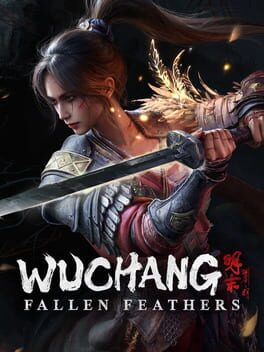
The Ming Dynasty setting is not decorative. Wuchang: Fallen Feathers places its action in the collapsing Shu region during the dynasty’s late period, and Leenzee Games builds the world as a system of visual argument: the Feathering Disease that afflicts Bai Wuchang is written into the architecture, the foliage, the texture of every surface the player passes through. Feathers appear where corruption has taken hold. Structures that were once administrative centres are now overgrown with growth patterns that mimic the curse’s progression across skin; the analogy is not subtle, and it does not need to be.
Bai Wuchang is a shadow walker, a warrior-class bound to a curse that the story frames as both a death sentence and a form of sight. She sees through the disease what others cannot. The visual design reflects this: corrupted environments pulse with a colour register that sits slightly wrong, as if the palette itself has been infected. The effect is consistent without being oppressive.
Where the visual direction is less confident is in its performance of scale. Some of the larger environmental set pieces, particularly in chapters three and four, are more architecturally ambitious than the rendering budget appears to support; the patch 1.1 frame-pacing rebuild corrected the worst of the stutter, but in particularly dense areas the engine still reads as working hard. The visual identity is coherent and intelligently conceived; the technical delivery occasionally does not match the ambition of the art direction.

Encounter Design and the Multi-Phase Contract
This is the section the piece earns its argument on. Leenzee Games stages the encounter as its primary design language, and in Wuchang: Fallen Feathers that language is architectural: the arena itself is the first teacher, and the contract between the design and the player is established through spatial failure before it is established through input failure.
Commander Honglan stages the encounter in a courtyard divided by a collapsed walkway: the first phase is a ground-level engagement that teaches the player the rhythm of Honglan’s overhead sequences; the second phase is a vertical repositioning that invalidates the ground reading entirely. The design is deliberate. The player who has learned phase one has learned the wrong vocabulary for phase two; the encounter argues that failure is the curriculum. The contract: you will misread this arena before you read it correctly, and the misreading is the lesson.
The Feathering One, the chapter two mid-boss, stages the encounter differently: the arena is featureless except for the boss itself, and the multi-phase logic is entirely moveset-driven. The Feathering One teaches the deflect window by forcing the player to operate within recovery windows that tighten between phases. Phase one: the moveset reads at moderate cadence; deflects are forgiving, and the stagger economy favours the player. Phase two: the cadence accelerates and the stagger economy inverts; what cost the player resources in phase one now costs the boss resources, but only if the deflects land on the correct window. The contract has shifted; the player who understood phase one discovers they have learned the language of a negotiation that has changed its terms.
General Bailong is the argument at its most spatially mature. His arena in chapter three is a tiered military platform, three levels connected by ramps the player can traverse during the fight. Bailong does not pursue across levels efficiently; his moveset is tuned for the lower tier. The encounter stages this explicitly: a player who learns to use the ramps gains recovery windows that a player fighting on Bailong’s level cannot access. The parry window equivalent, Wuchang’s deflect, is not the only answer; the stagger economy on the upper tier is entirely different from the stagger economy at ground level. Bailong stages the encounter as a spatial argument about positioning; the moveset reads differently depending on where in the architecture the player has placed themselves.
The Shu Emperor’s Ghost, the chapter five climax, is where the multi-phase contract is fully extended. Three distinct phases across an arena that physically transforms between them: the floor geometry changes, the lighting register shifts, and the audio architecture of the boss’s telegraph patterns modulates to reflect the ghost’s progressive dissolution. The design earns this complexity because it has been building the player’s spatial vocabulary across the preceding chapters; the Shu Emperor’s Ghost stages the encounter as a cumulative test, and the contract is the sum of every earlier contract. The moveset reads as a retrospective: Honglan’s overhead sequences reappear in distorted form; Bailong’s positional logic recurs in a context where the platform architecture is no longer stable. The encounter argues that the entire game has been preparation for this room.
Whitewater Crane, introduced in the January 2026 content patch, stages the encounter in a flooded arena where elevation is managed by a water-level mechanic that changes between phases. It is the cleanest expression of the design language in the game: entirely original, architecturally elegant, and technically stable in a way that the launch-window bosses were not on first presentation. The contract with Whitewater Crane is established in approximately ninety seconds of the first attempt; the encounter argues its terms clearly, and that clarity is both its strength and, for some players, a limitation relative to the accumulated spatial complexity of the main-game roster.

Combat and the Deflect System
The deflect in Wuchang: Fallen Feathers is not a parry. The distinction matters. A parry in the Sekiro tradition is frame-precise and rewards timing alone; a deflect in Wuchang carries a directional component tied to Bai Wuchang’s stance, meaning that the correct deflect requires both timing and positional context. The moveset reads through this lens: attacks that would be parried in Sekiro are deflected in Wuchang, but deflecting from the wrong stance angle does not achieve the same stagger outcome. The stagger economy is a function of both the deflect timing and the spatial relationship between Wuchang and the boss at the moment of contact.
Skyborn Might is the special-meter mechanic; it charges from deflects and from weapon-art connections, and it costs stamina to activate. The decision architecture here is interesting: Wuchang is a stamina-driven game at its core, and Skyborn Might represents a resource tension between the meter’s power and the stamina cost of deploying it. A player who has banked Skyborn Might through a disciplined deflect sequence may find themselves stamina-depleted at the moment they most need mobility; the design stages this tension deliberately.
Against Lies of P, the comparison that comes most naturally, Wuchang’s deflect system is less punishing at the margins but more spatially demanding. Lies of P rewards timing precision above spatial awareness; Wuchang rewards both in equal measure, which makes it a more demanding read in the early hours and a more textured system in the later ones. The combat earns the cost by the time the player reaches Bailong; the deflect system and the stagger economy have had enough time to develop into a legible language.
The launch version’s audio desync on Xbox Series X|S was not a cosmetic issue: telegraph patterns in boss fights depend on audio cues, and a desync that shifted audio ahead of the animation by a perceptible margin made deflect timing unreliable. Patch 1.2’s audio system overhaul corrected this; the deflect now reads as it was designed to read.

Story and the Feathering Curse
Bai Wuchang’s curse is the story’s central argument, and the Shu Emperor’s Ghost is its culmination. The Feathering Disease is positioned not as a plague but as a consequence: the Shu region’s collapse under the Emperor’s misrule has produced a spiritual contamination that manifests physically, and Wuchang’s shadow-walker status means she is both the disease’s carrier and the only agent capable of reading it clearly enough to address it. The thematic logic is sound; the execution is uneven.
The story stages the Feathering curse as a form of enforced perception: Wuchang sees what other characters cannot because the disease has altered her sensory relationship to the world. The Sallow Concubine chapter explores this most coherently, staging its narrative beats through environmental storytelling that trusts the player to connect the visual evidence without explicit exposition. The earlier chapters are more conventionally told; the contract between the story and the player is less clearly articulated than the contract between the encounter design and the player.
The story earns the cost of its ending. The Shu Emperor’s Ghost fight, as a narrative payoff, is coherent in a way that the lead-up occasionally is not; the final encounter stages the story’s argument spatially as well as dramatically, which is the correct decision for a game whose design language is built around spatial argument.

The Patch Cycle and What Changed
The launch version of Wuchang: Fallen Feathers on 24 July 2025 presented a genuine tension: the encounter design was clearly the work, and the technical state was clearly preventing it from being read. Frame pacing in third-phase boss transitions on PS5 and Xbox Series X|S dropped to levels that made deflect timing inconsistent; audio cues on Xbox were measurably ahead of animations in several key encounters; and a PC save-corruption issue on specific GPU configurations meant that a subset of players could not complete chapter three reliably.
Patch 1.0.1 (August 2025) addressed the PC save-corruption as an emergency fix. It did not touch the frame-pacing or audio issues. The encounter design remained partially occluded on console.
Patch 1.1 (September 2025) is the patch this retrospective depends on. Leenzee Games executed a full frame-pacing rebuild, specifically targeting the pacing-budget overrun that occurred in third-phase boss transitions. The General Bailong encounter, which had been the most severely affected on console, staged the encounter correctly for the first time post-patch: the multi-phase spatial architecture was readable because the frame delivery was consistent. The contract between the design and the player was, for the first time, legible on the platforms it needed to be legible on.
Patch 1.2 (November 2025) completed the technical correction. The audio system overhaul restored deflect-timing reliability on Xbox Series X|S; the save-system migration addressed the remaining PC edge cases; the Skyborn Might recovery balance pass shortened the stamina-cost recovery window in a way that slightly favours the player in extended engagements without removing the resource tension. The combat reads more cleanly post-1.2; the stagger economy is more consistent at the edges of the deflect window.
Patch 1.3 “Whitewater” (January 2026) added the Whitewater Crane encounter and the Bayou region. The Bayou is the smallest of the game’s regions, but the Whitewater Crane encounter is well-staged: a technically stable, architecturally legible boss fight that demonstrates what the design language looks like when it is not competing with technical friction. The balance adjustments in 1.3 are minor; the content addition is the meaningful contribution.
The retrospective verdict: the patches have done what they needed to do. The encounter design was always the work; the technical state at launch prevented the contract from being visible. Post-1.2, the contract is visible. Post-1.3, there is an additional encounter that stages the contract cleanly from its opening seconds. This is not a redemption narrative; it is a technical correction that has exposed the game the design always intended.
Value and the Whitewater Add
At £49.99/$59.99 standard, Wuchang: Fallen Feathers sits in the tier of major-budget indie releases that have positioned themselves against mid-tier publisher games. The 35-45 hour main-story estimate is accurate for a player working at the encounter design’s intended pace; the 60+ hour estimate for main-plus-side content includes the Bayou region and the Whitewater Crane encounter without inflation.
The Deluxe Edition at £64.99/$79.99 included a soundtrack and a season pass that has, to date, delivered the Whitewater content as a free patch rather than a paid season pass chapter. This is relevant for players who purchased the Deluxe on the assumption that the season pass represented paid future content: the Whitewater patch was free to all owners regardless of edition. The Deluxe earns its cost only if the soundtrack holds value for the purchaser; as a content-access proposition, it has not delivered materially more than the standard edition.
The post-patch standard edition earns the cost. A 35-45 hour soulslike with technically stable encounter design and a coherent spatial-argument structure at £49.99 is a reasonable proposition in 2026. The game that shipped in July 2025 was not that proposition; the game that exists as of May 2026, after four rounds of sustained technical correction, is.
Final Word
The moment that stages Wuchang’s argument most clearly is not a set piece; it is the third attempt on General Bailong, when the player first uses the upper ramp not as an escape but as a deliberate repositioning. The deflect window opens differently from the elevated angle; the stagger economy shifts; the encounter argues that the correct reading was available all along, and the player’s failure to find it was the lesson the design was staging. That moment requires a technically stable frame delivery to register as intended, and for the first six weeks after launch it did not. It does now.
A player who enjoys soulslike encounter design as a primarily spatial discipline, and who is willing to engage with the contract that Leenzee Games stages through multi-phase arena architecture, will find that the post-patch Wuchang earns its cost. A player who requires the story to carry equal weight to the encounter design will find that the contract is uneven; the story supports the encounter, but the encounter is not supplementary to the story. If the spatial argument of the arena is not what you are reading for, the encounter design will not compensate for the story’s inconsistency.
FAQ
Is Wuchang: Fallen Feathers worth playing in 2026?
The post-patch version of Wuchang: Fallen Feathers is worth playing if soulslike encounter design is your primary interest; the multi-phase spatial architecture across the main-game boss roster and the Whitewater Crane addition represents a coherent and technically stable design argument. The four major patches from August 2025 through January 2026 corrected the frame-pacing, audio desync, and save-system issues that made the launch version unreliable; what remains is the encounter design that was always the game's core proposition, now readable without the technical friction that obscured it at release.
What changed in the 1.1 patch?
Patch 1.1, released September 2025, executed a full frame-pacing rebuild that specifically targeted the pacing-budget overrun occurring during third-phase boss transitions on PS5 and Xbox Series X|S. The General Bailong encounter was the most severely affected encounter pre-patch, with frame delivery inconsistencies making deflect timing unreliable during the transition into his second and third phases; post-1.1, the encounter stages its multi-phase spatial architecture correctly on console for the first time. The 1.1 patch is the intervention that allowed the design to read as intended.
How does Wuchang compare to Lies of P or Sekiro?
Wuchang: Fallen Feathers occupies different territory from both its frequent comparators. Against Sekiro, the deflect system adds a directional stance component that makes the parry window equivalent more spatially demanding and less purely timing-dependent; against Lies of P, the encounter design prioritises arena architecture and multi-phase spatial logic over moveset-reading precision. Wuchang is a more forgiving read at the margins than either; it is also a more architecturally demanding read in the middle of its roster, where the arena geometry is doing as much work as the boss moveset.
Is the Deluxe Edition worth the upgrade?
The Deluxe Edition at £64.99 / $79.99 included a soundtrack and a season pass that has, as of January 2026, delivered the Whitewater content as a free patch available to all owners regardless of edition. For players who purchased the Deluxe specifically for season pass access, the content delivered has not differentiated the edition from the standard. The Deluxe earns the price difference if the soundtrack holds value independently; as a content-access proposition against the standard edition at £49.99 / $59.99, the case is weak given that the only major content addition has been universally available.
Does the Whitewater patch add a new boss?
Patch 1.3 "Whitewater", released January 2026, adds the Whitewater Crane boss encounter and the Bayou region. The Whitewater Crane stages the encounter in a flooded arena with a water-level mechanic that changes between phases; it is the cleanest expression of Leenzee Games' multi-phase spatial design language in the game, architecturally legible within the first two attempts and technically stable in a way that the launch-window roster was not. The Bayou region is the smallest of the game's areas, but the Whitewater Crane encounter alone justifies the patch as a meaningful content addition.
7.3
Great
SpawningPoint Verdict
Review summary
Wuchang: Fallen Feathers launched 24 July 2025 from Leenzee Games, published by 505 Games, on PS5, Xbox Series X|S, and PC. The game's core design argument is soulslike encounter staging built around multi-phase arena architecture: bosses teach through spatial failure as much as through input timing, and the progression across Commander Honglan, General Bailong, and the Shu Emperor's Ghost develops a coherent design vocabulary. The launch version's technical problems, specifically frame pacing in boss transitions and audio desync on Xbox, obscured this argument. Four patches from August 2025 through January 2026 corrected the technical state; patch 1.3 "Whitewater" added the Whitewater Crane encounter. The post-patch game at £49.99 / $59.99 standard delivers a technically stable soulslike with a well-staged encounter design scoring 7.3/10 overall.


