

The class system in Visions of Mana is a design argument, not a feature list. Equipping an Elemental Vessel does not simply add a new move; it reclassifies the character it sits on, replacing their role, their attack vocabulary, and their tactical function within the party. That distinction matters because it means the game’s progression is not about accumulating power but about accumulating literacy. When the system fires at its best, swapping Val from his default swordsman into the Wind Vessel’s Gambler class mid-combat is a live tactical decision, not a menu transaction. It has been nearly twenty years since the mainline Mana series asked that question of its players, and the answer Ouka Studios built is worth the wait, even if the game’s pacing does not sustain it across the full thirty-odd hours.
Game Snapshot
| Developer | Ouka Studios |
| Publisher | Square Enix |
| Release Date | 29 August 2024 |
| Platforms | PC/PS4/PS5/Xbox Series X/S |
| Price | £49.99 | $59.99 |
| Rating | PEGI 12 | ESRB T (Teen) |
| Genre | Action-RPG |
| Length | 30-40h main story/50-70h completionist |
| Install Size | ~30 GB |
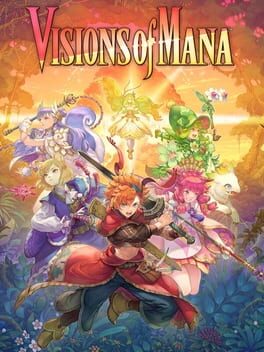
Presentation and World Design
The world of Qi’Diel is structured around its eight Elemental regions, each tied to a spirit that the pilgrimage party must visit in sequence. The art direction is consistent in its commitment to a pastel storybook register: saturated greens and purples in the jungle reaches near Longren, pale blues and dense snowfall geometry in the tundra approaches to the Water capital Illystana, warm amber and volcanic rock in the Fire Village of Tianeea where the journey begins. The colour logic is not decorative. Each region’s palette shifts toward the visual signature of its associated Elemental, which means the travel arc has a built-in rhythm of environmental contrast that keeps thirty hours of exploration from feeling monotonous.
What the world does less well is distribute that visual density evenly. The opening Fire and Wind regions are the most fully realised, with sight-line geometry that the encounter design later uses as a constraint: enemies patrol routes that make sense relative to the cover available, and the platforming collectible placements reward players who read the space before committing to a path. The mid-game Earth and Moon regions are sparser. The scale is maintained but the environmental storytelling thins out, and the spaces that should mark transitions between the pilgrimage’s emotional registers feel more like connective tissue than distinct locations.
Hiroki Kikuta’s score earns its series lineage. Kikuta composed cutscene tracks, with Tsuyoshi Sekito handling combat themes and Ryo Yamazaki writing the environmental and exploration pieces. The three-way division means the musical register shifts coherently between sections rather than blurring together, and the exploration music carries enough melodic weight to distinguish one region from the next without relying on percussion as a shortcut. The combat themes are correctly calibrated: present, driving, not so dominant that they override the tactical audio cues the player needs during fights.

Gameplay and Combat
The class system is the reason to play this game. Val, Hinna, Careena, Morley, and Palamena each have a unique class for every one of the eight Elemental Vessels, which means the full roster carries forty-plus distinct combat roles. The system does not ask the player to manage all of them simultaneously; it asks them to understand the ones available at any moment and choose correctly. That is a smaller ask than it sounds because each Vessel announces its associated class change legibly: equipping the Luna Globe on Val shifts him to the Aegis, a defensive pivot with counter-animation windows; equipping it on Careena shifts her to a different class entirely, one built around area suppression. The game teaches this distinction through encounter design in the first two Elemental regions, by forcing the player into situations where the correct response to an enemy pattern changes depending on which character holds the active Vessel.
The Class Strike gauge is the system’s escalation engine. Building it through attacks, taking hits, and using class-specific moves creates a pressure structure for every fight: the player is always managing both the encounter’s immediate demands and the question of when to discharge the gauge for maximum leverage. The encounters in the Fire and Wind Vessel sections are designed to make that decision interesting. The Forest Sanctuary area, which is the first encounter space where multiple Vessels are available simultaneously, sequences its fights to demonstrate the utility of switching mid-combat, with patrol groups that include both close-range and ranged enemy types that no single class configuration handles cleanly.
The structural problem emerges around the halfway mark. The encounter design in the Earth and Moon Vessel sections begins repeating attack vocabulary without escalating it. The same overhead-into-sweep pattern that appeared in the Longren region’s elite enemies reappears in the Moon Village approaches with higher health pools but no new teaching requirement. That is not escalation. The game has enough distinct enemy types to avoid this; the second half simply does not distribute them as carefully as the first. The boss fights across the eight Elemental Sanctuaries are the clearest evidence of the design gap: the Fire Sanctum boss is a well-staged teaching encounter that uses the Vessel system to set up its phase transition; several of the later Sanctuary bosses are health-bar attrition fights that do not engage the class system in any meaningful way. For a game whose central argument is that class choice is a live tactical decision, encounters that do not require that choice are the primary structural weakness.

Story and Characters
The pilgrimage structure is the right container for this story. Eight Elementals, eight regions, eight party compositions added over a thirty-hour arc: the episodic rhythm creates natural stopping points for character work without requiring the narrative to sustain momentum across the full runtime on its own. The design is honest about this. Val and Hinna are the emotional anchor, and the game invests its opening fifteen hours in making that anchor hold before the story asks the player to carry the weight of a larger cast.
Val is deliberately drawn against type. A Soul Guard is a protector role coded by the genre for solemnity, but Val is cheerful, curious, and makes decisions by loyalty rather than calculation. The choice pays off at the story’s structural pivot, when Eoren kills Hinna mid-pilgrimage to claim her corestone and awaken the Mana Sword. The loss lands with proportional weight because the first act did not treat it as inevitable. The subsequent sections, in which Val continues protecting the remaining Alms while seeking a way to restore Hinna, carry a grief logic that the writing maintains without overstating.
The supporting cast is variable in how much the narrative earns their presence. Morley’s arc, resolving the traumatic event that shaped him before the game began, is well-structured and uses the pilgrimage journey as its delivery mechanism rather than relying on cutscene exposition. Palamena’s political backstory in Illystana is handled efficiently in a single region’s worth of quests. Careena, who speaks in a register that reads as distinctly out of place against the rest of the cast, has a personality that functions better in light comedic exchanges than in the story’s heavier moments. The final antagonist reveal, which reframes Daelophos’s role across the full narrative, is the kind of structural reversal that works better on a first playthrough than on reflection; it asks the player to accept that several earlier encounters were staged differently than they appeared, which is a valid narrative move but one the game telegraphs incompletely.

Value and Longevity
The main story runs approximately thirty to thirty-five hours at a measured pace. Completionist play, which includes the full side-quest roster and the optional boss encounters tied to each Elemental region, extends that to fifty to sixty hours. The side quests are structurally standard: most resolve through item retrieval or named enemy defeats. A smaller set, connected to individual party members’ histories, are worth pursuing because they add context to character decisions in the main story. Those are not labelled separately, which is a minor navigational problem for players who want the best return on their side-quest time.
The class system provides genuine replayability within a single playthrough rather than across multiple ones. The game does not require the player to master every class configuration to reach the credits, but players who engage with the full Vessel roster will find encounters in the second half land differently depending on which classes they have levelled. The skill trees tied to each class add a further layer: unlocked abilities persist across configurations, which means investment in any one class carries forward rather than being lost on a Vessel swap. That economy is well-designed and prevents the system from feeling punishing toward players who experiment.
The game launched at a full retail price point. Given the volume of content and the structural quality of the combat system, the value proposition is defensible, particularly in 2026 when the catalogue price is significantly reduced on most platforms.

Technical Notes
Performance on PS5 is primarily stable at 60fps. Frame-time variance surfaces in the larger encounter spaces, particularly during multi-enemy fights where multiple Class Strike animations fire simultaneously, and in several of the more densely populated world areas. The drops do not reach a level that interferes with parry or dodge timing in the encounters where those inputs matter most, which is the correct threshold for whether technical performance affects the play experience. The PC version had documented performance issues at launch, including stuttering in open-world traversal areas; the current patch state is substantially improved from the day-one reports.
The lip-sync is misaligned across English voice acting in a way that is consistent rather than occasional, suggesting an integration issue rather than per-scene carelessness. It does not affect gameplay but it breaks the visual language of the cutscene presentation in a way that is noticeable enough to mention. The camera in multi-phase boss fights is competent during single-target encounters; it handles multiple enemies in a closed arena less cleanly, with tracking decisions that are occasionally ambiguous when the player needs to read a telegraph from a secondary target while managing a primary threat.
Visions of Mana is not available on Switch 2 at time of writing. Whether a port is forthcoming is unclear given Ouka Studios’ subsequent closure following the game’s release, though Square Enix has made no public statement about the franchise’s status.
Final Word
The class system earns its central billing. When the Fire Sanctum boss sequences its phase transition through a Vessel swap requirement, forcing the player to choose between two different tactical configurations under pressure with the Class Strike gauge already built, it is a well-staged fight that demonstrates what the system can do at full pressure. That quality of encounter design is present often enough in the first half to make Visions of Mana a game worth the investment. The second half does not sustain it. Encounter design that repeats attack vocabulary without escalating it, and boss fights that do not engage the class system as actively as the opening regions do, mean the final fifteen hours are a diminishing return on the promise of the first fifteen.
Recommended for players who are specifically interested in action-RPG class systems and are willing to accept that the pacing contract is not maintained evenly. Not recommended as an evergreen catalogue essential, but worth significant attention at current prices for genre enthusiasts.
FAQ
Is Visions of Mana worth playing?
Visions of Mana is worth playing for its class system, which is the most structurally interesting combat design the mainline series has produced. The system pairs each of eight Elemental Vessels with a unique class for every party member, making Vessel swaps tactical decisions rather than simple ability selections. The pacing weakens in the second half, where encounter design does not engage the class system with the same rigour as the opening sections, so players who engage primarily for the combat architecture will find the return on investment uneven across the full runtime.
How long is Visions of Mana?
The main story in Visions of Mana takes approximately thirty to thirty-five hours at a moderate pace, covering the eight Elemental regions of Qi'Diel and the full pilgrimage arc. Completionist play, including optional boss encounters tied to each Elemental Sanctuary and the full side-quest roster, extends the runtime to between fifty and sixty hours. Side quests connected to individual party members are worth prioritising for narrative context; the remainder are structurally standard retrieval and combat objectives.
Is Visions of Mana on Switch 2?
Visions of Mana is not available on Switch 2 at the time of writing. The game launched in August 2024 on PC, PS4, PS5, and Xbox Series X/S, with no Switch version released. Developer Ouka Studios closed following the game's launch, and Square Enix has made no public announcement about either a Switch 2 port or the future status of the Mana mainline series.
Does Visions of Mana have a sequel planned?
No sequel to Visions of Mana has been announced. Ouka Studios, the developer responsible for the game's production, closed after the title's release, which limits the immediate pipeline for further mainline Mana entries developed through the same team. The series continues to exist within Square Enix's portfolio and the franchise has a pattern of long gaps between mainline entries, but no specific follow-up has been confirmed as of 2026.
Is Visions of Mana suitable for younger players?
Visions of Mana carries a PEGI 12 and ESRB T (Teen) rating, and the rating is accurate to the content. The game includes fantasy violence in its combat and a mid-story death that carries genuine emotional weight within the pilgrimage narrative, but there is no graphic violence and the tone remains consistent with its storybook art direction. The difficulty is accessible: multiple settings allow the combat challenge to be adjusted without changing the class system's structural requirements, so younger players can engage with the full breadth of Vessel and class combinations at a manageable difficulty level.
7.8
Great
SpawningPoint Verdict
Review summary
Visions of Mana is the first mainline Mana entry since 2006, and the class system at its centre is the strongest structural argument the series has made in its action-RPG form. Equipping any of the eight Elemental Vessels reclassifies the character wearing it, changing their role and attack vocabulary in ways that make tactical swapping a live combat decision. The Fire and Wind Vessel sections demonstrate this argument at its best. The second half loses precision: encounter design repeats attack patterns without escalating them, and several Sanctuary boss fights do not require the class system in any meaningful way. The story's pilgrimage structure is well-chosen for the narrative's emotional arc, and the Val-Hinna relationship earns its weight. A worthwhile action-RPG with a class design worth studying, carried unevenly across its runtime.


