REVIEW
8.6· Great
Donkey Kong Bananza Review 2026: Nintendo EPD’s Switch 2 Smash-Em-Up
Donkey Kong Bananza delivers Nintendo EPD's most mechanically committed platformer in years, building an entire underground world around the premise that DK's strength is a navigation tool as much as a combat one. The eight-character roster, branching level structure, and co-operative modes with Pauline give the game substantial replay depth well beyond the main campaign's twenty hours. Visual clarity in both docked and handheld modes reflects the Switch 2 hardware advantage, and the absence of load-time interruptions keeps the momentum intact across long sessions. The only note against it is the lack of online multiplayer, which limits collaborative play to local sessions. For a first 3D DK outing in over two decades, Bananza arrives with quiet confidence and earns the time it asks for.


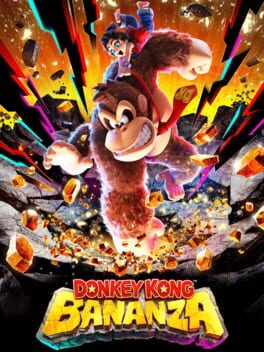
The first wall Donkey Kong punches through in Donkey Kong Bananza is not a tutorial. It is a thesis statement. The rubble lands, the path opens, and the game has already told you the only rule that matters: if it looks like stone, it probably yields. Nintendo EPD’s 3D platformer, DK’s first proper outing in that dimension in over two decades, commits entirely to that premise and builds a world that exists specifically to be dismantled.
There is something satisfying about a game that knows exactly what it is. Bananza does not hedge. It gives DK weight, it gives every surface a material property, and it asks you to move through an underground world by deciding what to break next. The result is a Switch 2 launch-window title that feels genuinely designed for the hardware it runs on, with the confidence that comes from a development team that chose a central idea and held to it.
This is a game about strength as curiosity. That is a considered thing to build a 3D platformer around.
Game Snapshot
| Developer | Nintendo EPD |
| Publisher | Nintendo |
| Release Date | 17 July 2025 |
| Platforms | Nintendo Switch 2 |
| Price | £59.99 | $69.99 |
| Rating | PEGI 7 | ESRB E10+ |
| Genre | 3D Platformer |
| Length | ~15-20h main/30h+ completionist |
| Install Size | ~16 GB |
Presentation and World Design
The underground world of Donkey Kong Bananza carries a quality that becomes clear about an hour in: it remembers what you have done to it. Walls stay broken. Passages you carved on the way down remain open on the way back. The subterranean zones do not reset between visits, which means that destruction is not cosmetic. It is the world’s record of your presence.
Nintendo EPD’s art direction commits fully to this premise. Stone fractures with visible weight, crumbling at the edges before giving way. Surfaces carry distinct textures that communicate affordance without UI indicators: brittle rock chips differently from reinforced metal, and the colour contrast between breakable terrain and immovable platforms reads at a glance even when debris fills the screen. The game trusts the player to read the environment rather than annotating it.
Each zone develops its own visual register through material variation and palette shifts across depth. The upper layers use warm ochres and amber; lower zones move into cooler, more saturated tones as the world opens into stranger geology. These transitions mark progress without a level-select screen ever appearing. The world communicates its own structure.
The light quality underground has a particular weight to it, all diffused amber and sharp shadow, that makes DK’s physicality read clearly against backgrounds in motion. When a wall collapses, the camera holds its framing. The debris settles. The new passage is lit correctly. None of this is accidental. Nintendo’s visual craft on this title extends to the way destruction is staged, not merely permitted.
For a Switch 2 title concerned with how a player relates to physical space, our Metroid Prime 4: Beyond review covers another first-party release that approaches world-building with similar architectural precision.

Gameplay and Combat
Donkey Kong Bananza centres on one mechanical premise: DK smashes through his environment to create routes, solve puzzles, and meet enemies on his own terms. The core toolset is bash, throw, climb, and manipulate. That is genuinely all of it. The game’s ambition is not in the breadth of its verbs but in how completely it builds a world around those four actions.
Destruction is navigation. Route options expand as players identify which surfaces yield, turning each area into a spatial puzzle where the correct path involves breaking rather than finding a gap. The physics engine handles debris predictably, which matters more than it sounds: smashed terrain settles with consistent behaviour so it never obscures platforms or disrupts timing. The game is legible under pressure because the destruction is well-engineered.
Controls prioritise weight over agility. DK moves with deliberate momentum, and that weight makes positioning decisions feel consequential. The bash mechanic responds instantly to input. The throw arc is precise enough for targeting enemies or environmental switches at range, and the parabola is consistent enough that it becomes a tool you trust rather than a guess. The handling model rewards planning over improvisation, asking for commitment to a chosen path rather than mid-air pivots.
Combat integrates directly into navigation. Enemies occupy the same spaces as routing decisions, so the choice to bash through a wall is simultaneously an offensive move, a traversal choice, and a puzzle solution. There is no mode switch between fighting and exploring. DK’s strength handles both through the same input vocabulary, which is the game’s cleverest structural decision.
The lava sections earn a particular mention. Molten flows act as both hazard and routing puzzle: DK must manipulate breakable platforms to redirect or bypass channels, turning environmental threats into traversal riddles. Breaking the wrong wall can trigger a flood or drain a chamber, forcing a reconsideration of the route mid-execution. These moments reward observation. They ask you to read before you smash.
The co-operative partnership with Pauline adds a second layer to these encounters, with her abilities complementing DK’s blunt force in ways that alter how specific puzzles resolve. Playing alongside a second person does not simply double the chaos; it genuinely changes what the game offers, providing a different read on spaces that DK alone would approach differently.
For players building a picture of the Switch 2 platformer catalogue, our best Switch 2 games 2026 guide covers where Bananza sits in the wider library.

Story and Characters
Donkey Kong Bananza places DK in a vast underground world and asks a very simple narrative question: what is down there? Nintendo EPD’s approach to story is minimal and deliberate. The premise is legible before the first level ends. DK explores. He smashes. He finds things. The reason to keep going is curiosity about the next layer, not investment in a plot.
Story beats arrive through environmental storytelling as DK descends deeper into subterranean zones. Each layer reveals something new about the world he is moving through. This suits a platformer where momentum matters more than exposition: players spend their time navigating rather than watching, and that pacing preserves the game’s energy across the full campaign length.
Pauline’s presence as a co-operative partner gives the adventure a companionship quality without requiring cutscenes to establish it. Her abilities contrast with DK’s physically, and that mechanical contrast communicates something about the relationship that a dialogue exchange could not. They solve problems differently. The game makes that legible through play rather than narration.
The wider character roster, which includes Diddy Kong, Dixie Kong, Cranky Kong, Funky Kong, Bowser Jr., and Peach alongside DK and Pauline, provides narrative variety through mechanical diversity. Each character carries distinct abilities that change how levels play. The game does not attempt to redefine its cast through dramatic arcs. It commits fully to DK as an active force in his own adventure, letting strength and momentum do the storytelling.
The story earns its time by staying out of the player’s way. Bananza is a game about doing rather than watching, and every narrative choice supports that priority. A silent protagonist smashing through stone needs no monologue when the world records the evidence of his passing.

Value and Longevity
At fifteen to twenty hours for the main campaign, Donkey Kong Bananza asks for sustained attention across a reasonable run of sessions. The completionist path extends to thirty hours and beyond, with secret passages, bonus levels, and the replay value that comes from returning to earlier zones with later-acquired knowledge of what the environment can yield. Walls that seemed solid on a first pass acquire new meaning once the material grammar is fluent.
The eight-character roster is the longevity engine. Replaying sections with Dixie’s mobility or Funky’s distinct movement profile genuinely changes the spatial problem each level presents. This is not cosmetic variety. Different characters reach different surfaces, which means the branching level structure rewards experimentation rather than repetition.
Local co-operative play for up to four players extends the game’s social dimension. Pauline as DK’s co-operative partner in the main campaign is the most developed version of this, but the four-player local sessions and split-screen support give families and groups a reason to return to areas they have already cleared. The absence of online multiplayer is the single note against the game’s value proposition: players who cannot gather in person will not have access to the collaborative modes.
The price at £59.99 / $69.99 reflects Nintendo’s first-party premium tier for Switch 2 software. For a game with this much considered content at the completionist end, that is a fair ask. Our best Switch 2 cosy starter pack guide situates Bananza within a broader first-wave library for anyone weighing initial Switch 2 purchases.

Technical Notes
Donkey Kong Bananza runs as a native Switch 2 title, and the additional hardware overhead shows where it counts. Frame rate holds steadily across both docked and handheld modes during standard play, with destructible physics and debris rendering handled smoothly even in busy sections. There are no notable drops during the lava-routing sequences where particle and fluid effects compound.
Handheld performance is the commendable note here. The tactile quality of the destructible environments reads clearly on the smaller screen: material textures and the contrast between breakable and immovable terrain remain legible without the display scale disadvantage that affected comparable titles on the original Switch. The hardware bump matters for a game whose readability depends on environmental detail.
Load times between zones are brief. The game does not draw attention to them, which is the correct behaviour for a title built around uninterrupted momentum. Transitioning between depth layers happens quickly enough that the pacing never stalls at a loading boundary.
The Switch 2-specific performance advantages are present without being intrusive. Enhanced visual fidelity in the underground environments and improved split-screen clarity in co-operative sessions both benefit from the additional headroom, but the game never presents these as selling points. They are simply the execution quality that the platform allows.
Final Word
There is a particular moment in Donkey Kong Bananza that arrives differently each time: the wall you assumed was scenery gives way, and the passage beyond opens into something the map had not suggested. The game is built around that discovery. Every surface is a question. DK’s strength is the answer, and the underground world is structured to make that exchange feel consistently satisfying across the full campaign.
Bananza works best for players who want a platformer to share across generations, one where the mechanical premise is immediate enough for a younger player and deep enough, in its routing puzzles and co-operative complexity, to hold the attention of someone who wants to find the edges of what the environment permits. Its strongest moments arrive when the system trusts the player to read before smashing. Those moments are frequent.
This is a confident first-party debut. It does not arrive with caveats about what it is trying to be.
FAQ
Is Donkey Kong Bananza only on Switch 2?
Donkey Kong Bananza is a Nintendo Switch 2 exclusive. The game was designed for the Switch 2 hardware specifically and is not available on the original Nintendo Switch, PS5, or Xbox Series X/S. Players will need a Switch 2 to access the game at launch.
How many playable characters does Donkey Kong Bananza have?
Donkey Kong Bananza features eight playable characters: Donkey Kong, Diddy Kong, Dixie Kong, Cranky Kong, Funky Kong, Pauline, Bowser Jr., and Peach. Each character carries distinct abilities that alter movement options and environmental interactions, making the same areas play differently depending on who you bring to them.
Does Donkey Kong Bananza have co-op multiplayer?
Donkey Kong Bananza supports local co-operative play for up to four players, including a dedicated co-operative campaign mode with Pauline as DK's partner. The game does not include online multiplayer at launch. Players who want to share the campaign must be in the same room; there has been no announcement of online functionality being added post-launch.
How long does it take to finish Donkey Kong Bananza?
The main campaign runs approximately fifteen to twenty hours for players focused on story completion. A full completionist run, accounting for secret passages, bonus levels, and character-specific routes, extends to thirty hours and beyond. The eight-character roster gives the game substantial replay depth beyond a single campaign playthrough.
Is Donkey Kong Bananza good for younger players?
Donkey Kong Bananza carries a PEGI 7 rating and an ESRB E10+ rating, making it appropriate for most ages. The core destruction mechanic is immediately intuitive, and the visual readability of the underground environments keeps the game accessible without simplifying the routing puzzles. Difficulty spikes arrive in mid-game sections, but the local co-operative modes allow experienced players to support younger ones through trickier areas.
8.6
Great
SpawningPoint Verdict
Review summary
Donkey Kong Bananza delivers Nintendo EPD's most mechanically committed platformer in years, building an entire underground world around the premise that DK's strength is a navigation tool as much as a combat one. The eight-character roster, branching level structure, and co-operative modes with Pauline give the game substantial replay depth well beyond the main campaign's twenty hours. Visual clarity in both docked and handheld modes reflects the Switch 2 hardware advantage, and the absence of load-time interruptions keeps the momentum intact across long sessions. The only note against it is the lack of online multiplayer, which limits collaborative play to local sessions. For a first 3D DK outing in over two decades, Bananza arrives with quiet confidence and earns the time it asks for.


