

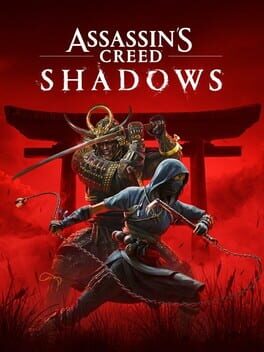
The dual-protagonist design is the contract Assassin’s Creed Shadows makes at the title screen and cannot afford to break. Naoe and Yasuke are not mechanical twins assigned to different story chapters; they are two distinct encounter grammars held inside the same open world, and the game’s March 2025 launch verdict turns almost entirely on whether that separation holds across the full runtime. It holds. Not without seams, not without AI detection problems that undermine specific stealth sequences in ways the shinobi contract cannot absorb cleanly, but the structural argument is present and it is the most considered design commitment the series has made since Origins.

Game Snapshot
| Developer | Ubisoft Quebec |
| Publisher | Ubisoft |
| Release Date | 20 March 2025 |
| Platforms | PlayStation 5, Xbox Series X/S, PC, Mac, iPad |
| Price | £59.99 | $69.99 (Standard) |
| Rating | PEGI 18 | ESRB M (Mature 17+) |
| Genre | Open-world action RPG |
| Length | ~30h main story / ~80h full completion |
| Install Size | ~50 GB (PS5) |
Gameplay and Combat
Naoe's Stealth Contract
Naoe's encounter design is built around a single premise: the shinobi is not faster than the samurai, she is better informed. The grappling hook sequences across Iga's rooftop pathways are not traversal tools that happen to feed into combat. They are reconnaissance instruments, staged to supply sightline geometry before the contract fight begins. A player who has read an Iga compound from the upper paths knows where the patrol routes cross, where the prone-crawl approach opens a kusarigama angle through the foliage, and which threshold connects the exterior approach to the interior assassination corridor. A player who descends directly will encounter the same information as a surprise.
The stealth system teaches this through the Iga hideout sequences, which are among the most concentrated encounter-design work in the launch build. Kunai deployment is staged against patrol timing: the game establishes patrol intervals in the approach, then asks the player to use that establishment during the contract itself. The mechanics are legible. The AI detection cone is visualised without being cartoonish. The prone-crawl approach, introduced in Yamashiro's opening contracts, is tested properly in the Harima sequences where foliage density is lower and the exposure window narrows significantly.
Where the contract buckles is at the AI boundary. Detection inconsistency is the specific failure: identical approach angles produce different detection outcomes across the same patrol type, which breaks the teaching logic the encounter has established. A player who reads the sightline correctly and executes the prone-crawl at the documented interval gets detected on the second attempt at the same geometry. That is not difficulty calibration; it is a consistency problem that the stealth contract cannot accommodate, because the contract is built on the premise that reading the information correctly produces a predictable outcome.
The contract holds for the majority of the runtime. The seams are identifiable and named, not systemic. For a launch build, the stealth scaffolding is more coherent than most of the series has managed.

Yasuke's Open-Warfare Contract
Yasuke stages his encounter grammar differently: the kanabō is not a fast weapon that staggering makes faster, it is a weight economy. The first Settsu open-field engagement establishes this correctly. The kanabō's stagger threshold varies by enemy class, and the game teaches those thresholds through the encounter order in Settsu before it asks the player to apply them in the compound assaults that follow. Heavy infantry absorb two hits before the stagger window opens. Ashigaru stagger on one. The naginata's range control across the same open-field engagements handles the spacing requirement that the kanabō cannot, and the game's encounter design gives the player both tools in the opening Settsu sequence before it builds scenarios requiring them together.
The yumi integration is the element that most distinguishes Yasuke's contract from a standard heavy-weapon soulslike loop. The bow is not a distance option appended to the melee kit; it is a de-escalation tool staged against the open-field geometry. The Settsu compound assaults use elevated archer positions that the kanabō cannot address from the ground without absorbing arrow damage, and the yumi provides the specific response the encounter has staged. That is weapon-tool integration, not weapon-kit breadth.
The bosses in Yasuke's contract are where the encounter design is most concentrated. The named feudal lords encountered through Settsu and Yamashiro province missions are staged around the stagger economy: they break the kanabō rhythm at specific health thresholds and require the player to switch to naginata reach control during the second phase. The phase transitions are announced through animation changes that are legible on first reading. The difficulty is calibrated, not opaque.

Presentation and World Design
Open-World Design: Sengoku Japan as Encounter Environment
The provinces are not backdrop. The seasonal system does encounter-design work: rain in Harima reduces detection range for both Naoe's stealth sequences and Yasuke's open-field approaches, which is the correct functional application of an environmental variable. Snow in Iga alters patrol-route spacing because guards cluster toward heat sources, changing the approach geometry for the shinobi contract. These are not cosmetic cycles. They modify the encounter parameters in ways that extend the game's teaching logic beyond weapon systems.
The world texture is specific without being encyclopaedic. Yamashiro's temple districts stage the environmental geometry that the stealth contract needs without requiring the player to absorb a history document before the contract begins. The architecture functions as encounter design: verticality exists where Naoe needs it, open ground exists where Yasuke does. The environmental staging and the encounter design are aligned, which is the correct relationship between the two. This calibration is central to what makes the province design worth attention, and it connects directly to the open-world design argument we explored in our Elden Ring PC and PS5 review.
The seasonal variation does expose the world's limits under extended play. The province layouts recycle patrol configurations across different seasonal states, which means a player deep into the second act is reading familiar encounter geometry in new lighting conditions. That is not a contract violation, but it is where the open-world scaffolding becomes visible beneath the encounter-design work. The seasonal mechanic is the most successful environmental-variable system in the series since the dynamic weather in Dragon Age: The Veilguard, though it is deployed at a greater scale and with more direct encounter-design consequence.
Story and Characters
The Dual-Protagonist Convergence
The narrative problem with two protagonists is not the backstory management: it is whether the story has a reason for both of them to be present at the same inflection points. Assassin's Creed Shadows at launch manages this through the conspiracy framework that both Naoe and Yasuke are tracking from different entry points. The convergence sequences, where the shared investigation brings both characters into the same compound or the same confrontation, are the game's strongest narrative moments because they use the dual-protagonist design as story infrastructure rather than marketing copy.
Naoe's motivation is personal and specific: the Iga massacre that opens the game stages her arc's stakes correctly and the named antagonists in the Templar-adjacent conspiracy are distinguished enough to function as genuine targets rather than obstacle types. Yasuke's arc is less internally motivated: his loyalty to Nobunaga provides a historical anchor, but the post-Honnoji direction requires the game to construct new stakes for him that do not always feel as earned as Naoe's.
The story does not falter at the convergence; it falters in the connective tissue between the major plot beats, where mission-objective repetition dulls the narrative momentum the opening act establishes. The cutscene quality is consistent. The dialogue avoids the expository dump problem that has affected several entries in the series. At launch, the dual-protagonist convergence is a structural achievement that the narrative framing does not always fully exploit.

Value and Longevity
Value at Launch
Thirty hours for the main story line is the correct length for a game whose encounter design requires the player to build fluency with two distinct combat grammars. A shorter runtime would not give Yasuke's stagger economy time to teach itself; a longer one would exhaust the province patrol configurations before the narrative justified the extension. The eighty-hour completionist figure is accurate but applies pressure that the encounter design cannot entirely sustain: the later-province contracts repeat attack vocabularies that the player has already been taught, which is inventory rather than escalation.
At £59.99 / $69.99 on release, the value case rests on the quality of the stealth and open-warfare encounter design rather than on content volume. The two grammars are genuinely differentiated, the province design stages both correctly, and the seasonal system extends the encounter variables without inflating the world artificially. For players who are specifically interested in what a dual-protagonist stealth-plus-combat architecture can do, the launch build makes that case clearly. For players expecting the encounter-design density of something like our South of Midnight review in its tighter spatial scope, the open-world scaffolding will occasionally be visible at the margins.
There is no Game Pass option at launch. The full price is what the encounter design has to justify on its own terms. It does, with the AI consistency caveat named above.
Technical Notes
The PS5 version holds frame rate through the first and second acts. The identified exception in the launch build is the large-scale open-field Settsu engagements where particle load from fire propagation through wooden structures drops frame-time intermittently. The drops are not sustained enough to affect the kanabō stagger economy in most cases, but the specific encounters where fire propagation and heavy infantry density coincide are the encounters where Yasuke's combat requires the most reliable input timing. That pairing is worth noting in the context of the encounter design rather than as a separate technical footnote.
The PC version at launch requires the driver version the game specifies. Without it, shader compilation stuttering affects the first two hours and the open-field engagements in ways that are disproportionate to the underlying stability. After the initial compilation pass, performance is consistent at the settings the game recommends.
The AI detection inconsistency noted in the stealth section is the launch build's most significant systemic issue. It is not a performance problem; it is an encounter-design problem that post-launch patches can address, and the underlying stealth architecture suggests they will.
Final Word
The launch contract holds. Naoe's shinobi grammar, built from the Iga hideout sequences through to the Harima province contracts, teaches the grappling-hook and prone-crawl vocabulary in the correct order and stages the kusarigama and kunai applications against encounter geometry that makes their function legible before it makes them necessary. That is the standard by which encounter design justifies its difficulty. Yasuke's open-warfare contract does the same through a different vocabulary: the kanabō stagger economy across Settsu's open-field engagements is the game's most mechanically precise design achievement.
For SpawningPoint's reassessment of the dual-protagonist design one year after launch, with the Claws of Awaji DLC and post-launch patches factored in, see Daniel's Assassin's Creed Shadows one-year retrospective. The launch verdict is 8.0. The retrospective reaches 8.4. The gap between those two numbers is what a year of patches and a focused DLC does to a game whose structural argument was present at launch but not fully resolved.
FAQ
Is Assassin's Creed Shadows good?
The dual-protagonist design is the game's central argument and it is a structurally coherent one: Naoe's shinobi stealth and Yasuke's open-warfare contract are genuinely differentiated encounter grammars rather than aesthetic variants on a shared system. The launch build has AI detection inconsistency in the stealth sequences and frame-time drops in large-scale Settsu engagements, neither of which undermines the core design. It is the most considered series entry since Origins and a credible open-world action RPG on its own terms.
Naoe or Yasuke: which is better for play?
Neither is superior; they are designed for different encounter preferences. Naoe's shinobi contract stages the grappling hook, kusarigama, and prone-crawl approach as a patience and geometry grammar: the encounter rewards reading the space before entering it. Yasuke's open-warfare contract stages the kanabō stagger economy and naginata range control as a weight and attrition grammar: the encounter rewards understanding enemy class thresholds and weapon-role switching. The dual-protagonist design is the game's argument, not its compromise.
How long is Assassin's Creed Shadows?
The main story runs approximately 30 hours through the Naoe and Yasuke arcs and their convergence sequences. Full completion with side contracts and province exploration reaches approximately 80 hours. The main-story runtime is the correct length for the encounter-grammar teaching arc; the completionist extension is where the patrol configurations begin to repeat.
Is AC Shadows on Game Pass?
Assassin's Creed Shadows is not available on Game Pass at launch in March 2025. It releases at full price: £59.99 / $69.99 for the Standard Edition, with higher-tier editions available. The encounter design justifies the launch price for players interested in what a dual-protagonist stealth-plus-combat architecture can do; the AI consistency issue is the noted launch-build caveat.
Should I buy Assassin's Creed Shadows at launch?
The launch build's stealth and open-warfare encounter design are coherent and the seasonal system does genuine encounter-variable work across the provinces. The AI detection inconsistency and the open-world structural repetition in the later acts are the specific caveats. A player interested in the dual-protagonist design and willing to work with the stealth AI inconsistency will find the launch experience worth the price. A player who wants the post-patch resolved version should note that the one-year retrospective scores the game at 8.4 after the fixes have landed.
8.0
Great
SpawningPoint Verdict
Review summary
Assassin's Creed Shadows at launch delivers a dual-protagonist design that earns its premise. Naoe's shinobi contract, built around grappling-hook verticality, kusarigama mid-range control, and prone-crawl approach across Iga and Harima, and Yasuke's open-warfare contract, built around kanabō stagger economy and naginata range control across Settsu's open engagements, are differentiated encounter grammars that the province design stages correctly. The seasonal system extends the encounter variables functionally. AI detection inconsistency in the stealth sequences and frame-time variance in large-scale Settsu engagements are the launch build's named caveats. The story's dual-protagonist convergence sequences are structurally achieved; the connective narrative tissue is uneven. At 8.0 out of 10, this is the march 2025 launch verdict. For the one-year reassessment, the retrospective is the correct read.


