RETROSPECTIVE
A Short Hike Retrospective The Perfect Short Cosy
A Short Hike retrospective for 2026: why the island's smallness is formal, how feathers reshape attention, and why the perfect short cosy claim still holds.


The phone call at Hawk Peak is not the game’s reward; it is the game’s release. A Short Hike earns its shortness by refusing to become busy. That claim still matters in 2026, when gentle games confuse generosity with accumulation. This retrospective is not asking whether the mountain still looks pleasant, or whether the short runtime feels larger now. It is asking whether the game still earns the perfect short cosy claim by making its smallness formal. It does, quietly. The island waits, the path opens, and the player is trusted to stop when stopping feels right.
Game Snapshot
| Field | Detail |
| Developer | adamgryu |
| Publisher | adamgryu |
| Release Date | 30 July 2019 (PC); 18 August 2020 (Nintendo Switch) |
| Platforms | Windows, macOS, Linux, Nintendo Switch, PlayStation 4, Xbox One |
| Price | Check price on Amazon |
| Rating | PEGI 3 / ESRB E (Everyone) |
| Genre | Cosy exploration retrospective |
| Length | Varies |
| Install Size | Varies by platform |
Presentation and World Design
Hawk Peak has a quality of afternoon light that does most of the game’s critical work before the player reaches the climb. The paths are readable without being over-marked, the sea catches at the edge of the screen, and the island feels walked rather than arranged. That distinction matters. A world that is only pretty asks to be admired. This one asks to be crossed, paused in, and returned to by a slightly different route.
The pixelated softness is not a veil over thin design. It is the correct visual distance for a game about attention at small scale. Trees become shapes before obstacles. Cliffs become invitations before routes. The player notices a ledge because the world has made a quiet promise that ledges usually matter. That promise is also why A Short Hike on Switch 2 reads differently as a platform piece, whilst our full Hike review makes the broader argument for its brevity. Here, the retrospective point is simpler: the mountain still knows where to put the player’s eye.

Gameplay and Combat
There is no combat here in the usual sense, which is the correct absence. The game puts its pressure into feathers, height, and the small decision of whether to spend stamina now or save it for the next ridge. Failure is a slip, a fall, a return to a ledge just below where the player meant to land. It is forgiving without turning forgiveness into ceremony. The morning is still available.
The feather system remains one of the cleanest forms of cosy progression because it changes the player’s relationship with space, not their obligation list. Each new feather opens the island a little further. It does not add a daily chore, a meter to maintain, or a menu to tend. That is why the game still feels distinct beside broader life-sim structures. In our Moonstone Island review, the question is how a larger loop earns its skies across repeated days. A Short Hike answers the smaller version: how much can one afternoon hold before it stops being an afternoon? The answer is: exactly this much.
Story and Characters
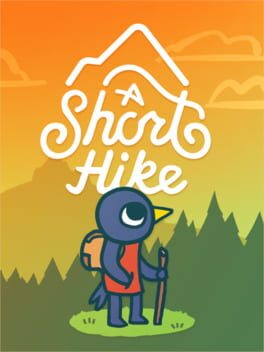
Claire’s errand is plain, which is why it works. She needs reception, she needs the peak, and the game lets the emotional weight sit behind that practical shape. The writing does not underline the loneliness of waiting for a call. It places the player on an island where everyone else is also doing a small thing: running, painting, fishing, selling, looking for something misplaced. The story becomes a collection of parallel afternoons.
This is the quiet kind of character writing, where an NPC is allowed to be one good exchange rather than a biography. The painter’s uncertainty, the runner’s focus, the economy of shells and coins: each detail has enough outline to hold attention, then enough restraint to let the player move on. That restraint is close to what works in Cattails Wildwood Story on Switch 2, though A Short Hike reaches it by subtraction rather than accumulation. The island tells the player enough. It trusts the rest to the walk.
Value and Longevity
The value question is where A Short Hike is easiest to misread. It is not generous because it lasts for weeks. It is generous because it understands the size of its own promise. The player can finish the climb quickly, then return for shells, races, fishing, hidden corners, and a place that now feels known.
That is a different kind of value from a shopkeeping loop or a season cycle. Our Tiny Bookshop review turns on what repeated days reveal about people. A Short Hike turns on what one day reveals when the game does not crowd it. Short sessions reward more than completionism, and the correct ending is the one chosen after the peak. The light on the water at the cove has a particular settled quality in the late afternoon, and the game lets the player notice it without asking for anything more.

Technical Notes
The game depends on movement that reads cleanly, camera behaviour that lets the path stay understandable, and saves that make returning feel easy. The island’s legibility is the technical requirement that matters. When those conditions hold on the target platform, the technical layer has done the correct work: it has stayed out of the afternoon.
Final Word
A Short Hike remains the rare short game whose brevity feels structural rather than slight. The summit matters, but the better memory is usually lower down: a ledge reached by accident, a coin found near water, the sound of landing safely after a glide that nearly ran out. The game has always understood that an afternoon is not made larger by filling every minute. It becomes larger when the minutes are allowed to settle. That is why the retrospective verdict is still clear. A Short Hike earns what it claims, and it does so by stopping before the claim thins out.
Is A Short Hike still worth playing in 2026?
A Short Hike is still worth playing in 2026 for players who want a game that understands the size of its own promise. The island is small by design, the afternoon is shaped with care, and the game stops before the claim thins out. It does not run on repeated days the way a life-sim does, and it never suffers for that. It is one afternoon that still holds for players who notice a ledge because the world has made a quiet promise that ledges usually matter.
Does A Short Hike require a long commitment?
No long commitment is required. The climb can be finished quickly, and the value sits in what one day reveals when the game does not crowd it. Short sessions suit it better than completionism, and stopping after the peak is a choice the game respects. Players who want a place that feels known after a single careful pass will find the island still offers exactly that.
Is the game only for players who like short experiences?
The game is for players who like precision about pace. The shortness is formal: routes double back, each feather changes what the island asks you to notice, and the climb ends before the loop starts to feel owed. Players who want repeated-day accumulation will find the structure different from a life-sim, but the afternoon still holds for those who notice the light on the water at the cove without being asked for anything more.
Does the retrospective change the original verdict?
The retrospective confirms the original verdict rather than revising it. The island still earns its smallness by refusing to become busy, and the title’s claim holds because the ending still arrives at the right moment. The afternoon light, the readable paths, and the quiet promise that ledges usually matter have not changed. The game remains precise about what an afternoon can hold.
Is there anything new in 2026 that affects the experience?
The core experience is unchanged. Platform updates may improve load times or resolution, but the island's legibility, the feather system, and the afternoon's shape are the same. The game depends on movement that reads cleanly and saves that make returning feel easy. When those conditions hold, the technical layer stays out of the afternoon as it always has.


