Every guide answering what order to play Metal Gear Solid gives you the same list. Release order is correct. The harder question in 2026 is access. Two of the nine mainline entries remain locked behind legacy hardware until August, and the rest sit across three storefronts and two collection volumes. This guide covers both the ideal sequence and the practical route through what you can actually play right now. Whether you are starting with the 1998 original or the 2025 Delta remake, the goal is the same: experiencing Hideo Kojima’s espionage saga in the order that preserves its surprises, its callbacks, and its emotional weight.
Quick Answer Box
Play Metal Gear Solid in release order: MGS1, MGS2, MGS3, MGS4, Peace Walker, Ground Zeroes, then The Phantom Pain. This is the sequence Kojima designed and the one that preserves every twist and callback. If you cannot access MGS4 or Peace Walker yet, start with the Master Collection Vol. 1 (MGS1 through MGS3) and pick up Vol. 2 when it arrives on 27 August 2026.
What Order to Play Metal Gear Solid: Why Release Order Is Still Right
Release order exists because Kojima built each sequel expecting you to have played the last one. Metal Gear Solid 2 opens with a sequence that directly mirrors the first game’s opening. Metal Gear Solid 3, set decades earlier, is packed with references that only land if you already know Shadow Moses. Guns of the Patriots closes threads from every previous entry. Playing chronologically strips those moments of their purpose.
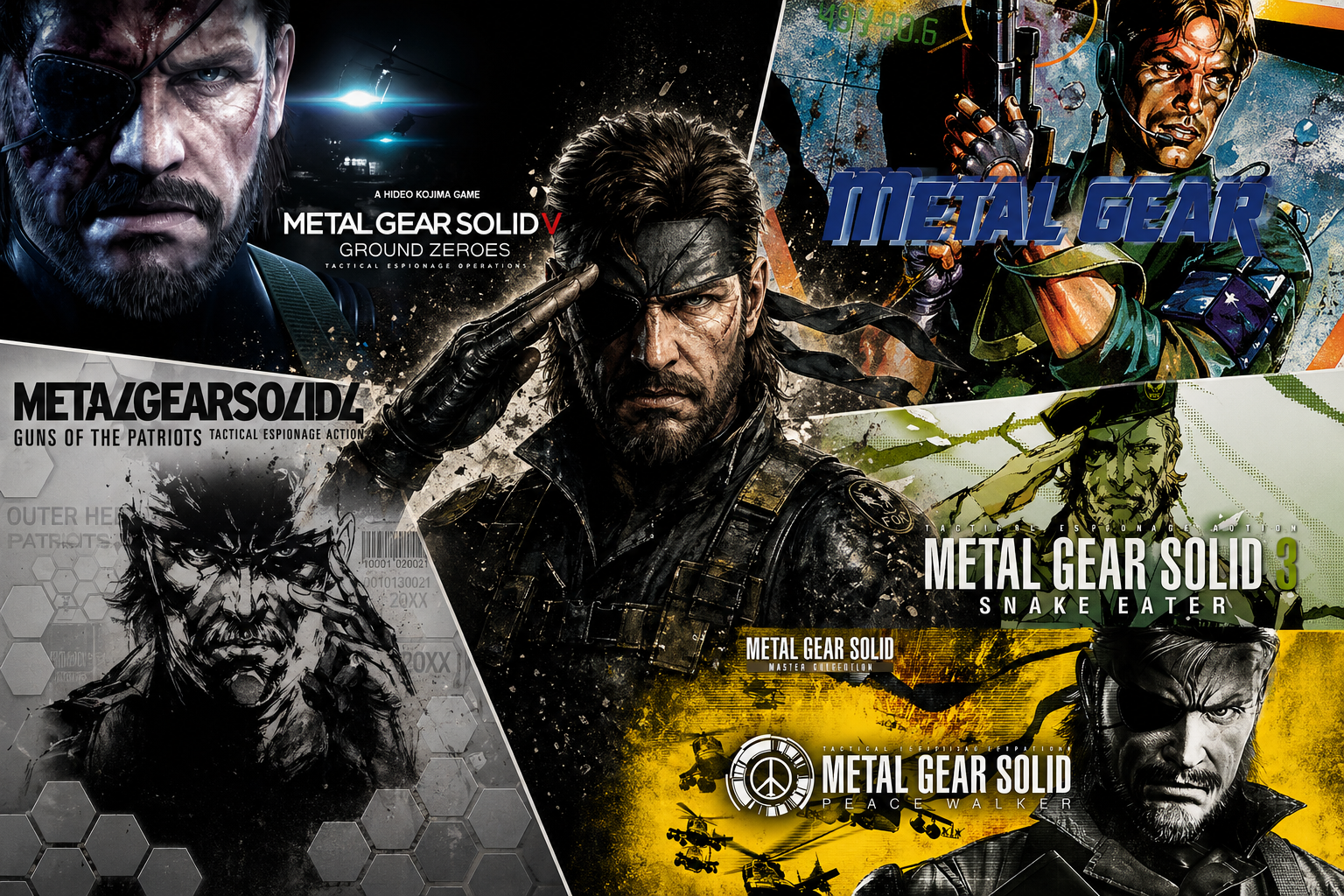
Here is the full release order for mainline titles:
- Metal Gear Solid (1998) — 11 hours
- Metal Gear Solid 2: Sons of Liberty (2001) — 13 hours
- Metal Gear Solid 3: Snake Eater (2004) — 16 hours
- Metal Gear Solid 4: Guns of the Patriots (2008) — 18.5 hours
- Metal Gear Solid: Peace Walker (2010) — 18 hours
- Metal Gear Solid V: Ground Zeroes (2014) — 2 hours
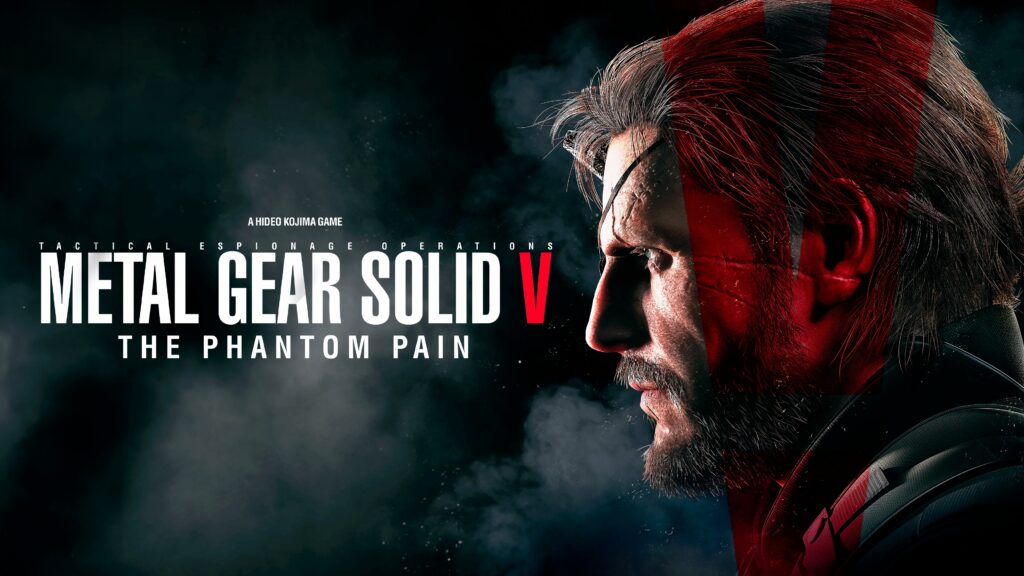
- Metal Gear Solid V: The Phantom Pain (2015) — 45.5 hours
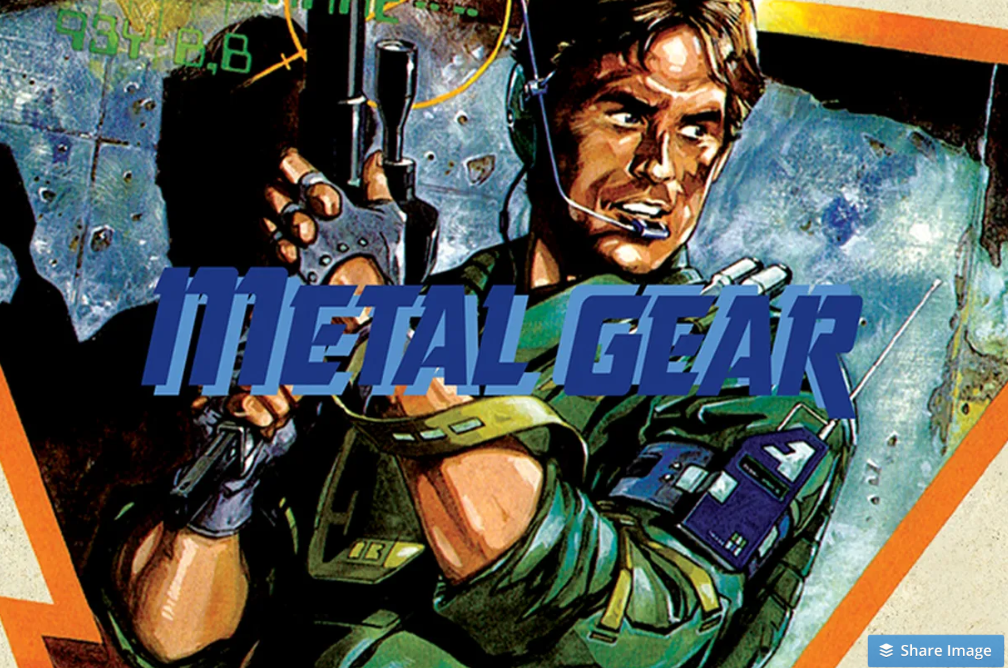
Total core campaign: roughly 124 hours. That is a serious commitment. The original Metal Gear (1987) and Metal Gear 2: Solid Snake (1990) are included in Vol. 1 of Konami’s collection and worth playing for historical context, but MGS1 recaps their stories thoroughly enough that skipping them costs you flavour, not comprehension.
The order works. Trust it.
Chronological Order: When It Makes Sense (and When It Does Not)
The Metal Gear timeline spans fifty years of in-game history, from 1964 to 2014. Chronological order follows Big Boss’s arc first, then Solid Snake’s:
- Metal Gear Solid 3: Snake Eater (set in 1964)
- Metal Gear Solid: Peace Walker (1974)
- Metal Gear Solid V: Ground Zeroes (1975)
- Metal Gear Solid V: The Phantom Pain (1984)
- Metal Gear Solid (2005)
- Metal Gear Solid 2: Sons of Liberty (2007/2009)
- Metal Gear Solid 4: Guns of the Patriots (2014)
It sounds elegant. In practice, it fractures two things. The first is narrative: MGS3’s final salute derives its power from the player already understanding what the Boss’s sacrifice costs across three subsequent games. Playing it first turns a devastating reveal into a simple plot point. The second is mechanical: jumping from The Phantom Pain’s open-world stealth sandbox back to the fixed camera angles of the 1998 original is a jarring downgrade that colours how you receive the older titles.
Chronological order suits a replay. It recontextualises familiar scenes and deepens the thematic threads between father and son. For a first experience, it sacrifices too much.
What You Can Actually Play Metal Gear Solid on in 2026
Most guides stop at the list. This one does not. Knowing the right order means nothing if you cannot access the games. Here is the honest picture as of April 2026.
Playable Now on PS5, Xbox Series X/S, and PC
- MGS1, MGS2, MGS3 via Master Collection Vol. 1 (also on Switch).
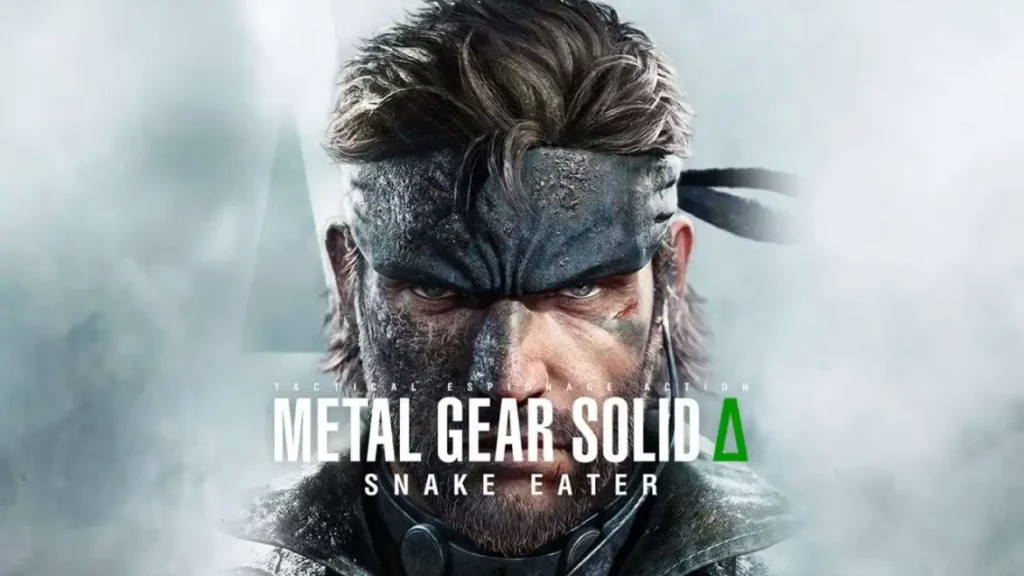
- Metal Gear Solid Delta: Snake Eater (PS5, Xbox Series, PC). Not a replacement for the original in a release-order run, but the strongest entry point for players who want modern controls. Konami’s approach mirrors what they did with Silent Hill 2: a faithful remake that modernises presentation whilst keeping the original’s structure intact.
- MGSV: Ground Zeroes and The Phantom Pain via backwards compatibility (PS4 version on PS5, Xbox One version on Series X/S) or natively on PC. The Definitive Experience bundles both.
Locked Until 27 August 2026
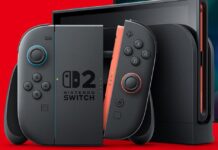
- Metal Gear Solid 4: Guns of the Patriots has been a PS3 exclusive since 2008. It finally arrives on PS5, Xbox, PC, Switch, and Switch 2 via Master Collection Vol. 2. Until then, your only option is a working PS3.
- Metal Gear Solid: Peace Walker sits in the same gap. The PSP original, the PS3 HD Collection, and Xbox 360 backwards compatibility are the current routes. Konami’s second volume brings it to every modern platform in August.
The practical consequence: if you start today, you can play MGS1 through MGS3 and then MGSV without interruption. Guns of the Patriots and Peace Walker require either legacy hardware or patience until late August. Plan accordingly.
The Best Starting Point for Absolute Newcomers
Start with Metal Gear Solid (1998) if you can tolerate dated controls. It remains the most effective introduction to the franchise’s tone, themes, and characters. Vol. 1 puts it on every current platform for under twenty pounds.
Start with Metal Gear Solid Delta: Snake Eater if you want a modern experience first. Delta is a standalone Cold War stealth story with current-generation visuals and controls. It works as a gateway, but its callbacks to MGS1 and MGS2 carry no weight on a first encounter. You will still need to return to the 1998 original to follow the Solid Snake timeline.
Do not start with Metal Gear Solid V. Its open-world structure and thin narrative context make it the worst possible introduction despite being the most mechanically polished entry. The Phantom Pain assumes you know Big Boss’s history from three previous games.
One game is enough to decide. If the first ten hours hook you, the rest of Kojima’s catalogue will too.
Which Metal Gear Solid Games You Can Skip Without Missing the Core Story
Not every entry is essential. Here is what you can cut without losing the thread.
Skip: Metal Gear and Metal Gear 2: Solid Snake (1987/1990). Both are included in the first volume, and they are fascinating pieces of gaming history, but MGS1’s opening briefing recaps every critical plot point. Play them later if curiosity strikes.
Skip: Metal Gear Solid: Portable Ops (2006). Semi-canonical at best. Peace Walker treads the same territory more effectively and is the version Kojima considered part of the core saga.
Skip on a tight schedule: Metal Gear Solid V: Ground Zeroes. This brief prologue to The Phantom Pain lasts roughly two hours. Its single mission is excellent, but a story recap video bridges the same gap. If you have the time, play it. If not, The Phantom Pain opens with enough context.
Do not skip: MGS1, MGS2, MGS3, MGS4, Peace Walker, or The Phantom Pain. Each one carries plot threads, character reveals, or thematic shifts that later entries depend on. Cutting any of these six leaves visible gaps in the story.
Six games. Roughly 122 hours. That is the minimum viable path through a saga that spans five decades of Cold War paranoia, nuclear deterrence, and cloned soldiers.
FAQ
What order should I play Metal Gear Solid in?
Release order is the recommended sequence for first-time players, starting with the 1998 original and ending with The Phantom Pain. Kojima designed each entry expecting familiarity with its predecessor, meaning narrative twists, character introductions, and thematic payoffs all depend on having followed the intended progression. Chronological order works better as a second-playthrough lens.
Should I play Metal Gear Solid in chronological or release order?
Release order is the stronger choice for newcomers because it preserves the intended impact of every narrative reveal and gameplay progression. Chronological order, which begins with Snake Eater (1964) and ends with Guns of the Patriots (2014), recontextualises familiar scenes but strips several major reveals of their dramatic weight. Veterans who want Big Boss’s arc as a continuous thread may prefer chronological on a replay.
Can I start with Metal Gear Solid 3 or Delta: Snake Eater?
Starting with Delta: Snake Eater is a viable option, as its self-contained Cold War storyline and Unreal Engine 5 presentation make it the most accessible entry in the franchise. The trade-off is that references to Shadow Moses and the Tanker Incident will pass unnoticed until you play the earlier titles. Starting here is reasonable if dated controls are a barrier, but looping back to the 1998 original afterward is necessary for the Solid Snake arc.
Do I need to play the original Metal Gear and Metal Gear 2?
Playing the 1987 and 1990 originals is optional for newcomers because Metal Gear Solid’s intro briefing summarises their critical plot points. Vol. 1 includes both, and they reward curiosity, but omitting them sacrifices atmosphere rather than understanding. Their top-down gameplay feels distinctly different from the 3D entries that followed.
What Metal Gear Solid games are in the Master Collection?
Vol. 1 (available now) includes Metal Gear, Metal Gear 2: Solid Snake, Metal Gear Solid, Metal Gear Solid 2, and Metal Gear Solid 3 on PS5, Xbox Series X/S, Switch, and PC. Vol. 2 (arriving 27 August 2026) adds Guns of the Patriots, Peace Walker, and Ghost Babel. Neither volume includes Metal Gear Solid V or Delta: Snake Eater, which are sold separately.
Is Metal Gear Solid 4 available on PS5?
Guns of the Patriots has been locked to the PlayStation 3 since its 2008 launch, making it the most difficult mainline entry to access in 2026. It arrives on PS5, Xbox Series X/S, PC, Switch, and Switch 2 on 27 August 2026 via Master Collection Vol. 2, ending eighteen years of platform exclusivity.
What is the best Metal Gear Solid game to start with?
Metal Gear Solid (1998) remains the strongest starting point because it was designed as the franchise introduction and establishes every major character and theme. For players who prioritise modern visuals and controls, Delta: Snake Eater (2025) is the most polished alternative gateway. Avoid starting with The Phantom Pain, as its sandbox design and sparse narrative framing assume familiarity with three earlier games.
How long does it take to play all Metal Gear Solid games?
Completing the seven mainline entries from MGS1 through The Phantom Pain requires around 124 hours of focused play. Including the 1987 and 1990 originals adds another ten hours, bringing the total near 134. The Phantom Pain alone accounts for 45.5 hours, making it by far the longest individual instalment. A streamlined run of the six essential titles sits at approximately 122 hours.
Which Metal Gear Solid games can I skip?
The 1987 and 1990 originals can be skipped safely, as MGS1 recaps their plots in its opening briefing. Portable Ops (2006) is semi-canonical and largely superseded by Peace Walker. Ground Zeroes is a short prologue that enriches but is not essential for The Phantom Pain. The six entries you must keep are MGS1, MGS2, MGS3, MGS4, Peace Walker, and The Phantom Pain.
Is Metal Gear Solid Delta the same as Snake Eater?
Metal Gear Solid Delta: Snake Eater is a ground-up remake of the 2004 original, rebuilt in Unreal Engine 5 with modernised controls, overhauled visuals, and quality-of-life improvements. The core story, characters, and mission structure remain faithful to the PlayStation 2 version. It holds an 86 on Metacritic compared to the original’s 91, and sold over one million copies within its first day of release on 28 August 2025.
Summary
Release order remains the definitive way to experience Kojima’s espionage saga, spanning seven mainline entries and roughly 124 hours of storyline. In 2026, availability is the genuine challenge. Vol. 1 covers MGS1 through Snake Eater on every current platform, and MGSV is accessible via backwards compatibility and PC. Guns of the Patriots and Peace Walker, however, remain out of reach on modern hardware until Master Collection Vol. 2 arrives on 27 August 2026. Newcomers should begin now with what is available, working through the first three entries and MGSV, then filling the remaining gaps when Konami’s second volume launches.
Please note that some links in this article are affiliate links. If you found the coverage helpful and decide to pick up the game, or anything else for your collection, through one of those links, we may earn a commission at no extra cost to you. We use this approach instead of filling Spawning Point with intrusive display ads, and rely on this support to keep the site online and fund future reviews, guides, comparisons and other in-depth gaming coverage. Thank you for supporting the site.