Opening
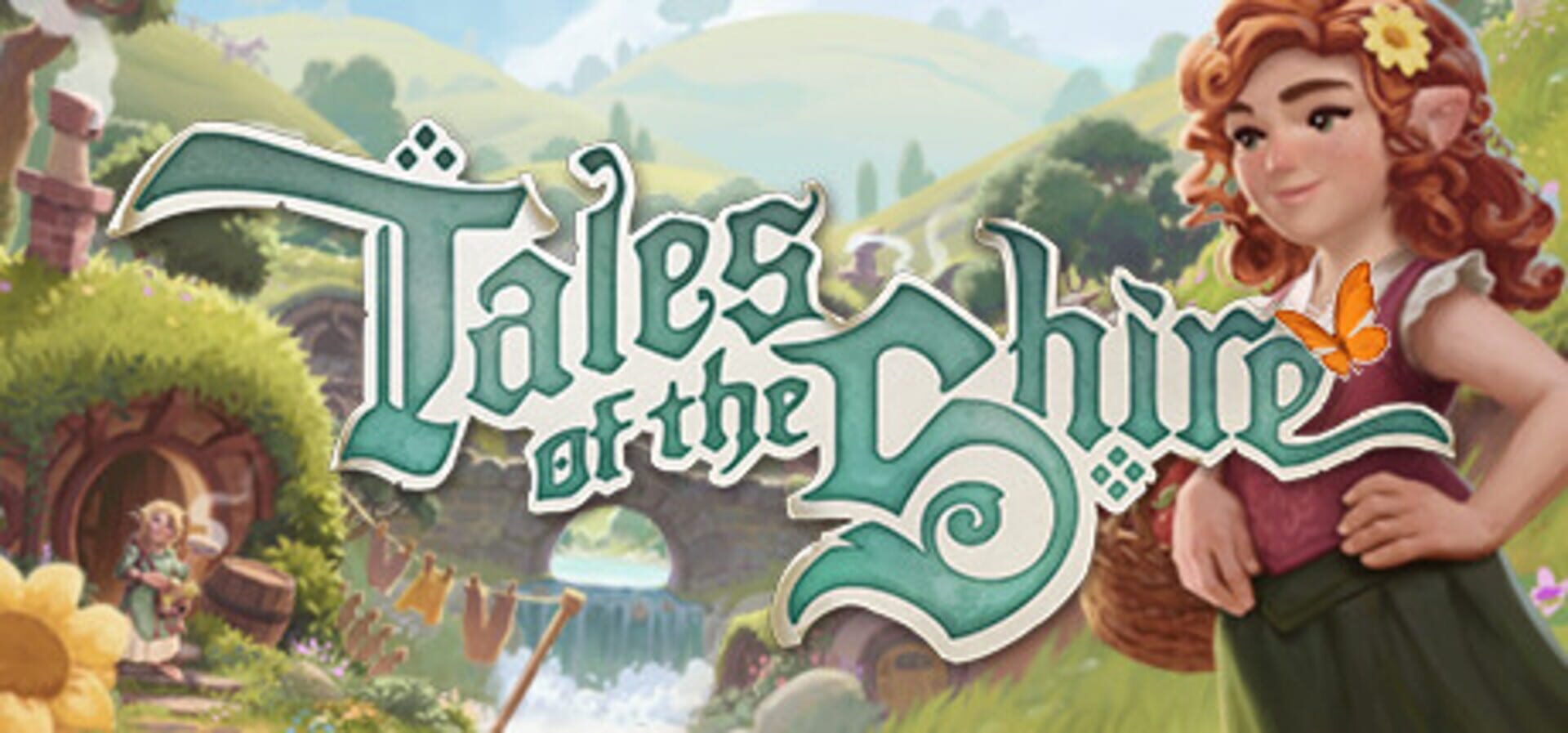
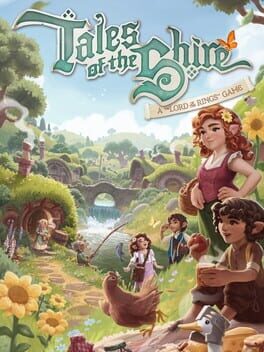
The entire point of Tales of the Shire is that nothing of consequence happens. No swords, no dark lords, no quests beyond the village. The stakes are a burnt mushroom soup, a neglected garden, and a neighbour whose affection you have not yet earned. Wētā Workshop's life sim, released 29 July 2025 across PC, PS5, Xbox Series X/S, and Switch, takes Tolkien's most frequently skipped-past setting, a village called Bywater in the years between *The Hobbit* and *The Fellowship of the Ring*, and earns that premise through a cooking system, a decoration loop, and a cast of 15 NPCs whose warmth outpaces the game's technical roughness. The answer, mostly, is yes: though a repetitive middle act and some persistent launch bugs test the patience, the final stretch delivers on the concept.
Game Snapshot
| Developer | Wētā Workshop |
| Publisher | Fictions (Private Division) |
| Release Date | 29 July 2025 (PC, PS5, Xbox Series X/S, Switch); 25 March 2026 (Switch 2) |
| Platforms | PC, PlayStation 5, Xbox Series X/S, Nintendo Switch, Nintendo Switch 2 |
| Price | £28.99 | $34.99 |
| Rating | PEGI 3 | ESRB E (Everyone) |
| Genre | Life simulation |
| Length | Main story: ~10–15 hours; full completion with clubs and relationships: ~30–40 hours |
| Install Size | ~3 GB (PC) |
Bywater is small, deliberate, and recognisably Tolkien. The art style is not technically ambitious, and the 3 GB install size confirms it was never meant to be. What it achieves is consistency of mood. Every garden, every Hobbit hole doorway, and every foraging trail in the surrounding countryside reads as a coherent whole.
The soundtrack is the presentation's strongest asset. Gentle orchestration borrows the tonal vocabulary of the Peter Jackson films without reproducing them, and the ambient audio, birdcall, rustling grass, running water, creates an atmosphere that makes the lack of spoken dialogue more conspicuous by contrast. There are only minimal grunts to acknowledge conversation. On PC and PS5, the silence is odd but manageable. On Switch, where the visuals step down further with visible pop-in and reduced character detail, the combined effect can feel undercooked.
The world structure is compact and legible. Players navigate Bywater's central area and its surrounding fields with the help of bird guides, small creatures that function as intuitive waymarkers through the landscape. The grid-free interior decoration system, used to furnish and expand a rundown Hobbit hole over the course of the game, is a quiet highlight: placing furniture with the freedom to rotate and stack items precisely rewards the investment of time. For players coming from Unpacking, the decoration system will feel familiar in spirit, though Tales of the Shire ties it to relationship progression rather than narrative revelation.
Tales of the Shire: Gameplay and Hobbit-hole Life
##IMAGE:Tales of the Shire — cooking system, gardening, and Hobbit daily life gameplay:tales-of-the-shire-02-1920.jpg##
Tales of the Shire structures each in-game day across five periods from dawn through night, with roughly 17 real-time minutes per cycle. The activities on offer, foraging, gardening, fishing, and cooking, occupy each period naturally, and the daily rhythm is well-paced in the early game. The fishing mini-game is the weakest of the four: a rote mechanic that adds little to a loop where cooking earns most of the relationship gains.
Cooking is the standout. Preparing a meal requires gathering and processing each ingredient individually, then combining them with seasonings and appropriate tools. The system involves calibrating opposing qualities, smooth against chunky, tender against crisp, to find a dish's sweet spot and maximise its effect on the Hobbit who eats it. It is more intricate than it initially appears, and the moment where a carefully prepared meal unlocks a new level of friendship with Rosie Cotton or Willow Took justifies the effort. Hobbits have seasonal preferences and fleeting cravings, which adds a light planning layer: grow what the season demands, forage what the recipe calls for, and track who wants what.
The gardening system supports this. Seeds planted in garden planters have varying growth times and respond to companion planting, rewarding strategic layout rather than random scattering. Quality varies, and higher-quality ingredients produce better meals, which in turn accelerate the central relationship-building loop.
The problem arrives in the mid-game. Progressing Bywater towards official village status requires raising 15 NPCs' friendship meters by cooking for them and hosting dinners. The loop is engaging at first and repetitive by the third or fourth cycle. Between the cooking and gardening, the game's other systems, the gesture tool and some of the club activities, lack the same payoff. The social clubs introduced in the epilogue give completionists a meaningful progression structure across five ranks, but they arrive late enough to feel like a separate experience rather than an integrated one.
Story and Characters in Tales of the Shire
##IMAGE:Tales of the Shire — Rosie Cotton, Bywater NPC characters, and Tolkien lore:tales-of-the-shire-03-1920.jpg##
The narrative frame is light: a player-created Hobbit arrives in Bywater, moves into a neglected property, and works to restore both the home and the community's sense of fellowship. The story is not driven by conflict in the conventional sense. Progress comes from shared meals, completed quests, and deepening friendships with a cast of 15 named NPCs whose dialogue, despite the absence of voice acting, carries real character.
Familiar faces anchor the experience for Tolkien readers: Rosie Cotton appears as a neighbour, and Old Noakes provides the curmudgeonly village presence recognisable from the books. Willow Took, the carpenter who unlocks new rooms in the Hobbit hole as her friendship level rises, is one of the stronger original inclusions, and Nefi, a Dwarf blacksmith who has settled in Bywater, adds welcome texture to a world that could otherwise feel insular.
This is not an adventure. The boundaries of the map are the boundaries of the story. For players who want precisely that kind of Tolkien experience, the genre-specific framing is the game's strongest argument. For others, the limited character depth and the absence of meaningful narrative stakes beyond 'host a good dinner party' may feel thin. Games like Tiny Bookshop demonstrate how character writing in the cosy genre can carry a full arc; Tales of the Shire's NPCs are charming but rarely reach that depth. The setting between the two major story eras is a deliberate choice: this is Bywater before shadow touches it, and the game commits to that lightness throughout.
Tales of the Shire Review: Value and Longevity
##IMAGE:Tales of the Shire — value, social clubs, and 30-40 hours completionist content:tales-of-the-shire-04-1920.jpg##
At £28.99 / $34.99, Tales of the Shire sits at the lower end of the mid-tier price bracket, which is the right position for what it offers. The main story, the questline to make Bywater an official village, takes roughly 10 to 15 hours depending on pace. Thorough engagement with friendships, club progression, and home decoration extends that to 30 to 40 hours, though the repetitive friendship cycle in the middle hours means those additional hours are not all equally engaging.
No DLC has been announced. The Switch 2 version, released 25 March 2026, runs in compatibility mode and does not currently benefit from dedicated enhancements. For players arriving on that platform, the visual experience is closer to the original Switch version than to the PS5 or PC releases, though the portability argument remains valid.
The mixed critical reception, a Metacritic PS5 score of 61 and a PC score of 58, reflects genuine inconsistency rather than a failure of the premise. Cosy life-sim fans who lean into cooking and relationship mechanics at their own pace will find more than the scores suggest. Players who need a strong loop to sustain engagement will find the cracks. For a direct comparison within the cosy genre, Stardew Valley remains the benchmark for farming life sims on Switch 2, and Tales of the Shire does not displace it, though it occupies a different tonal space. The best cosy games on PS5 in 2026 offer a wider field of comparison for platform-specific buyers.
Technical Notes
The PS5 version runs solidly for the most part, with occasional framerate drops in crowded village areas noted across reviews. The game's modest technical requirements, 3 GB on PC, mean the performance issues are not a hardware ceiling problem but a polish one. Bugs reported at launch included getting stuck in environmental objects, necessary quest items failing to spawn, and in some cases total progress blocks requiring a game restart.
Switch fares worst. Reduced character detail and visible pop-in are observable on both original hardware and the Switch 2 compatibility mode release. No post-launch patch history was available at the time of writing to confirm whether the launch-day issues have been addressed. The PC and PS5 versions represent the most stable experience, and the best PS5 games of 2026 context places its technical presentation in the lower range for a current-generation release, though the art direction partially compensates for what the technology does not deliver.
Final Word
Tales of the Shire works best when it is not asking you to think about whether it works. Settle into the daily rhythm of foraging the meadow, tending the garden, and preparing a mushroom-and-herb soup to share with Willow Took over a long evening in a Hobbit hole you have spent hours decorating, and the game's limitations recede. The cooking system is genuinely inventive. The setting is handled with care. If you arrived expecting a life sim with the structural rigour of Stardew Valley or the narrative density of something like Venba, the repetitive middle hours and launch bugs will frustrate. For players who want the specific, gentle experience of living a Hobbit life between two great stories, with no swords, no rings, and no urgency beyond tonight's dinner, it mostly delivers that. Skip it if mid-game repetition breaks your patience; stay if the premise alone is the draw.
Please note that some links in this article are affiliate links. If you found the coverage helpful and decide to pick up the game, or anything else for your collection, through one of those links, we may earn a commission at no extra cost to you. We use this approach instead of filling Spawning Point with intrusive display ads, and rely on this support to keep the site online and fund future reviews, guides, comparisons and other in-depth gaming coverage. Thank you for supporting the site.