THE LONG CUT · OPINION
Sequels vs Remakes: Which Should Your Favourite Game Series Get Next?
The answer depends on what you want to feel, not what the studio is making. If the series still works and you want more of the same feeling done better, you want a sequel. If the original’s ideas outgrew its technology, a remake makes sense. Reboots suit series that have lost their identity entirely. A simple framework for matching expectation to format.

The Long CutOpinion, argument, and wider industry context.
You know the feeling. You finish a game you love, or you remember one you used to rinse as a kid, and you think: I just want more of this.
Then the announcement drops… and it’s not what you pictured.
Sometimes it’s a sequel that changes everything. Sometimes it’s a remake that looks gorgeous but feels slightly off. Sometimes it’s a “remaster” and you cannot tell what actually changed. And sometimes it’s a reboot that basically says, “Right, new plan.”
So what should your favourite series get next?
A simple way to decide is to stop thinking about what the studio is making, and think about what you want to feel when you pick up the pad.

If you want more of the same feeling, just better: you want a sequel
A sequel is for when the series still works. The controls make sense. The core idea is strong. You just want it pushed further.
You want a sequel when:
- The old game still plays well today.
- You like the basic formula and want new levels, new systems, new story.
- You trust the studio to evolve things without losing the point of the series.
The risk with sequels is obvious too: they can get bored of themselves. They chase trends, add busywork, or change tone so much that it stops feeling like the series you loved.
Ask yourself: Do I want “more”, or do I want “different”? If it’s “more”, that’s sequel territory.

If you want the same game, but playable in 2025: you want a remake
A remake is for when you love the idea of the original, but you do not love going back to it.
You want a remake when:
- The camera is a fight.
- The controls feel stiff.
- The checkpoints are cruel.
- The UI is a relic.
- You keep saying, “I’d replay it if it just felt smoother.”
A good remake lets you enjoy the game again without having to forgive it every five minutes.
The risk: a remake can “tidy up” too much. Some games have edges for a reason. If you smooth everything, you can lose the bite.
Ask yourself: Do I want to re-experience it, or do I want it to move on? If it’s “re-experience”, that’s remake territory.
If you mainly want it sharper and smoother: you want a remaster
This is the simplest one, and also the most confusing because marketing loves the word.
A remaster is for when:
- The game is already solid.
- It just needs higher resolution, better performance, cleaner presentation.
- You want the same game, not a rebuilt one.
If you are hoping for modernised controls, redesigned levels, or a totally different feel, a remaster will not scratch that itch.
Ask yourself: Do I want it rebuilt, or just improved? If it’s “improved”, that’s remaster territory.
If the series feels lost, or stuck, or tired: you want a reboot
A reboot is for when the franchise needs a new direction, not a fresh coat of paint.
You want a reboot when:
- The old formula is not working anymore.
- The series has become a parody of itself.
- The tone needs to change.
- The studio wants a clean starting line.
The risk is also the point: a reboot is a gamble. Some fans will love the new direction. Some will feel like they have lost “their” version of the series.
Ask yourself: Does this series need a new chapter, or a new identity? If it’s “new identity”, that’s reboot territory.

A few easy examples (the vibe, not a lecture)
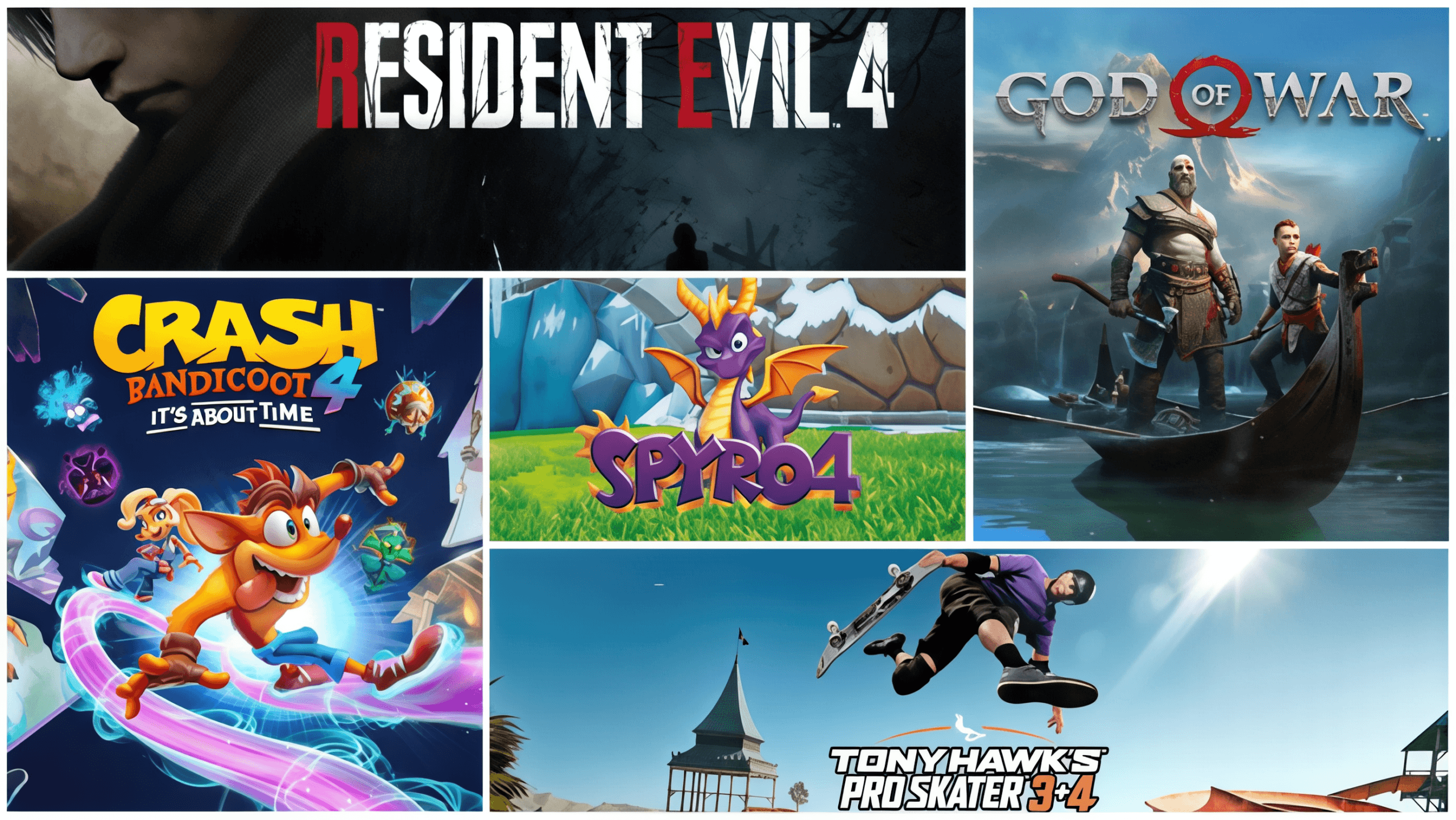
Tony Hawk is the “remake makes sense” example. If the magic is in feel, rhythm, and responsiveness, a smart modern rebuild can remind everyone why it worked in the first place.
Crash Bandicoot shows how a comeback can work when you respect the original, but it also shows how modern decisions around pricing and add-ons can change how people talk about the whole return.

Spyro is a good reminder that not every franchise needs reinvention. Sometimes you just want the charm, the colour, and the simple joy of moving through worlds that feel good to be in.
Resident Evil is proof that a series can survive huge shifts if it keeps a clear identity at the centre. It can remake older entries and still move forward, because the goal is consistent: tension, atmosphere, and pressure.
God of War is what it looks like when a sequel is brave enough to feel like a fresh era. It still counts as “the series”, but it does not cling to the old shape.

The quickest checklist
When you hear a comeback announcement, ask these four questions:
- Do I want new stuff, or do I want the old stuff back?
New stuff = sequel. Old stuff back = remake/remaster.
2. Does the original still feel good to play?
Yes = sequel or remaster. No = remake.
3. Is the series’ identity still intact?
Yes = sequel. No = reboot (or a very careful remake).
4. Am I excited because of the game, or because of the name?
If it’s mostly the name, be cautious. Big brands can be used as comfort blankets.
FAQ
Q. What’s the difference between a remake and a remaster?
A remaster is the same game running better and looking cleaner. A remake is rebuilt, often with new assets, updated controls, and changes to how it plays moment to moment.
Q. Why are there so many remakes now?
A. Because they let new players discover older hits without fighting dated design, and they are often a safer bet than launching a brand-new idea at modern budgets.
Q. Can a sequel also feel like a reboot?
A. Yep. Some sequels change tone and structure so much that they basically restart the series, even if they keep the history.
Q. Which is ‘best’?
A. The one that matches what the series needs. If the old game is brilliant but awkward to play, a remake is a gift. If the series is thriving, a sequel is the right kind of ambition. If it’s lost its way, a reboot might be the only honest move.
Support SpawningPoint
Please note that some links in this article are affiliate links. If you found the coverage helpful and decide to pick up the game, or anything else for your collection, through one of those links, we may earn a commission at no extra cost to you. We use this approach instead of filling SpawningPoint with intrusive display ads, and rely on this support to keep the site online and fund future reviews, guides, comparisons and other in-depth gaming coverage. Thank you for supporting the site.
Please note that some links in this article are affiliate links. If you found the coverage helpful and decide to pick up the game, or anything else for your collection, through one of those links, we may earn a commission at no extra cost to you. We use this approach instead of filling SpawningPoint with intrusive display ads, and rely on this support to keep the site online and fund future reviews, guides, comparisons and other in-depth gaming coverage. Thank you for supporting the site.