RETROSPECTIVE
Garden Story Retrospective: An Overlooked Action-cosy Hybrid
A careful Garden Story review for 2026, revisiting its action-cosy loop, village rituals, soft combat, and whether Concord's guarded world still earns its pace.


Garden Story begins with a village that needs tending before it needs saving. This action-cosy hybrid earns its best moments through maintenance. Concord’s work is not only to strike back at rot, but to restore paths, carry requests, and learn which parts of the Grove have been left unattended. That makes this garden story review a different exercise in 2026. The salient point is whether its softness was ever the point. Garden Story is uneven, especially when combat asks for more precision than the tool set comfortably holds, but its central claim remains legible: care can be active without becoming frantic.
Game Snapshot
| Developer | Picogram |
| Publisher | Rose City Games |
| Release Date | 11 August 2021 |
| Platforms | PC, Mac, Xbox One, Switch |
| Price | £17.99/$19.99 (Nintendo Switch eShop); £15.49/$14.99 (PC via Steam) |
| Rating | PEGI 3 |
| Genre | Action-cosy adventure, life-sim adjacent |
| Length | 10-11 hours (main story); 14-15 hours (main + extras); up to 19 hours (completionist) |
| Install Size | 203 MB (Nintendo Switch); approx. 203 MB (PC) |
Presentation and World Design
The Grove is built from small thresholds: village paths, pond edges, gateposts, gardens tended by habit rather than spectacle. Its pixel art asks the player to read a cracked path, a cluttered workbench, and then understand who has been caring for that place.
The palette has a deliberate softness, with greens and browns that keep the world close to soil. The danger looks like rot rather than invasion, because Garden Story is not interested in heroism as a posture. It is interested in repair. The small sound of a tool hitting stone sits beside birdsong and water, and the village feels most convincing when nothing dramatic is happening.
This is less exact than the plant-reading discipline in our full Strange Horticulture review, but it belongs to the same family of attention. Garden Story is at its best when it trusts the player to notice an absence before a quest marker names it.

Gameplay and Combat
The daily loop is a careful mixture of errands, resource gathering, repair work, and light combat. That mixture is also where the game most clearly exposes its limits. Garden Story wants its action to feel like another form of tending, and at times it does: clear rot from a path, gather materials, bring a corner of the map back into use. The loop is slow, not empty. That is the point.
Combat is the least settled part of the design. The tools have weight, but not always the readability that weight requires, and some fights ask for a cleaner rhythm than the animation language can offer. The issue is formal: combat sometimes sounds like a different game speaking through the same little body.
The resource work is stronger. The inventory has the plain quality of a drawer sorted by someone who uses it daily. Compared with the sharper appetite of our full Wytchwood review, Garden Story is more forgiving and less acidic. Compared with our full Moonstone Island review, it has less breadth, but a clearer interest in repair. The game earns its action-cosy shape when those halves meet.
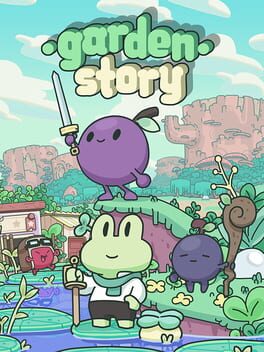
Garden Story retrospective: an overlooked action-cosy hybrid
7.4/10
Buy on Amazon
Price and availability from Amazon
Story and Characters
Concord is a good protagonist for this kind of work because the character begins small in a world already full of duties. Garden Story’s writing is plain, and that plainness suits it. The village does not need speeches about community when the player has just spent the morning fixing a bridge. The story is most persuasive when labour becomes relationship.
The characters sit in broad strokes, but the strokes are placed carefully. The elders, shopkeepers, and neighbours belong to the village’s ritual order, and the game understands that order well enough to make routine feel like belonging. A request means more when the player has seen the broken object.
That makes Garden Story quieter than the social life-sim shape in our Cattails Wildwood Story review, where community has more room to sprawl. Garden Story’s restraint is narrower. Care is not a feeling first. It is the repeated act that makes the feeling possible.
Value and Longevity
At £17.99 on Switch and £15.49 on PC, Garden Story sits at a price that matches its scope well. Published playtime data puts main-story completion at around 10-11 hours, with main story plus extras reaching 14-15 hours, and completionist runs approaching 19 hours. Garden Story is not a game whose worth lives in hours alone. It is worth asking whether the loop still feels well spent after the village’s first layer of recovery has become familiar.
For some players, the answer will be yes. The appeal is the steady return: clear a path, collect what is needed, answer the day’s requests, go back under different light. For others, the loop will find its floor earlier. Our full Tiny Bookshop review praised a game that reads people through repeated trade. Garden Story reads place through repeated maintenance, which is narrower and more fragile.

Technical Notes
Garden Story has one of the smallest footprints in the genre: 203 MB on Nintendo Switch, confirmed on the Nintendo UK eShop, and a matching size on PC. That install size means load times are negligible and the game sits lightly on any device. QA should check save reliability, late-area slowdown, and handheld readability before publication. A game like this does not need technical drama. It needs the frame to hold while the player crosses a bridge, opens a menu, and hears the small confirmation sound. Performance is not the point here. Continuity is.
Final Word
Garden Story is not the broadest cosy review candidate in 2026, and it is not the cleanest action game inside a softer frame. Its value is more particular than that. It understands that a village can be made legible through work, and that a repaired path can carry more meaning than a line of dialogue. The combat sometimes pulls the game away from its quiet centre, but the centre remains. It earns a particular quality of late afternoon: one more errand, one more bridge, one small sound confirming that the Grove has noticed. That is the quiet kind.
Is Garden Story worth it in 2026?
Garden Story is worth it at £17.99 on Switch or £15.49 on PC if the appeal is a slow repair loop rather than a large life-sim calendar. Published playtime puts the main story at 10-11 hours, with full completion around 19 hours. Its best work is repeated maintenance and the feeling of a village returning to use.
Is Garden Story a life-sim review candidate or an action game?
Garden Story sits between the two, and that tension is the point of the review. It has combat, tools, quests, and resource work, but its stronger claim is care as routine. The life-sim part is not a full social calendar. It is the daily rhythm of tending a place until it feels inhabited.
Does Garden Story have combat?
Garden Story has combat, but the fighting works best as part of the repair ritual. Clearing rot matters because the path can be used again, not because the fight carries the whole experience. The combat is readable enough for the premise, though it is less confident than the gathering and restoration loop.
How does the maintenance loop compare with other cosy gathering games?
It is narrower and more fragile than the seasonal accumulation in many life-sims. The appeal is the steady return of clearing a path, answering the day's requests, and going back under different light. Players who want constant novelty or deep social calendars will find the loop finds its floor earlier.
Is the game forgiving of being put down?
The day has a natural shape that respects short sessions. A player can cross a bridge, gather what is needed, and leave without feeling that the game has withheld its point. That is one of its quieter acts of kindness.


